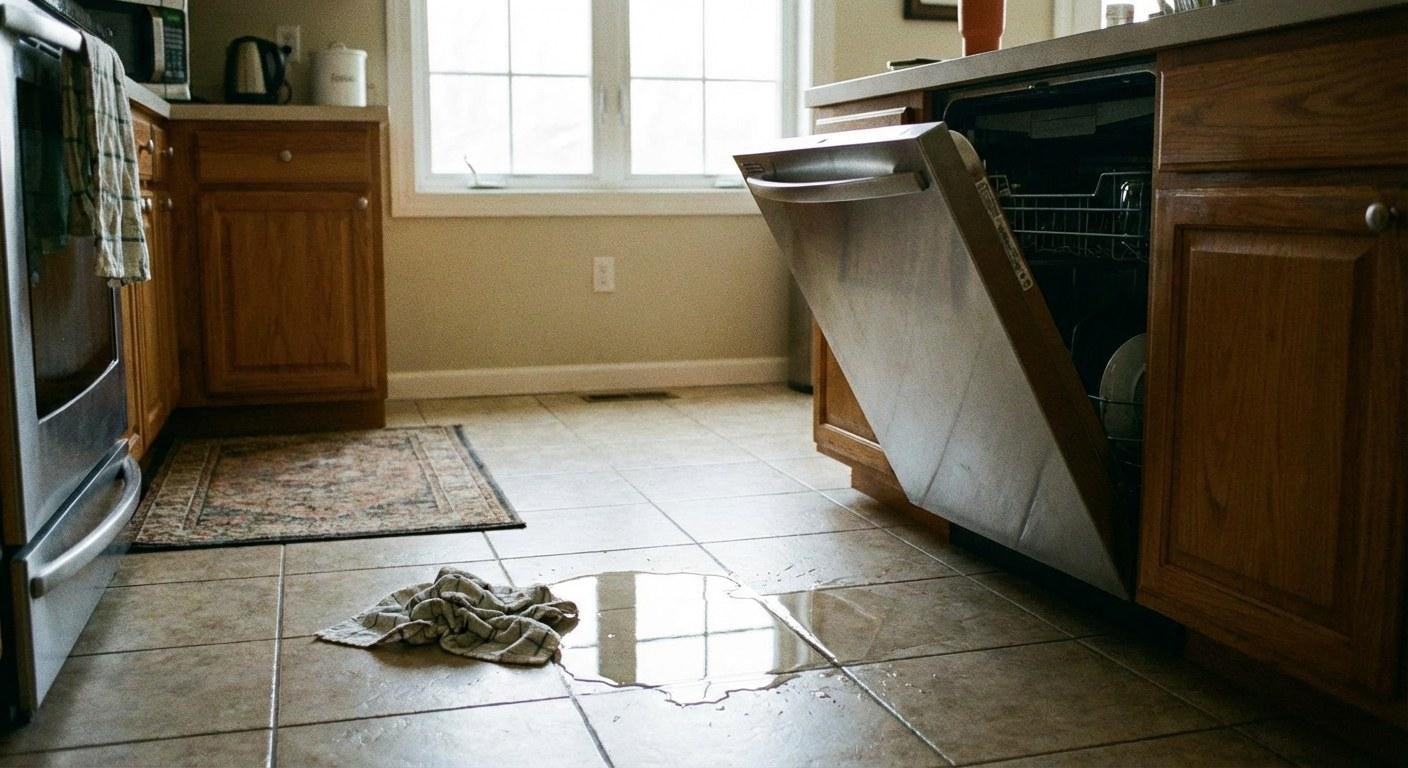
Most dishwasher leaks come from one of three places: the door, the connections underneath, or the internal components. By methodically checking each area, you can often identify and resolve the problem yourself with basic tools and a little patience.
This guide will walk you through how to find the source of the leak and what steps you can take to fix it, so you can get your kitchen back to normal.
First Find Where the Water Is Coming From
Before you can fix the leak, you need to pinpoint its origin. Since water can travel, finding the exact spot is the most important first step.
- Clear the Area: Remove any items from in front of and under your dishwasher. Dry the floor completely with a towel.
- Run a Short Cycle: Start a rinse or short wash cycle. This will allow you to observe the leak in real time.
- Watch Closely: Use a flashlight to get a good look.
- Check along the bottom edge of the door and the front panel for any drips.
- Look underneath the unit to see if water is pooling on the floor.
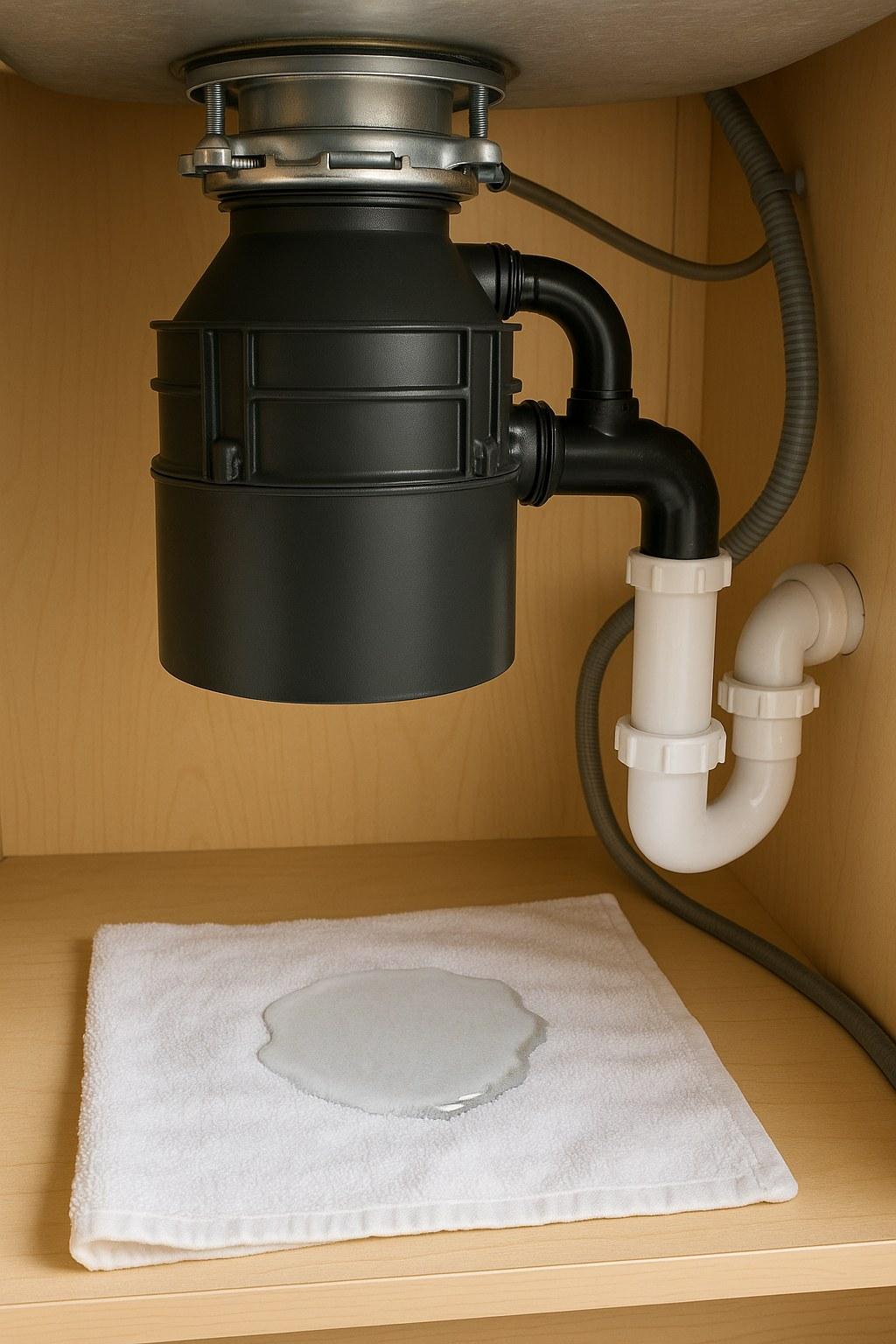
- If you can, check the cabinet under your sink where the dishwasher’s water supply and drain hoses are connected. Look for any moisture around those connections.
Once you’ve identified the general area of the leak—the door, underneath the unit, or the hoses—you can move on to the specific fix.
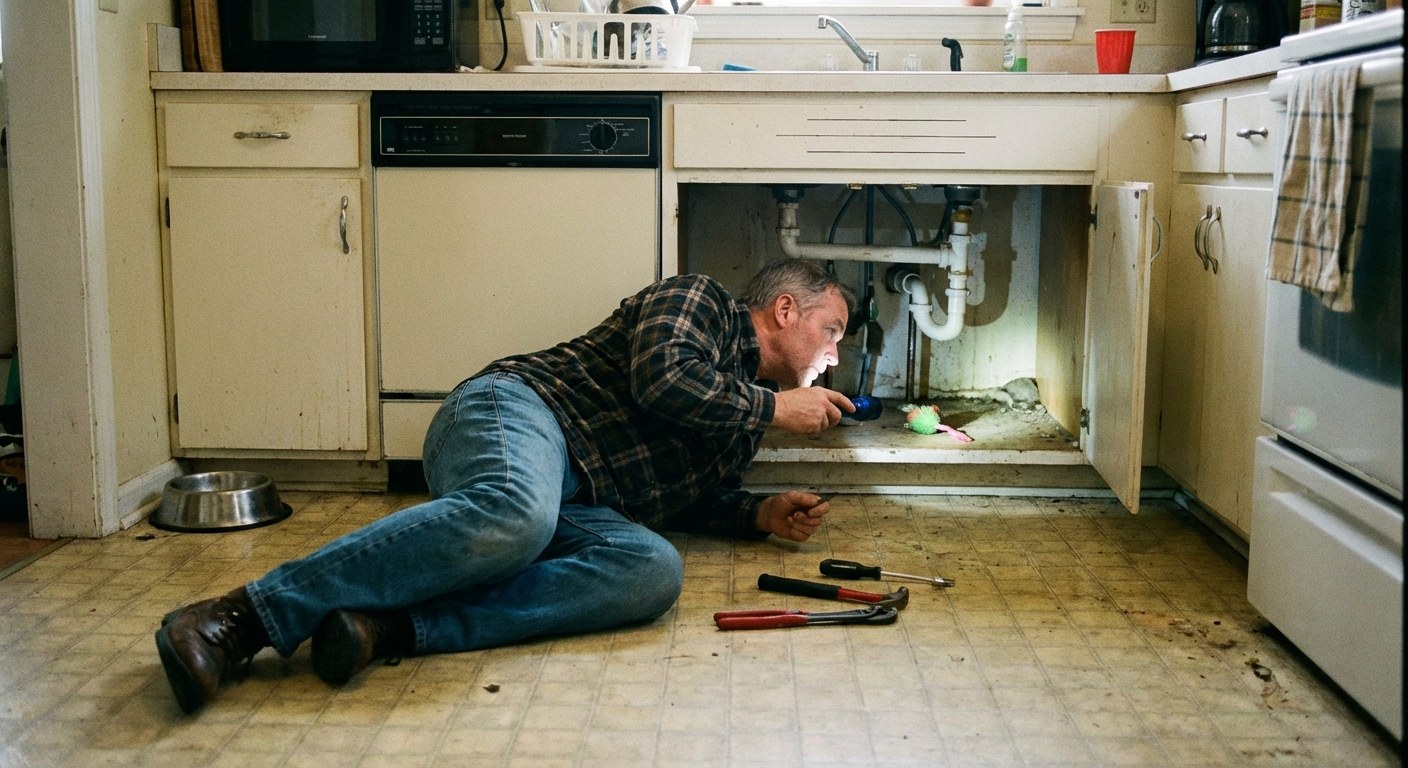
What to Do If Your Dishwasher Is Leaking
We’ll break down the troubleshooting steps based on where you see the water. For any steps that require you to work on the dishwasher itself, it's always a good practice to turn off the power at the circuit breaker first.
If the Leak Is Coming from the Door
This is one of the most common types of leaks and is usually caused by a bad seal or an unlevel appliance.
1. Inspect the Door Gasket
The door gasket is the flexible rubber or vinyl seal that runs along the inside edge of the dishwasher tub. It creates a watertight seal when the door is closed.
- Feel for Damage: Open the door and run your fingers along the entire gasket. You’re checking for any cracks, tears, brittle sections, or areas that look flattened or compressed.
- Check for Debris: Food particles and mineral buildup can prevent the gasket from sealing properly. If it looks dirty, cleaning it may solve the problem.
Safe to Try Yourself:
- Clean the Gasket: Gently wipe the gasket and the channel it sits in with a cloth dampened with warm, soapy water. Rinse with a clean, damp cloth and dry it thoroughly. Sometimes, just removing this buildup is enough to restore the seal. After cleaning, run another short cycle to see if the leak has stopped.
- Replace the Gasket: If the gasket is clearly damaged, replacing it is a straightforward job. You can find a replacement part by searching for your dishwasher’s model number online. Keeping a record of your appliance models in an app like Casa can make finding the right parts much simpler. To replace it, you typically just pull the old one out of its channel and press the new one firmly into place.
2. Check If the Dishwasher Is Level
If the dishwasher isn’t level, water can pool in the front of the tub and seep out of the door.
- Use a Level: Place a carpenter's level on the top edge of the open door or on the upper rack. Check it from front-to-back and side-to-side. The bubble should be centered in both directions.
Safe to Try Yourself:
- Adjust the Feet: Most dishwashers have adjustable feet. After turning off the power, you can remove the front kick plate to access them. Use an adjustable wrench to turn the feet up or down until the appliance is perfectly level. Run another cycle to see if this has solved the leak.
If the Leak Is Coming from Underneath
Water pooling directly under the main body of the dishwasher often points to an issue inside the tub or with the main water components.
1. Check the Filter and Float Switch
A clogged filter can prevent the dishwasher from draining properly, causing water to back up and leak. The float switch is a safety device that tells the dishwasher when to stop filling with water; if it gets stuck, the unit can overfill.
- Locate the Parts: Both the filter and the float switch are located on the floor of the dishwasher tub. The filter is usually a cylindrical screen that you can twist to remove. The float switch is a small plastic dome or cylinder.
Safe to Try Yourself:
- Clean the Filter: Remove the filter and rinse it thoroughly under hot water. Use a soft brush to scrub away any food particles or grease.
- Check the Float Switch: Gently lift the float switch up and down. It should move freely. If it feels stuck, clean around it to remove any debris that might be causing it to bind.
After cleaning both, run a short cycle to see if the leak is gone.
If the Leak Is Coming from the Hoses
Leaks from the water supply line or drain hose are common and often simple to fix. You’ll usually find these connections in the cabinet under your kitchen sink.
1. Inspect the Hose Connections
- Feel for Looseness: Carefully check the connections where the water supply hose (usually a braided steel line) and the drain hose (a flexible ribbed hose) connect to your plumbing. See if the nuts are loose to the touch.
Safe to Try Yourself:
- Tighten the Connections: Use an adjustable wrench to gently snug up the nut on the water supply line—turn it about a quarter-turn clockwise. Be careful not to overtighten, as this can damage the fittings. If the drain hose is held by a clamp, use a screwdriver to tighten it.
- Replace the Hose Washer: The water supply hose has a small rubber washer inside the coupling that can wear out over time. If tightening the connection doesn't work, turn off the water supply, unscrew the hose, and replace this small washer. They are inexpensive and available at any hardware store.
When to Call a Professional
While many dishwasher leaks are simple fixes, some problems require an expert. It’s time to call an appliance repair technician if:
- You've tried the DIY steps above and the dishwasher is still leaking.
- The leak appears to be coming from the main pump or motor underneath the unit.
- You see cracks in the plastic tub of the dishwasher.
- You are not comfortable performing any of the steps, especially those involving leveling the appliance or replacing parts.
Typical Time and Cost
Fixing a leaking dishwasher yourself can be very cost-effective.
-
DIY Costs:
- Door Gasket: $20 - $60 for the part.
- Hose Washer: Less than $5.
- Time: Most of these repairs take between 15 and 45 minutes.
-
Professional Repair Costs:
- A service call from an appliance repair technician typically ranges from $100 to $250, which often includes the diagnosis and minor repairs. The final cost will depend on the parts needed and the complexity of the job.
A Dry Floor and Peace of Mind
A leaking dishwasher is a common household problem that you can often solve without a service call. By starting with a careful observation to find the source, you can follow a clear path to diagnose and fix the issue. Whether it's cleaning a gasket or tightening a hose, these small maintenance tasks can prevent water damage and keep your appliances running smoothly.
When you're ready for a partner in managing your home, download the Casa app. We’re here to provide the guidance and tools you need to handle repairs, plan for maintenance, and feel confident in your home.