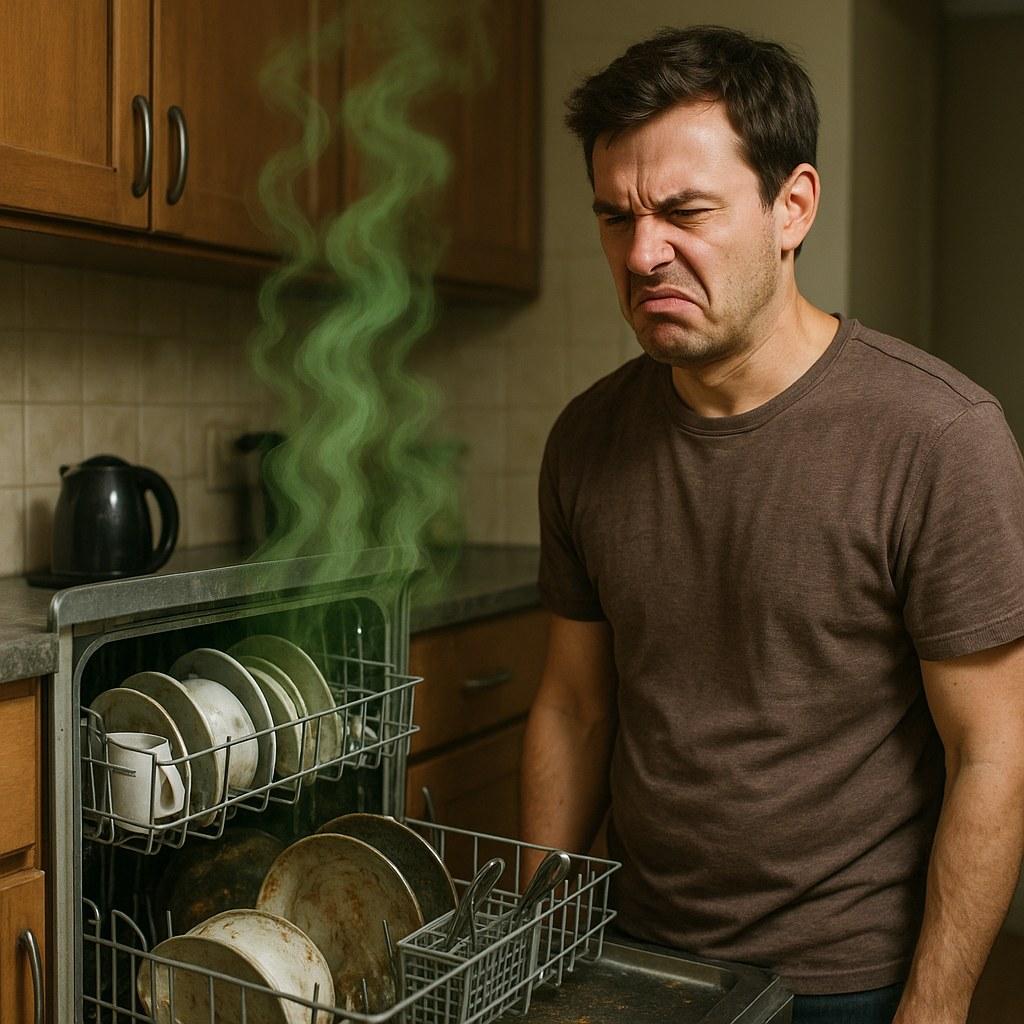
That lingering smell is typically caused by a buildup of trapped food particles, grease, and grime in the filter, spray arms, or door gasket. Sometimes, it can also be a sign of a minor drainage issue, leaving stagnant water at the bottom of your machine.
Whatever the cause, we're here to walk you through it. Think of us as your friendly expert on the other end of the line. In this guide, we'll help you diagnose the source of the odor and provide a step-by-step plan to get your dishwasher smelling fresh and cleaning effectively again.
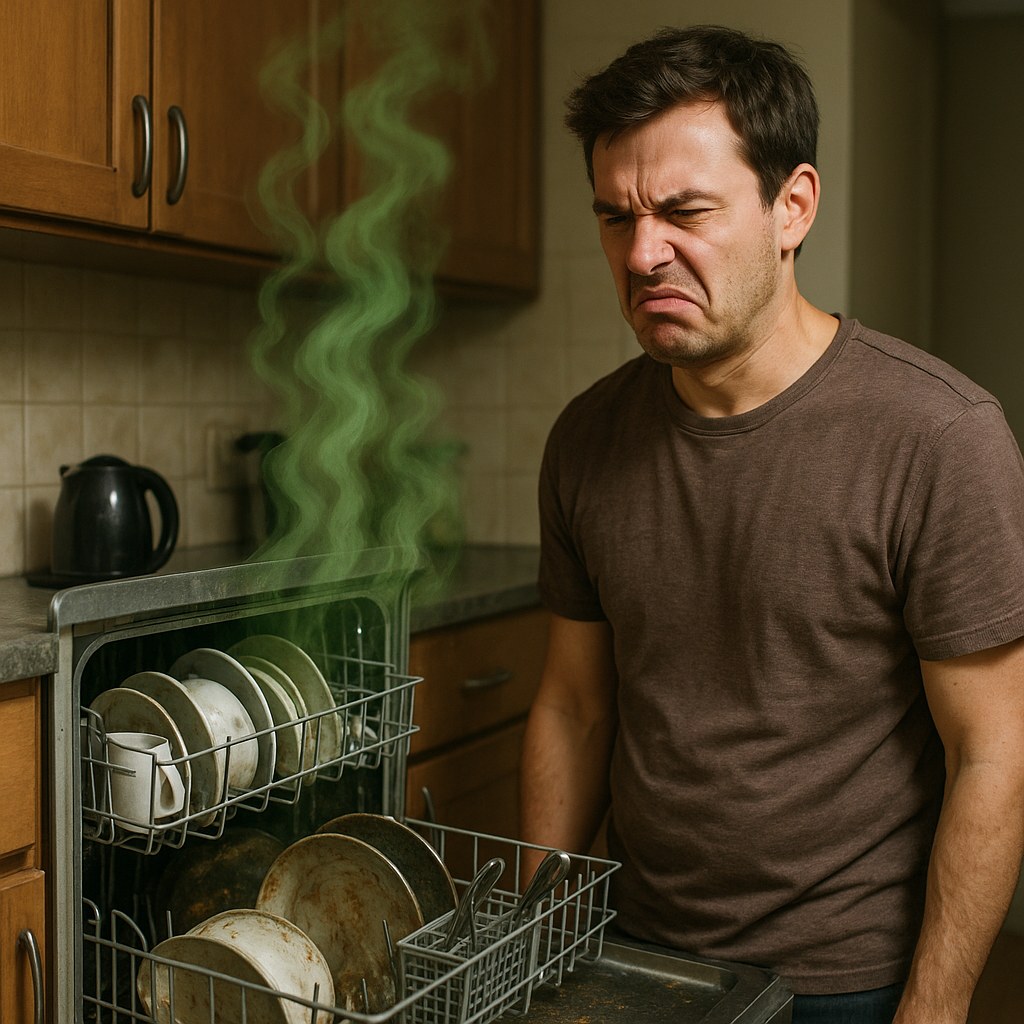
Why Does My Dishwasher Smell? The Common Culprits
Before we roll up our sleeves, let's understand what we're up against. A smelly dishwasher isn't just a random occurrence; it's a direct result of what goes on inside the machine. Here are the most frequent offenders:
- A Clogged Filter: Your dishwasher's filter is the unsung hero, trapping food scraps and debris to prevent them from clogging the drain. But if it’s not cleaned regularly, those trapped particles start to decompose, creating a nasty smell. This is the number one cause of dishwasher odors.
- Dirty Door Gasket and Seals: The rubber gasket around your dishwasher door creates a watertight seal. Unfortunately, it's also the perfect place for moisture, soap scum, and tiny food bits to get trapped, leading to mold and mildew growth.
- Improper Drainage: If your dishwasher isn’t draining completely, even a small amount of standing water at the bottom can become a stagnant pond for smelly bacteria to thrive. This can be caused by a clog in the drain hose or an issue with your garbage disposal connection.
- Clogged Spray Arms: The spray arms have small holes that shoot water to clean your dishes. These holes can get clogged with food debris. When that happens, the trapped food begins to rot, and the arms can't clean your dishes (or the dishwasher itself) effectively.
- General Grease and Grime Buildup: Over time, grease and food residue can build up a film on the interior walls, racks, and even the ceiling of your dishwasher, contributing to a general musty or sour smell.
Now that we know the potential suspects, let's start our investigation and get this problem solved.
Step by Step Guide to a Fresher Dishwasher
We'll start with a quick inspection to pinpoint the source of the smell and then move on to targeted cleaning solutions.
Part 1: The Initial Inspection - Play Detective
First things first, let’s get a closer look. You'll need to get down on your hands and knees for this, but it only takes a minute.
- Open the dishwasher door completely and pull the bottom rack all the way out. Set it aside.
- Look for standing water. Is there a puddle of water collected in the tub at the bottom, underneath where the spray arm sits? A tiny bit might be normal, but anything more than half an inch suggests a drainage problem.
- Use your nose. Lean in and take a sniff near the filter area (usually a round, twist-off component at the bottom). Then, smell along the rubber door gasket. Try to determine if the odor is strongest in one specific spot or if it’s more of a general smell throughout the interior.
Based on what you find, proceed to the next relevant step.
Part 2: What to Do If You Find Standing Water
If you discovered a pool of water at the bottom, we need to address a potential drainage issue before we do any cleaning.
A clogged drain is a breeding ground for bacteria, and no amount of cleaning will fix the smell if the water can't escape. Let’s check the most common blockage points.
- Safety First: Turn Off the Power. Go to your home's circuit breaker and flip the switch that controls the dishwasher. This is a crucial safety step before you start working.
- Soak Up the Water. Use old towels or a sponge to soak up the standing water in the bottom of the tub.
- Check the Filter and Sump. Twist the lower filter (usually counter-clockwise) and lift it out. Clear away any visible food debris or gunk from the filter screen and the sump area it was covering.
- Inspect the Drain Hose. Pull the dishwasher out slightly if you can, or look under your kitchen sink to find the drain hose. It's typically a flexible, ribbed hose that connects from the dishwasher to your garbage disposal or sink drain. Make sure it isn't kinked or bent sharply, which can restrict water flow.
- Ensure a "High Loop". The drain hose should loop up high, almost to the level of the countertop, before connecting to the drain. This high loop prevents water from the sink from flowing back into the dishwasher. If it's sagging, secure it in a higher position with a zip tie or strap.
- Run a Test. Reinstall the filter, turn the power back on at the breaker, and run a quick "Rinse Only" cycle. Once it's finished, open the door. Is the bottom dry? If so, you've likely solved the drainage problem! Now you can proceed to clean the filter.
- If Water Remains: If you still have standing water after these steps, the clog may be further down the line in your plumbing or in the garbage disposal connection. At this point, it's best to call a plumber.
Part 3: How to Clean the Main Odor Hotspots
If you didn't have a drainage issue, or if you've just fixed one, it's time to clean the components that are most likely causing the smell.
A. Cleaning the Dishwasher Filter and Sump
This is the most important part of your mission. A clean filter is key to a fresh-smelling dishwasher.
- Turn off the power at the circuit breaker.
- Remove the bottom rack to get easy access.
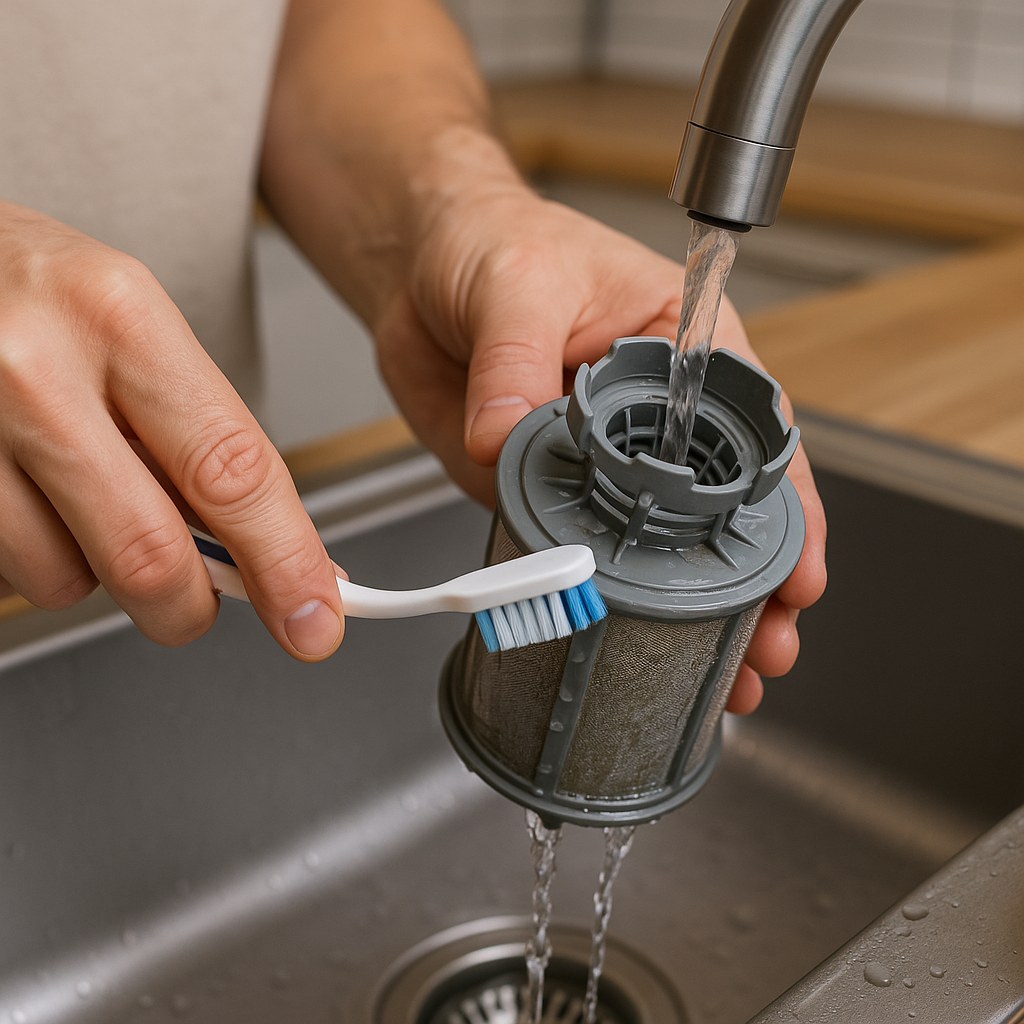
- Remove the filter. Most modern dishwashers have a cylindrical filter that you can remove by twisting it counter-clockwise and lifting it out. There may also be a flat mesh screen underneath it. Refer to your owner's manual if you're unsure.
- Scrub the filter. Take the filter components to the sink and scrub them thoroughly with a soft brush (an old toothbrush works perfectly) and warm, soapy water. Get all the grime and tiny food particles out of the mesh screen.
- Wipe the sump. While the filter is out, take a microfiber cloth dipped in white vinegar and wipe down the sump (the area where the filter sits).
- Reinstall and Deodorize. Put the clean filter back in place and secure it. Then, pour one cup of white vinegar into the bottom of the dishwasher tub. Run the machine on its hottest cycle (with no dishes). The vinegar will help break down grease, sanitize the interior, and neutralize odors.
If the filter was the main culprit, your dishwasher should already smell significantly better. If a faint odor lingers, move on to the next step.
B. Cleaning the Door Gasket and Seals
Mold and mildew love to hide in the rubber gasket around the door.
- Mix a cleaning solution. Fill a spray bottle with equal parts white vinegar and warm water.
- Spray and Scrub. Open the dishwasher door fully. Spray the entire rubber gasket, paying special attention to the folds and crevices. Let the solution sit for a few minutes to break down the grime.
- Scrub gently with a toothbrush to loosen any trapped food or mildew.
- Wipe it clean. Use a microfiber cloth to wipe the gasket and the inside edge of the door until it's clean and dry.
- Deodorize with Baking Soda. To finish the job, sprinkle one cup of baking soda across the bottom of the tub and run a short, hot rinse cycle. Baking soda is excellent at absorbing any remaining odors.
Part 4: The Ultimate Deep Clean for Stubborn Smells
If you've cleaned the filter and gasket and still notice an odor, or if you just want to perform a deep, restorative cleaning, it's time to tackle the spray arms and interior walls.
- Turn off the power at the circuit breaker.
- Remove the racks. Take both the upper and lower racks out of the dishwasher to give you full access to the interior.
- Clean the Spray Arms. The spray arms can usually be removed by unscrewing a plastic hub or simply pulling them off. Check the small holes for any visible debris. Use a pair of needle-nose pliers, a toothpick, or a paperclip to carefully poke out any gunk that's clogging the holes. Soak the arms in a basin of warm water and one cup of white vinegar for about 30 minutes, then rinse them.
- Wipe Down the Interior. Dip a microfiber cloth in white vinegar and wipe down the interior walls, the inside of the door, and the rack tines.
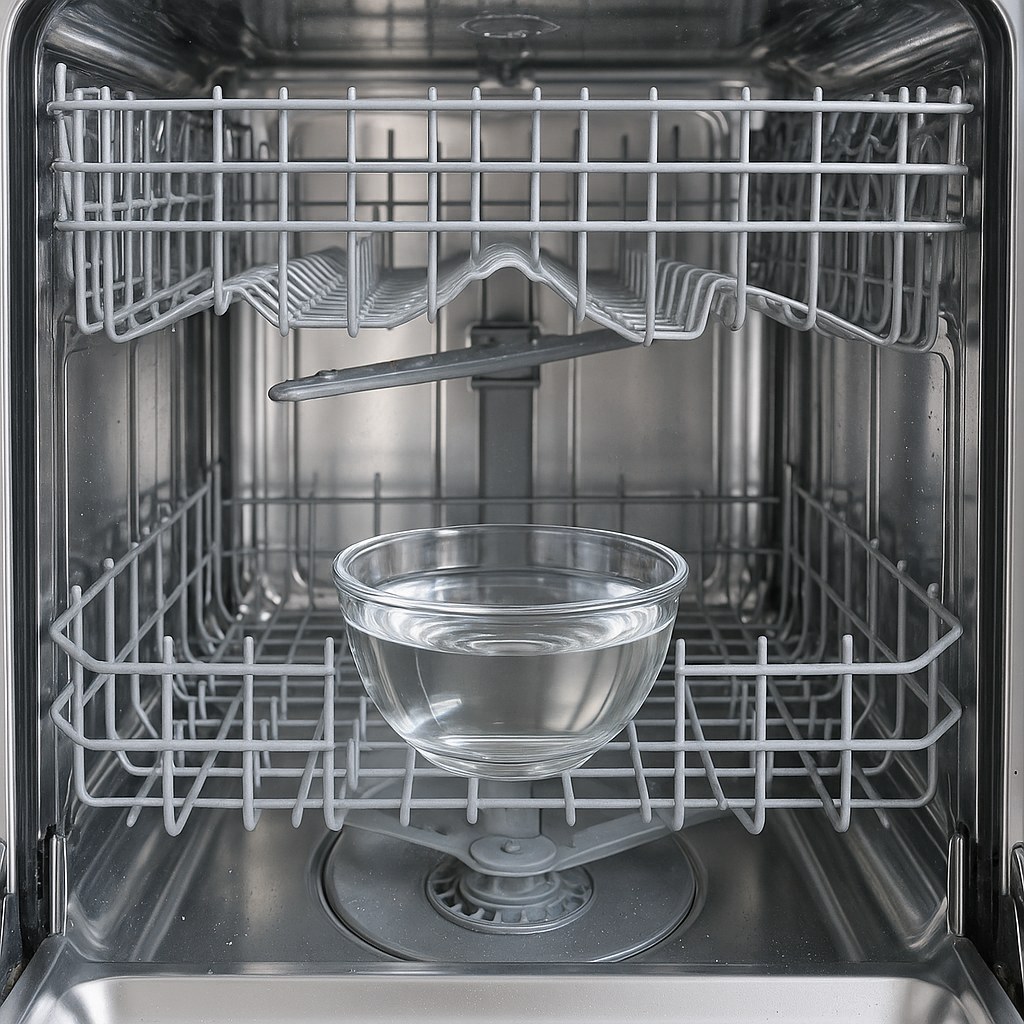
- Reassemble and Run the Final Cleaning Cycle. Reinstall the spray arms and racks. Place a dishwasher-safe bowl filled with one cup of white vinegar on the top rack. Sprinkle one cup of baking soda on the bottom of the tub. Turn the power back on and run the dishwasher on its longest, hottest cycle. This one-two punch of vinegar and baking soda will sanitize, deodorize, and leave the interior sparkling.
- Air it Out. Once the cycle is complete, open the door and let the interior air-dry completely. This helps prevent moisture from getting trapped and starting the cycle of smells all over again.
When to Call a Professional
While most dishwasher smells are a DIY fix, there are times when you need an expert. According to HomeAdvisor, the typical cost to have an appliance technician diagnose and repair an issue is between $100 and $250. It's time to make the call if:
- You continue to have drainage issues after clearing the filter and hose.
- You notice any cracks or tears in the door gasket that may require replacement.
- The smell persists after you've performed a thorough deep cleaning. This could indicate a problem with internal components.
A Fresh Start for Your Dishwasher
A smelly dishwasher is an unwelcome guest in any kitchen, but with a little bit of cleaning, you can show it the door. By regularly cleaning your filter and giving your machine a deep clean every few months, you can prevent odors from ever coming back.
Feeling empowered? For more easy-to-follow DIY home maintenance guides and instant access to trusted professionals for the jobs you can't handle alone, download the Casa app today. We're here to help you keep your home running smoothly, one project at a time.