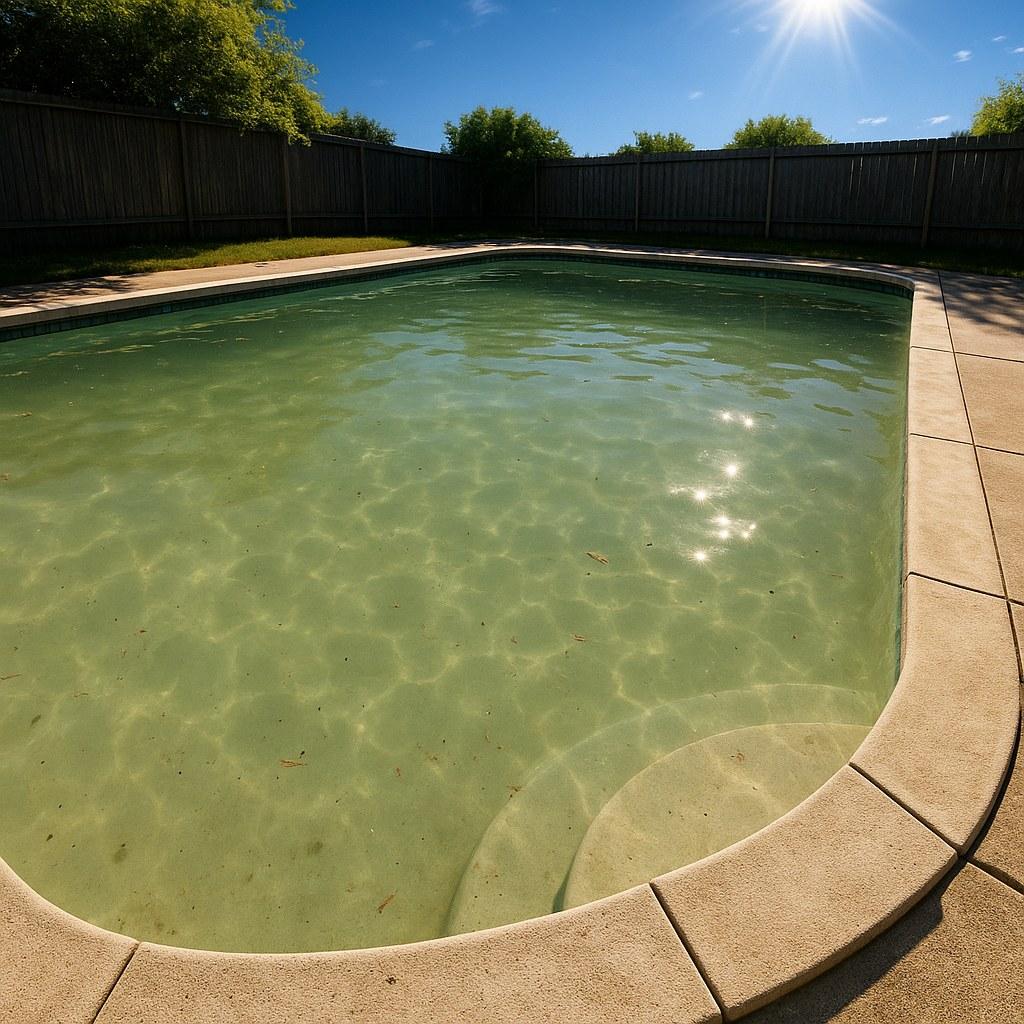
Don't worry, you're not alone. Cloudy water is one of the most common issues pool and spa owners face. It’s a clear sign that something is off, whether it’s the water chemistry, the filtration system, or both. The good news is that with a little detective work and the right steps, you can usually restore your water to its crystal-clear glory without having to call in a professional.
Think of us as your friendly expert on the other end of the line. We’re going to walk you through everything you need to know to diagnose the problem and get your pool or spa sparkling clean again.
Why Is My Pool or Spa Water Cloudy? The Main Culprits
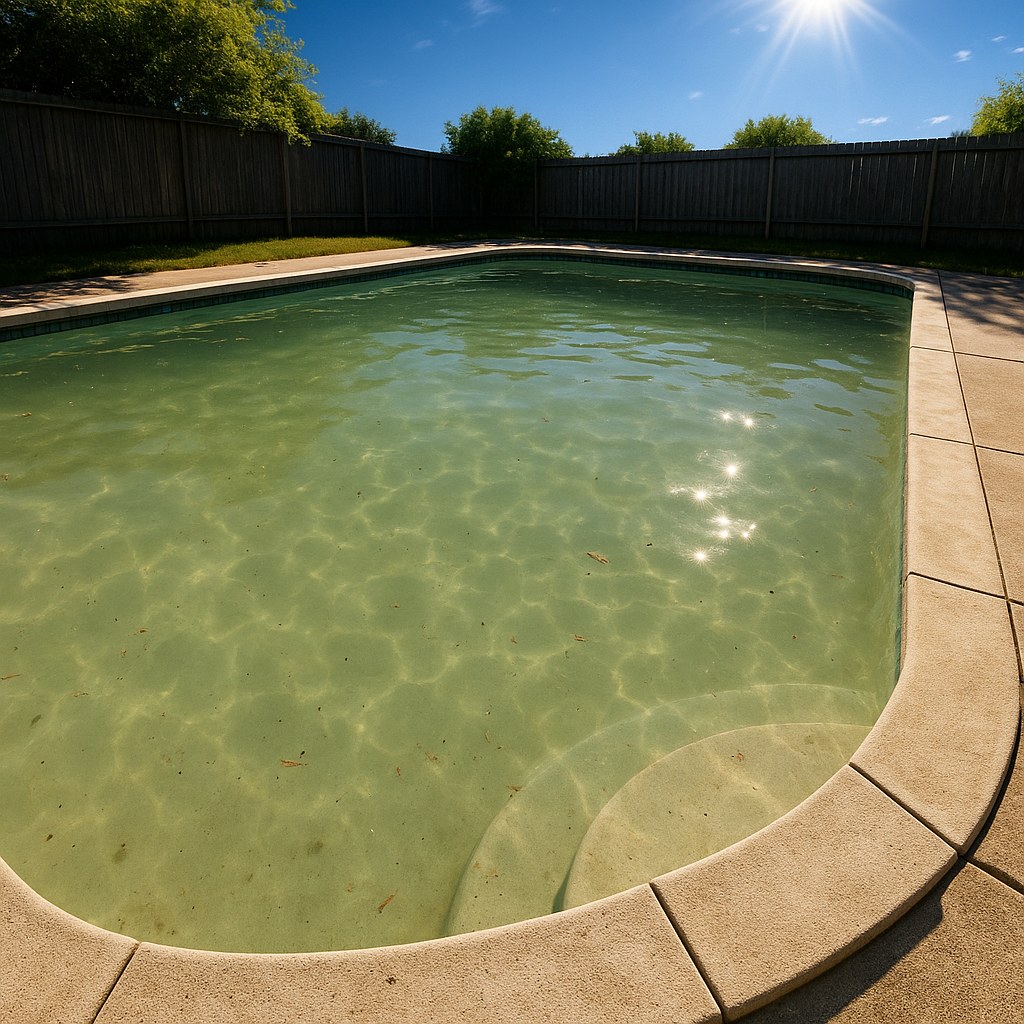
Before we dive into the fix, let's understand what causes that hazy, milky water. Cloudiness is caused by tiny, suspended particles that are too small to be seen individually but numerous enough to scatter light, making the water look opaque. These particles can come from a few different sources.
-
Imbalanced Water Chemistry: This is the number one cause of cloudy water.
- Low Sanitizer (Chlorine or Bromine): Sanitizer is what kills bacteria and other contaminants. When levels are too low, microorganisms can multiply rapidly, creating a cloudy mess that can quickly turn into a full-blown algae bloom.
- High pH or Alkalinity: When pH and alkalinity levels are too high, it can cause calcium to come out of solution and form calcium carbonate, which appears as white, cloudy particles. High pH also makes your sanitizer less effective, creating a double whammy.
- Low pH or Alkalinity: While less common, very low pH can also cause issues and make the water aggressive, potentially damaging your equipment over time.
-
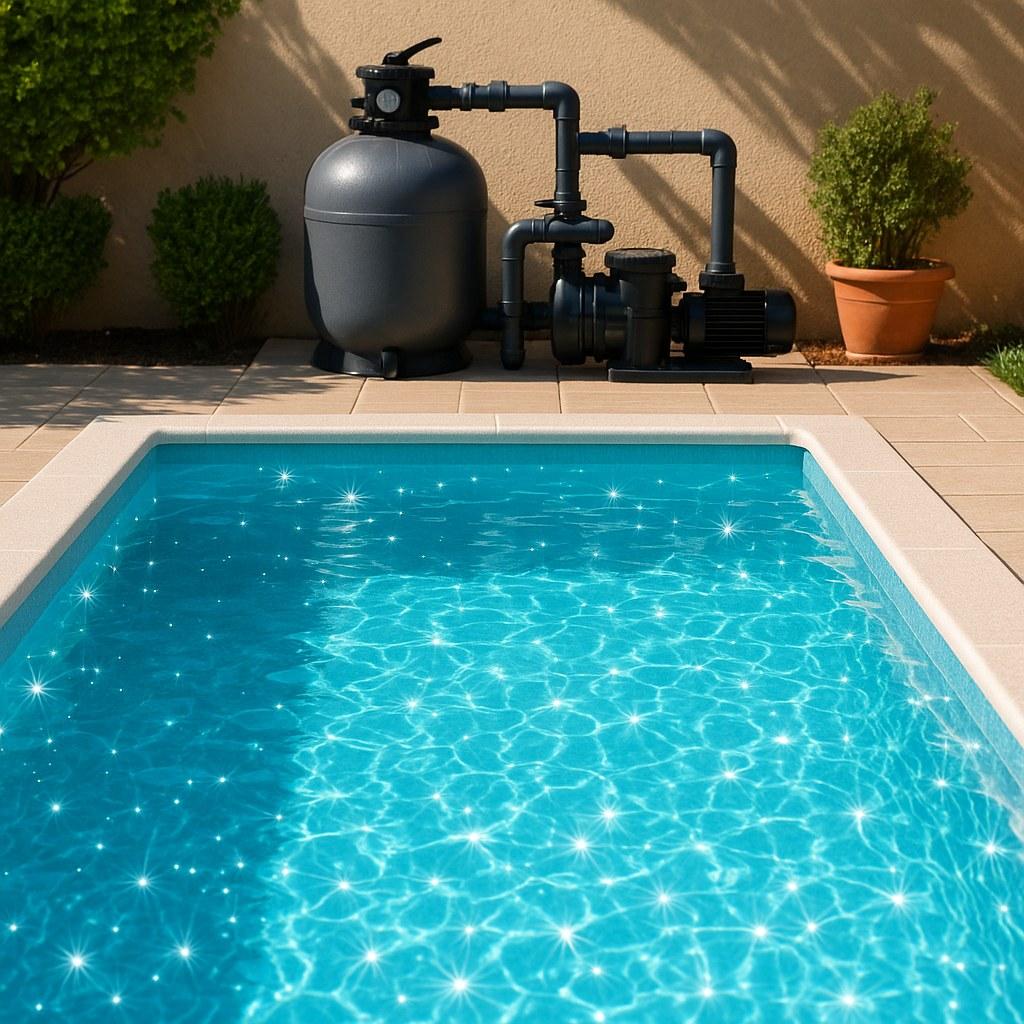
Inefficient Filtration: Your filter’s job is to trap and remove suspended particles. If it’s not working correctly, your water will never clear up.
- Dirty or Clogged Filter: A filter that's full of debris can't capture any more particles. In fact, it can start releasing them back into the water.
- Not Running the Pump Long Enough: Your pool or spa pump needs to run long enough each day to turn over the entire volume of water. If you're cutting the circulation time short, the filter doesn't get a chance to do its job.
-
Environmental Factors: Sometimes, the cause is external.
- Heavy Bather Load: Lots of people in the water means more sunscreen, lotions, oils, and organic matter, which can overwhelm your sanitizer and cloud the water.
- Recent Rainstorm: Rainwater can introduce contaminants and throw off your water's pH balance.
- Debris: Pollen, dust, leaves, and other debris can contribute to cloudiness.
Now that we know the likely suspects, let's roll up our sleeves and get to work.
Your Step-by-Step Guide to Clear Water
The first thing we need to figure out is whether we're dealing with a larger body of water (a pool) or a smaller, heated one (a spa or hot tub). The principles are the same, but the chemical dosages and timelines are different.
- Is it a spa? You'll likely see built-in seats, jets, and it will hold less than 1,000 gallons.
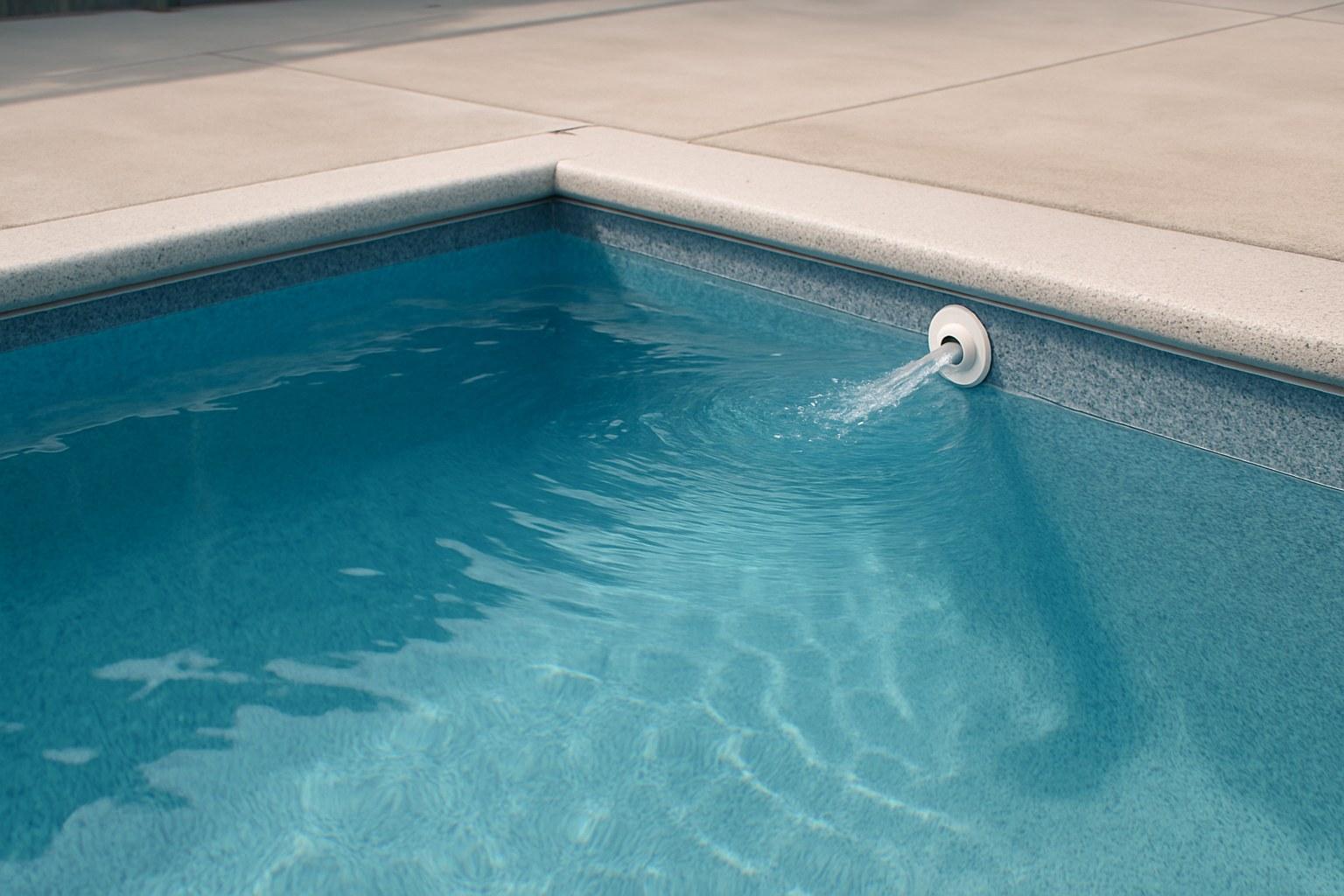
- Is it a pool? It's larger, holds thousands of gallons, and has return inlets instead of massage jets.
Once you’ve identified which you’re working on, follow the appropriate section below.
How to Fix a Cloudy Spa or Hot Tub
Spas are smaller, so their chemistry can change quickly. Let's start there.
Step 1: Test and Balance Your Spa Chemistry
First, grab your water testing kit—either test strips or a liquid reagent kit will work. And remember, always wear gloves and safety glasses when handling spa chemicals.
- Start Circulation: Turn on your spa's jets to ensure the water is circulating.
- Test the Water: Following your kit's instructions, collect a water sample and test for free chlorine (or bromine), pH, and total alkalinity.
- Analyze the Results: Compare your readings to the ideal ranges for a spa:
- Free Chlorine: 3–5 ppm (parts per million)
- Bromine: 4–6 ppm
- pH: 7.2–7.8
- Total Alkalinity: 80–120 ppm
- Adjust the Chemicals: Adjust one chemical at a time, starting with alkalinity, then pH, and finally the sanitizer. Always let the water circulate for at least 20-30 minutes between adding different chemicals.
- To Adjust Sanitizer: If your chlorine or bromine is low, you'll need to "shock" the water. Use a granular chlorine shock product, following the dosage instructions on the label to raise your sanitizer level to the ideal range. Scatter the granules evenly across the surface.
- To Adjust pH: If your pH is high or low, use a pH increaser (soda ash) or decreaser (sodium bisulfate) to bring it into the 7.2-7.8 range. Broadcast the product around the spa's perimeter.
- To Adjust Alkalinity: Total alkalinity acts as a buffer for your pH. If it's low, your pH will be unstable. Use an alkalinity increaser (sodium bicarbonate) to bring it into the 80-120 ppm range. It's best to dissolve this in a bucket of water before pouring it in.
After making your adjustments, close the spa cover and let the circulation pump run continuously for 24 hours. If imbalanced chemistry was the culprit, your water should be significantly clearer. If not, it's time to check the filter.
Step 2: Clean the Spa Filter Cartridge
A dirty filter can't do its job. Cleaning it is simple and should be done regularly.
- Turn Off the Power: Go to your spa's control panel and turn it off completely.
- Access the Filter: Locate the filter housing (it's usually a large canister inside the spa). Unscrew the lid.
- Remove the Cartridge: Lift the filter cartridge straight out.
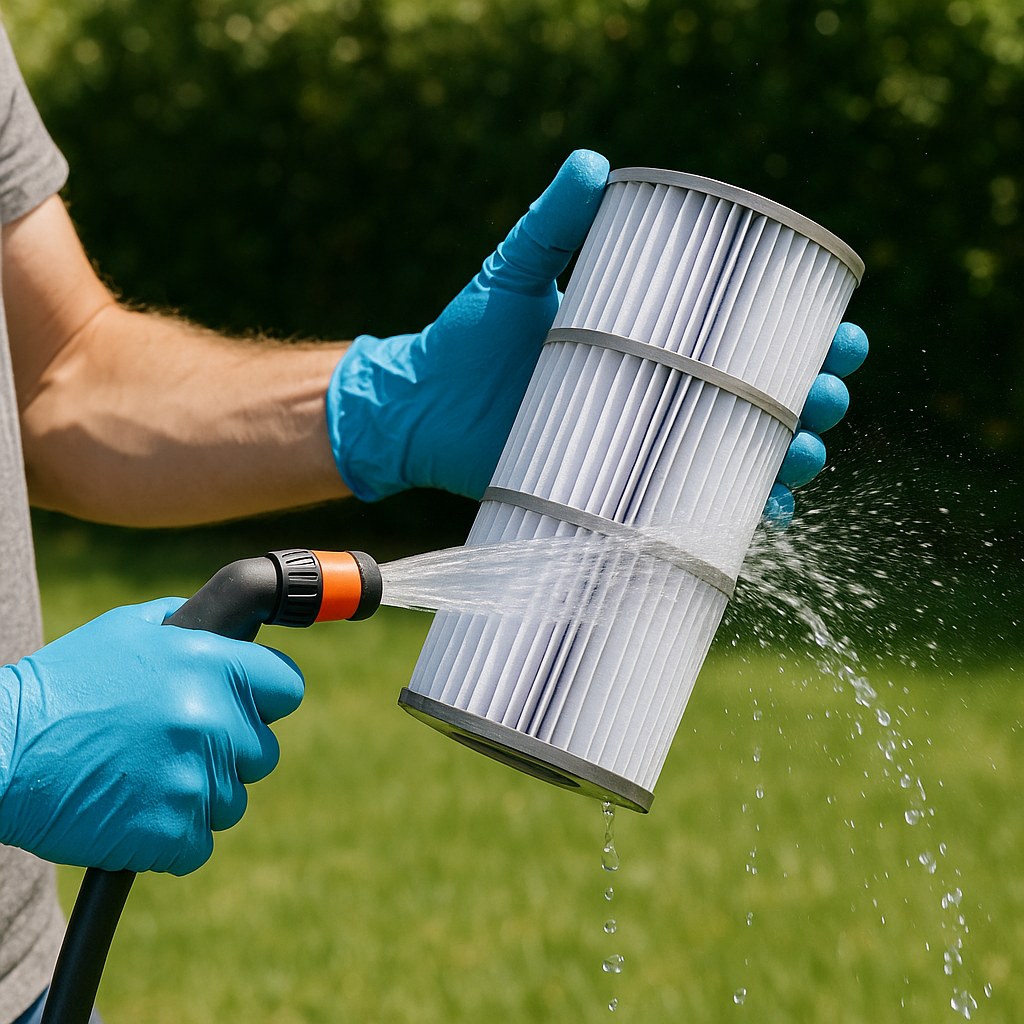
- Rinse Thoroughly: Using a garden hose with a spray nozzle, rinse the filter from top to bottom, making sure to get between each pleat. Continue until the water running off is clear.
- Inspect for Damage: Look for any tears in the fabric pleats or cracks in the end caps. If it's damaged or the pleats are flattened, it's time for a replacement.
- Reinstall and Run: Place the clean cartridge back in the housing, screw the lid on tightly, and restore power to the spa. Run the jets for at least 8 hours to help clear the remaining particles.
If your water is still cloudy after balancing the chemistry and cleaning the filter, you may have a more stubborn issue and it might be time to call a professional.
How to Fix a Cloudy Swimming Pool
The process for a pool is very similar, but on a larger scale.
Step 1: Test and Balance Your Pool Chemistry
Get your pool testing kit, gloves, and safety glasses ready.
- Ensure Circulation: Make sure your pool pump is running.
- Test the Water: Collect a sample and test for free chlorine (or bromine), pH, and total alkalinity.
- Analyze the Results: Compare your readings to the ideal ranges for a pool:
- Free Chlorine: 1–3 ppm
- Bromine: 3–5 ppm
- pH: 7.2–7.8
- Total Alkalinity: 80–120 ppm
- Adjust the Chemicals: As with a spa, adjust alkalinity first, then pH, and then your sanitizer.
- To Adjust Sanitizer: If your chlorine is below 1 ppm, you need to shock the pool, typically with granular chlorine shock. This rapidly raises the chlorine level to kill contaminants. It's best to do this at dusk, as sunlight burns off chlorine.
- To Adjust pH/Alkalinity: Use the appropriate increaser or decreaser chemicals, following the dosage instructions for your pool's volume.
After adjusting the chemistry, you must run your pool pump and filter continuously for at least 24 hours. This constant circulation is critical for mixing the chemicals and filtering out the particles.
Step 2: Clean or Backwash Your Pool Filter
If 24 hours of filtration doesn't clear the water, your filter needs attention. The process depends on the type of filter you have.
- For Cartridge Filters: The process is the same as the spa filter above. Turn off the pump, remove the cartridges, and hose them down thoroughly.
- For Sand or D.E. Filters: You'll need to "backwash" the filter. This reverses the flow of water to flush out trapped debris.
- Turn Off the Pump: Always turn the pump off before moving the multiport valve handle.
- Set to "Backwash": Turn the valve to the BACKWASH position and attach your backwash hose.
- Run the Pump: Turn the pump on. Water will rush out of the backwash hose. Run it for about 2-3 minutes, or until the water in the filter's sight glass runs clear.
- Rinse the Filter: Turn the pump off. Set the valve to RINSE. Turn the pump on and run it for about 30 seconds. This resettles the filter media.
- Return to "Filter": Turn the pump off again. Set the valve back to FILTER and turn the pump back on.
After cleaning or backwashing, continue to run the pump continuously for another 24 hours.
What if the Water is Still Cloudy?
If you've balanced your chemicals and cleaned your filter and the water is still stubbornly cloudy, you might consider using a water clarifier or flocculant.
- Clarifiers are coagulants that bind tiny particles together into larger clumps that your filter can more easily trap.
- Flocculants bind particles into much larger, heavier clumps that sink to the bottom of the pool, where they can be vacuumed to waste.
These are great secondary solutions, but they won't fix the root cause. If you're still struggling, it's a good sign that it's time to call in a professional. A pool service technician can diagnose more complex issues like high Total Dissolved Solids (TDS) or a filter problem that requires more than a simple cleaning.
The Final Word on Clear Water
Clearing up cloudy water is all about two things: balanced chemistry and effective filtration. By regularly testing your water and keeping your filter clean, you can prevent cloudiness before it starts.
Dealing with home maintenance challenges like this can feel daunting, but you've got this. And for everything else, there’s Casa. Download the Casa app today to get access to more easy-to-follow DIY guides, create a personalized maintenance schedule for your home, and connect with trusted, vetted professionals for the jobs you can't tackle alone. Let Casa help you keep your home—and your pool—in perfect shape.