The good news is you don’t have to live with it or immediately shell out for a professional cleaning. Most carpet odors can be tackled with a little detective work and some common household items. You can think of us as your expert on the other end of the line, ready to walk you through finding the source and getting your carpet smelling clean again.
In this guide, we'll break down how to identify the type of smell you're dealing with and provide you with targeted, step-by-step solutions to eliminate it.
First, Let's Play Detective: What’s Causing That Smell?
Before you start scrubbing, you need to identify the culprit. Carpet odors generally fall into a few categories:
- Moisture and Mildew: This is a common one, especially in basements or humid climates. A spill that wasn't dried properly or a hidden leak can lead to mold and mildew growth, resulting in a distinct musty smell.
- Pet Accidents: We love our furry friends, but their accidents can leave behind powerful, lingering odors caused by uric acid, which doesn’t break down easily.
- Spills and Stains: Food, drinks, and other organic materials can start to decompose within carpet fibers, leading to unpleasant smells.
- General Grime: Over time, dust, dirt, and everyday foot traffic can create a general stale or dusty odor that permeates the entire carpet.
The key to success is matching the treatment to the problem. Let’s get started by pinpointing exactly where that smell is coming from.
Step 1: The Initial Assessment - Finding Ground Zero
You can’t fix a smell if you don’t know where it’s coming from. Is it one specific spot, or is the entire room affected?
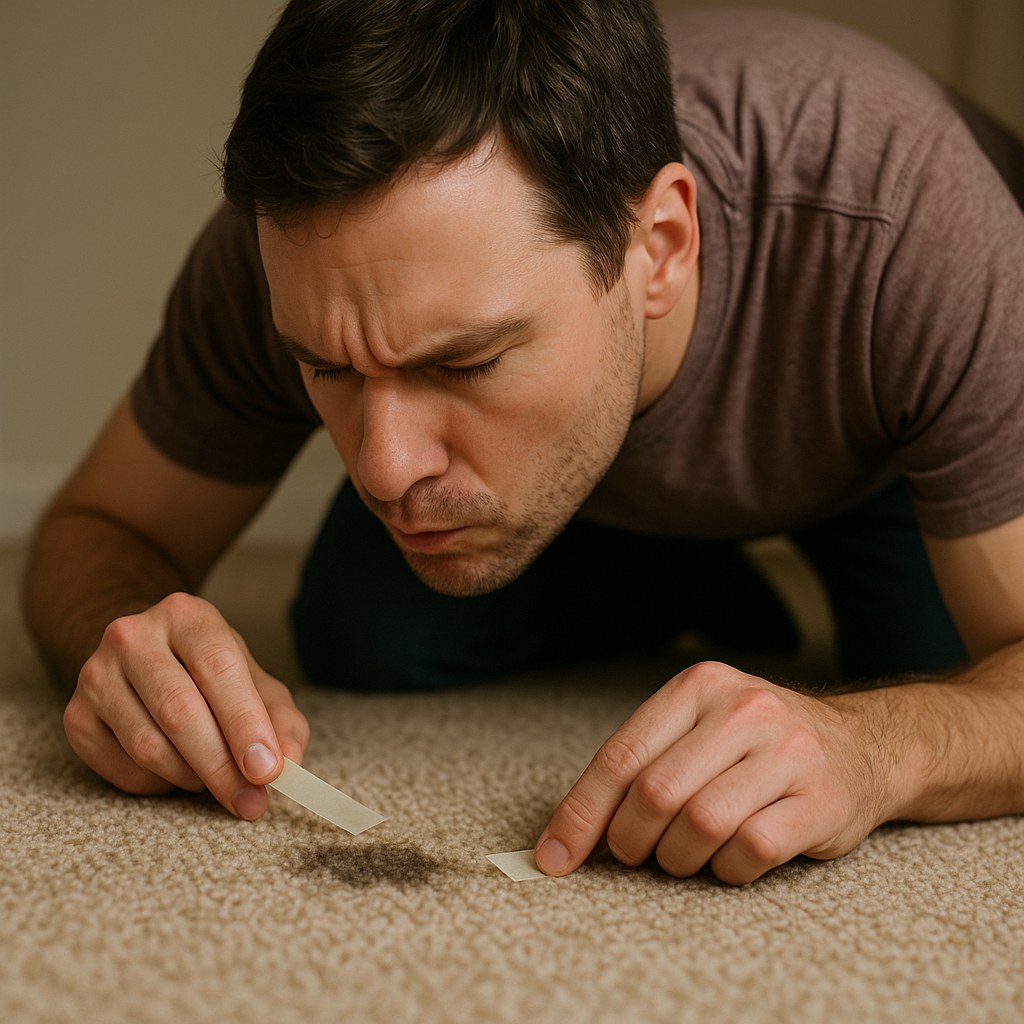
- Do a Slow Walk-Through: Walk slowly around the room, getting down closer to the carpet level if you need to. Use your nose to determine where the smell is strongest.
- Mark the Spot: Once you find a potential source, mark it with a small piece of masking tape. This will save you from having to sniff it out again later.
Once you’ve done your initial sweep, you’ll have your answer: is the smell limited to one or more small areas, or does it seem to be coming from the entire carpet? This distinction will guide your next steps.
Path 1: How to Fix Localized Carpet Smells
If you've traced the odor to a specific spot, you're in luck! This is usually the easiest type of carpet smell to fix. Now we just need to figure out what kind of spot it is.
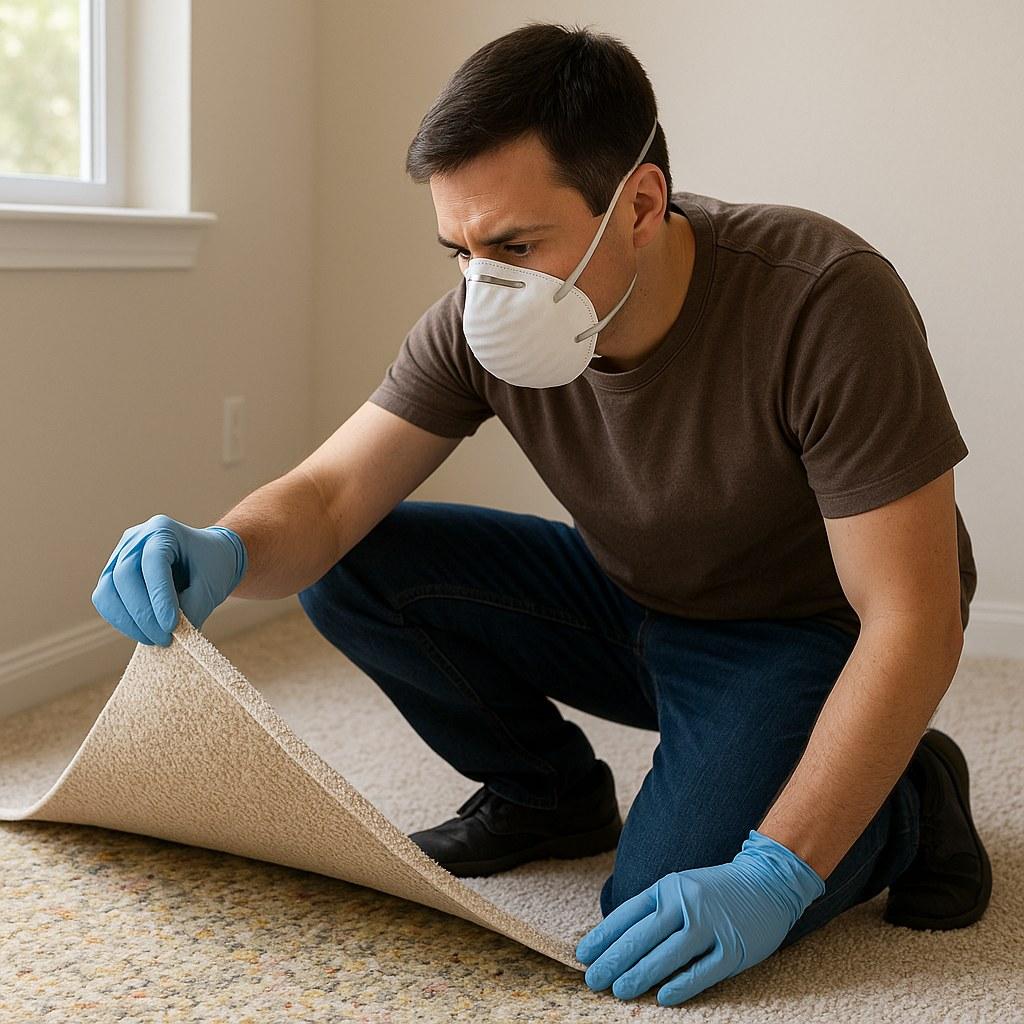
Kneel down at the marked spot and use the back of your hand to touch the carpet fibers. Does it feel cool or damp?
If the Spot is Damp: Localized Moisture Treatment
A damp spot is a breeding ground for mold and mildew, so it’s important to act fast. That musty smell is a tell-tale sign of bacterial growth.
What You'll Need:
- Rubber gloves and an N95 mask
- Clean towels
- Baking soda
- White vinegar
- A spray bottle
- A soft-bristled brush
- A fan
Step-by-Step Instructions:
- Safety First: Put on your gloves and mask. You don’t want to be breathing in potential mold spores.
- Blot, Don't Rub: Place a thick, clean towel over the damp spot and press down firmly (you can even stand on it) to absorb as much moisture as possible. Repeat with dry sections of the towel until you can't pull up any more water.
- Apply Baking Soda: Sprinkle a generous, even layer of baking soda over the entire damp area. Baking soda is a fantastic natural deodorizer that will absorb both moisture and odors.
- Add Vinegar: Fill your spray bottle with a 1:1 mixture of white vinegar and water. Lightly mist the baking soda. You’ll see it start to fizz and bubble—that’s the chemical reaction that’s helping to break down the odor-causing bacteria.
- Gentle Scrub: Let the mixture fizz for about 5 minutes. Then, take your soft brush and gently scrub the area in small circles to work the solution deep into the carpet fibers.
- Blot Again: Cover the area with a fresh towel and press down firmly to absorb the cleaning solution and loosened grime.
- Dry It Completely: This is the most crucial step. Aim a fan directly at the treated spot and leave it running for several hours, or until the carpet feels completely dry to the touch. Lingering moisture will just bring the smell right back.
If the smell is gone once the spot is fully dry, you're all set! If the odor persists, it could be a sign that moisture has penetrated the carpet padding or even the subfloor. At this point, it’s wise to call a professional carpet cleaner to assess for deeper issues.
If the Spot Isn't Damp (But You Have Pets): Localized Pet Odor Treatment
Pet urine contains uric acid crystals that don’t dissolve in water, which is why the smell can return on humid days even after you’ve cleaned it. This method tackles both the stain and the odor.
What You'll Need:
- Rubber gloves
- Clean towels
- Dish soap
- A bowl
- Baking soda
- White vinegar
- A fan
Step-by-Step Instructions:
- Blot Up Excess: If the spot is fresh, blot it with a clean towel to absorb as much liquid as you can.
- Create a Cleaning Solution: Mix one tablespoon of clear dish soap with one cup of warm water.
- Scrub Gently: Dip a brush in the soapy solution and gently scrub the spot. The goal is to loosen the stain from the fibers without pushing it deeper.
- Rinse and Blot: Dampen a new, clean towel with plain water and blot the area to "rinse" out the soap. Then, blot with a dry towel to remove as much moisture as possible.
- Bring on the Fizz: Sprinkle a generous amount of baking soda over the spot. Then, slowly pour about a half-cup of white vinegar over the baking soda. Let it fizz for about 5 minutes. This reaction helps neutralize the ammonia in pet urine.
- Final Blot and Dry: Blot the area one last time with a fresh towel, then aim a fan at the spot until it's completely dry.
If the smell remains after drying, you may need a more powerful, specialized product. Look for an enzymatic cleaner at a pet store, or call a professional carpet cleaner who has experience with pet odor removal.
If the Spot is Dry and Not Pet-Related: Localized General Odor Treatment
For mystery spots or old spills (like milk or juice), a simple deodorizing treatment is often all you need.

What You'll Need:
- Vacuum
- Baking soda
- White vinegar
- A spray bottle
Step-by-Step Instructions:
- Vacuum First: Thoroughly vacuum the area to remove any loose dirt or debris.
- The Baking Soda Trick: Sprinkle a very liberal layer of baking soda over the smelly spot. Don’t be shy!
- Let it Sit: Allow the baking soda to sit for at least an hour—overnight is even better. It will absorb the odor molecules from the carpet fibers.
- Vacuum Again: Carefully vacuum up all the baking soda.
- Light Vinegar Mist: Mix a solution of one part vinegar to three parts water in a spray bottle. Lightly mist the area. The vinegar smell will be strong at first but will disappear as it dries, taking other odors with it.
- Air Dry: Let the spot air dry completely. Open a window to improve ventilation.
This simple process is often enough to eliminate lingering food or dirt smells. If not, it may be time to call a professional for a targeted deep clean.
Path 2: How to Tackle Pervasive, Room-Wide Odors
If the smell seems to be everywhere, the job is bigger, but definitely not impossible. First, assess the room for signs of widespread moisture—check for leaks near baseboards, windows, or radiators, and note if the air feels damp or heavy.
If the Room is Humid or the Carpet is Damp: Pervasive Moisture Treatment
Widespread dampness is a serious issue that needs immediate attention to prevent large-scale mold growth.
What You'll Need:
- Rubber gloves and an N95 mask
- A wet/dry shop vacuum
- A dehumidifier
- Fans
- Baking soda
Step-by-Step Instructions:
- Extract Water: Rent a shop vacuum and use it to extract as much water as possible from the entire carpet. Work in slow, overlapping lines.
- Set Up Drying Equipment: Place a dehumidifier in the center of the room and set it to 45% relative humidity. Position multiple fans on opposite sides of the room to create cross-ventilation, ensuring air flows over the entire carpet surface.
- Deodorize with Baking Soda: Once the surface feels less saturated, sprinkle a light layer of baking soda over the entire carpet.
- Wait and Dry: Let the dehumidifier and fans run continuously for at least 24-48 hours. Allow the baking soda to sit for at least 12 hours during this time before vacuuming it up.
If a musty smell remains after the carpet is bone-dry, you should contact a water-damage restoration specialist. They can check for mold under the carpet and padding, which can be a serious health hazard.
If the Carpet is Dry: Pervasive General Odor Treatment
For general staleness from smoke, cooking, or years of use, a full carpet deep clean is the best solution.
What You'll Need:
- A high-quality vacuum
- A carpet cleaning machine (you can rent one)
- Carpet shampoo
- Baking soda
Step-by-Step Instructions:
- Thorough Vacuuming: First, give your carpet the most thorough vacuuming of its life. Go slowly in overlapping rows, and then do it again in the opposite direction to lift dirt from all sides of the fibers.
- Deep Clean: Rent a carpet cleaner from a local hardware or grocery store. Follow the machine’s instructions, filling it with hot water and the recommended amount of carpet shampoo.
- Work in Sections: Clean the carpet in straight, slightly overlapping lines. Try not to oversaturate the carpet, as this can lead to moisture problems.
- Dry Completely: Allow the carpet to air-dry for at least 8-12 hours. Keep the room well-ventilated by opening windows or using fans.
- Final Deodorizing Pass: Once the carpet is completely dry, sprinkle baking soda evenly across the entire surface. Let it sit overnight.
- Final Vacuum: The next day, vacuum up all the baking soda. Your carpet should look and smell significantly fresher.
When to Call a Professional
While DIY methods are effective for many issues, some jobs require an expert. The average cost to have a carpet professionally cleaned ranges from $125 to $250, according to HomeAdvisor. It's time to call in a pro if:
- The odor returns quickly after cleaning.
- You suspect a serious mold or mildew problem.
- The smell is from a source that requires specialized chemical treatment (like severe pet damage).
- You've tried everything and the smell just won't budge.
Your Partner in Home Maintenance
Fixing a smelly carpet is a satisfying DIY project that can completely transform a room. By playing detective and following the right steps, you can get your home smelling fresh and clean again.
For more helpful guides, maintenance reminders, and a direct line to trusted professionals for those jobs you can’t handle alone, download the Casa app today. We’re here to make homeownership easier, one step-by-step fix at a time.