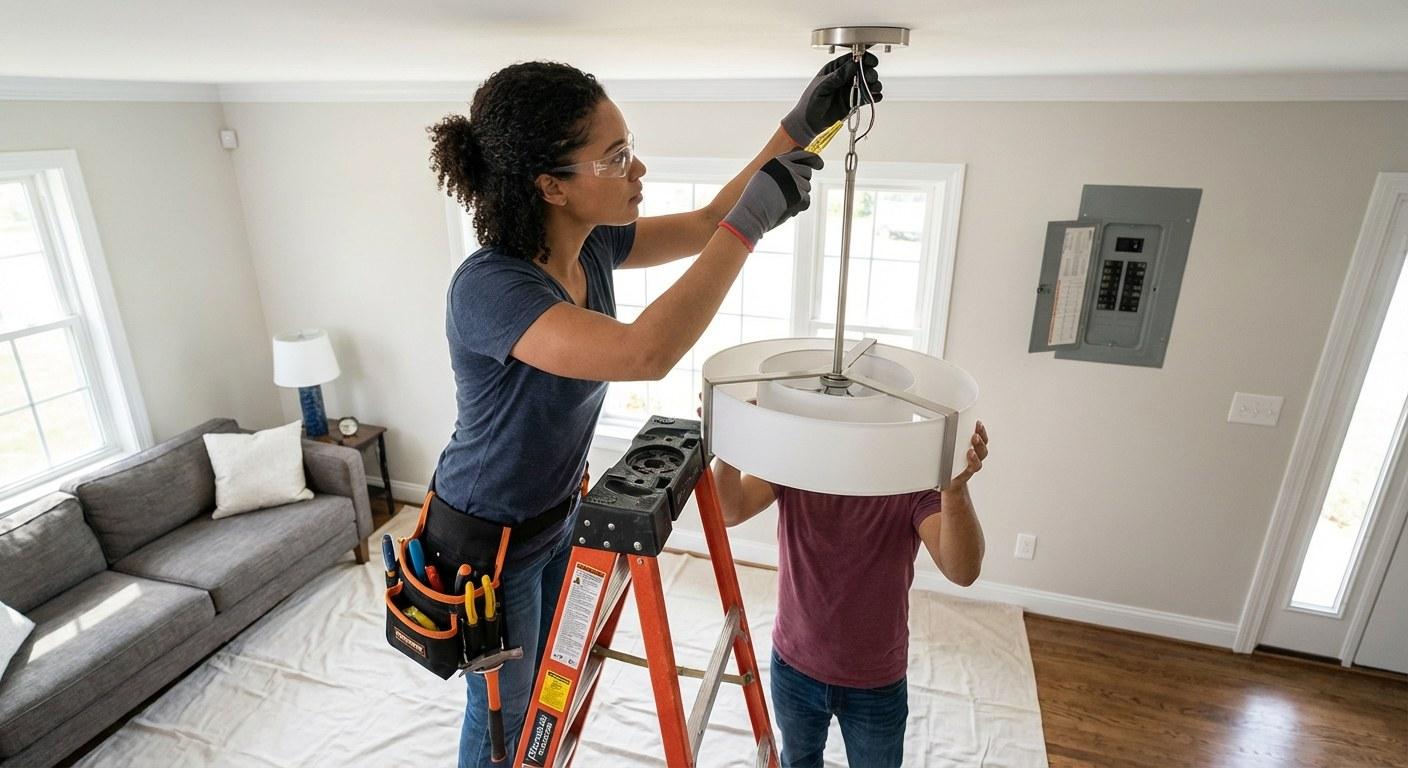
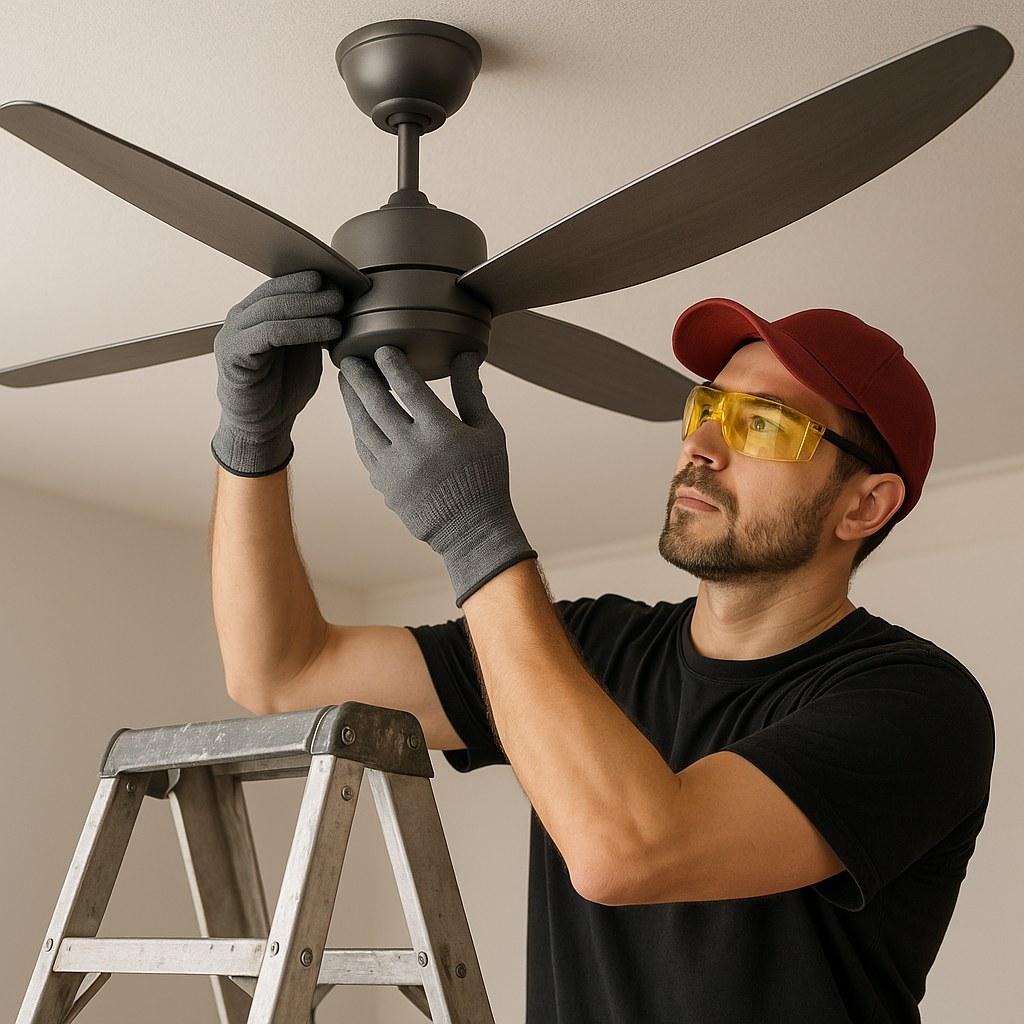
The key to this project isn’t just connecting a few wires—it’s about safety from start to finish. The most important considerations are ensuring the power is completely off and confirming that the electrical box in your ceiling is strong enough to support the weight of your new fixture.
This guide will walk you through the process step-by-step, helping you know what’s safe to do yourself and when it’s time to call a professional electrician.
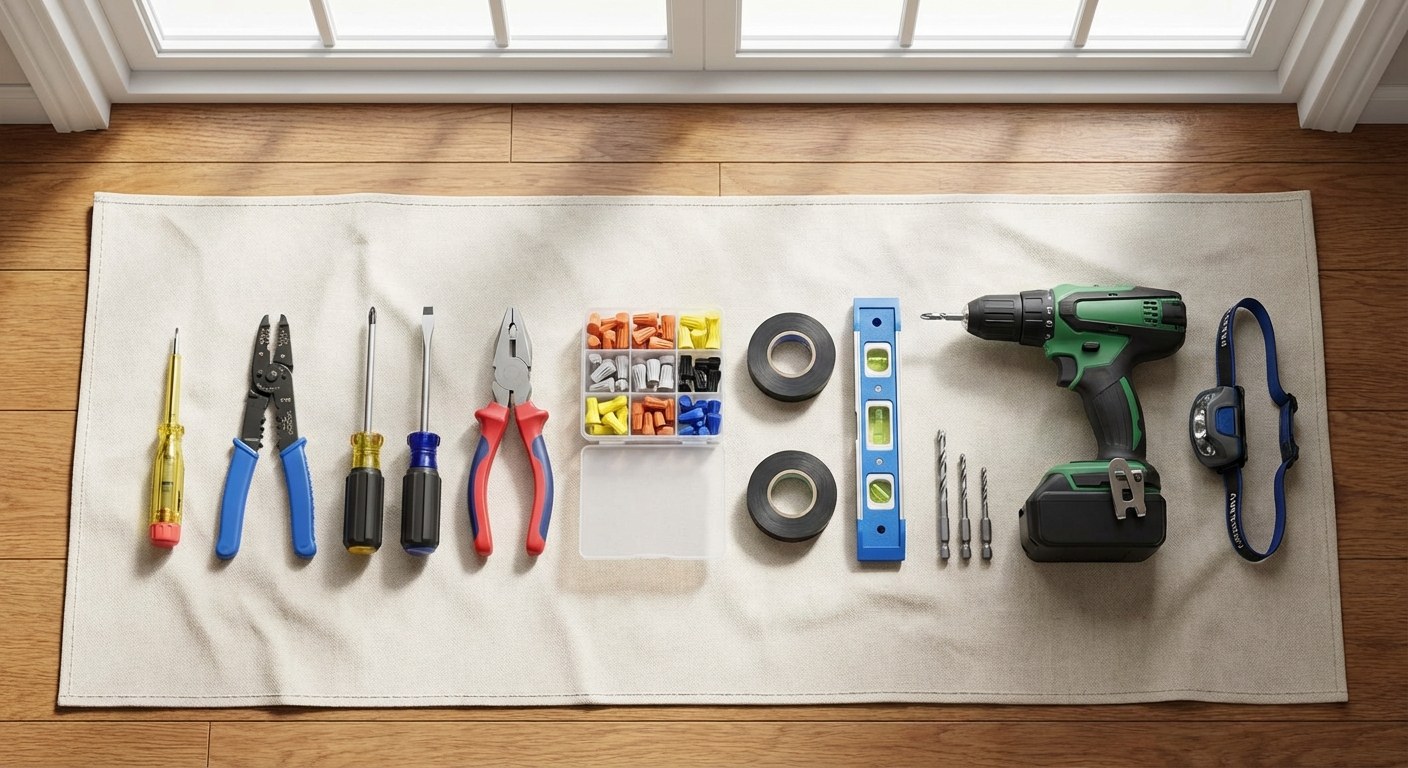 IMAGE ALT: Tools needed for a ceiling fixture installation, including a screwdriver, ladder, and voltage tester.
Before You Begin: Safety and Preparation
Working with electricity requires your full attention. Never rush, and always prioritize safety over speed. Before you start, gather your tools and make sure your workspace is clear.
Crucial Safety Step: Turn Off the Power
This is the most important part of the entire process. Do not skip or shortcut these steps.
- Find your electrical panel. This is usually in a garage, basement, utility closet, or hallway.
- Locate the correct circuit breaker. The panel door should have a directory labeling which breaker controls which room or area. Find the one for the room where you'll be working.
- Turn the breaker off. Flip the switch to the "OFF" position. This should cut power to the fixture.
- Verify the power is off. This is a critical check. Use a non-contact voltage tester (an inexpensive tool available at any hardware store) and hold its tip against the wall switch that controls the fixture. If the tester remains silent and does not light up, the power is off. If it beeps or lights up, the circuit is still live. Go back to the panel and try another breaker. If you cannot confidently shut off the power, stop here and call a licensed electrician.
Tools and Materials Checklist:
- Sturdy step ladder
- Non-contact voltage tester
- Phillips and flathead screwdrivers
- Wire strippers
- New wire connectors (often called wire nuts)
- Your new ceiling fixture and all parts from the box
Step 1: Remove the Old Fixture
If you're replacing an existing fixture, you’ll need to remove it first. It can be helpful to have a second person to hold the fixture while you work.
- Place your ladder on a stable, level surface directly below the fixture.
- Remove any glass shades, covers, or light bulbs from the old fixture to make it lighter and less fragile.
- Loosen the mounting screws that hold the fixture’s base (or canopy) to the ceiling. Support the fixture with one hand as you do this.
- Carefully lower the fixture a few inches to expose the wiring inside the ceiling box.
- Confirm the power is off again. Touch the tip of your non-contact voltage tester to each wire connection. It should not light up or beep.
- Unscrew the wire connectors to separate the fixture’s wires from the house wires. There will typically be three connections: black to black, white to white, and a bare copper or green ground wire.
- Set the old fixture aside.
Step 2: Inspect the Ceiling Box
With the old fixture removed, you can see the ceiling box (also called an electrical or junction box). This box houses the wiring and, more importantly, supports the fixture's weight. Not all boxes are created equal, and using the wrong one is a serious safety hazard.
- For a Ceiling Fan (any weight): A ceiling fan’s movement creates dynamic stress, so it requires a special box. Look inside the box for a label that says “Fan Rated” or “Acceptable for Fan Support.” It should also feel completely solid when you gently wiggle it.
- For a Heavy Light or Chandelier (over 35-50 lbs): Heavy fixtures also need extra support. The box should be labeled “Fan Rated” or list a specific weight rating (e.g., “Rated for 50 lbs”). It must be firmly secured to a ceiling joist or support brace.
- For a Basic Light Fixture (under 35 lbs): Most standard ceiling boxes are sufficient for lightweight fixtures, as long as they are securely mounted.
When to Stop and Call a Professional
This inspection is your most important decision point.
If you are installing a ceiling fan and your box is not fan-rated, stop.
If you are installing a heavy fixture and the box is not rated for its weight, stop.
In these cases, the box must be replaced with an appropriate heavy-duty or fan-rated one. This is a job for a licensed electrician, who can ensure it's installed safely and up to code. It's also time to call an electrician if you're installing a fixture in a location that has never had one, as new wiring will be needed.
Step 3: Install Your New Fixture
Always read and follow the manufacturer's instructions that came with your specific fixture. The steps below are a general guide.
Wiring Basics
You will typically connect three sets of wires:
- Hot Wire: Connect the black wire from the ceiling to the black wire from the fixture.
- Neutral Wire: Connect the white wire from the ceiling to the white wire from thefixture.
- Ground Wire: Connect the bare copper or green wire from the ceiling to the green or bare copper wire from the fixture.
To make a connection, hold the bare ends of the two wires together and twist a wire connector over them clockwise until it’s tight. Give a gentle tug on each wire to ensure it’s secure.
For a Basic Light Fixture:
- Attach the new fixture's mounting strap (a small metal plate) to the ceiling box with the provided screws.
- Connect the wires as described above.
- Carefully tuck the wires up into the ceiling box.
- Align the fixture’s base with the screws on the mounting strap and tighten the decorative nuts until the base is flush with the ceiling.
- Install the recommended light bulbs and attach any shades or covers.
For a Ceiling Fan or Heavy Chandelier:
- Attach the heavy-duty mounting bracket to your fan-rated ceiling box. Make sure it is secure.
- Assemble the fan motor, downrod, and canopy on the floor, following the manual. For a chandelier, you may need to attach a chain and weave the wires through it.
- Lift the fixture and hang it from the mounting bracket. Many ceiling fans have a slot or hook that allows the unit to hang freely while you connect the wires. This is where a helper is invaluable.
- Connect the wires as described in the manual (fans may have extra wires for the light kit, usually blue).
- Secure the canopy to the mounting bracket, tucking the wires inside.
- Attach the fan blades or chandelier crystals, and install light bulbs.
Step 4: Restore Power and Test
Once the fixture is fully installed, it's time to test your work.
- Go back to your electrical panel and flip the circuit breaker back to the "ON" position.
- Turn on the wall switch.
- Test all functions. If it’s a light, ensure it turns on. If it’s a fan, test all the speed settings and the light kit.
If the fixture doesn't work, turn the power off at the breaker again and double-check your wire connections. If you’re unsure about anything, it’s always safest to call an electrician.
Typical Time and Cost
- DIY Time: A simple light fixture swap can take 30 to 60 minutes. A ceiling fan or complex chandelier might take 1 to 2 hours.
- Professional Cost: Hiring an electrician for a standard fixture installation typically ranges from $150 to $350. If a new, fan-rated box or new wiring is needed, the cost will be higher.
Keeping track of home improvement details, like which circuit breaker goes to which room, is simple with a home management tool. The Casa app can help you organize these notes so you’re always prepared for the next project.
You’re Ready
Installing a new ceiling fixture is a very achievable project when you follow the steps methodically and prioritize safety. By checking your ceiling box and verifying the power is off, you can confidently tackle this update and enjoy the results.
For more clear, step-by-step guidance on maintaining and improving your home, download the Casa app. It's the always-on advisor that helps you feel confident and in control of your home.