Many homeowners see Private Mortgage Insurance (PMI) as a penalty for not having a 20% down payment. It’s better to reframe that thinking. PMI is not a penalty; it’s the tool that enabled you to buy your home with less money down. It’s a temporary cost, and you have more control over it than you might think.
Let’s walk through what PMI is, how it works, and the specific steps you can take to remove it from your monthly payment for good.
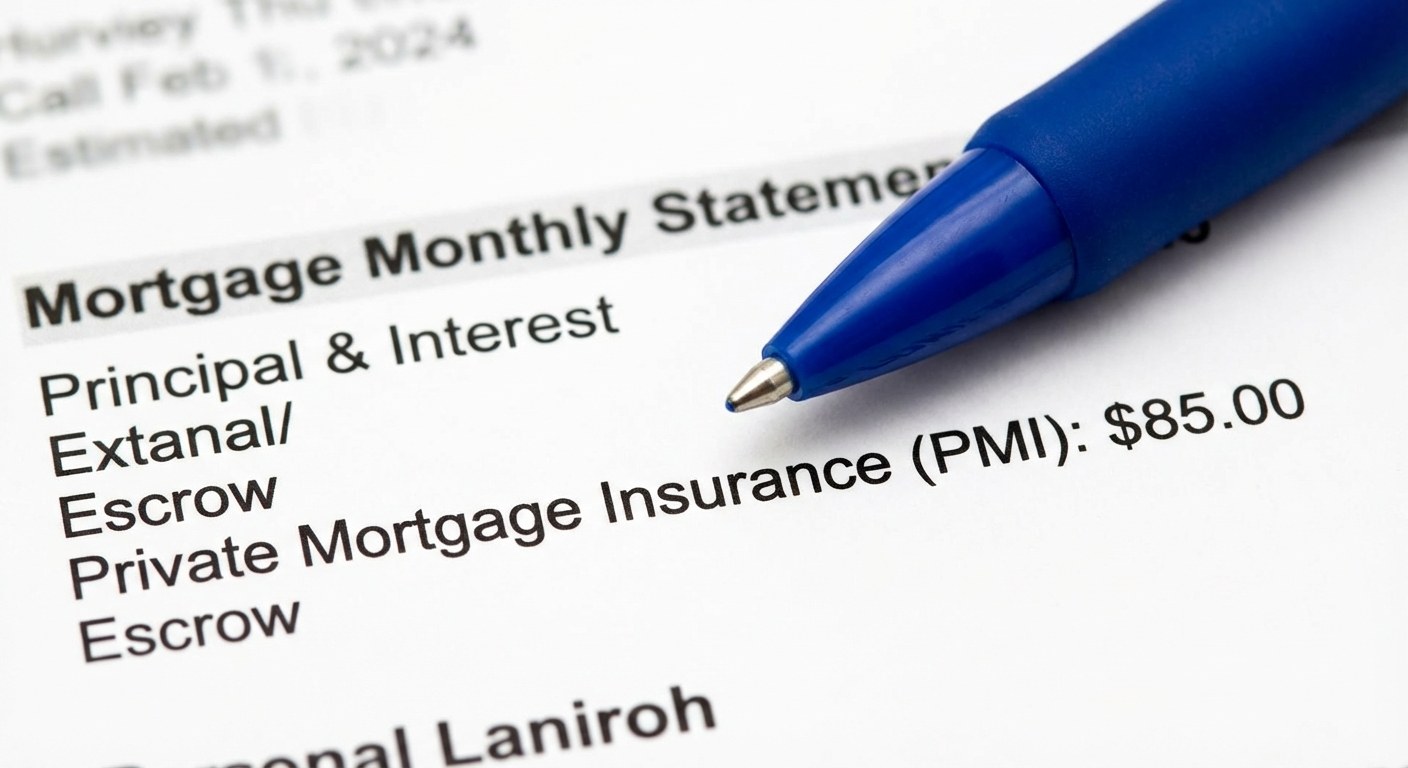 Image Alt: A close-up of a mortgage bill highlights the Private Mortgage Insurance (PMI) line item.
What Is Private Mortgage Insurance?
Private Mortgage Insurance is a type of insurance policy that protects your lender, not you. If a homeowner with a low down payment is unable to make their mortgage payments, PMI helps the lender recoup their losses.
Lenders see a down payment of less than 20% as a higher risk. To offset this risk, they require borrowers to pay for a PMI policy. This allows them to offer loans to a wider range of buyers, which is how many people are able to purchase their first home.
It’s important to distinguish PMI, which is used for conventional loans, from the insurance on government-backed loans. FHA loans, for example, have a Mortgage Insurance Premium (MIP), which follows a different set of rules.
The Key to Removing PMI: Loan-to-Value (LTV) Ratio
The entire process of removing PMI revolves around one central concept: your loan-to-value (LTV) ratio.
LTV is a simple percentage that compares your outstanding mortgage balance to your home’s value.
- Formula: LTV = (Current Loan Balance / Home's Value) x 100
For example, if your loan balance is $320,000 and your home’s value is $400,000, your LTV is 80%.
This 80% LTV mark is your primary target. Once you reach it, you are generally no longer considered a high-risk borrower, and you can begin the process of removing PMI. You can reach this goal in two ways:
- Paying down your loan principal through your regular monthly payments.
- Your home’s value increasing through market appreciation or improvements.
How to Remove PMI on a Conventional Loan
If you have a conventional loan, federal law provides clear paths for getting rid of PMI. The primary law governing this is the Homeowners Protection Act of 1998.
Automatic Termination
By law, your lender or mortgage servicer must automatically terminate your PMI coverage on the date your loan balance is scheduled to reach 78% LTV of the home's original value. This is based on your initial amortization schedule—the table that shows how your loan is paid off over time. You must be current on your payments for this to happen automatically.
Homeowner-Requested Removal
You don't have to wait for the 78% mark. You have the right to request that your lender cancel PMI when your loan balance reaches 80% LTV of the original value.
Here are the typical steps for a homeowner-requested removal:
- Check Your Status: Review your latest mortgage statement to find your current principal balance. Divide that by your home's original purchase price to estimate your LTV.
- Contact Your Lender: Call your mortgage servicer and ask about their specific procedure for PMI cancellation. They will confirm the requirements and provide any necessary forms.
- Submit a Written Request: You will likely need to submit a formal request in writing.
- Meet the Conditions: To be eligible, you generally must have a good payment history (no late payments in the last year) and be current on your loan.
Using Your Home's Current Value
What if your home's value has increased significantly since you bought it? You may be able to reach the 80% LTV threshold much faster.
In this case, you can request PMI removal based on your home’s current market value. The process is similar, but with one key difference: the lender will require a new home appraisal, and you will have to pay for it (typically a few hundred dollars).
Most lenders also have "seasoning" requirements, meaning you must have held the mortgage for a certain period, often two to five years, before you can use an updated appraisal for PMI removal.
What About FHA Loans and MIP?
The rules for removing the Mortgage Insurance Premium (MIP) on an FHA loan are much stricter and depend on when you took out the loan and how much you put down.
According to the U.S. Department of Housing and Urban Development (HUD), the rules for FHA loans originated after June 3, 2013, are:
- If your down payment was less than 10%: You will pay MIP for the entire life of the loan. The only way to remove it is to refinance into a conventional mortgage once you have sufficient equity.
- If your down payment was 10% or more: You will pay MIP for the first 11 years of the loan. After that, it is automatically cancelled.
If you have an FHA loan, it's crucial to understand these terms. For many, refinancing is the most practical path to eliminating monthly mortgage insurance payments.
Planning Your PMI Removal Strategy
Getting rid of PMI is a tangible financial goal that can free up a significant amount of cash in your monthly budget. Here’s how to plan for it.
Understand Your Loan
The very first step is to confirm your loan type. Look at your original closing documents. Is it a Conventional loan or an FHA loan? This determines your path forward.
Track Your Equity
Your home equity is the foundation of this process. Keep an eye on your mortgage statements to watch your loan balance shrink. You can also monitor local real estate trends to get a sense of your home's potential appreciation. Keeping these documents and notes organized in a home management app like Casa can make it easy to track your progress over time.
Consider Extra Payments
If you’re in a position to do so, making extra payments toward your loan's principal can speed up your journey to 80% LTV. Be sure to specify with your lender that any extra funds should be applied directly to the principal balance.
Communicate with Your Lender
When you think you’re getting close to the 80% LTV mark, contact your mortgage servicer. Ask for their specific PMI removal requirements in writing. Knowing their exact process ahead of time will prevent surprises and help you submit your request correctly the first time.