Outdoor living projects are common, but they involve managing weather, property lines, and structural safety. By breaking the process down step by step, you can approach this renovation with confidence and keep the project manageable.
Defining Your Project Scope
The first step in planning is deciding whether you are building a deck or a patio. While the terms are sometimes used interchangeably in casual conversation, they are very different projects.
A patio is built directly on the ground—often called "on-grade." It is typically made from poured concrete, natural stone, or interlocking pavers. Patios are ideal for flat yards and are generally less structurally complex.
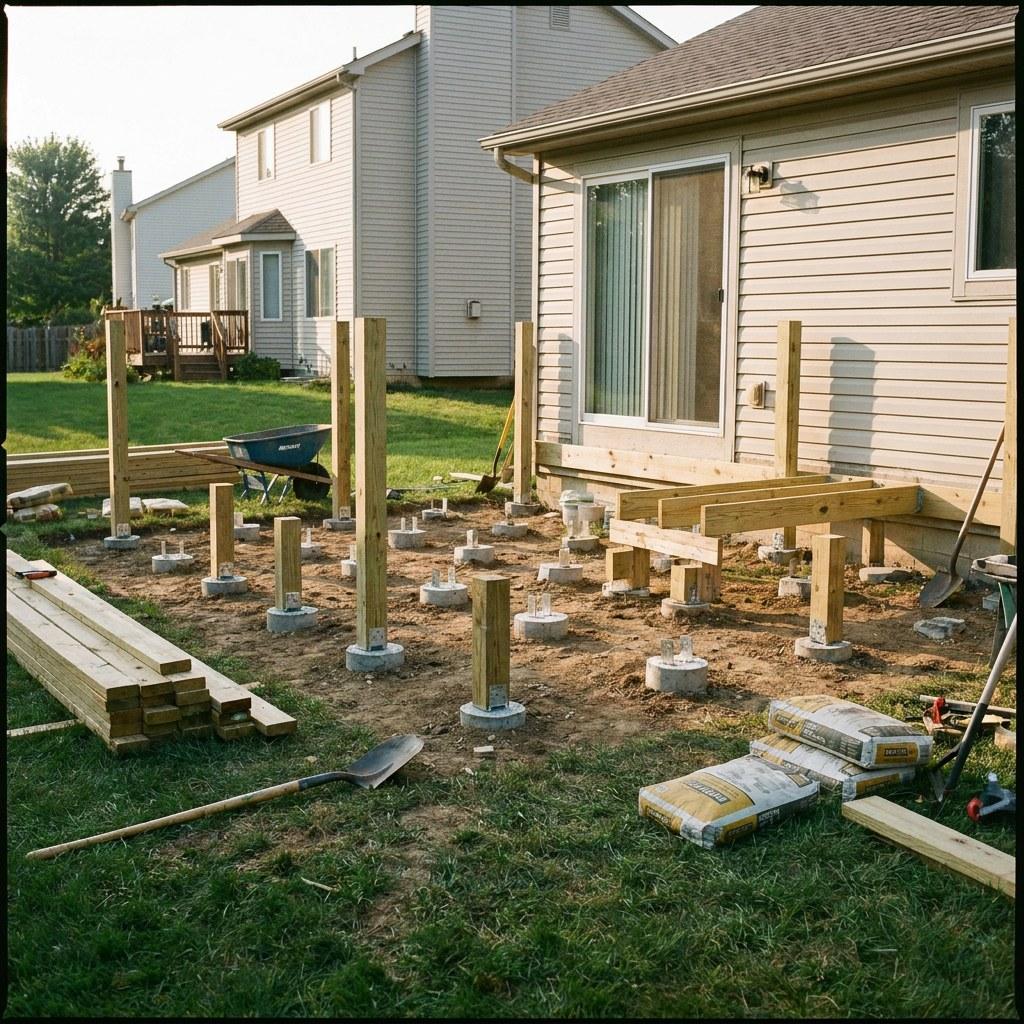
A deck is an elevated platform usually made of wood or composite materials. Decks require structural supports, known as footings, dug into the ground. They are ideal for sloped yards or homes where the back door sits high off the ground.
When defining your scope, be mindful of how quickly the project can grow. A standard 12-by-12-foot square deck is a straightforward job. However, adding built-in seating, multiple staircases, pergolas, custom lighting, or outdoor kitchens will significantly expand your timeline, budget, and the level of expertise required.
Budget Ranges and Variability
Because outdoor projects vary so widely in size and material, the final price tag can range from a few thousand dollars to tens of thousands.
For a basic patio, you can expect estimates to land roughly between $3,000 and $10,000. A standard wooden deck usually ranges from $5,000 to $15,000.
These numbers fluctuate based on a few key factors:
- Materials: For decks, pressure-treated pine is the most budget-friendly option. Cedar looks beautiful but costs more. Composite decking (boards made from a blend of wood fibers and plastic) requires far less maintenance over the years but comes with a much higher upfront cost. For patios, plain poured concrete is the most affordable, while stamped concrete or natural stone pavers are more expensive.
- Site Preparation: If your yard requires extensive leveling or tree removal before the work begins, your costs will rise.
- Elevation: The higher a deck is off the ground, the more structural support, railing, and staircase materials it requires.
Timeline Expectations
A common misunderstanding is that a deck or patio can be built in a weekend. While the physical construction might only take one to three weeks, the overall timeline is much longer.
Planning, finalizing the design, and gathering quotes generally takes two to four weeks. If your project requires a permit, local government approval can take anywhere from a few weeks to a few months. Once work begins, expect weather to play a role. Rain can delay digging footings or pouring concrete. It is wise to start planning in the late winter or early spring if you want to use your new space by summer.
Hidden Costs and Common Surprises
Outdoor renovations frequently uncover unexpected challenges. Preparing for these financially will help keep your stress levels low.
- Grading and Drainage: Your yard must slope away from your house so water does not pool against your foundation. Altering the land for a patio might require installing underground drainage pipes, which adds to the cost.
- The Ledger Board: If your deck is attached to your house, it connects via a piece of lumber called a ledger board. If the wood on your home behind the ledger board is rotting, it will need to be replaced before the deck can be safely attached.
- Buried Utilities: Digging footings or leveling land might reveal buried irrigation pipes, electrical wires, or plumbing that must be moved.
- Material Price Fluctuations: The cost of lumber and concrete can change from month to month based on supply chain conditions.
Permit and Code Considerations
Most attached decks, elevated decks, and large patios require a building permit from your local municipality. Permits ensure the structure can hold weight safely and will not collapse.
Even if a permit is not required for a simple ground-level patio, you still need to be aware of "setbacks." Setbacks are local rules dictating how close to your property line you are legally allowed to build. Furthermore, if you live in a community with a Homeowners Association (HOA), you will likely need their approval before breaking ground.
Contractor Selection Guidance
Because a poorly built deck is a major safety hazard, hiring a specialized contractor is highly recommended. Look for professionals who focus specifically on outdoor living structures rather than general handymen.
Request three separate quotes. When reviewing them, make sure each contractor includes the cost of pulling permits and managing site cleanup. A reliable contractor will be transparent about their warranty and happy to provide references from similar projects in your area. You can easily keep track of these contractor quotes, reference photos, and permit documents within your Casa app to stay organized during the planning phase.
How to Decide If This Renovation Is Worth It
Deciding to move forward with an outdoor renovation comes down to balancing your lifestyle needs against the financial commitment.
Unlike a necessary repair—such as replacing a leaking roof—a deck or patio is discretionary. While these projects do add appeal to your home and can increase its market value, they rarely return 100% of their cost when you sell. Therefore, the true return on investment is your personal enjoyment. If you plan to stay in your home for several years and know you will regularly use the space for dining, hosting, or relaxing, the investment is likely worth it.
Risk Boundaries
Knowing when to tackle a project yourself, when to wait, and when to hire a professional is the key to a smooth renovation.
- Safe to try yourself: If you are physically capable and have the time, building a small, simple, on-grade gravel or paver patio is a manageable DIY project.
- Worth waiting: If you are planning during the peak summer season, contractors may be fully booked or charging premium rates. It may be wise to wait until fall to sign a contract for a spring build.
- Time to stop and call a professional: Any deck that is elevated off the ground, requires footings to be dug, or attaches directly to your home's structure should be handled by a licensed professional. Similarly, if you begin digging a patio and hit buried utility lines, stop immediately and call an expert.
Short Recap
Adding a deck or patio is a fantastic way to enjoy your home, provided you plan thoroughly. Start by deciding between a ground-level patio or an elevated deck. Set a realistic budget that accounts for materials, site preparation, and potential hidden costs like drainage or foundation repairs. Expect the process to take several months from the initial design to the final permit inspection. By understanding the scope and hiring the right professionals, you can minimize stress and build an outdoor space that will serve you well for years.
To keep your renovation organized, store your project ideas, budget notes, and contractor quotes in one reliable place. Download the Casa app today to confidently manage your next home improvement project from start to finish.