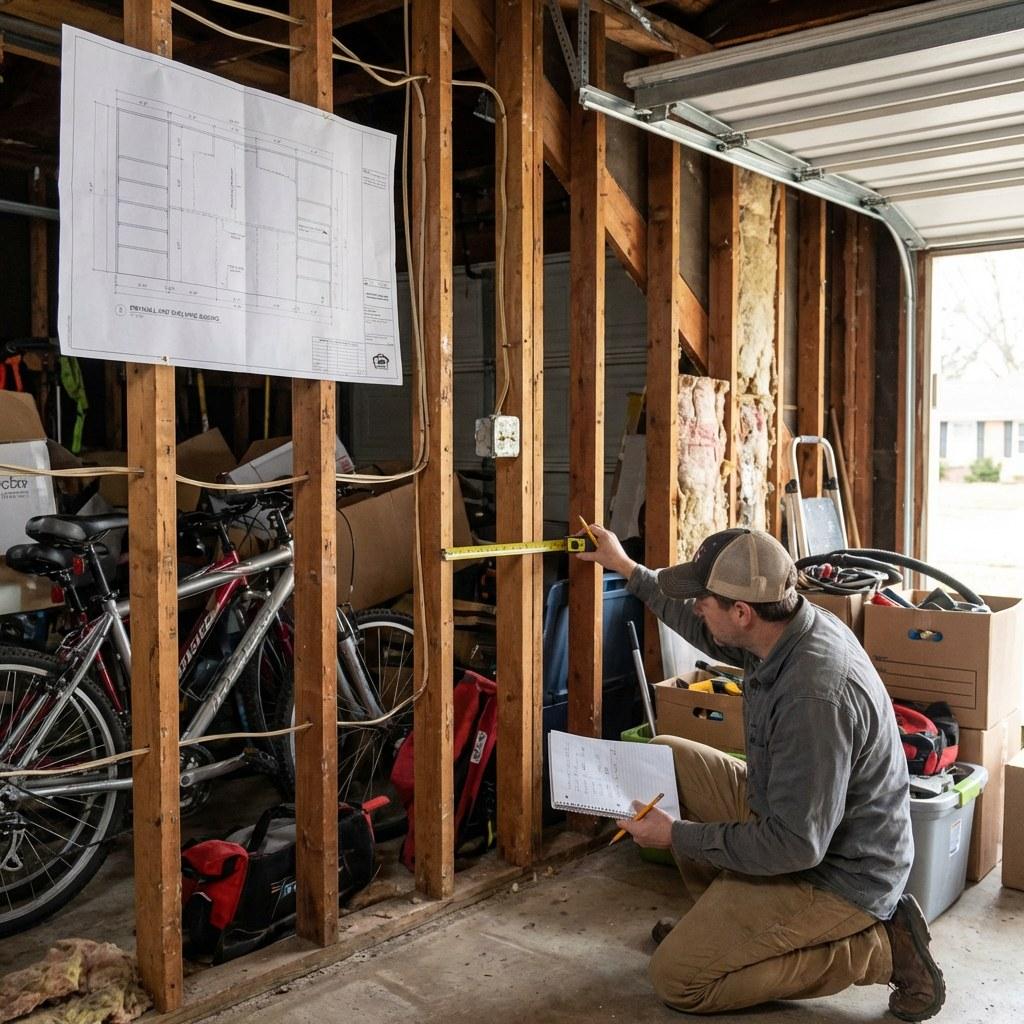
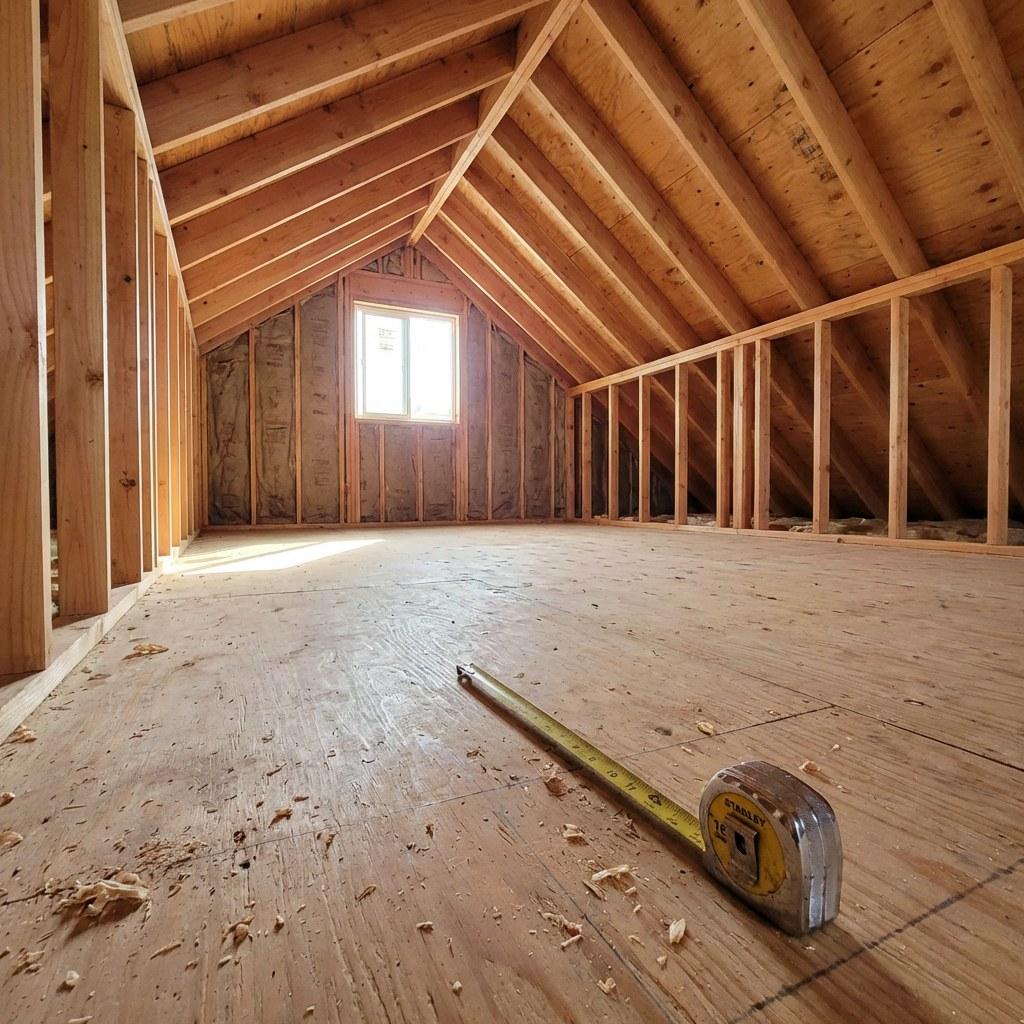
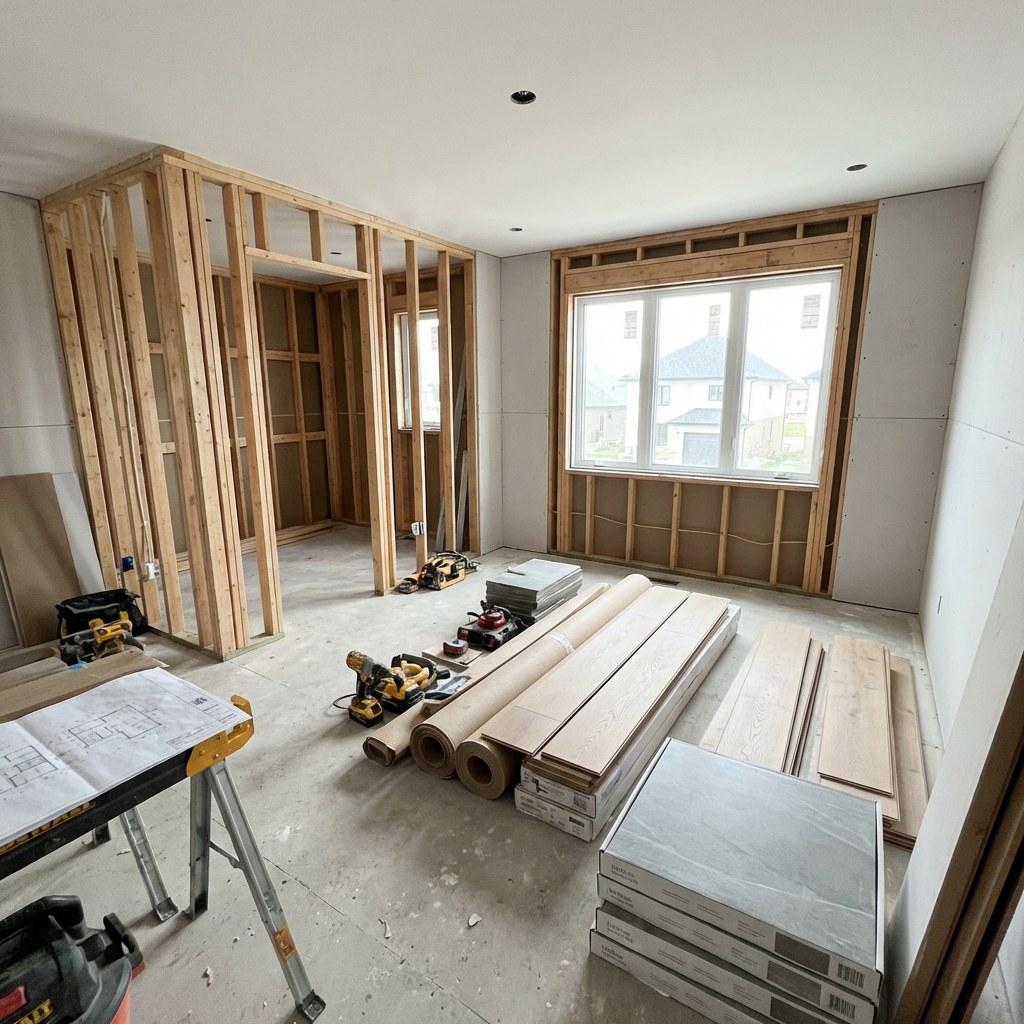
However, finishing your garage is a highly manageable project that adds immediate function and organization to your home. Taking the time to understand what the project entails will help you avoid unnecessary stress, keep your budget under control, and ensure the space actually meets your needs.
Defining the Scope of Your Garage Project
Before you buy materials or call a professional, you need to define exactly what your project includes.
A standard garage finishing project typically involves:
- Installing insulation in the walls and ceiling to regulate temperature.
- Hanging, taping, and painting drywall.
- Upgrading lighting from a single bare bulb to overhead LED fixtures.
- Adding a few extra electrical outlets for tools or appliances.
- Applying a protective coating, such as epoxy, to the concrete floor.
Where scope expands quickly:
Renovations often suffer from "scope creep," which is when a project slowly grows larger and more expensive than originally planned. In a garage, this usually happens when you decide to add plumbing for a sink, install dedicated heating and cooling, or attempt to convert the space into a fully livable room (often called an Accessory Dwelling Unit, or ADU).
If you shift from simply finishing the walls to creating a heated living space, you are no longer doing a basic upgrade—you are starting a major construction project. It is best to stick to creating a clean, dry, and bright utility space unless you are prepared for a significantly longer and costlier process.
Setting Budget Expectations
Garage finishing budgets vary widely based on the size of the space, regional labor rates, and how much work you intend to do yourself.
- Light DIY Finishing ($1,500 to $4,000): If you are comfortable installing your own insulation, hanging drywall, painting, and applying a basic DIY floor coating, your costs will mostly be tied to materials.
- Professional Standard Finishing ($5,000 to $15,000+): Hiring a contractor to handle the drywall (which is labor-intensive), upgrade the electrical panel, and apply a professional-grade floor coating will increase the price. Larger two- or three-car garages will push toward the higher end of this range.
The biggest variables in your budget will be electrical work and flooring. Running new wiring back to your main electrical panel requires a licensed electrician, and professional floor treatments require specialized grinding equipment and industrial materials.
Timeline Expectations
If you decide to tackle this yourself on weekends, expect the project to stretch over a month or two. Hanging drywall is physically demanding, and the process of "mudding" (applying joint compound to hide the seams) requires multiple coats with drying time in between.
If you hire a professional crew, a standard garage finishing project generally takes one to three weeks. Electricians and insulation installers will spend a few days, followed by the drywall crew, who will need several days to hang, mud, sand, and paint. Floor coatings usually take two to three days to apply and cure properly before you can park a car on them.
As you gather quotes and dimensions, keeping track of your details is important. You can use the Casa app to securely store your measurements, contractor estimates, and inspiration photos so you have everything in one place when it is time to make a decision.
Hidden Costs and Common Surprises
When you begin working on an unfinished space, you may uncover existing issues that need to be addressed before you can move forward.
- Moisture and water leaks: If water pools near your garage door or seeps through the concrete block, you must fix the drainage issue first. Trapping moisture behind new drywall will quickly lead to mold and rot.
- Outdated electrical panels: If your home's main electrical panel is full or outdated, an electrician may not be able to simply add new outlets to the garage. You might need a panel upgrade, which can add significant cost.
- Wood rot or pest damage: Exposed studs near the ground are susceptible to rot and termites. Damaged framing must be replaced or reinforced before the walls are closed up.
Permits and Code Considerations
Because you are altering the structure and potentially the electrical system, you will likely need a building permit. A permit is an official approval from your local government ensuring the work meets safety standards.
Garages also have specific fire safety codes. The wall and ceiling that separate the garage from the living spaces of your home—often called the demising wall—must be covered with a specific type of fire-rated drywall. This helps slow the spread of a fire from the garage to the house. A reputable contractor will know these rules, but if you are doing the work yourself, you must consult your local building department.
Contractor Selection Guidance
If you choose to hire professionals, you have two main paths. You can hire individual specialists (an electrician for the wiring, a drywaller for the walls, and a flooring company for the concrete), or you can hire a general contractor to manage the entire process.
A general contractor will cost more, but they take the burden of scheduling and coordinating off your shoulders. When speaking with contractors, verify their licensing and insurance, and ask explicitly who is responsible for pulling the permits and hauling away construction debris.
How to Decide If This Renovation Is Worth It
Evaluating the worth of a garage project comes down to how you plan to use your home. While finishing a garage can add value to your property, the true return on investment is found in your daily utility.
Ask yourself:
- Are you currently paying for a monthly storage unit because your home lacks space?
- Do you need a dedicated workspace for repairs, hobbies, or a home gym?
- Will finishing the garage prevent pests and dirt from being tracked into your main living areas?
If answering yes to these questions brings you a sense of relief, the investment in a clean, finished space is likely a smart financial and practical decision.
Risk Boundaries: When to Pause and When to Proceed
Understanding your limits will keep you safe and your project on track.
Safe to try yourself:
- Installing basic fiberglass insulation (while wearing proper safety gear).
- Painting existing drywall.
- Installing wall-mounted shelving systems or heavy-duty hooks.
- Applying consumer-grade floor sealants (provided the concrete is thoroughly cleaned and prepped).
Worth waiting or monitoring:
- If you notice cracks in your concrete floor that are shifting or widening, or if the roof is actively leaking. You should always secure the envelope of your home before spending money on cosmetic interior finishes.
Time to stop and call a professional:
- Electrical work: Never attempt to wire your own outlets or lighting if you are not trained.
- Moving structural beams: Do not cut or remove any framing without consulting a professional, as it could compromise the structural integrity of your roof.
- Professional flooring: If your concrete floor is heavily damaged, soaked in decades of oil, or requires a truly durable finish for heavy vehicles, professional grinding and epoxy application is highly recommended.
Wrapping Up
Finishing an unfinished garage is an excellent way to reclaim square footage and bring order to your home. By clearly defining your scope, setting realistic budget expectations, and respecting the boundaries between DIY tasks and professional work, you can transform a dusty storage area into a valuable extension of your home.
Planning a renovation is always easier when you have a structured way to keep track of your home's details. Download the Casa app today to organize your project notes, store contractor estimates, and build a proactive maintenance plan for your newly finished space.