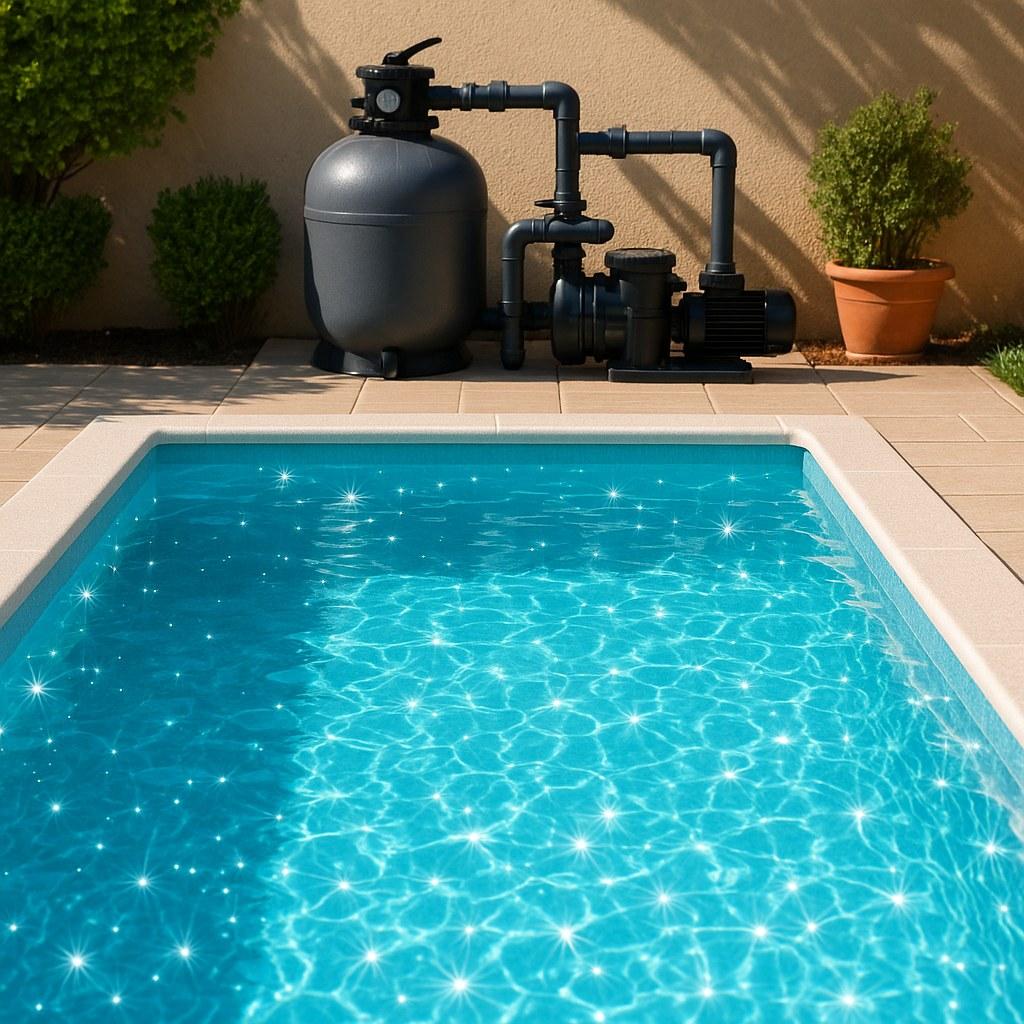
The good news is that many common pool filter issues are surprisingly easy to diagnose and fix yourself. Whether your pump won’t start, your water flow is weak, or the pressure gauge is telling you something is wrong, you’re in the right place. We’re here to walk you through the troubleshooting process step-by-step, just like a friendly expert on the phone.
Let's dive in and get that filter system running smoothly again, so you can get back to enjoying your pool.
Why Your Pool Filter Might Not Be Working
Before we start tinkering, it helps to understand the usual suspects. A pool filter system is a circuit, and a problem in one area affects the whole thing. Most issues boil down to one of these culprits:
- Power Problems: The pump is the heart of the system. If it's not getting electricity, nothing else will work.
- A Clogged or Dirty Filter: This is the most common issue. A filter packed with debris restricts water flow, causing high pressure and weak jets.
- Air Leaks: If air is getting sucked into the system, it reduces the pump's ability to pull water, leading to low pressure and poor performance.
- A Broken Gauge: Sometimes, the system is fine, but the pressure gauge that reports on its health is broken, sending you on a wild goose chase.
With these possibilities in mind, let's start our diagnosis at the very beginning: power.
Step 1: The Initial Power and Safety Check
First things first: safety. Water and electricity are a dangerous mix. Before you begin, make sure everyone is out of the pool and the area around your pool equipment (the "equipment pad") is dry.
- Locate the Pump Power Switch: Find the switch dedicated to your pool pump, usually located on or near the equipment pad.
- Perform a Quick Test: Flip the switch to ON. Listen for the hum of the pump motor and look at the pump's strainer basket (the part with the clear lid) to see if water starts moving.
- Power Down: After about 10 seconds, flip the switch back to OFF.
If the pump didn’t start at all, it's likely an electrical issue. Don't worry, we can check a few things before calling an electrician.
What to Do If Your Pump Has No Power
If turning the switch on did nothing, follow these steps:
- Check the Circuit Breaker: Go to your home's main electrical panel and find the breaker labeled "Pool," "Pump," or something similar. Flip it completely OFF and then back ON to reset it.
- Reset the GFCI Outlet: If your pump plugs into a GFCI (Ground Fault Circuit Interrupter) outlet—the kind with "Test" and "Reset" buttons—press the "Reset" button firmly.
- Check the Timer: Many pool pumps are connected to a timer. Make sure the timer is set to the manual "ON" position, which overrides any programmed schedule.
- Try Again: Head back to the pump power switch and try turning it on one more time.
If the pump still won't start after these steps, the problem is likely an electrical or mechanical failure within the pump itself. At this point, it's safest to call a pool service professional to diagnose the issue.
If your pump did start, let's move on to the next step: checking the system's vital signs.
Step 2: Check Your System's Pressure and Water Flow
With the pump running, we can now figure out how well it's working. The two key indicators are the pressure gauge and the return jets.
- Switch the Pump ON.
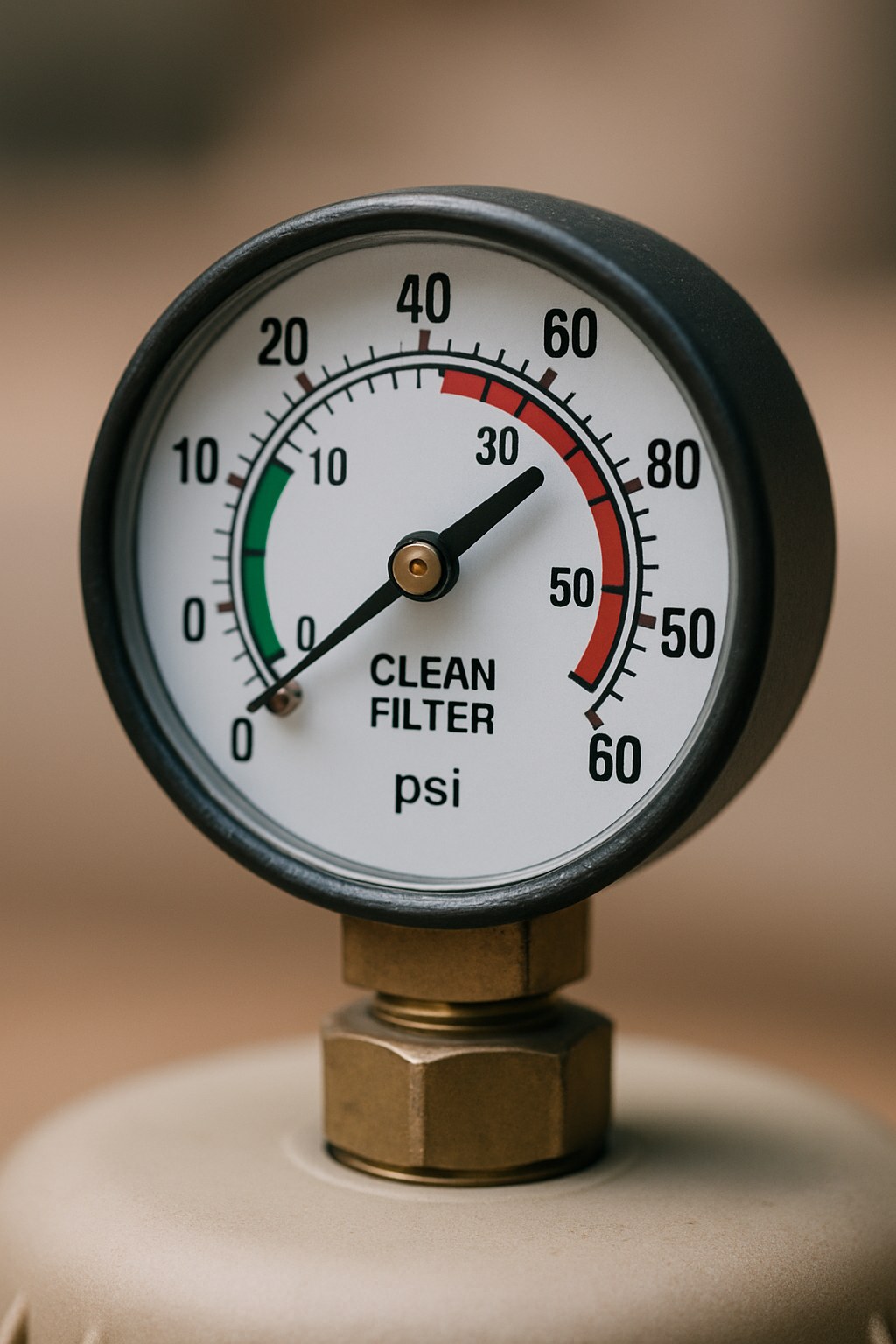
- Read the Pressure Gauge: Look at the gauge on top of your filter. What is the PSI (pounds per square inch) reading? Pro Tip: It's crucial to know your filter's "normal clean pressure." This is the PSI reading right after you've cleaned the filter. Take a picture or write it down on the filter with a permanent marker. This number is your baseline.
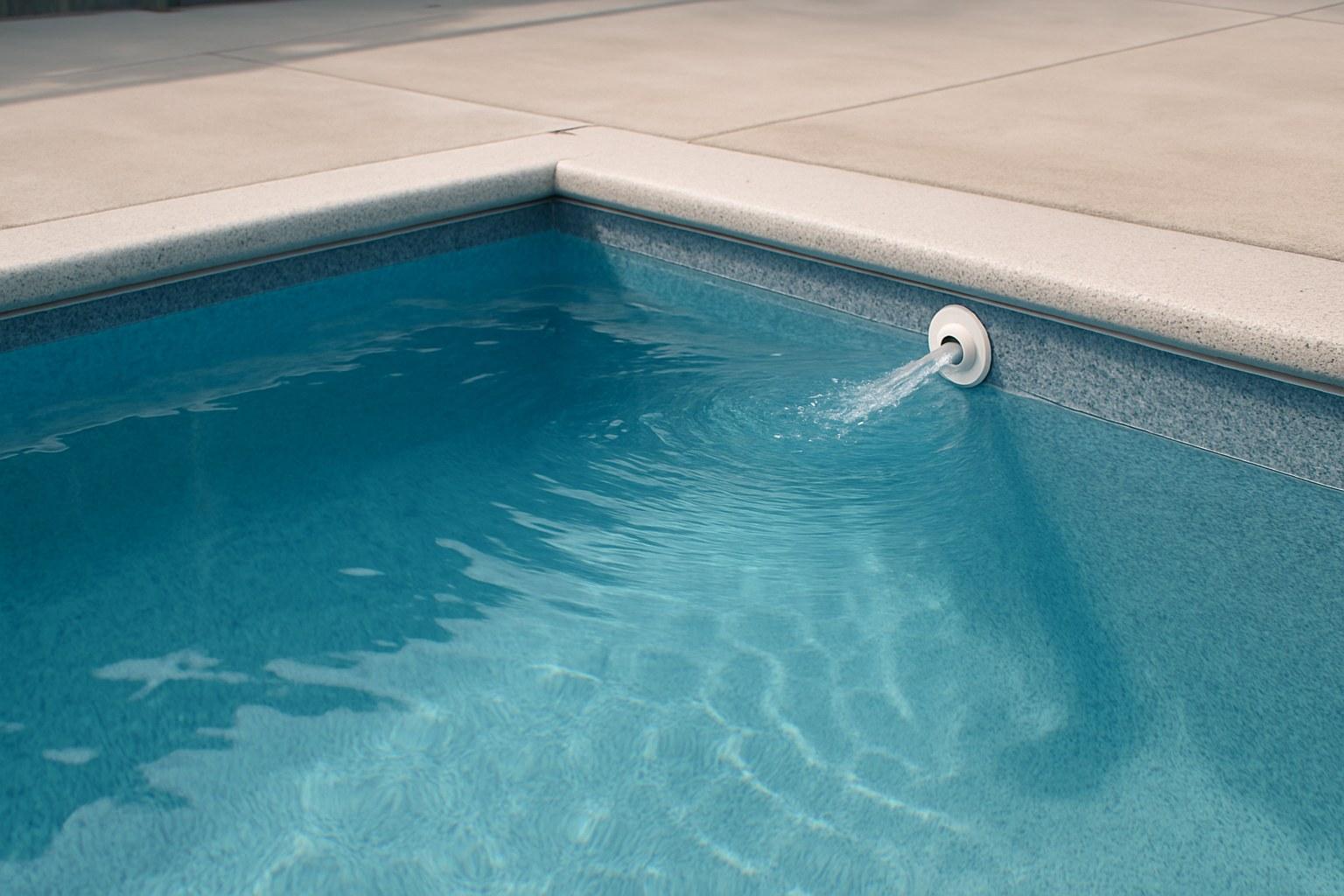
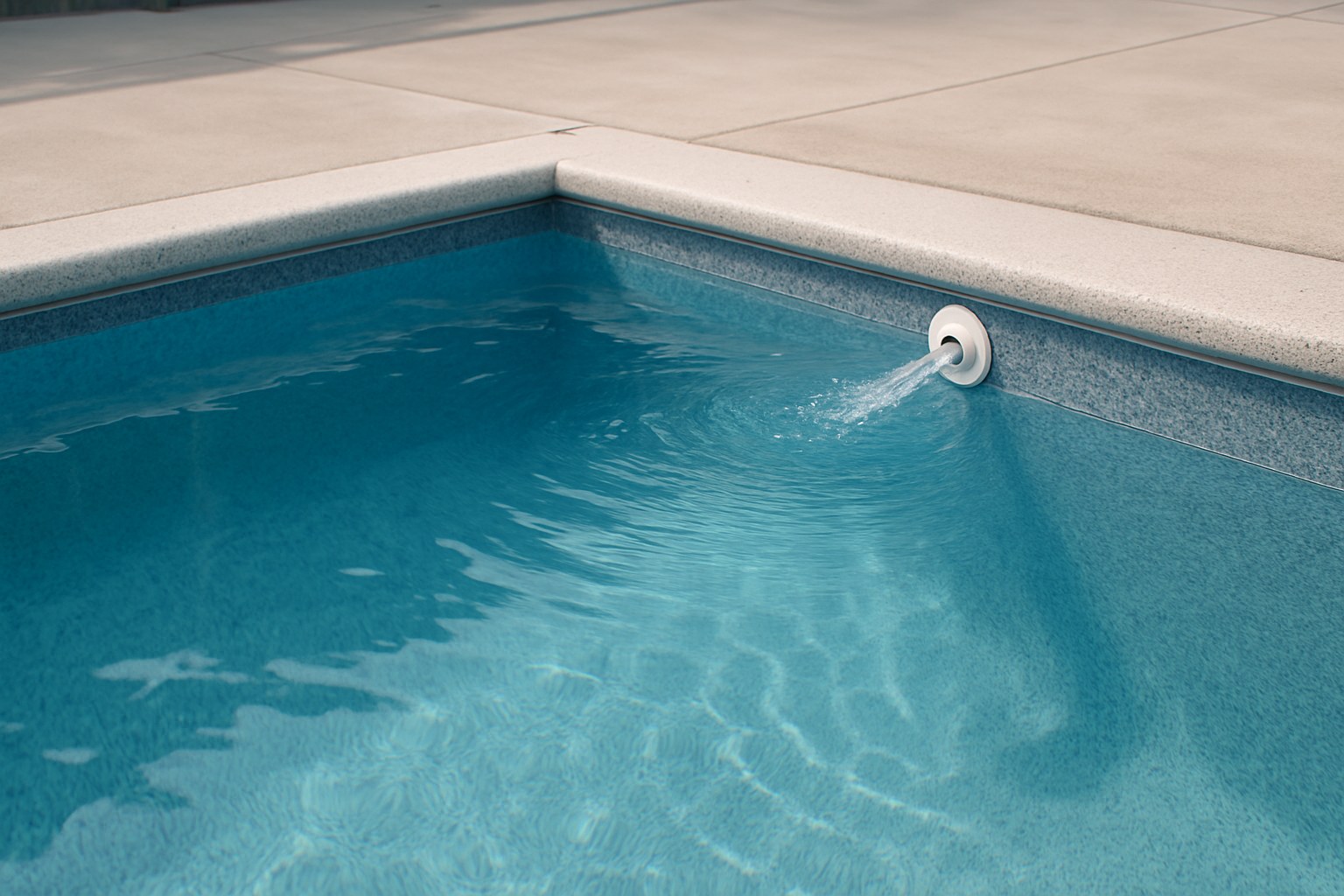
- Check the Return Jets: Go to the pool and put your hand in front of a return jet (where the filtered water flows back in). Is the flow strong and steady, or is it weak and trickling out?
Now, compare your findings. There are two main scenarios that point to a problem:
- Scenario A: High Pressure & Weak Flow. Is the pressure gauge reading 8-10 PSI or more above your normal clean pressure? This almost always means you have a dirty, clogged filter that needs cleaning.
- Scenario B: Low Pressure & Weak Flow. Is the pressure gauge reading at or near zero, even though the pump is running and the jets are weak? This could mean a faulty gauge or an air leak somewhere in the system.
Let's tackle each scenario.
Scenario A: How to Fix High Pressure by Cleaning Your Filter
High pressure is a cry for help from your filter. It's telling you it's clogged and struggling to push water through. The solution is to clean it, but the method depends on what type of filter you have: Sand, Cartridge, or Diatomaceous Earth (D.E.).
For Sand Filters: How to Backwash
Backwashing reverses the flow of water through the sand, flushing out all the trapped dirt and debris.
- Turn the pump OFF.
- Rotate the handle on your multi-port valve to the "BACKWASH" position.
- Turn the pump ON. Let it run for 2-3 minutes, or until the water in the small sight glass on the valve runs clear.
- Turn the pump OFF again. Move the valve handle to "RINSE."
- Turn the pump ON and let it run for about 30 seconds. This resettles the sand bed.
- Turn the pump OFF one last time. Return the valve handle to "FILTER."
- Turn the pump back ON. Your pressure should now be back down to its normal clean level, and your jet flow should be strong. Don't forget to add fresh water to the pool with a hose to replace what was lost during backwashing.
For Cartridge Filters: How to Clean the Cartridges
Cartridge filters don't have a backwash option. You'll need to take them out and clean them manually.
- Turn the pump OFF. Open the small air relief valve on top of the filter housing to release the pressure.
- Release the clamp or lid mechanism holding the filter tank together. This might require a screwdriver or wrench. Lift off the filter lid.
- Carefully remove the cartridge(s) from the tank, paying attention to how they are positioned.
- Using a garden hose with a high-pressure nozzle, spray each cartridge from top to bottom, cleaning between the pleats until no more debris comes off.
- Inspect the cartridges for tears or collapsed pleats. If they are damaged, they need to be replaced.
- Check the large o-ring on the filter tank. If it's dry or cracked, apply a thin coat of silicone lubricant.
- Place the clean cartridges back inside, secure the lid, and close the air relief valve.
- Turn the pump ON. As pressure builds, open the air relief valve again until a steady stream of water sprays out, then close it. This purges any remaining air from the system.
For D.E. Filters: How to Backwash and Recharge
D.E. filters use a fine powder to achieve superior filtration. Like sand filters, they can be backwashed, but you have to replace the D.E. powder afterward.
- Follow the same backwashing steps as for a sand filter (Steps 1-7 above).
- After returning the valve to "FILTER," leave the pump OFF for a moment.
- In a bucket, mix the amount of D.E. powder recommended by your filter’s manufacturer with enough pool water to create a milky slurry.
- Turn the pump ON. Go to the skimmer closest to your equipment and slowly pour the D.E. slurry directly into it. The pump will suck the mixture in and re-coat the filter grids.
- Bleed the air from the filter tank using the air relief valve until water sprays out.
After cleaning your filter, if the pressure is back to normal and the flow is strong, you've solved the problem!
Scenario B: How to Fix Low Pressure and Weak Flow
Low pressure usually means the pump is struggling to pull water, either due to a blockage (less common) or an air leak (very common). First, let's rule out a bad gauge.
Is Your Pressure Gauge Working Correctly?
- With the pump running, note the low reading.
- Turn the pump OFF. The needle on the gauge should immediately drop to 0 PSI.
- If the needle doesn't move at all, it's stuck and needs to be replaced. A new gauge is inexpensive and easy to install. Simply unscrew the old one, wrap the threads of the new one with Teflon tape, and screw it in until it's snug.
How to Find and Fix Air Leaks
If the gauge works, you're likely dealing with an air leak. Air is getting sucked into the system on the suction side (the plumbing before the pump), which starves the pump for water. The most common culprit is the pump strainer lid.
- Check the Pump Lid O-Ring: Turn the pump OFF. Open the clear lid on your pump. Inspect the rubber o-ring that seals the lid. If it's cracked, stretched, or flattened, it needs to be replaced. If it looks okay, wipe it clean and apply a thin layer of pool-grade silicone lubricant before securely tightening the lid back in place.
- Inspect the Filter Tank O-Ring: The large o-ring that seals the two halves of your filter tank can also be a source of leaks. Ensure it's clean, lubricated, and not pinched.
- Look for Drips: With the pump running, look for any water dripping from union fittings or valve handles. While these are on the pressure side, they can indicate a poor seal that might also let air in when the pump is off. Tighten any loose fittings by hand.
After sealing any potential leaks, turn the system back on. If your return flow is strong and the pressure is back in its normal range, you've successfully kicked that pesky air out of the system!
When to Call a Pool Professional
DIY is empowering, but some jobs are best left to the experts. According to HomeAdvisor, a service call from a pool technician typically costs between $75 and $150. It's time to make that call if:
- Your pump won't turn on after checking the breakers and GFCI.
- You've cleaned your filter, but the pressure remains high (this could indicate a blockage in the lines or calcified sand/cartridges).
- You've sealed all visible air leaks, but the system still has low pressure (the leak could be in an underground pipe).
- You hear loud grinding or whining noises from the pump motor.
Take Control of Your Pool Maintenance
A working filter is the key to a healthy and inviting pool. By learning how to perform these basic diagnostic and maintenance tasks, you not only save money but also ensure your pool is always ready for fun. Regular filter cleanings and system checks can prevent most of these problems from happening in the first place.
For more expert home maintenance tips and easy-to-follow repair guides, download the Casa app today. Casa empowers you to manage your home with confidence, providing the help you need, right when you need it. Whether it's a DIY fix or connecting you with a trusted pro, we're here to help you every step of the way.