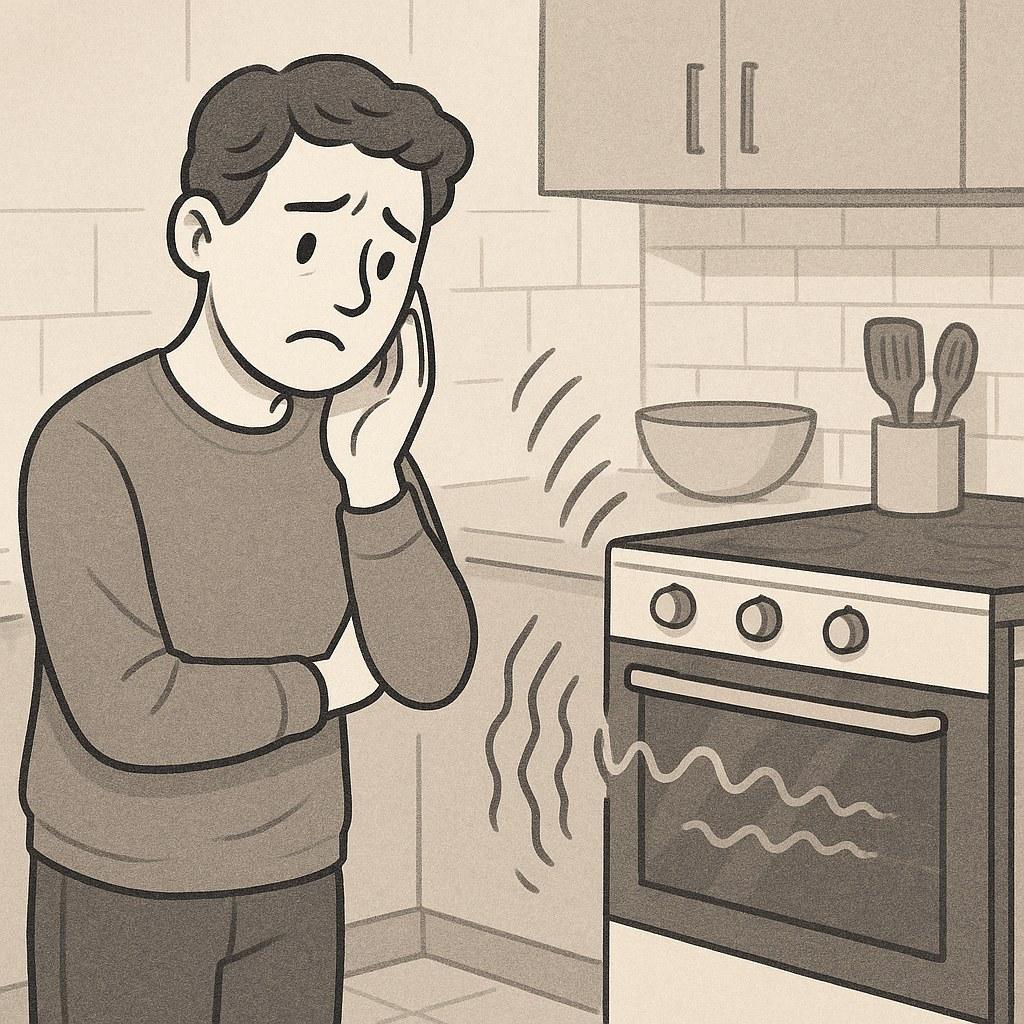
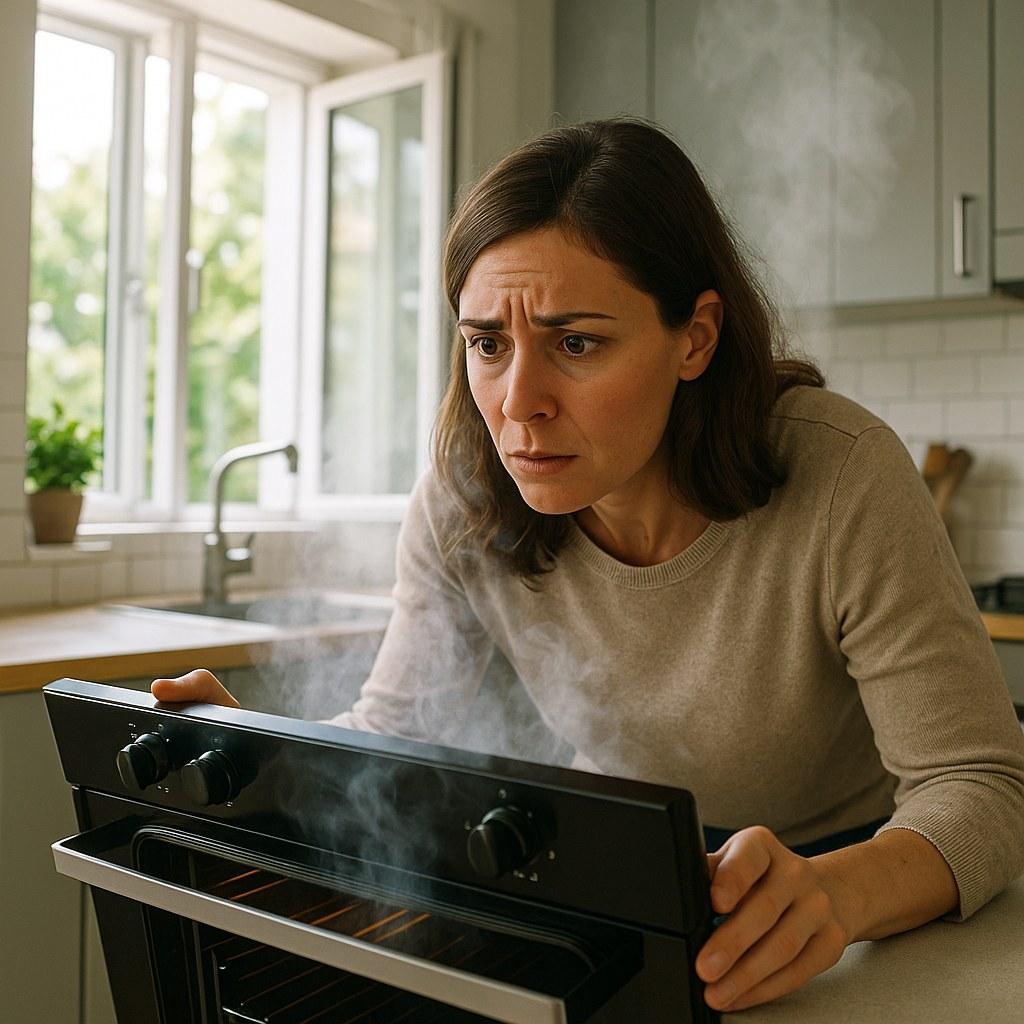
Don't panic! While some noises are indeed a sign to call a professional, many of the most common strange oven noises are caused by simple issues you can diagnose and fix yourself in under an hour. Think of it like this: your oven is talking to you, and we’re here to help you translate what it’s saying.
In this guide, we'll walk you through the process of identifying the noise, figuring out its cause, and performing the simple repairs that will get your appliance back to running silently and efficiently. Let’s get that kitchen quiet again.
Safety First: Before You Begin Any Work
Before we dive in, let’s cover the most important step of any appliance repair: safety. Working with ovens involves electricity and, in some cases, natural gas.
For ALL ovens, you must:
- Disconnect the Power: Go to your home's circuit breaker panel and switch off the breaker that controls your oven. It's often a double-pole breaker and should be clearly labeled. Don't just turn the oven off at the control panel—you need to cut the power completely.
- Let It Cool Down: Never work on a hot oven. Make sure it is completely cool to the touch before you begin.
If you have a GAS oven, you must also:
- Shut Off the Gas: After you pull the oven away from the wall, you'll see a gas supply line with a shut-off valve. Turn the valve handle so it is perpendicular (at a 90-degree angle) to the pipe. This stops the flow of gas to the appliance.
With these safety precautions in place, we can start our detective work.
Step 1: Is Your Oven Gas or Electric?
The first thing we need to determine is your oven's fuel source, as the causes of noises are very different between gas and electric models. This is easier to figure out than you might think.
Carefully slide your oven forward, just enough to see what's behind it. Be mindful not to stretch any cords or connections.
- If you see a flexible, often yellow or silver, metal tube running from the wall to the oven, you have a gas oven. It will also have a standard electrical cord for the electronics, but the gas line is the key identifier.
- If you see only a very thick, heavy-duty electrical cord (usually a 240-volt cord with a large plug), you have an electric oven.
Once you know what you're working with, you can skip to the appropriate section below.
Troubleshooting Noises in a Gas Oven
Gas ovens make a few distinct noises that point to different components. Listen carefully to identify which one matches your situation.
The Noise: A Rapid Clicking When You Turn It On
If you hear a fast click-click-click sound when you try to light the oven but the flame doesn't ignite, the issue is almost always with the ignition system. The clicking is the sound of the igniter trying to create a spark to light the gas. When it fails, it's typically because something is blocking the spark or the gas flow.
How to Fix It:
- Safety Check: Ensure the oven is cool, the power is off at the breaker, and the gas supply is shut off.
- Access the Burner: Remove the oven racks. The main burner is usually located on the floor of the oven. You should see a burner cap covering it.
- Clean the Components: Lift off the burner cap. You'll see the small ceramic tip of the igniter nearby. Using a small, soft brush (an old toothbrush works well), gently brush away any crumbs, grease, or food debris from both the burner cap and the igniter tip.
- Reassemble: Place the burner cap back, making sure it sits flat and is properly centered. Put the oven racks back in.
- Test It Out: Turn the gas valve back on (handle parallel to the pipe) and restore power at the circuit breaker. Set the oven to bake and listen.
If the clicking is gone and the oven lights normally, congratulations! A little cleaning was all it took. If the clicking continues without ignition, the igniter or spark module itself may have failed and needs to be replaced by a qualified appliance technician.
The Noise: A Rattling or Grinding Sound
A metallic rattling or grinding sound, especially when the convection fan is running, is usually caused by something being loose inside the oven cavity.
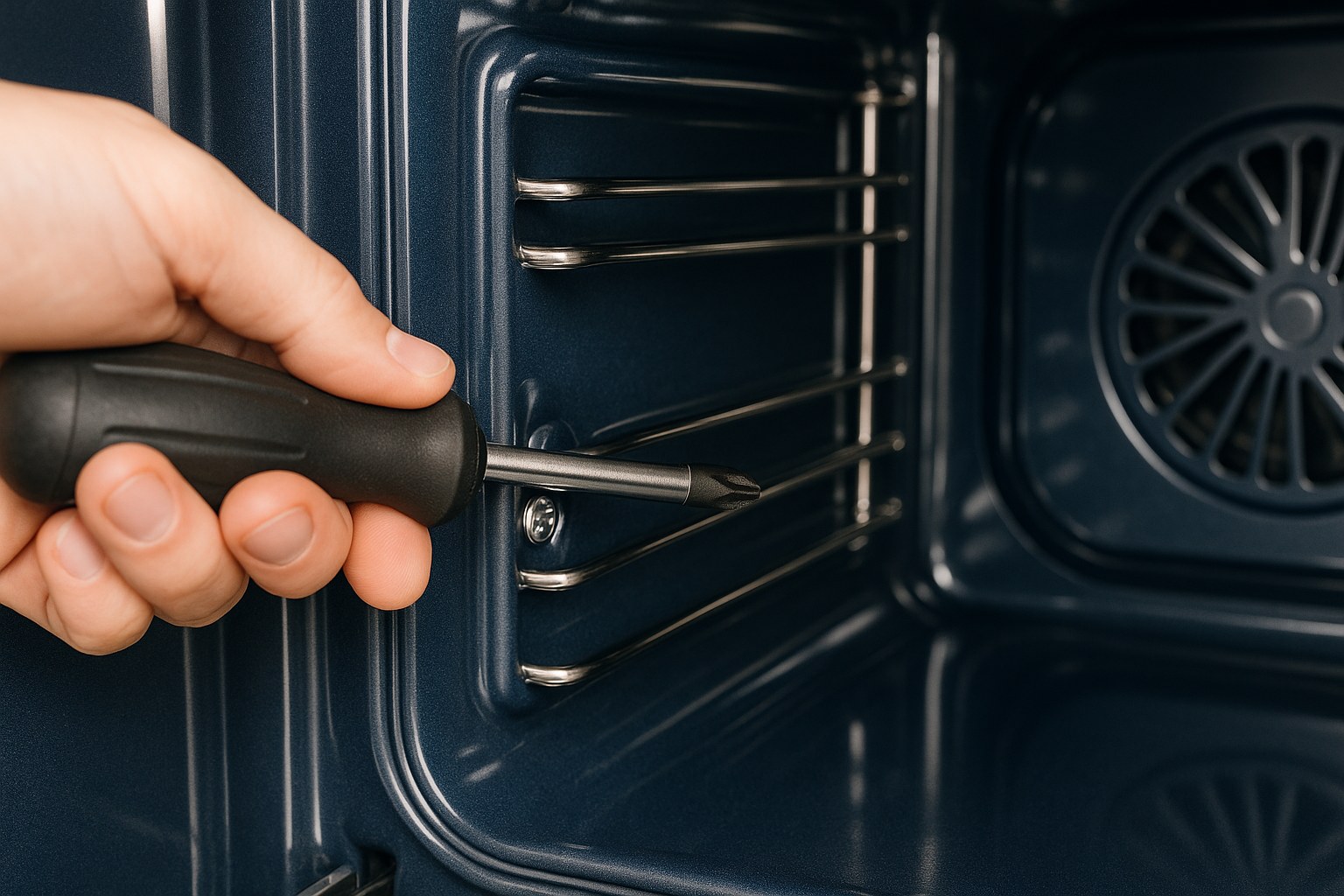
How to Fix It:
- Safety Check: Power off at the breaker and wait for the oven to cool.
- Inspect Internal Hardware: Remove the oven racks. Look for any visible screws on the oven floor, back panel, or around the fan cover. Gently check if they are loose and tighten them with a Phillips screwdriver.
- Check the Racks: Sometimes the racks themselves aren't seated properly. Give each rack a little shake and make sure it's firmly positioned in its side rails.
- Look for Debris: Check if any foil, small utensils, or other debris has fallen and is touching the fan grille at the back of the oven.
- Test It Out: Restore power and run the oven on a convection setting.
If the noise is gone, you've solved it. If the rattling persists, it could indicate a problem with the fan motor's mounting bracket or the motor itself, which is a job for a professional.
The Noise: A Steady Buzzing or Humming
A low buzzing or humming noise coming from the back of the oven often points to the cooling fan. This fan is separate from the internal convection fan and is used to cool the oven's electronic controls.
How to Fix It:
- Safety Check: Cut the power at the circuit breaker.
- Access the Rear Panel: Carefully pull the oven out from the wall. You'll need to remove the rear access panel, which is typically held on by several screws.
- Inspect the Cooling Fan: The cooling fan assembly is usually near the top. Check for loose mounting screws and tighten them. Look for any wires or insulation that might be vibrating against the fan blades.
- Clean the Blades: Dust and grease can build up on the fan blades, causing an imbalance. Wipe them clean with a cloth.
- Spin Manually: Gently spin the blades with your finger. They should rotate freely and quietly. If they feel stiff or make noise, the motor may be failing.
- Reassemble and Test: Secure the rear panel, push the oven back, restore power, and listen.
If cleaning and tightening solved the buzz, you're all set. If not, the fan motor or an electrical transformer could be at fault, requiring a service call.
Troubleshooting Noises in an Electric Oven
Electric ovens have their own unique set of sounds, primarily related to the heating elements and convection system.
The Noise: A Buzzing or Humming During Heating
A low-frequency buzz that occurs while the oven is heating up often comes from the heating elements themselves.
How to Fix It:
- Safety Check: Turn off the power at the circuit breaker and ensure the oven is cool.
- Inspect the Elements: Examine both the bake element (on the bottom) and the broil element (on the top). Look for any blisters, cracks, or bright glowing spots, which indicate the element is failing.
- Check for Looseness: Gently tug on each element. If it feels loose, tighten its mounting screws with a screwdriver. A vibrating element can create a buzzing sound as high voltage passes through it.
- Test It Out: Restore power and run the oven.
If tightening the screws fixed the hum, fantastic! If you saw signs of damage or the noise continues, the element likely needs to be replaced. This is a common repair that an appliance technician can handle quickly.
The Noise: A Rattling or Grinding from the Back
Just like in a gas oven, a rattling in an electric oven usually points to the convection fan inside the oven cavity.
How to Fix It:
- Safety Check: Breaker off, oven cool.
- Access the Fan: Remove the oven racks. At the back of the oven, you'll see a fan cover or grille. Unscrew it.
- Check the Fan Blade: Hold the blade and gently try to wiggle it. It should be firm. If it's loose, you need to tighten the nut that holds it to the motor shaft. This nut is often reverse-threaded, meaning you turn it clockwise to tighten. Use a socket wrench to snug it up.
- Clean and Reassemble: Brush off any food debris from the blades, then reinstall the cover and racks.
- Test: Turn the power back on and run the convection fan.
A loose fan blade is a very common cause of rattling. If the noise is gone, you've nailed it. If the sound remains, the fan motor itself is likely worn out and needs replacement.
The Noise: A Sharp Pop or a Sparking Sound
STOP! This is a serious issue. A loud pop, especially if accompanied by a flash of light or a visible spark, indicates electrical arcing. This is a dangerous situation that can damage your oven and create a fire hazard.
What to Do:
- Do Not Use the Oven: Immediately turn the oven off at its control panel.
- Shut Off the Breaker: Go to your circuit breaker panel and turn the oven's breaker off. Leave it off.
- Visual Inspection (No Touching!): With the power off, you can open the door and look for any scorch marks, black spots, or melted areas on the heating elements or interior walls. Do not touch anything inside.
- Call a Professional Immediately: This is not a DIY repair. Electrical arcing can be caused by a failed heating element, damaged wiring, or a faulty control board. You need a qualified appliance repair technician to diagnose and safely fix the problem. The cost of a professional service call, typically ranging from $100 to $250, is a small price to pay for safety.
Your Partner in Home Maintenance
Fixing a noisy oven can feel like a huge accomplishment, saving you time and the cost of a service call. By listening closely and following these safe, simple steps, you can solve many common appliance issues on your own.
But for those times when the problem is more complex, or when you just want the peace of mind that comes with a professional diagnosis, Casa is here to help. Download the Casa app today to get access to more easy-to-follow DIY repair guides, maintenance reminders, and a network of vetted, reliable professionals for every job around your home. Take control of your home maintenance with Casa in your corner.