The good news is that most of the time, the culprit is something simple—a pilot light that's gone out, a safety switch that's been tripped, or an air filter that's just a little too dusty. You don’t always need to call in a professional right away.
In this guide, I’m going to walk you through the process of diagnosing why your water heater keeps shutting down and how to fix it, just like I would over the phone. We'll cover the three main types of water heaters—gas, electric, and tankless—so you can find the exact solution you need. Let's get that hot water flowing again!
Common Reasons Your Water Heater Shuts Off
Before we roll up our sleeves, it helps to understand what’s going on behind the scenes. Your water heater is designed with safety features that shut the unit down when something isn’t right. Here are the most frequent offenders:
- Pilot Light or Ignition Issues (Gas Heaters): For gas models, the pilot light is a small, continuous flame that ignites the main burner. If it goes out, the heater shuts down. This can be caused by a draft, a dirty orifice, or a faulty thermocouple.
- Thermocouple Failure (Gas Heaters): The thermocouple is a safety device that senses the pilot light's flame. If it doesn't detect heat, it shuts off the gas supply. If it's old or malfunctioning, it might shut off the gas even when the pilot is lit.
- Overheating and Tripped Limit Switch (Electric Heaters): Electric heaters have a high-limit switch that cuts power if the water gets dangerously hot. This is a crucial safety feature, and if it keeps tripping, it could point to a faulty thermostat or heating element.
- Power Supply Problems (Electric Heaters): Sometimes the fix is as simple as a tripped circuit breaker in your home's electrical panel.
- Clogged Air Intakes or Filters: Gas and tankless water heaters need a steady flow of air for proper combustion. If the air intake screen or filter gets clogged with dust, lint, or debris, the unit can overheat and shut itself off as a safety precaution.
Fixing these issues can be surprisingly affordable. A DIY repair might only cost you time, whereas hiring a professional can be more costly. According to HomeAdvisor, the average professional water heater repair can range from $221 to $967. Let’s see if we can solve this for free first.
Step 1: First Things First, Identify Your Water Heater
The troubleshooting steps vary significantly based on the type of water heater you have. So, our first mission is to figure out what you’re working with. Head over to where your water heater lives (usually a basement, garage, or utility closet) and let's identify it.

Here’s how to tell them apart:
- Gas Tank Water Heater: This is the most common type. It's a large metal cylinder with a gas supply pipe (usually a thin, flexible metal tube) running to a control box near the bottom. You'll also see a vent pipe or chimney on top to exhaust gases.
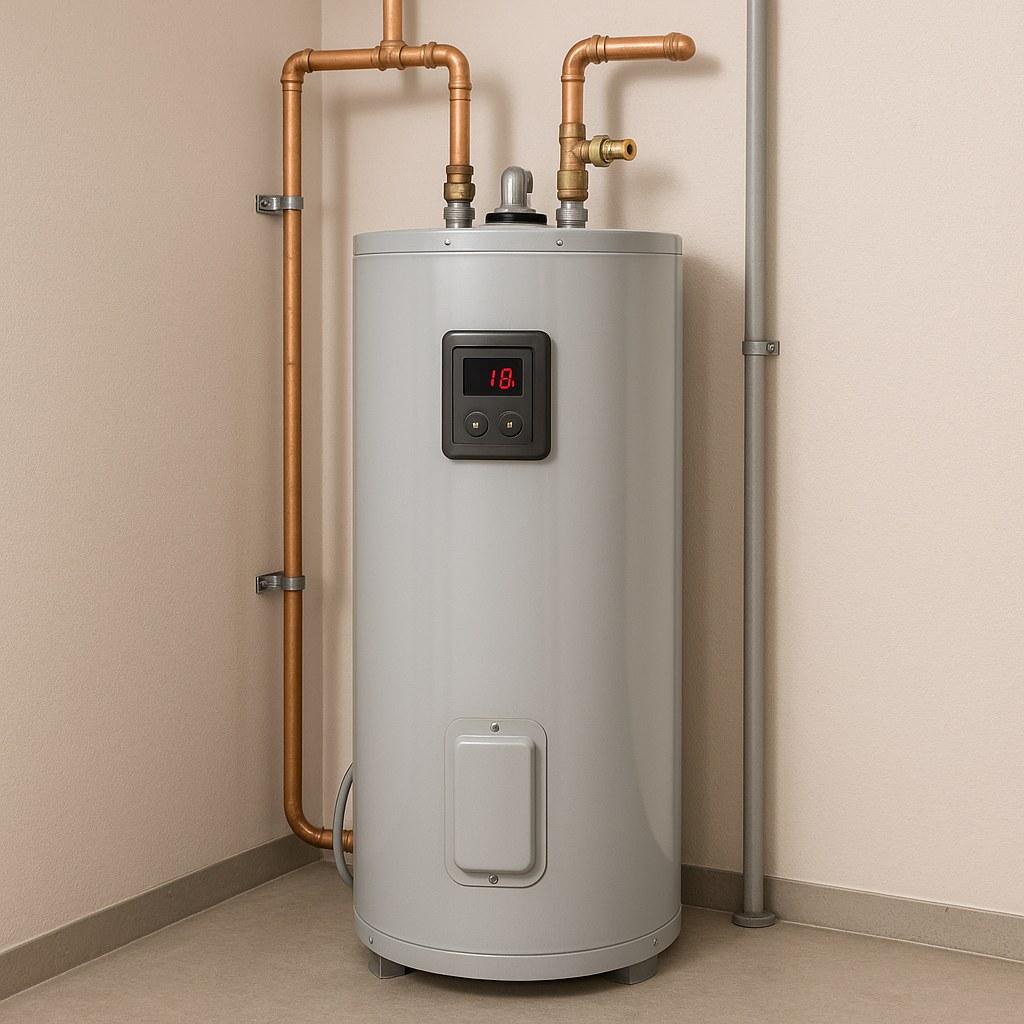
- Electric Tank Water Heater: This looks very similar to a gas tank heater—a big cylinder—but it won't have a gas pipe or a vent on top. Instead, you'll see one or two thick electrical cables running from the wall directly into access panels on the side of the tank.
- Tankless Gas Water Heater: This is a smaller, rectangular unit mounted on the wall. It doesn't store water in a tank. You'll see both a gas supply pipe and water pipes connected to it.
Once you’ve identified your model, you can jump to the right section below. If you're still not sure, check the data plate on the side of the unit—it will list the fuel type.
Troubleshooting a Gas Tank Water Heater
If you have a traditional gas water heater that keeps shutting off, the problem is almost always related to the pilot light or airflow.
Check 1: Is the Pilot Light Out?
Let's start with the most common issue.
- Find the gas control knob on the front of the control box near the bottom of the tank. It will have settings like "On," "Off," and "Pilot."
- Look for a small viewing window or a removable metal cover below the control box. This lets you see into the combustion chamber.
- Peer through the window. Do you see a small, steady blue flame? If not, the pilot light is out.
How to Relight Your Pilot Light
Relighting a pilot light is straightforward, but you must follow the steps carefully for safety.
- Turn the gas control knob to the "Off" position. This is crucial. Wait a full five minutes to allow any residual gas in the chamber to dissipate.
- After five minutes, crouch down and sniff near the combustion chamber. If you smell gas, stop immediately. Do not proceed. Leave the area and call a professional HVAC technician or your gas company.
- If you don't smell gas, turn the control knob to the "Pilot" position.
- Press and hold down the reset button (often a red button on the control box).
- While still holding the button, use a long-nose lighter to ignite the pilot burner inside the chamber.
- Once the pilot flame is lit, continue holding the reset button for a full 60 seconds. This gives the thermocouple time to heat up and detect the flame.
- After a minute, release the button. The pilot light should stay lit.
- Turn the gas control knob to the "On" position and set your desired temperature.
- Replace the viewing window cover.
If the water heater stays on for the next 15-20 minutes, you've likely solved the problem! If it goes out again, you may have a faulty thermocouple, which is often a job for a professional.
Check 2: Is the Air Intake Screen Clogged?
If the pilot light was on, or if it stays on but the main burner keeps shutting off, the next thing to check is the air intake. Your heater needs oxygen to burn fuel, and if it's suffocating, it will shut down.
- Turn the gas control knob to "Off."
- Look for the air intake screen, which is typically located around the very bottom of the water heater. It might look like a metal mesh or a series of vents.
- Use a vacuum with a brush attachment to thoroughly clean all the dust and debris from the screen.
- For any remaining fine dust, wipe the screen with a damp cloth.
- Turn the gas control knob back to "On" (you may need to relight the pilot if you turned it completely off).
If a clogged screen was the problem, the heater should now run properly.
Troubleshooting an Electric Tank Water Heater
Electric water heaters are simpler in design but have their own set of common problems, usually related to power.
Check 1: Did the Circuit Breaker Trip?
Before you even touch the water heater, let’s check your electrical panel.
- Find your main electrical panel (breaker box).
- Open the door and look for the breaker labeled "Water Heater." It's often a "double-pole" breaker, which means it's twice as wide as standard breakers.
- Check its position. If the handle is in the middle or "Off" position, it has tripped.
- To reset it, push the handle firmly all the way to the "Off" position, then flip it back to "On."
Wait about 30 minutes. If the heater stays on, you're good to go! If the breaker trips again shortly after, there could be a more serious electrical issue, like a short in the wiring or a bad heating element. In that case, it's best to call an electrician.
Check 2: Has the High-Limit Switch Tripped?
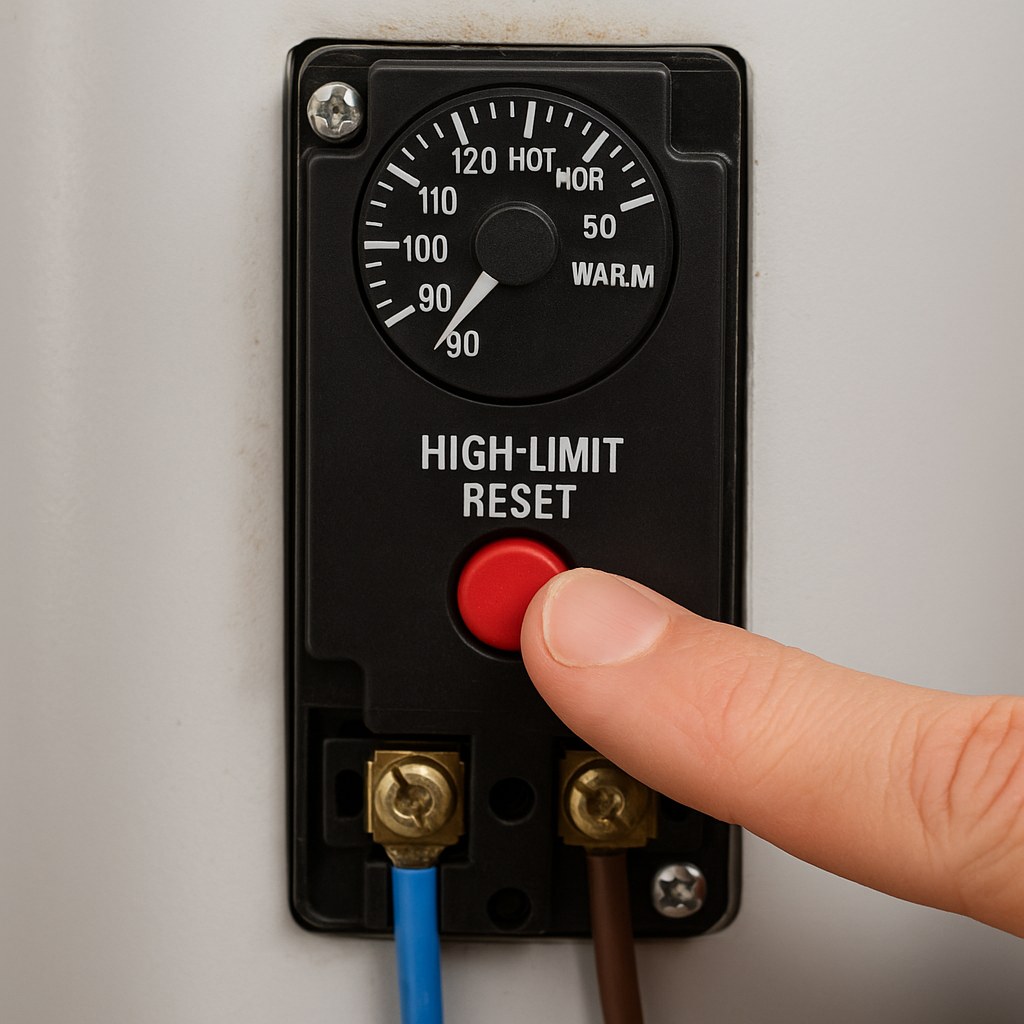
If the breaker is fine, the next step is to check the high-limit reset button on the thermostat.
- Safety first: Go back to your electrical panel and turn the water heater's circuit breaker to the "Off" position.
- On the side of your water heater, you'll see one or two access panels. Use a Phillips screwdriver to remove the upper panel.
- Carefully peel back the insulation. You'll see the upper thermostat.
- Look for a small, red button labeled "Reset" or "High Limit." If it has tripped, it will feel "clickable."
- Press the red button firmly until it clicks.
- Put the insulation back in place and screw the access panel back on.
- Go to your electrical panel and flip the breaker back to "On."
If the heater now stays on for several hours, the problem is solved. If this button continues to trip, it means the water is getting too hot, likely due to a faulty thermostat or heating element, and you should call a professional.
Troubleshooting a Tankless Gas Water Heater
Tankless heaters are efficient but sensitive to airflow. If yours is shutting off, a dirty filter is the most common cause.
Check 1: Is the Air Filter Dirty?
- Unplug the tankless heater from the wall or turn off its dedicated circuit breaker.
- Remove the front cover. This usually involves undoing a few screws.
- Look for the air filter. It's often a small mesh screen located near the fan assembly.
- If it's covered in dust or lint, that's your problem.
- Slide the filter out of its slot.
- Rinse it under warm water until it's clean.
- Gently shake out the excess water and let it air dry for a few minutes.
- Slide the clean, dry filter back into place, replace the front cover, and restore power.
Turn on a hot water faucet and let it run for five minutes. If the heater runs continuously, you’ve fixed it!
When It's Time to Call a Professional
While many water heater issues are simple DIY fixes, some problems require an expert. It's time to call a licensed HVAC technician or plumber if:
- You smell gas at any point.
- The DIY fixes in this guide don't solve the problem.
- A circuit breaker or high-limit switch repeatedly trips.
- You're just not comfortable performing these repairs yourself.
Your safety is always the top priority.
Keep Your Water Heater Happy
A little preventative maintenance goes a long way. To avoid future cold showers, consider doing the following:
- For tank heaters: Flush the tank once a year to remove sediment buildup, which can cause overheating and reduce efficiency.
- For all types: Regularly check and clean any air intake screens or filters every few months.
- For tank heaters: Have the anode rod checked every 2-3 years. This "sacrificial" rod prevents corrosion inside your tank.
Your Partner in Home Maintenance
Fixing a water heater that keeps shutting off can feel like a big win. You saved money, learned a new skill, and got your home running smoothly again. That's what being a homeowner is all about.
For more easy-to-follow guides, maintenance reminders, and a direct line to trusted professionals for the jobs you can't tackle alone, download the Casa app today. We're here to help you manage your home with confidence, one project at a time.


 BACK
BACK