

Mar 18, 2026
Planning Your Entryway Renovation
A practical guide to scoping budgeting and managing an entryway renovation to reduce daily friction and improve your homes first impression.
It is common to feel overwhelmed by the entryway of a home. Even though it is usually one of the smallest spaces in the house, it carries a heavy daily burden. It is the drop zone for coats, shoes, mail, and bags, and it is the first impression your home makes on guests. When an entryway lacks function, the resulting clutter can create daily stress.
Looking for more guidance? Take a look at our Improvements overview.
Planning an entryway renovation is about balancing aesthetics with heavy-duty durability. By breaking the project down into manageable pieces, you can approach the work with confidence and clear expectations.
Defining the Scope of Your Entryway
Scope refers to the boundaries of your project—what you are doing and, just as importantly, what you are not doing. Entryway projects can range from a simple cosmetic refresh to a complete structural overhaul.
A standard entryway renovation usually includes:
- Upgrading flooring to a more durable, water-resistant material.
- Installing built-in storage, such as a bench, cubbies, or coat hooks.
- Replacing or painting the front door.
- Updating overhead lighting or wall sconces.
- Adding fresh paint and updating trim or molding.
Scope creep—when a project slowly expands beyond its original plan—happens easily here. You might start by wanting a new tile floor, only to realize the adjacent hallway flooring no longer matches, leading you to replace flooring throughout the entire main level. To prevent this, clearly define where your project starts and stops before you begin purchasing materials.
Budget Ranges and Variability
Because the scope of an entryway project can vary so widely, the budget will reflect those choices.
- Cosmetic Refresh ($500 to $1,500): This covers fresh paint, a new light fixture, simple wall hooks, and perhaps a new rug or a pre-assembled storage bench.
- Moderate Upgrade ($1,500 to $4,000): This range typically includes replacing the flooring with durable tile or luxury vinyl, installing semi-custom built-in cabinetry, and hiring an electrician to update lighting.
- Major Overhaul ($4,000 to $10,000+): If you are replacing the exterior door with a high-end model, widening the doorway, removing walls to open the space, or bringing in a carpenter for fully custom millwork, costs will rise into this tier.
Material choices heavily influence the final number. A standard fiberglass front door might cost $400, while a custom solid wood door with side windows (sidelites) can easily exceed $3,000.
Timeline Expectations
A cosmetic refresh can often be completed over a single weekend. A moderate upgrade involving new flooring and built-ins usually takes one to two weeks, assuming materials are already on-site.
If your project requires custom materials—like ordering a specific exterior door or waiting on custom cabinetry—the lead time for those items can take four to eight weeks before installation even begins. Once the materials arrive, structural changes or custom carpentry will generally keep your entryway under construction for two to four weeks. During this time, you will likely need to use an alternate entrance to your home.
Hidden Costs and Common Surprises
Entryways are notorious for hiding water damage. Because this area is exposed to wet shoes, dripping umbrellas, and the outdoor elements, it is common to pull up old flooring and discover rot in the subfloor (the structural wood layer beneath your finished floor). Repairing a damaged subfloor is necessary before new flooring can be laid and will add both time and material costs to your project.
Another common surprise involves door framing. If you live in an older home, the existing door frame may not be perfectly square. Installing a new, pre-hung exterior door in an out-of-square opening requires extra carpentry work and insulation to ensure it operates smoothly and seals out drafts.
Permit and Code Considerations
Most cosmetic entryway updates do not require a permit. However, if your renovation involves moving or removing a wall, widening the exterior door opening, or running new electrical wiring for lighting, your local municipality will likely require building permits.
Structural changes must comply with local building codes to ensure the home remains safe and well-supported. If you are unsure whether your project requires a permit, a quick call to your local building department can provide clarity.
Contractor Selection Guidance
The type of professional you hire depends entirely on your scope.
- Handypersons: Ideal for installing simple fixtures, assembling furniture, or hanging drywall.
- Carpenters: Best for designing and building custom storage benches, wainscoting, or complex trim work.
- Door and Window Specialists: If you are replacing an exterior door, hiring a specialized installer is often worth the cost. Exterior doors must be perfectly weather-sealed and secure, which requires specific expertise.
- General Contractors: Necessary only if you are moving walls, altering the home's footprint, or coordinating multiple trades (plumbers, electricians, and carpenters) at once.
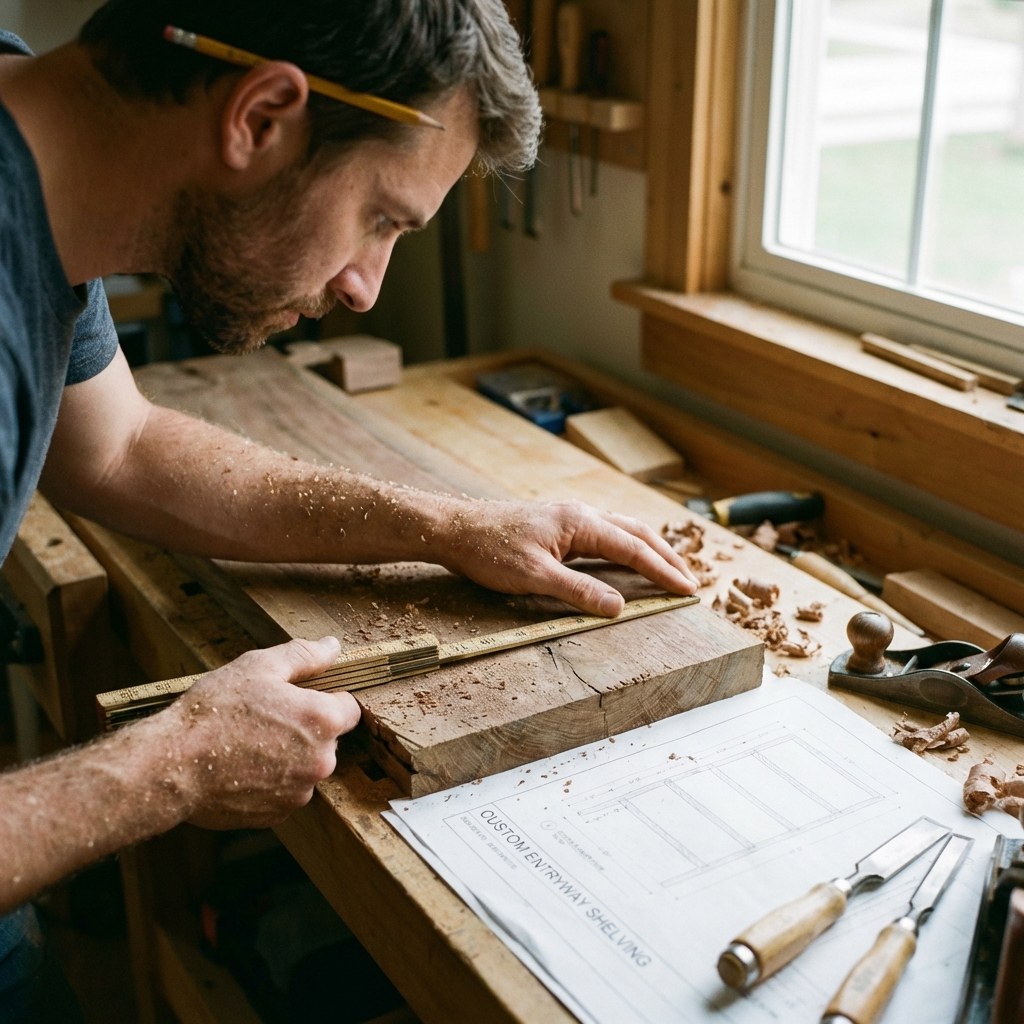 Custom built-ins require precise measurements and skilled carpentry to look seamlessly integrated into your home.
How to Decide If This Renovation Is Worth It
When evaluating an entryway renovation, measure the value in daily friction reduced. Does your current setup cause mornings to feel chaotic because shoes and keys are always missing? Does a drafty front door make your living room uncomfortably cold in the winter?
If a moderate investment in storage and weatherproofing resolves a daily source of stress and lowers your heating bills, the renovation is highly practical. If the project is purely aesthetic and requires taking on high-interest debt, it may be worth scaling back the scope or delaying the work until it can be comfortably funded. You can use the Casa app to keep track of your home improvement goals and organize your project inspiration until you are ready to begin.
Risk Boundaries
Knowing what to tackle yourself and when to call a professional is key to a smooth project.
- Safe to try yourself: Painting walls, installing surface-mounted coat hooks, swapping out standard cabinet hardware, or laying simple click-and-lock vinyl flooring.
- Worth waiting or monitoring: If your front door sticks occasionally during humid months but functions well the rest of the year, it may just be natural wood expansion rather than a structural issue requiring immediate replacement.
- Time to stop and call a professional: If you find black, crumbling wood under your entryway floor, stop working. This indicates significant water damage or pest intrusion that requires professional assessment. Likewise, never attempt to remove a wall unless a professional has confirmed it is not load-bearing (supporting the weight of the house above it).
Recap
An entryway renovation is an excellent way to improve the daily function of your home. By defining your scope early, anticipating minor water damage, and matching the right contractor to the job, you can navigate the process smoothly. Focus on durable materials and smart storage to get the highest return on your investment in everyday comfort.
When you are ready to start planning your next home project, the Casa app can help you organize your maintenance routines, track your home’s systems, and keep your property running smoothly. Download Casa today to manage your home with confidence.