

Nov 4, 2025
How to Get Rid of Rats Outside Your House For Good
Seeing a rat in your yard is alarming. Is it a lone wanderer or a sign of a full-blown infestation? This guide walks you through assessing the problem, making your property unattractive to rodents, and sealing your home to keep them out for good.
There are few things more unsettling than spotting a rat scurrying across your patio or darting under the deck. Your mind immediately starts racing: Was that a one-time visitor, or is this the start of a bigger problem? Are they getting into the house?
Looking for more guidance? Take a look at our Maintenance overview.
Seeing a rat outside your home is a valid cause for concern. Rats are not just a nuisance; they can pose serious health risks by spreading diseases and can cause significant structural damage by gnawing on wood, electrical wires, and even pipes. The good news is that you can often handle the problem yourself with a clear, methodical approach.
This guide is designed to walk you through that process, just like we were on the phone together. We'll help you figure out the scale of your rat issue and give you a step-by-step action plan to make your property rat-free.
Is One Rat a Sign of an Infestation?
The first step is to determine whether you’re dealing with a solitary scout or an established colony. Rats are social creatures, so the old saying "where there's one, there are more" often holds true. However, a single sighting doesn't automatically mean your yard is overrun. It could be a transient rat passing through, drawn by a temporary food source.
The key is to act quickly to figure out what you’re up against.
Step 1: The Initial Assessment
Before you jump into action, let's do a little detective work. This initial assessment will help you understand if that rat was just passing by or if it calls your yard home.
Working time: 10 minutes
Here's what to do:
- Observe Quietly: Go to the spot where you saw the rat. Stand still and silent for about five minutes. Rats are cautious but also creatures of habit. You might see more activity if you’re patient. The best times to do this are at dusk or dawn when they are most active.
- Walk the Perimeter: Take a slow walk around the entire exterior of your house. Keep your eyes peeled for any more rats, especially near potential food sources (like garbage cans or compost bins) and shelter (like woodpiles or dense shrubs).
Now, ask yourself: Have you seen a rat more than once in the last month?
- If the answer is no, and your quick assessment didn't reveal any more rats, you're likely dealing with a single explorer. Your next step is to make your property as uninviting as possible. Let's move to Step 2.
- If the answer is yes, you've seen rats repeatedly, it’s time to assume you have a local population. We need to look for more definitive signs of an infestation. Skip ahead to Step 3.
Step 2: If You've Only Seen One Rat — Remove the Welcome Mat
If you suspect you're dealing with a lone rat, the goal is simple: remove whatever attracted it in the first place. Rats need food, water, and shelter to survive. Take these away, and they'll have no reason to stick around.
Working time: 45 minutes | Monitoring period: 1 week
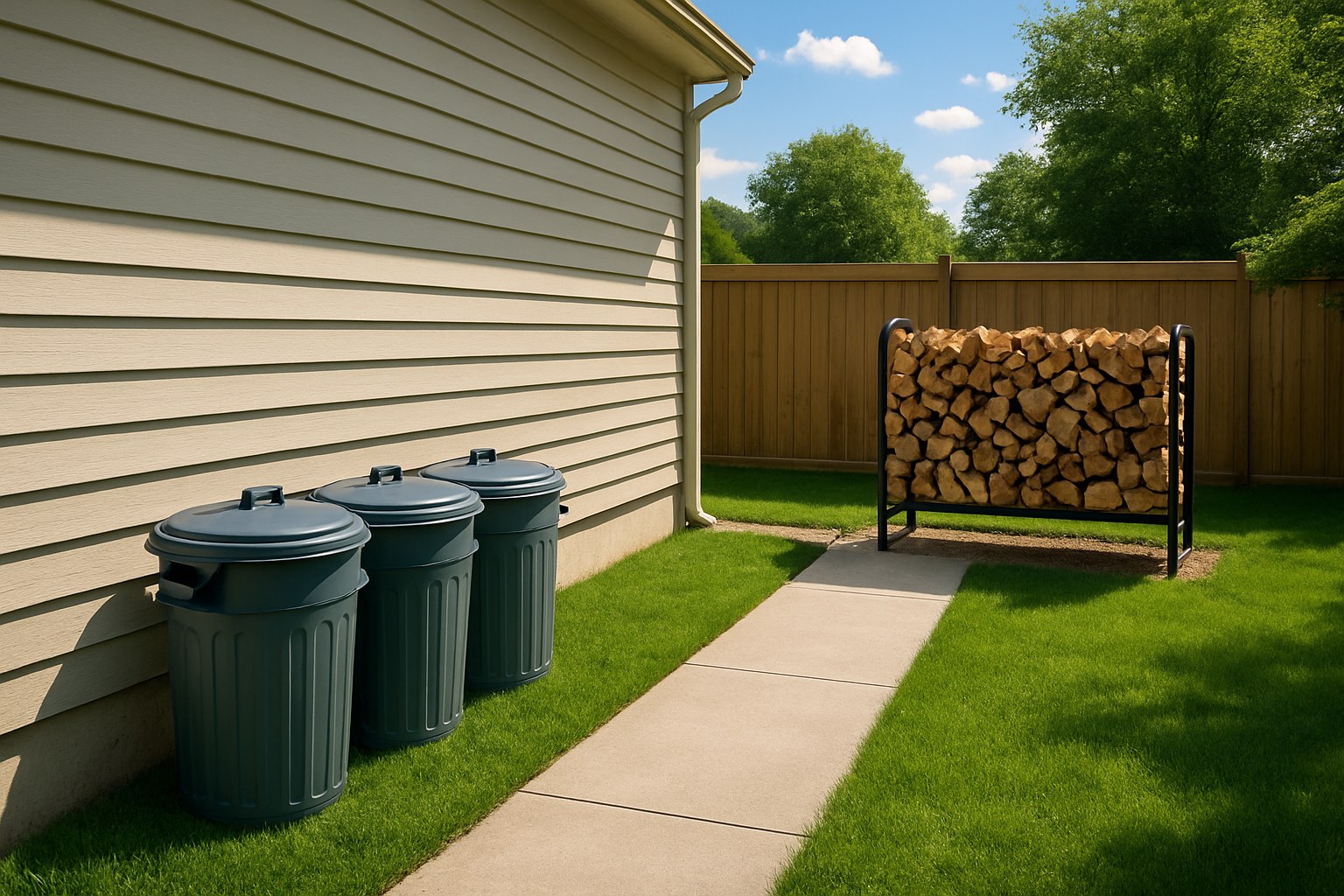
Here's how to make your yard less appealing to rodents:
- Secure Your Garbage: This is the number one attractant. Make sure all trash goes into bags that are tied securely. Most importantly, ensure your garbage can lids shut tightly. If your lid is broken or missing, replace the can. A bungee cord can also help keep persistent critters out.
- Manage Your Compost Pile: Compost is great for the garden, but an open pile of fresh food scraps is a buffet for rats. Use a shovel to turn your compost regularly and cover any new additions with soil or brown materials like leaves or sawdust. A sealed compost tumbler is an even better, rodent-proof option.
- Clean Up Natural Food Sources: If you have fruit trees, vegetable gardens, or berry bushes, be diligent about picking up any fallen produce from the ground. Don't let your harvest become a rat's dinner.
- Rethink Bird Feeders: While lovely, bird feeders are notorious for attracting rodents. Rats are happy to eat the seeds that birds spill on the ground. If you must have a feeder, sweep up any spilled seed daily and store your birdseed in a sealed, chew-proof container (metal or thick plastic).
After making these changes, monitor your yard for one week. If you see no new rat activity (no sightings, no droppings), congratulations! You have successfully encouraged your unwanted guest to move on.
If you still see rat activity after cleaning up, it's a sign the problem is more entrenched than you thought. At this point, it’s best to call a licensed pest control professional.
Step 3: If You've Seen Multiple Rats — Inspect for an Infestation
Repeated sightings strongly suggest you have a resident rat population. Now we need to confirm it by looking for the evidence they leave behind. This will also help you pinpoint their travel paths and nesting areas.
Working time: 30 minutes
The best time to inspect is at dusk. Grab a powerful flashlight and let's get started.
- Look for Droppings: Shine your flashlight along the base of your exterior walls, behind bushes, under your deck, and near garbage cans. Rat droppings are a key sign. They are typically shiny black, about 1/2 to 3/4 of an inch long, and shaped like a grain of rice with pointed ends.
- Check for Gnaw Marks: Rats have constantly growing incisors and need to chew on hard surfaces to keep them filed down. Look for fresh gnaw marks on wooden door frames, siding, deck boards, and the edges of sheds. Fresh marks will be a lighter color than the surrounding wood.
- Search for Burrows: Norway rats, a common species, are known for burrowing. Check for entry holes in the ground, especially under dense shrubs, woodpiles, or concrete slabs. These burrows will be about two to four inches wide, often with a fan of loose soil kicked out around the entrance.
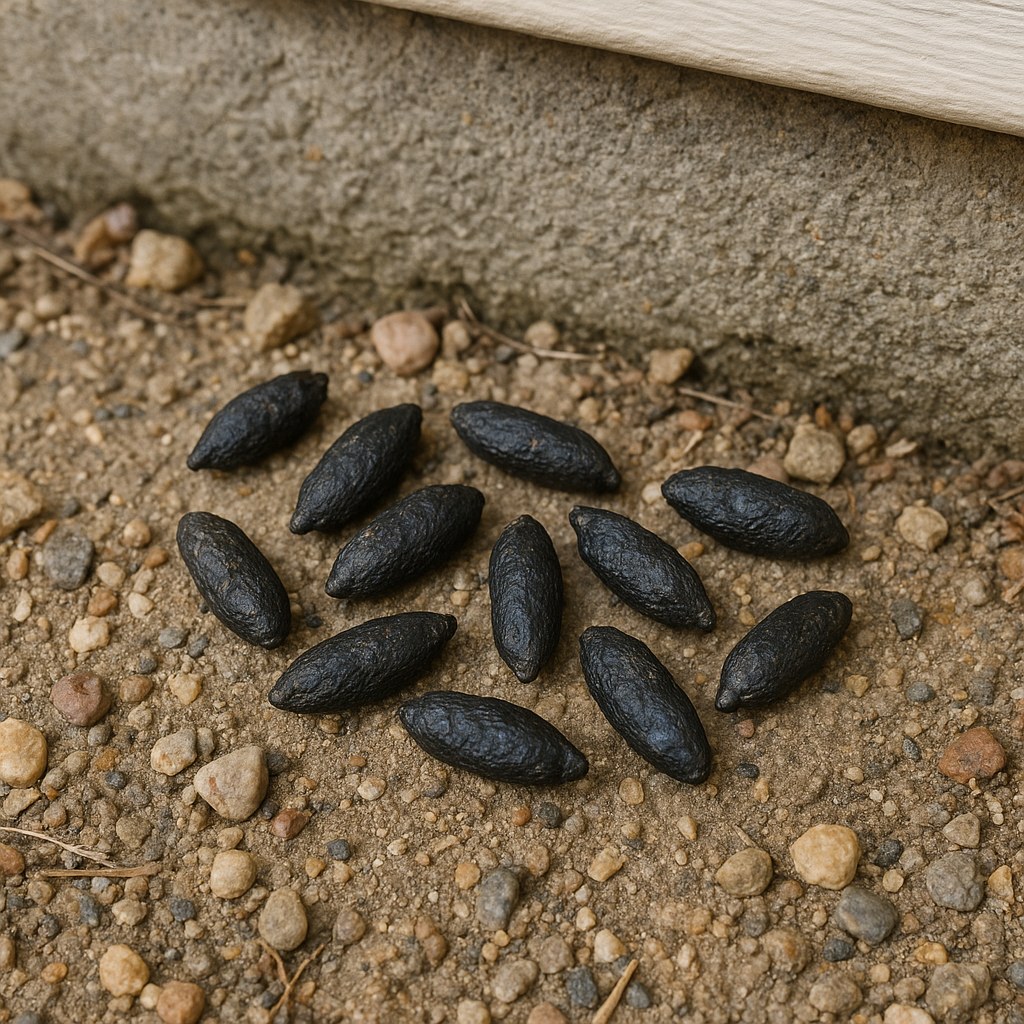
Did you find rat droppings, gnaw marks, or burrows?
- If you found clear evidence, you have a confirmed infestation. Your next step is to block their entry points and begin reducing the population. Proceed to Step 4B.
- If you didn't find any of these signs, but are still seeing rats, they may be nesting on a neighboring property and using yours as a foraging ground. Your focus should be on making your yard an inhospitable "no-go" zone. Proceed to Step 4A.
Step 4A: No Signs Found? Fortify Your Yard
If you're seeing rats but can't find nests or droppings, your goal is to eliminate any potential shelter on your property. This is about making them feel exposed and unsafe.
Working time: 1 hour | Monitoring period: 2 weeks
- Cut Back Overgrowth: Rats love clutter and tall grass, which provide cover from predators. Mow your lawn regularly and keep grass below eight inches. Use a weed whacker along fences and foundations.
- Manage Firewood Stacks: A woodpile stacked directly on the ground next to your house is a five-star hotel for rats. Move the stack at least 20 feet away from your home and elevate it on bricks or a dedicated rack to allow for airflow and visibility underneath.
- Trim Tree Branches: Rats are excellent climbers. If tree branches are touching or hanging within three feet of your roof, they can provide a direct highway into your attic. Use a pruning saw to trim them back.
- Declutter Your Perimeter: Remove any junk or clutter from along your exterior walls. This includes old planters, tarps, lumber, and boxes. The clearer the area around your foundation, the fewer places rats have to hide.
Monitor for two weeks. If the rat activity disappears, your property is now rat-free. If you're still seeing them, it's time to call a professional for a more thorough assessment.
Step 4B: Infestation Confirmed? Seal, Trap, and Eliminate
Finding droppings, burrows, or gnaw marks means it's time for direct action. The strategy here is two-pronged: prevent them from getting inside your house and reduce the outside population.
Working time: 2 hours | Monitoring period: 1 week
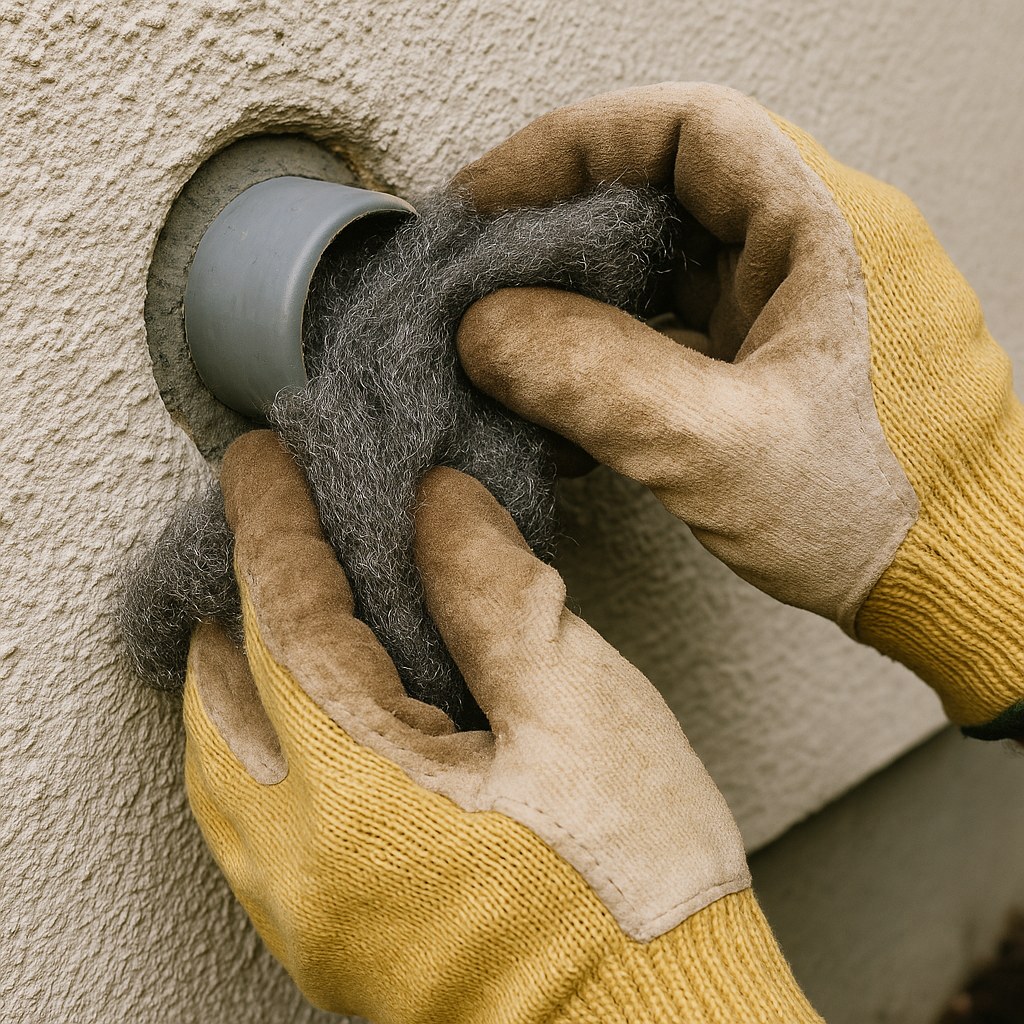
- Identify and Seal Entry Points: Rats can squeeze through surprisingly small openings. According to the CDC, they can fit through a hole the size of a half-dollar. Use a flashlight to inspect your foundation for gaps around pipes, utility lines, vents, and under doors.
- Seal with Steel Wool and Caulk: For any gaps you find, stuff them tightly with steel wool. Rats can chew through almost anything, but they hate chewing on steel wool. To hold it in place and create a weather-tight seal, cover the steel wool with silicone caulk.
- Set Traps: Trapping is an effective way to control the population in your yard. Classic wooden snap traps are affordable and effective. Bait them with a small amount of peanut butter, bacon grease, or nesting material like cotton. Place the traps along the walls where you found droppings or near burrow entrances, as rats tend to travel along vertical surfaces. Be sure to place them where pets or children cannot access them.
After sealing gaps and setting traps for one week, check for new signs. Are you still seeing fresh droppings or catching rats in your traps?
- If no, you have successfully eliminated the infestation. Keep your yard clean and monitor for any new activity.
- If yes, the infestation may be larger or more complex than a DIY approach can handle. It’s time to call in the experts.
When to Call a Pest Control Professional
While these DIY methods are highly effective, some situations require professional intervention. It's time to call a pro if:
- You've tried these steps for several weeks with no improvement.
- You suspect rats have gotten inside your walls, attic, or crawlspace.
- The infestation seems too large to manage on your own.
A professional exterminator has the training and tools to resolve the issue safely and efficiently. The cost for professional rat removal can vary, but Forbes Advisor notes that the average cost is around $350, with a typical range of $175 to $525. It's a worthwhile investment for your peace of mind and the protection of your home.
Take Control of Your Home Maintenance
Dealing with pests is a stressful part of homeownership, but you don’t have to do it alone. By following this guide, you can take confident, effective steps to reclaim your yard from unwanted rodents.
For more expert advice on tackling home maintenance challenges, from pest control to plumbing, download the Casa app today. Our easy-to-follow guides empower you to handle DIY fixes, and when a job is too big, we can connect you with trusted, vetted professionals in your area. Let Casa be your partner in keeping your home safe and sound.