

Nov 21, 2025
How To Remove Driveway Stains From Concrete Asphalt and More
Don't let ugly stains ruin your curb appeal. Our comprehensive guide walks you through identifying your driveway material—concrete, asphalt, pavers, or gravel—and using the right DIY methods to remove oil, grease, and other stubborn stains for good.
Your driveway is one of the first things people see when they arrive at your home. It’s the welcome mat to your property, but over time, it can get marred by ugly stains from oil leaks, tire marks, grime, and spills. These eyesores don't just hurt your home's curb appeal; some stains can even degrade the surface of your driveway over time.
Looking for more guidance? Take a look at our Maintenance overview.
The good news? You don't have to live with a stained driveway. With a little bit of know-how and some elbow grease, you can tackle most of these spots yourself. Think of me as your friendly expert on the other end of the line, ready to walk you through it.
In this guide, we'll cover everything you need to know about how to remove stains from any type of driveway, whether it's concrete, asphalt, pavers, or gravel. Let's get that driveway looking brand new again!
First Things First: Assess Your Driveway
Before you grab a brush and start scrubbing, we need to do a little detective work. Using the wrong cleaning method can be ineffective at best and permanently damaging at worst. Here’s how to start.
1. Identify Your Driveway Material
The first step is to figure out exactly what your driveway is made of. The four most common types are:
- Concrete: A light gray, hard, and relatively smooth surface made from cement, sand, and gravel. It’s very porous and soaks up stains easily.
- Asphalt (or Blacktop): A black, slightly softer surface made from a petroleum-based binder and aggregates. It’s more flexible than concrete but can be damaged by harsh chemical solvents.
- Pavers or Bricks: Individual blocks made of concrete, clay, or stone set in a pattern. The challenge here is cleaning both the porous paver surface and the sand-filled joints between them.
- Gravel: Loose stones or crushed rock. Cleaning gravel is less about scrubbing and more about removing and replacing the stained material.
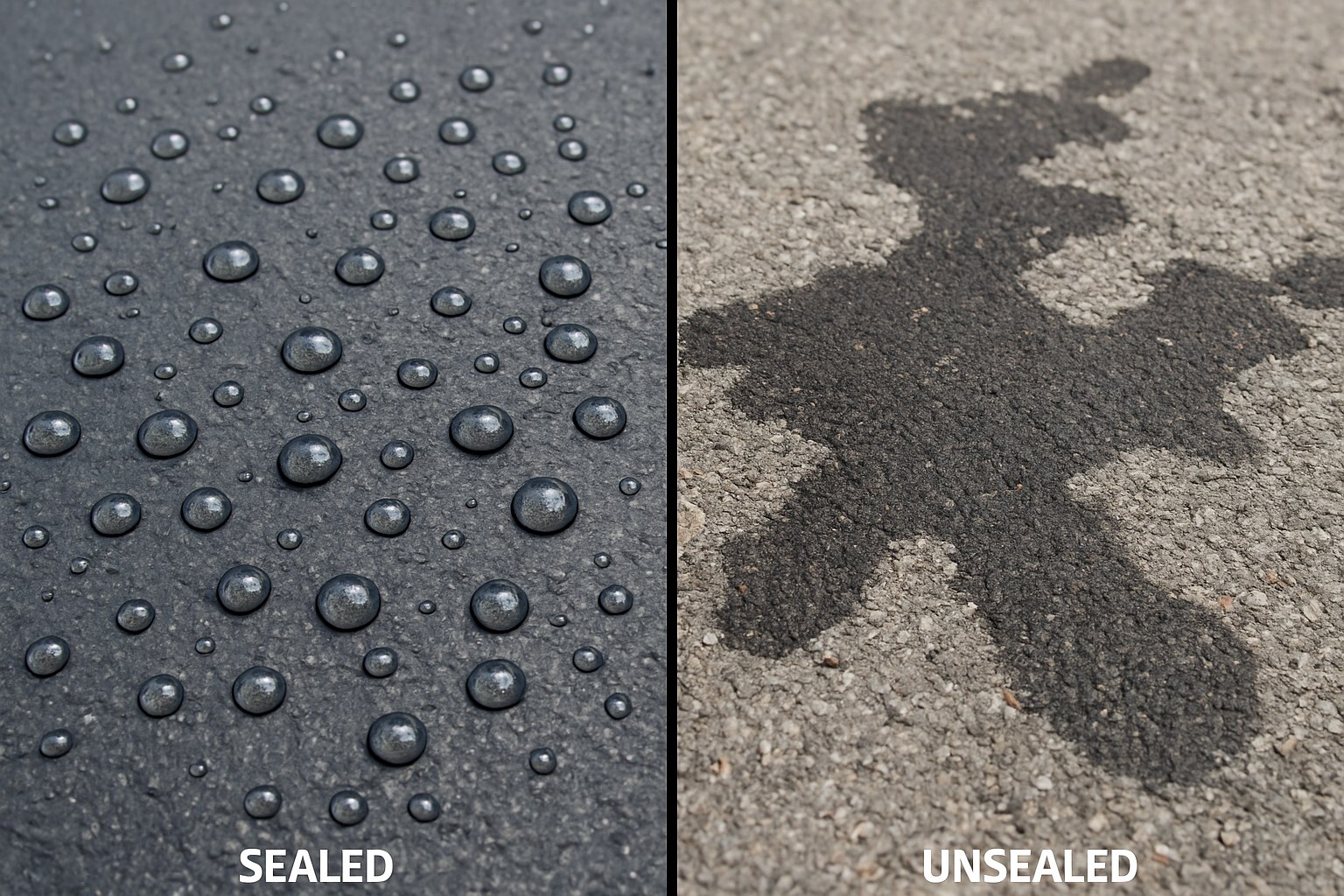
2. Check for a Sealant
Many driveways have a protective sealant applied to them. Cleaning a sealed driveway with abrasive methods or harsh chemicals can strip this protective layer, leading to more problems down the road.
Here’s a simple test:
- Pour a tablespoon of water onto a clean, unstained part of your driveway.
- Watch it for about 60 seconds.
- If the water beads up like on a freshly waxed car, your driveway is sealed.
- If the water soaks in and darkens the surface, it’s unsealed.
If your driveway is sealed, we strongly recommend calling a professional. The risk of damaging the sealant is high, and a pro will have the right tools and gentle cleaners to do the job safely.
How to Clean a Concrete Driveway
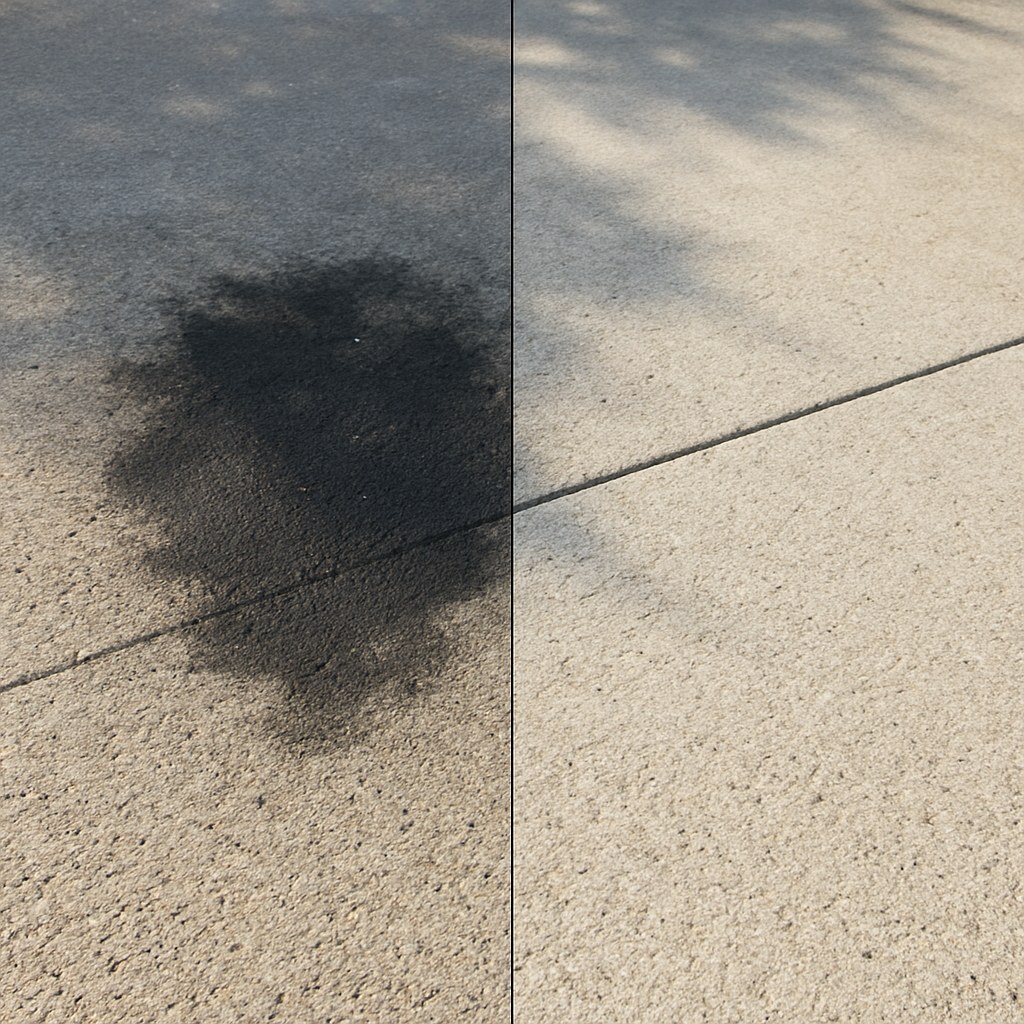
Unsealed concrete is like a sponge for stains, especially oil and grease. But with the right approach, you can pull most of them out.
For Oil and Grease Stains:
Oil is the most common culprit on concrete. The key is to absorb as much of it as possible before you start scrubbing.
What You'll Need:
- Cat litter (the plain, non-clumping clay kind works best)
- Stiff broom
- Concrete cleaner or degreaser
- Stiff scrub brush
- Garden hose with a spray nozzle
Step-by-Step Instructions:
- Absorb the Excess Oil: Pour a generous amount of cat litter directly onto the oil stain, making sure to cover it completely.
- Grind it In: Use the heel of an old shoe to stomp on the litter, grinding it into the stain. This helps the clay pull the oil out from the concrete's pores.
- Let it Sit: Leave the litter on the stain for at least 30 minutes. For older, tougher stains, you might want to leave it overnight.
- Sweep it Up: Use your stiff broom to sweep up the oil-saturated litter. Dispose of it in a sealed trash bag according to your local regulations.
- Apply Cleaner: Pour a high-quality concrete cleaner or degreaser directly onto the remaining stain.
- Scrub Vigorously: Using a stiff-bristled scrub brush, work the cleaner into the stain. Use some muscle here—you want to get deep into the concrete's pores. Scrub for about 5 minutes.
- Rinse Thoroughly: Use your garden hose, ideally with a high-pressure nozzle, to rinse the area completely.
- Let it Dry: Allow the spot to dry fully. Concrete looks different when wet, so you won’t know if the stain is truly gone until it's dry.
If a faint spot remains, you can repeat the process. If it’s still there after a second attempt, it may have penetrated too deeply, and it might be time to call in a pro.
For Other Stains (Dirt, Mildew, Leaf Stains):
For general grime or organic stains, a gentler approach is often all you need.
What You'll Need:
- Oxygen bleach powder
- Bucket
- Stiff scrub brush
- Garden hose
Step-by-Step Instructions:
- Mix Your Solution: In a bucket, mix one cup of oxygen bleach powder with one gallon of warm water. Stir until it’s fully dissolved. Oxygen bleach is a great, eco-friendly alternative to chlorine bleach, which can harm your lawn.
- Saturate the Stain: Pour the solution over the stained area, making sure it’s completely soaked.
- Let it Work: Allow the solution to sit and work its magic for about 15 minutes.
- Scrub the Area: Use your stiff brush to scrub the stain.
- Rinse it Clean: Rinse the area thoroughly with your garden hose. Try to direct the runoff toward a grassy area or soil rather than into storm drains.
How to Clean an Asphalt Driveway
Asphalt is durable, but because it's a petroleum product, it can be damaged by oil, gasoline, and other harsh solvents. You need to be a bit more careful here.
For Oil and Grease Stains:
The process is similar to concrete, but you must use a cleaner that is specifically designed for asphalt.
What You'll Need:
- Cat litter
- Stiff broom
- Asphalt-safe degreaser
- Stiff brush
- Garden hose
Step-by-Step Instructions:
- Absorb and Sweep: Follow the same cat litter method as for concrete: pour, grind, wait 30 minutes, and sweep up.
- Apply Degreaser: Apply an asphalt-safe degreaser to the remaining stain. Read the product's instructions carefully.
- Scrub Gently: Scrub with a stiff brush, but don't be overly aggressive, as you don't want to damage the asphalt's surface.
- Rinse Well: Rinse the area with a garden hose, again being mindful of runoff.
For Other Stains:
The oxygen bleach solution is also safe for asphalt and works well on dirt and grime. Follow the same mixing and application steps as you would for concrete.
How to Clean a Paver or Brick Driveway
Pavers add a lot of character, but their porous nature and the sand-filled joints present a unique challenge.

For Oil and Grease Stains:
What You'll Need:
- Cat litter
- Brush
- Paver-safe degreaser
- Stiff scrub brush
- Garden hose
- Polymeric joint sand (optional, but recommended)
Step-by-Step Instructions:
- Absorb the Oil: Apply cat litter, grind it in, let it sit for 30 minutes, and sweep it away.
- Apply Cleaner: Spray a paver-safe degreaser onto the stain.
- Scrub the Pavers: Use a stiff brush to scrub the surface of the pavers, paying close attention to the porous texture.
- Rinse Gently: Rinse with a garden hose on a gentle setting. A high-pressure stream can blast the sand right out of the joints.
- Replace the Sand: If you did wash out some of the joint sand, wait for the area to dry completely. Then, sweep new polymeric sand into the joints and mist it lightly with water to set it.
For Other Stains:
The oxygen bleach method works wonders on pavers, too. Just remember to rinse gently to protect the joint sand, and be prepared to refill the joints if needed.
How to "Clean" a Gravel Driveway
You can’t really scrub gravel. For a gravel driveway, the solution is usually to remove and replace the stained stones.
- For Oil Stains: Use a shovel to scoop up the top 2-3 inches of stained gravel and dispose of it. Rake the surrounding gravel to fill the spot, and then top it off with a fresh layer of matching gravel.
- For Other Discoloration: Often, you can simply use a sturdy rake to mix the discolored gravel with the clean stones around it. If the stain is still noticeable, adding a thin top layer of fresh gravel will hide it completely.
When a DIY Fix Isn't Enough
While these DIY methods are effective for most common stains, some jobs are best left to the professionals. You should call a contractor if:
- Your driveway is sealed.
- The stain won't lift after two cleaning attempts.
- The stain is from something hazardous like battery acid.
- You don't know what the stain is or what your driveway is made of.
The cost to have a driveway professionally cleaned typically ranges from $250 to $600, depending on the size of your driveway and the severity of the stains. It's a worthwhile investment to avoid causing permanent damage.
Final Thoughts: Your Curb Appeal is Back!
A clean driveway makes a huge difference in the overall look and feel of your home. By correctly identifying your driveway's material and using the right cleaning technique, you can restore its appearance and protect its longevity.
Feeling overwhelmed or have a stain that just won't budge? Download the Casa app! We make home maintenance simple with easy-to-follow guides just like this one. And if you decide you need a pro, Casa can connect you with trusted, vetted contractors in your area to get the job done right. Get started today and take the guesswork out of homeownership