

Apr 14, 2026
Spring Gutter Cleaning and Drainage Checklist
Learn how to safely clean your gutters and check your downspouts this spring to prevent costly water damage and protect your home foundation.
It is common to look at home maintenance as a list of tedious weekend chores. Clearing out your gutters often falls right at the top of that list. However, it helps to look at this task differently: cleaning your gutters is not busywork. It is one of the most effective, low-cost ways to prevent major water damage to your home.
Looking for more guidance? Take a look at our Maintenance overview.
When you clear debris from your roofline, you are actively directing thousands of gallons of water safely away from your house during spring and summer storms.
What Typically Goes Wrong If Ignored
Gutters have one simple job: catch rain and carry it away from your house. When they become clogged with winter leaves, pine needles, and dirt, the water has nowhere to go.
Instead of flowing down the spout, water pools in the gutter. Eventually, it spills over the edges. When water overflows regularly, it runs down the side of your house and pools directly at the base of your home. Over time, this pooling water puts immense hydrostatic pressure (the weight of the water) against your foundation, finding its way into basements and crawlspaces.
Additionally, standing water is heavy. Clogged gutters can easily warp or tear away from the side of your house under the weight of wet debris.
What This Task Protects
Keeping your gutters clear directly protects several critical parts of your home:
- The Foundation: By moving water away from the base of your home, you prevent shifting, cracking, and basement flooding.
- Fascia Boards: The fascia is the long wooden board right behind your gutters. Overflowing water rots this wood, leading to expensive carpentry repairs.
- Roof and Siding: Clear gutters prevent water from backing up under your roof shingles or staining your exterior siding.
- Pest Control: Standing water in clogged gutters is a common breeding ground for mosquitoes and carpenter ants.
Step-by-Step Checklist for Clearing Gutters
If you choose to do this task yourself, preparation makes the job safe and straightforward.
- Gather your tools: You will need a sturdy extension ladder, thick work gloves, a small plastic scoop (a child’s sandbox shovel works well), a bucket, and a garden hose with a spray nozzle.
- Position your ladder safely: Place your ladder on firm, level ground. Ensure it leans against the house at a safe angle. Never lean a ladder directly on the gutters, as they can bend easily.
- Scoop the debris: Starting near the downspout, use your scoop to remove leaves and muck. Place the debris into your bucket to avoid a messy cleanup on the ground later.
- Flush the gutter: Once the heavy debris is out, use your garden hose to spray the remaining dirt toward the downspout.
- Check the flow: Watch the water run down the spout. If the water backs up, you may have a clog inside the vertical downspout tube. You can usually clear this by feeding the hose down the pipe and turning the water on full blast to push the clog out.
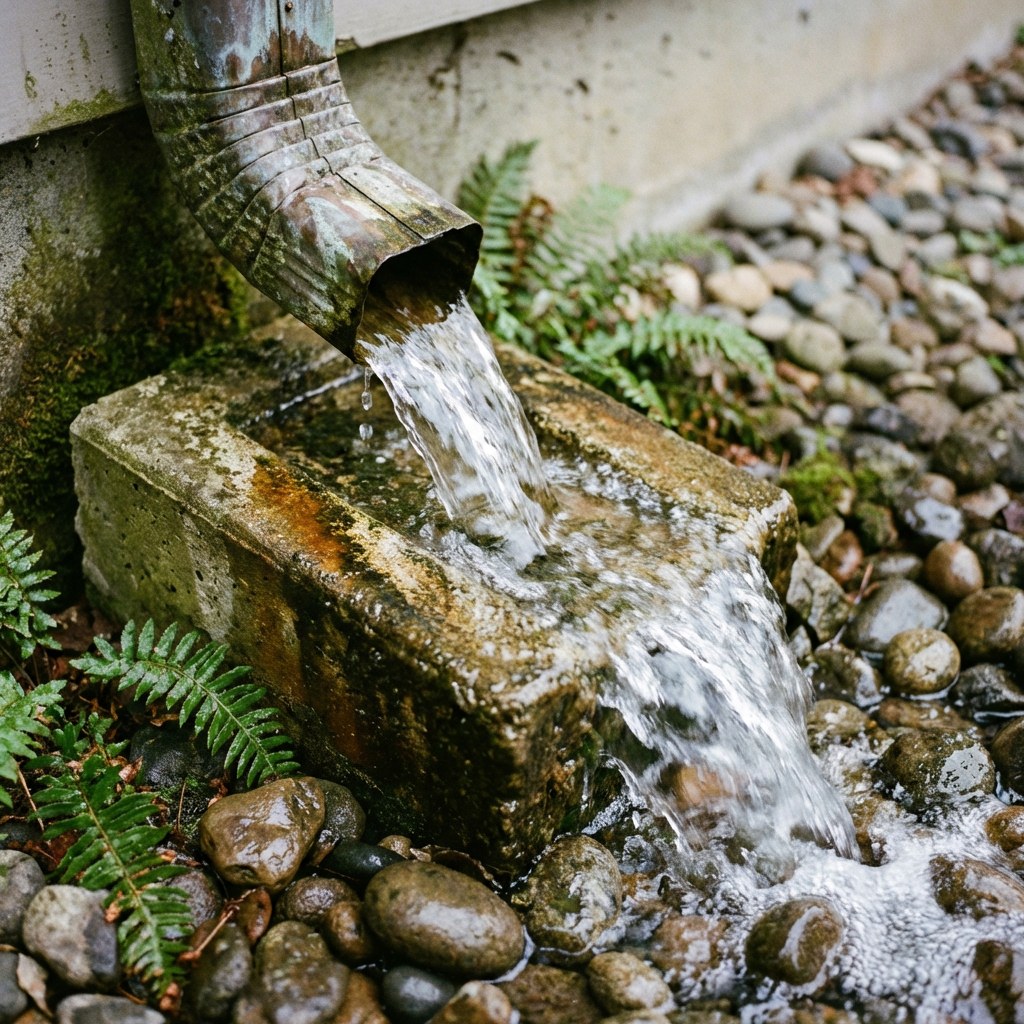
- Inspect downspout extenders: Ensure the water exiting at the bottom is being directed at least three to four feet away from your foundation.
How Often It Should Be Done
For most homes, gutter cleaning should be done twice a year.
- Spring: To clear out twigs, seeds, and late-falling debris from winter, preparing the system for heavy spring showers.
- Late Fall: Once the majority of the leaves have fallen from the trees around your property.
If you live in an area heavily surrounded by pine trees, you may need to check them a third time during the summer, as pine needles accumulate quickly.
Signs You Have Waited Too Long
If you are unsure whether your gutters need attention, the next heavy rainstorm will usually tell you. Look out for these signs:
- Water cascading over the sides of the gutters like a waterfall.
- Water pooling near the foundation or making the ground noticeably soft and muddy near the house.
- Gutters that look visibly crooked, sagging, or pulling away from the roofline.
- Small plants or weeds visibly growing out of the top of your gutters.
The Cost of Neglect vs. Cost of Maintenance
Preventive maintenance requires a very small investment compared to the repairs caused by poor drainage.
- Cost of Maintenance: If you do it yourself, the cost is essentially zero. If you hire a professional, standard gutter cleaning generally ranges from $150 to $300, depending on the size and height of your home.
- Cost of Neglect: Replacing rotted fascia boards can cost between $500 and $1,500. Fixing a flooded basement or repairing foundation cracks caused by water pooling can easily run from $3,000 to over $10,000.
Safety Boundaries: When to Call a Pro
While cleaning gutters is a standard homeowner task, ladder safety should be taken seriously.
This is an excellent DIY task if you have a single-story home, level ground, a reliable ladder, and feel comfortable working at moderate heights.
However, you should stop and hire a professional if:
- You have a two-story or three-story home.
- Your property sits on a steep hill or uneven ground where a ladder cannot be safely stabilized.
- Your roof is particularly steep or complex.
- You experience vertigo, unsteadiness, or physical limitations.
Paying a local service to handle heights is a smart, standard decision for many homeowners.
How to Build This Into Your Home Maintenance Schedule
Because gutters only need attention a few times a year, it is easy to forget about them until a storm hits. The best way to stay prepared is to tie this task to a predictable seasonal change.
Make a habit of scheduling your spring check in April, right as you start organizing your yard, and your fall check in November, right before freezing temperatures arrive. If you use the Casa app, you can easily set up a recurring seasonal maintenance schedule. Casa will remind you when it is time to check your roofline, keeping you ahead of the weather without needing to keep the task taking up space in your mind all year.
Recap
Clearing your gutters is a simple, high-impact maintenance task that protects your home's foundation, siding, and roof from water damage. By scooping out seasonal debris twice a year and ensuring water flows safely away from your house, you avoid thousands of dollars in hidden decay. Whether you spend a Saturday afternoon on a ladder or hire a local professional, keeping your gutters clear is one of the smartest investments you can make in your home's longevity.
For more guidance on organizing your seasonal home tasks and keeping track of your maintenance routines, download the Casa app today. We are here to help you manage your home with confidence.