

Jan 17, 2026
How to Fix a Boiler Not Producing Heat A DIY Guide
Woke up to a cold house or a lukewarm shower? Our guide walks you through the most common boiler problems, from low pressure and air-locked radiators to thermostat issues, so you can get your heat and hot water back on.
It’s one of the worst feelings: you wake up on a chilly morning, stumble to the shower, turn the handle, and are met with a stream of lukewarm—or worse, ice-cold—water. You touch a radiator, and it’s stone cold. Your boiler isn't working, and suddenly your cozy home feels more like an icebox.
Looking for more guidance? Take a look at our Repairs overview.
Don't panic! While a boiler breakdown is stressful, it doesn't always mean an expensive call-out is in your immediate future. Many common boiler issues can be safely diagnosed and fixed with a little DIY know-how. Boiler breakdowns are one of the most common home maintenance issues, but you'd be surprised how often the solution is something simple.
Here at Casa, we want to empower you to handle these problems yourself. Think of us as your friendly expert on the other end of the line, ready to walk you through it. This guide will help you troubleshoot why your boiler isn't producing heat or hot water and get your system back up and running.
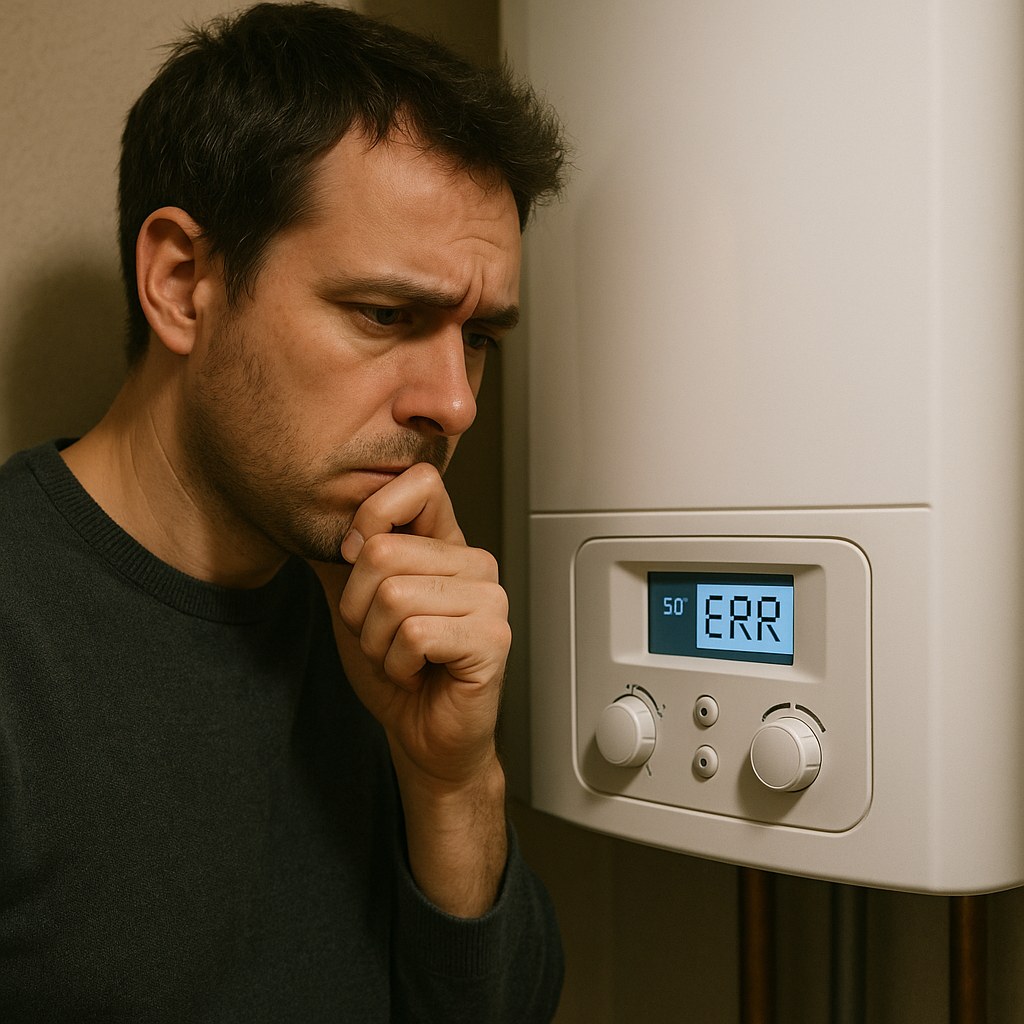
Before You Begin: The First Diagnostic Question
To figure out what’s wrong, we first need to narrow down the symptoms. The most important question you need to answer is:
Are you having issues with BOTH your central heating and your hot water, or just one of them?
The answer to this question is your key to unlocking the problem.
- Both heating and hot water are out: This usually points to a system-wide issue, like low water pressure or a problem with the boiler itself.
- Only hot water is out: This suggests the problem is isolated to the hot water delivery system, like a diverter valve on a combi boiler.
- Only the heating is out: This means the boiler is successfully heating water, but it's not circulating through your radiators properly.
Once you know the answer, you can jump to the right section below and start troubleshooting.
Problem 1: No Heat AND No Hot Water
If your whole system is down, it’s likely a central issue. Let’s work through the most common culprits, from easiest to most complex.
Step 1: Check Your Boiler's Pressure
Your boiler needs to maintain a stable water pressure to function correctly. If the pressure drops too low, a safety feature will often shut the boiler down to prevent damage.
How to check: Look for a pressure gauge on the front of your boiler. It’s usually a round dial with green and red zones. When the system is cold, the needle should be in the green zone, typically between 1.0 and 1.5 bar. If the needle is below 1.0 bar, or in the red, you've likely found your problem.
How to Repressurize Your Boiler
Repressurizing sounds technical, but it’s a straightforward task.
- Locate the Filling Loop: Look underneath your boiler for a small, flexible, silver-braided hose with a valve at each end. This is the filling loop.
- Open the Valves: Using a flathead screwdriver or the small handles, turn both valves a quarter-turn until they line up with the pipe. You should hear the sound of water entering the system.
- Watch the Gauge: Keep your eyes on the pressure gauge. You’ll see the needle start to rise.
- Close the Valves: Once the needle reaches around 1.2 bar, immediately close both valves by turning them back to their original position. Be careful not to over-pressurize the system.
- Check for Drips: Wipe down the filling loop and valves with a cloth and make sure there are no leaks.
Once repressurized, try restarting your boiler. In many cases, this is all it takes to bring your heat and hot water back to life.
Step 2: Check Your Thermostat and Timer
Sometimes, the simplest solution is the right one. It's possible your boiler is fine, but it hasn't been told to turn on.
- Check the Room Thermostat: Make sure your thermostat is set a few degrees higher than the current room temperature. If it's set too low, it won't "call for heat." If you have a digital thermostat, check that the batteries aren't dead.
- Check the Boiler Timer/Programmer: Ensure that the heating and hot water are scheduled to be "ON" at the current time. It’s easy to accidentally switch it to a different setting.
Make the necessary adjustments, wait about 10 minutes, and then check a radiator or hot water tap.
Step 3: Bleed Your Radiators
If your radiators have cold spots, especially at the top, it’s a classic sign of trapped air in the system. This air prevents hot water from circulating properly, making your heating inefficient and sometimes causing the boiler to struggle.
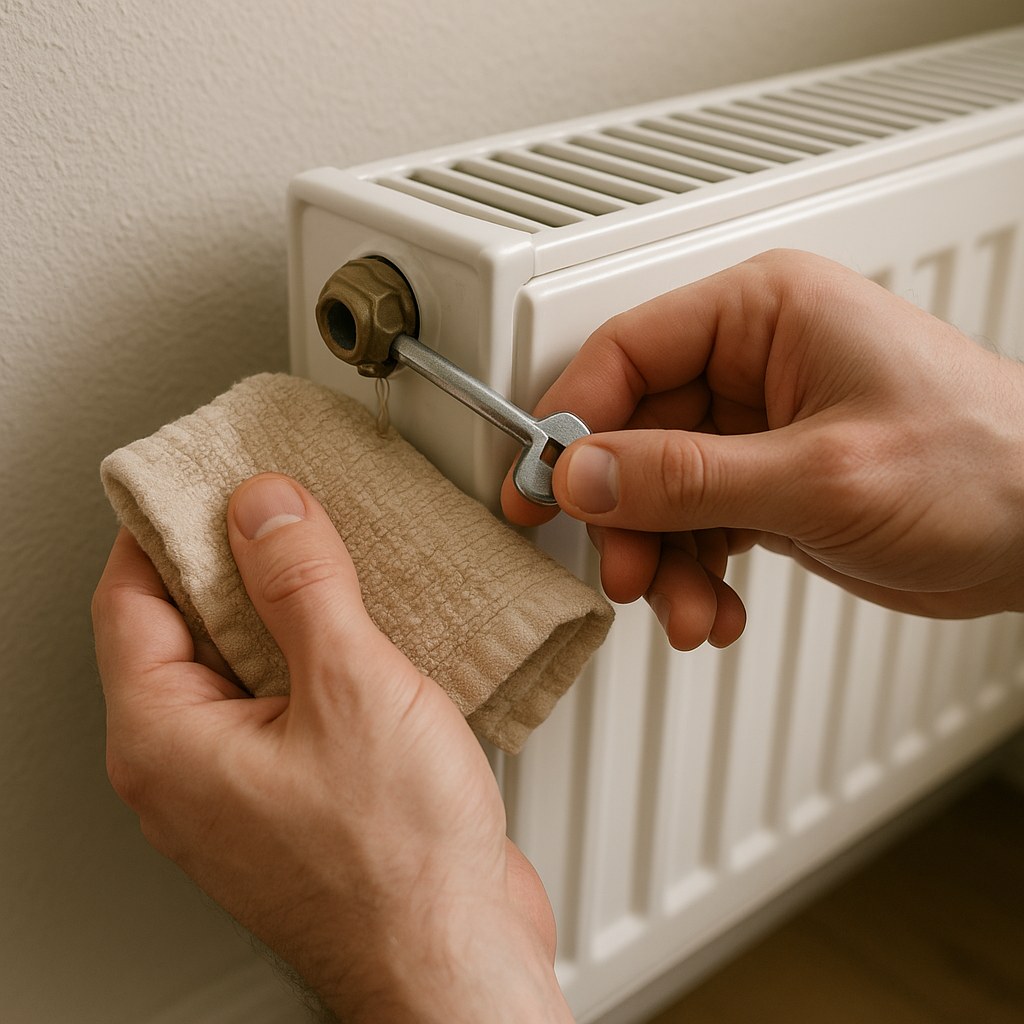
How to Bleed Your Radiators
- Turn Off the Boiler: Make sure your central heating is switched off and wait for the radiators to cool down.
- Prepare: Place an old towel or a small tray under the bleed valve of the first radiator. The bleed valve is a small square or screw-head valve, usually at the top corner of the radiator.
- Open the Valve: Insert a radiator bleed key (available at any hardware store) into the valve and slowly turn it counter-clockwise about a quarter-turn. You’ll hear a hissing sound as the trapped air escapes.
- Close the Valve: As soon as water starts to trickle out instead of air, turn the key clockwise to close the valve tightly.
- Repeat: Go through every radiator in your home, starting with the ones downstairs and working your way up.
- Check the Pressure: Bleeding radiators releases pressure from the system, so check your boiler's pressure gauge when you're done. If it has dropped below 1.0 bar, you'll need to repressurize it using the steps above.
Step 4: Inspect the Circulation Pump
The circulation pump is the heart of your heating system, pushing hot water from the boiler to your radiators and back again. If it gets stuck or fails, the water won't move, and you'll get no heat.
- Safety First: Turn off all power to the boiler at the main switch.
- Locate the Pump: This is usually a metal box-like component within the boiler casing.
- Listen and Feel: Carefully place your hand on the pump's housing. If it's running, you should feel a slight vibration and hear a low hum. If it’s silent and still, it might be stuck.
- Free a Stuck Pump: Many pumps have a large, silver screw in the center. With the power still off, place a towel underneath to catch drips and use a flathead screwdriver to turn the screw one full turn counter-clockwise. This can release trapped air or a stuck spindle. Tighten the screw, restore power, and listen for the pump to kick in.
If the pump is very hot to the touch or makes loud grinding noises, it has likely failed and will need to be replaced by a professional.
Problem 2: Heating Works, But No Hot Water
If your radiators are toasty but your taps are cold, the issue is with the domestic hot water system. The fix depends on what type of boiler you have.
For Combi Boilers: The Diverter Valve
A combination (combi) boiler heats water on demand. A component called the diverter valve directs hot water to either your radiators or your taps. These valves can sometimes get stuck in the "heating" position.
A gentle tap on the valve's housing with the handle of a screwdriver can sometimes be enough to free it. You'll need to remove the boiler's front panel to access it. Always turn off the power to your boiler before removing any panels. If this doesn't work, the valve likely needs to be replaced by an HVAC technician.
For Conventional Boilers: The Cylinder Thermostat
If you have a conventional boiler with a separate hot water storage cylinder (tank), check the thermostat on the side of the cylinder. It should be set to at least 60°C (140°F) to ensure the water is properly heated. If it's set too low, just turn it up, wait 30 minutes for the boiler to reheat the water, and test a tap.
When It's Time to Call an HVAC Technician
While many boiler issues are simple DIY fixes, some problems require an expert. You should call a professional if:
- You’ve tried all the steps above and nothing has worked.
- Your boiler is displaying a specific error code that you can't clear.
- You smell gas or suspect a carbon monoxide leak (in this case, leave your home immediately and call your utility company).
- You see significant water leaking from the boiler unit itself.
- You're simply not comfortable performing any of these steps.
According to Angi, the average professional boiler repair costs around $425, with a typical range between $225 and $630. While it's an expense, it's a worthwhile investment in your home's safety and comfort.

Stay Warm and In Control
Facing a boiler problem can be daunting, but by following a logical troubleshooting process, you can often solve the issue yourself and save hundreds of dollars. By checking the pressure, thermostat, and radiators first, you can knock out the most common culprits in under an hour.
For more easy-to-follow home maintenance guides, expert advice, and a direct line to vetted professionals when you need them, download the Casa app today. We're here to help you manage your home with confidence, one project at a time.