

Mar 10, 2026
How to Fix a Boiler That Sounds Like a Kettle
If your boiler is making a whistling or rumbling kettle noise, it is usually due to trapped air, high pressure, or limescale buildup. Here is how to quiet it down safely.
Hearing a high-pitched whistling, bubbling, or rumbling noise coming from your boiler can be alarming. Because it sounds exactly like a tea kettle coming to a boil on the stove, HVAC professionals refer to this issue as "kettling."
Looking for more guidance? Take a look at our Repairs overview.
When a homeowner first hears this sound, it is easy to assume the boiler is dangerously overheating or nearing the end of its life. Fortunately, that is rarely the case. Kettling simply means the water flow inside the system is restricted. When water moves too slowly over the heat exchanger, it gets too hot and begins to boil and turn to steam, creating that whistling sound.
The restriction is usually caused by trapped air, incorrect system pressure, or hard-water mineral buildup. You can resolve most of these issues yourself with a few basic tools and a bit of patience.
Here is how to safely diagnose and treat a kettling boiler.
Safety First: What You Can Do vs. When to Call a Pro
Safe to try yourself:
- Checking the system pressure gauge.
- Releasing trapped air by bleeding the radiators.
- Adjusting the boiler's water pressure.
When to stop and call a professional:
- If you do not feel comfortable draining the system.
- If adjusting the water pressure and bleeding the radiators does not stop the noise.
- If you suspect an electrical or internal mechanical failure, such as a broken circulating pump.
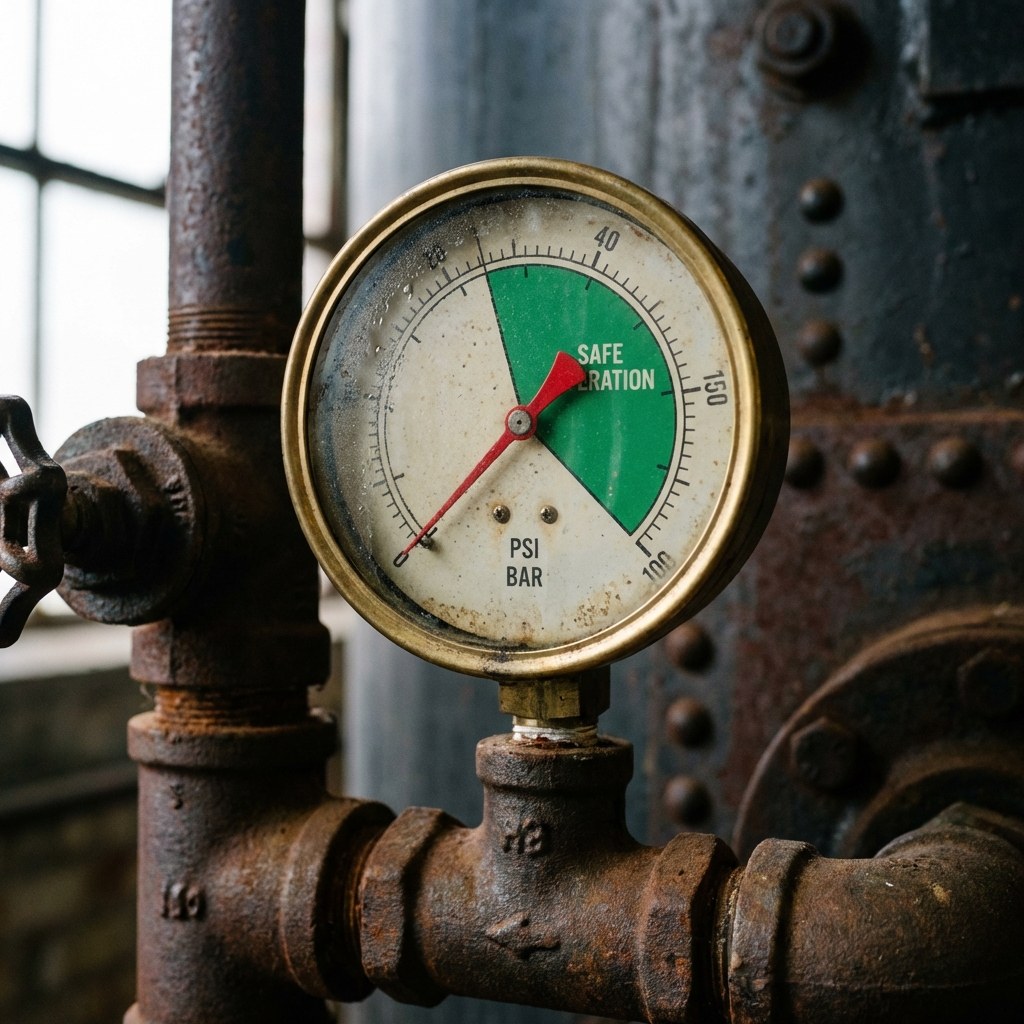
Step 1: Prepare the Boiler for Inspection
Before doing any work on your heating system, you must allow it to cool down to prevent accidental burns.
- Turn your room thermostat to its lowest setting to switch off the heating demand.
- Turn the boiler power switch to the "off" position.
- Wait at least 30 minutes for the boiler casing and the internal water to cool completely.
- Locate the pressure gauge. This is typically on the front or underside of the boiler. It will usually have a dial that measures pressure in "bar" (1 bar is roughly equal to 14.5 PSI).
Step 2: Check and Reduce Boiler Pressure
A healthy cold boiler should have a pressure reading between 1.0 and 1.5 bar. If your gauge is reading above 1.5 bar while the system is cold, the pressure is too high and needs to be reduced.
- Place a bucket under the bleed valve of your lowest radiator.
- Insert a radiator bleed key into the valve and turn it counter-clockwise until water starts to flow.
- Keep an eye on the boiler's pressure gauge as the water drains.
- Once the gauge drops into the 1.0 to 1.5 bar range, close the bleed valve tightly.
- Dry any drips on the radiator with a towel.
- Turn the boiler back on and listen. If the noise is gone, your system is back to normal. If it continues, move to the next step.
Step 3: Bleed Radiators and Repressurize
Trapped air is a common cause of kettling. Air bubbles take up space in the pipes, slowing down the flow of water. If you have not bled your radiators in the last six months, it is worth doing now. Keeping track of routine tasks like this is easy if you log them in your Casa app.
- With the boiler powered off and cooled down, hold a towel under the bleed valve of your highest radiator (usually on the top floor of the home).
- Insert the radiator bleed key and turn it slowly counter-clockwise until you hear air hissing out.
- Keep the valve open until a steady stream of water flows out, then turn it clockwise to close it.
- Repeat this process for every radiator in the house, moving from the highest floor down to the lowest floor.
- Return to the boiler and check the pressure gauge. Bleeding air out often causes system pressure to drop.
- If the gauge is below 1.0 bar, locate the filling loop (the hoses and valves connecting your home's water supply to the boiler). Open the valves until the gauge reads between 1.2 and 1.5 bar, then close them securely.
Turn the boiler on and listen. If the kettling sound is gone, the trapped air was your culprit.
Step 4: Check for Hard Water and Limescale
If your pressure is correct and the radiators are free of air, you may have limescale buildup. If you live in an area with hard water, minerals can bake onto the boiler's heat exchanger, much like the chalky white residue you might see on your kitchen faucets. This insulates the metal, causing the water to boil unevenly.
Testing and descaling your system is a more involved process.
- Fill a clean glass with cold tap water and dip a water hardness test strip into it. If the reading comes back as "Hard" or "Very Hard," limescale is a likely suspect.
- With the boiler powered off and cooled, close the isolation valves on both sides of the system's magnetic filter (if you do not have a filter, you will need to add descaler via a downstairs radiator).
- Unscrew the filter lid and pour in the recommended amount of central-heating system descaler.
- Re-seal the lid and open the isolation valves.
- Switch the boiler on and set the thermostat to 140°F (60°C) for one hour so the descaler can circulate and dissolve the buildup.
- After an hour, turn the boiler off, attach a hose to the system drain valve, and empty the water completely.
- Refill the system using the filling loop until the pressure reads 1.2 to 1.5 bar, and bleed all the radiators again to remove newly introduced air.
Note: If flushing the entire heating system feels like too large of a project, this is an excellent time to stop and call an HVAC technician.
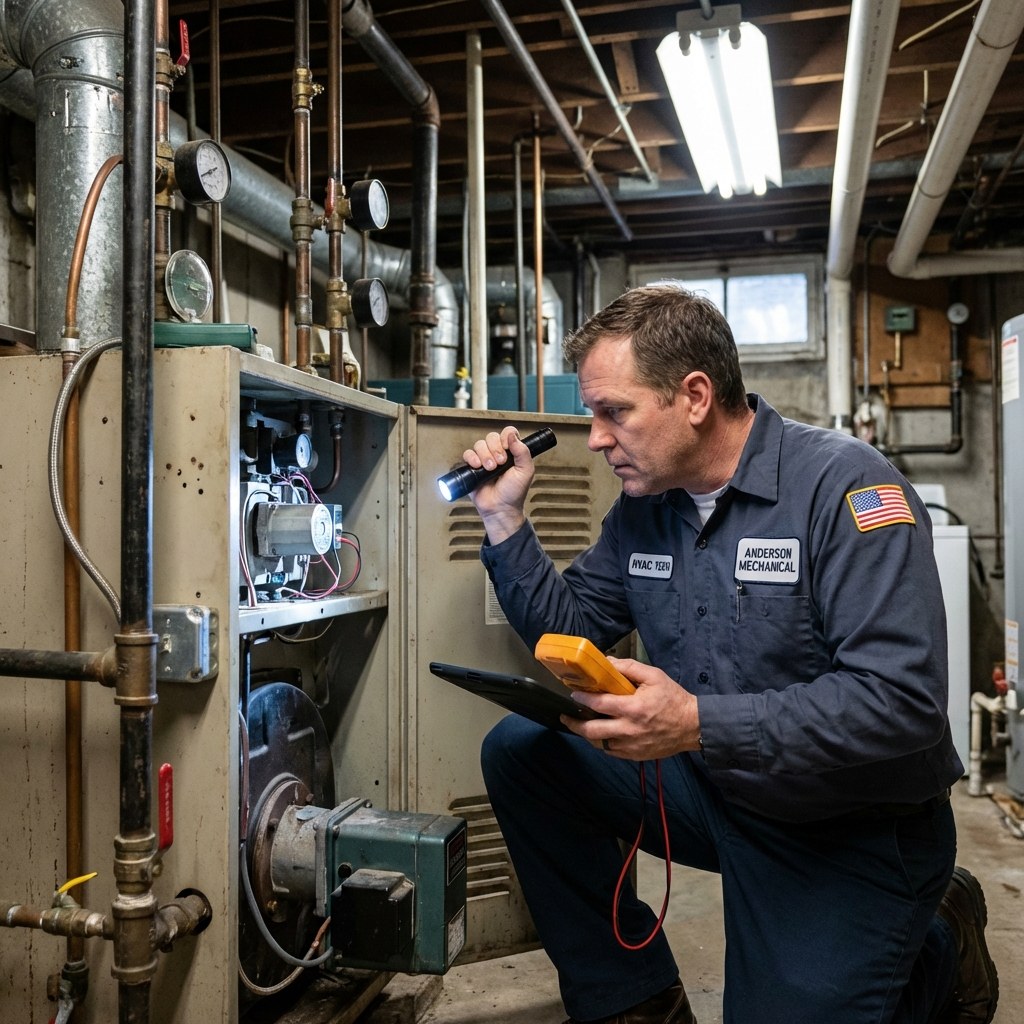
Step 5: Check the Pump Speed
If descaling does not work, or if you recently had work done on your system pipework, your circulating pump might be running too slowly.
- Turn off the boiler power switch and isolate the power completely at the dedicated electrical switch (often called a fused spur) or your main breaker panel.
- Use a Phillips screwdriver to remove the circulating pump cover.
- Locate the speed selector dial on the pump. If it is set to a low speed, rotate the dial so it points to "2" for medium speed.
- Replace the cover, restore power, and turn the boiler on.
Listen through a full heating cycle. If the boiler is still kettling after you have checked the pressure, bled the radiators, and verified the pump speed, it is time to call a professional. You may have a failing pump or a severely damaged heat exchanger that requires replacement.
Typical Time and Costs
- DIY fixes (Bleeding radiators, adjusting pressure): These tasks take 15 to 45 minutes and are generally free, aside from a few dollars for a radiator bleed key if you don't already have one.
- DIY descaling: This requires about two hours of active work and waiting. A bottle of central heating descaler typically costs $20 to $40.
- Professional repair: If you hire an HVAC technician to diagnose the issue, perform a professional system power-flush, or replace a pump, expect to pay anywhere from $150 to $500, depending on the severity of the problem and your local labor rates.
Wrapping Up
A boiler that sounds like a kettle is asking for a little routine maintenance. By checking your system pressure, bleeding trapped air, and addressing hard water, you can often restore your heating system to a quiet, efficient state without an expensive service call.
Staying ahead of plumbing and HVAC maintenance keeps your home running smoothly. Download the Casa app today to organize your home repair schedules, track your seasonal maintenance, and confidently manage your home without the stress.