

Mar 15, 2026
How to Fix a Damaged Pool or Spa Liner
A torn or bubbling pool liner can be stressful, but many small leaks are easy to patch yourself. Learn how to diagnose liner damage and safely repair minor tears.
Noticing a tear in your pool or spa liner—or watching your water level slowly drop—is a stressful moment for any homeowner. It is easy to assume the worst and picture a complete, expensive liner replacement.
Looking for more guidance? Take a look at our Repairs overview.
Fortunately, that is often not the case. Pool and spa liners are designed to endure a lot of wear, and many small punctures or tears can be reliably patched in under an hour without draining the entire pool. Keeping track of your pool's maintenance history and seasonal water levels in the Casa app can help you spot these issues early, making them even easier to manage.
In this guide, we will walk through how to assess the damage to your liner, determine if it is a safe do-it-yourself repair, and apply a lasting patch.
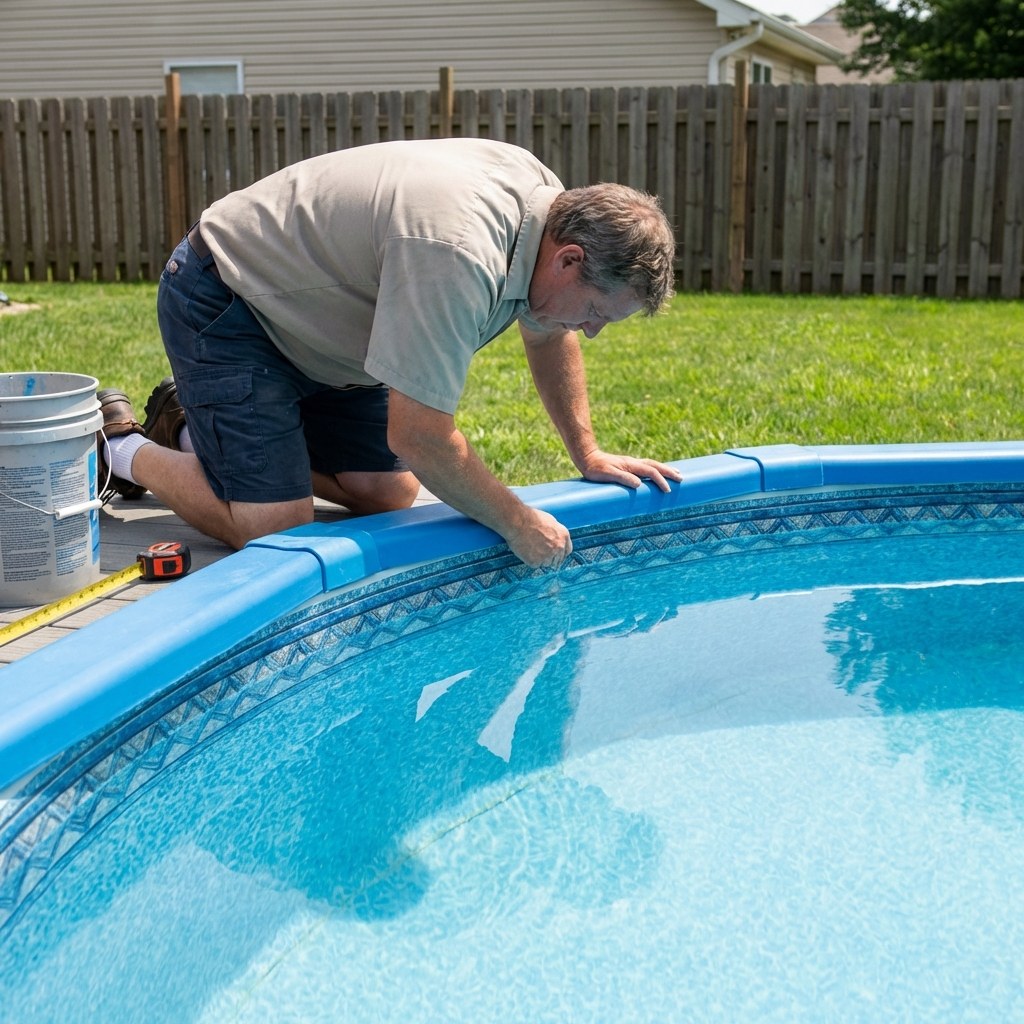
What Symptoms Usually Indicate
Liner damage generally presents itself in a few clear ways:
- Visible rips or tears: Often caused by sharp objects, pool toys, or debris.
- Air bubbles behind the liner: This indicates water has seeped behind the vinyl, which can happen through a small puncture.
- Faded spots: Fading is normal over time due to sun and chemicals, but severely faded spots become brittle and are highly prone to tearing.
- Unexplained pool water loss: Losing more than a quarter-inch of water a day (beyond normal evaporation) usually points to a leak.
Diagnosing the Damage
Before you buy a patch kit or call a professional, you need to assess the exact nature of the damage.
- Turn off the equipment: Press the switch on your pump control panel to turn off all circulation equipment. Still water makes it much easier to see the bottom and sides of the pool.
- Locate the damage: Walk around the pool or spa edge and visually look for rips, bubbles, or faded spots.
- Measure the tear: Use a plastic ruler to measure the longest part of the tear.
- Test the edges: Place a fingertip on both sides of the tear and gently pull. If the tear easily widens, stop immediately—the vinyl is too brittle.
- Check the location: Look closely to see if the tear runs along a manufactured seam line.
- Determine the age: Check your paperwork or a sticker on the pump control panel for the liner's installation date.
When to DIY vs. When to Call a Pro
Clear boundaries are important when dealing with hundreds of gallons of water. Here is how to decide your next step:
Safe to try yourself: You can confidently patch the liner yourself if the damage is a single puncture or tear under 2 inches, it is not located on a seam, and the liner is less than 5 years old.
When to stop and call a professional:
- The tear is longer than 2 inches.
- The tear is located directly on a seam (these require specialized welding or replacement).
- The vinyl crumbles or tears further when gently touched.
- The liner is over 5 years old and heavily faded or brittle.
- Your liner is still under the manufacturer's warranty. (Always check your warranty first; attempting a DIY repair might void your coverage).
Step-by-Step Patch Repair
If your tear meets the DIY criteria, you can repair it using a standard vinyl pool and spa patch kit, which you can find at any local pool supply store.
Preparation
Put on disposable gloves to keep the natural oils from your hands off the liner. Lay out your vinyl patch material, adhesive tube, applicator, scissors, and a plastic ruler. Wipe any dirt or algae away from the damaged area with a clean microfiber cloth.
Next, determine if you can lower the water level below the tear.
Option A: Patching in Dry Conditions
If the tear is near the top of the pool, patching it dry is the easiest method.
- Submerge one end of a standard garden hose in the pool water and start a siphon into a bucket outside the shell, or use your pump's waste setting.
- Lower the waterline until it sits at least 6 inches below the damaged area.
- Pat the damaged area completely dry with a towel.
- Cut a rounded vinyl patch. It should extend 2 inches beyond all sides of the tear. (Avoid square corners, as they easily peel up).
- Apply a thin layer of adhesive from the kit onto the backside of the patch.
- Press the patch firmly over the tear, smoothing out any air bubbles with your thumbs.
- Hold steady pressure for 2 minutes, then wait 30 minutes while keeping the area dry.
- Refill the pool above the patch line and observe for 5 minutes to ensure it is watertight.
Option B: Patching Underwater
If the tear is deep, do not drain your pool. Draining a vinyl pool too low can cause the entire liner to shrink and collapse. You can easily patch it underwater.
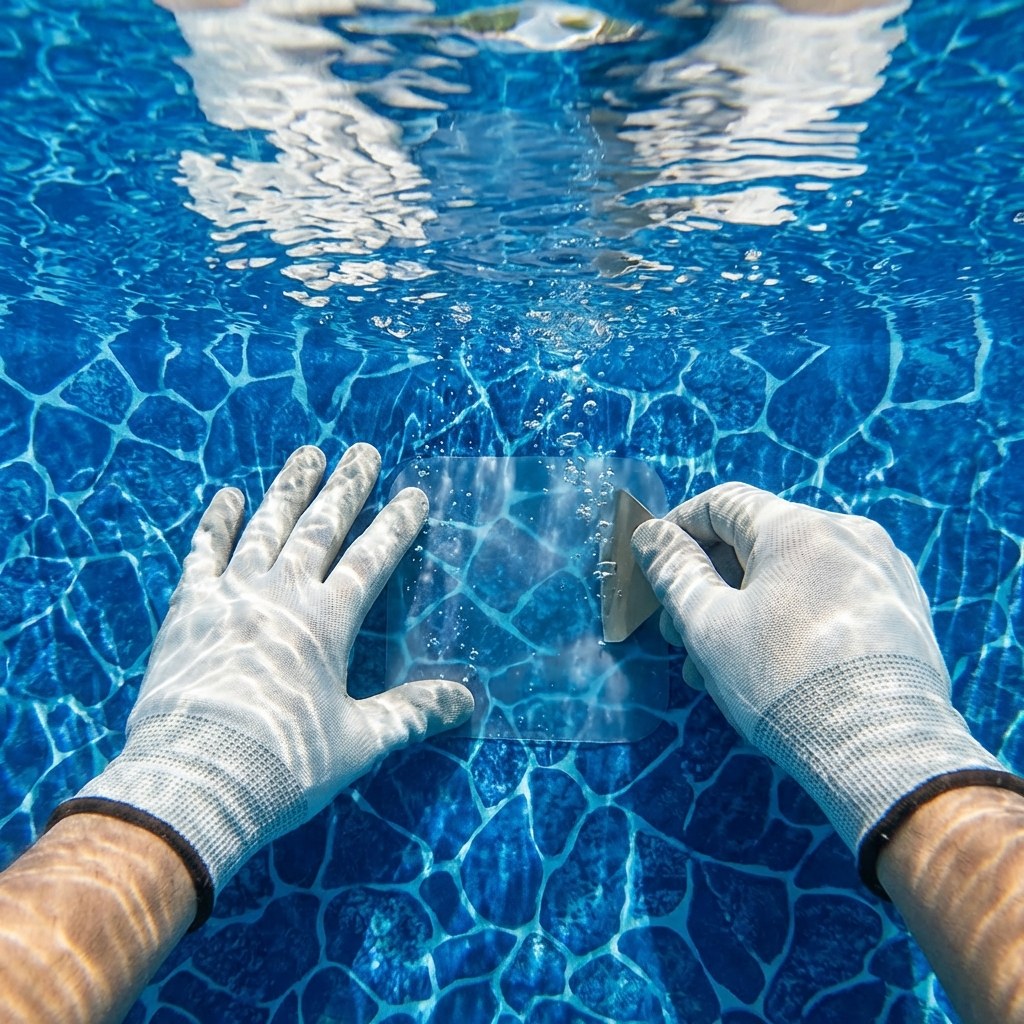
- Cut a rounded vinyl patch that extends 2 inches beyond the tear.
- Spread a generous layer of adhesive on the backside of the patch.
- Fold the patch in half (with the adhesive sides touching) to keep the glue from washing away as you move through the water.
- Quickly reach down to the damaged area and unfold the patch directly against the liner.
- Press the center of the patch onto the liner and smooth outward, forcing out trapped water.
- Hold the patch firmly for 2 minutes. If the spot is hard to reach, use the rounded tip of a telescopic pool pole to apply pressure.
- Avoid touching or brushing the patched area for at least 24 hours. Check it the next day to ensure it is fully adhered.
Typical Time and Cost Ranges
- Assessment time: 15 minutes.
- Repair time: 30 to 60 minutes, depending on whether you need to lower the water level.
- DIY Cost: $10 to $30 for a high-quality vinyl patch kit.
- Professional Cost: $150 to $300 for a professional patch job, or $1,500 to $4,000+ if the liner requires full replacement.
Short Recap
A torn pool liner does not automatically mean your swimming season is over. By carefully measuring the tear, checking its location, and assessing the age of your vinyl, you can easily determine if a simple patch will fix the problem. Remember to use rounded edges on your patch and apply steady pressure to ensure a watertight seal. If the tear is large, on a seam, or the liner is aging, it is best to consult a professional pool technician.
For more step-by-step guides on maintaining your outdoor spaces and keeping your home running smoothly, download the Casa app today. Casa helps you organize your home maintenance, track warranties, and tackle repairs with calm confidence.