

Oct 2, 2025
How to Fix a Furnace Pilot Light That Is Out
Feeling the chill because your furnace isn't working? A pilot light that's gone out is a common cause. This guide will walk you through the safe, step-by-step process to identify your furnace type, relight the pilot, and troubleshoot common issues like a faulty thermocouple.
That sudden, unwelcome chill in your home can be a real source of stress, especially when the temperature outside is dropping. You check the thermostat, see that it’s on, but there’s no warm air coming from the vents. More often than not, the culprit is a simple one: your furnace's pilot light has gone out.
Looking for more guidance? Take a look at our Repairs overview.
The good news is that this is often a problem you can fix yourself without needing to make an expensive emergency call to an HVAC technician. Whether you have an older furnace with a standing pilot light or a more modern unit with electronic ignition, we’ve got you covered.
Think of us as your expert on the line, ready to walk you through this. We’ll help you safely diagnose the problem, relight your pilot, and get your home feeling warm and cozy again in no time.
Safety First: What to Do If You Smell Gas
Before we touch anything, let’s talk about the most important rule of working with a gas furnace: safety. Natural gas has a distinct rotten egg smell for a reason—to alert you to a potential leak.
If you approach your furnace and smell a strong gas odor, STOP IMMEDIATELY. Do not proceed with any of the steps below. A gas leak is an emergency that requires a professional.
Here is exactly what you need to do:
- Do Not Touch Anything Electrical: Don't flip any light switches, use your phone, or unplug any appliances. A tiny spark can ignite the gas.
- Extinguish All Flames: Put out any candles, cigarettes, or other open flames immediately.
- Evacuate Everyone: Get yourself, your family, and your pets out of the house right away.
- Call for Help from a Safe Distance: Once you are safely outside and away from the building, call your gas company's emergency number or 911 to report the leak.
Do not re-enter your home until the gas company or emergency services have declared it safe. Your well-being is the top priority.
If you do not smell gas, then it's safe to proceed. Let's figure out what kind of furnace you have.
Step 1: Identify Your Furnace Type
Furnaces generally come in two flavors when it comes to ignition systems. The fix for your pilot light issue depends entirely on which type you have.
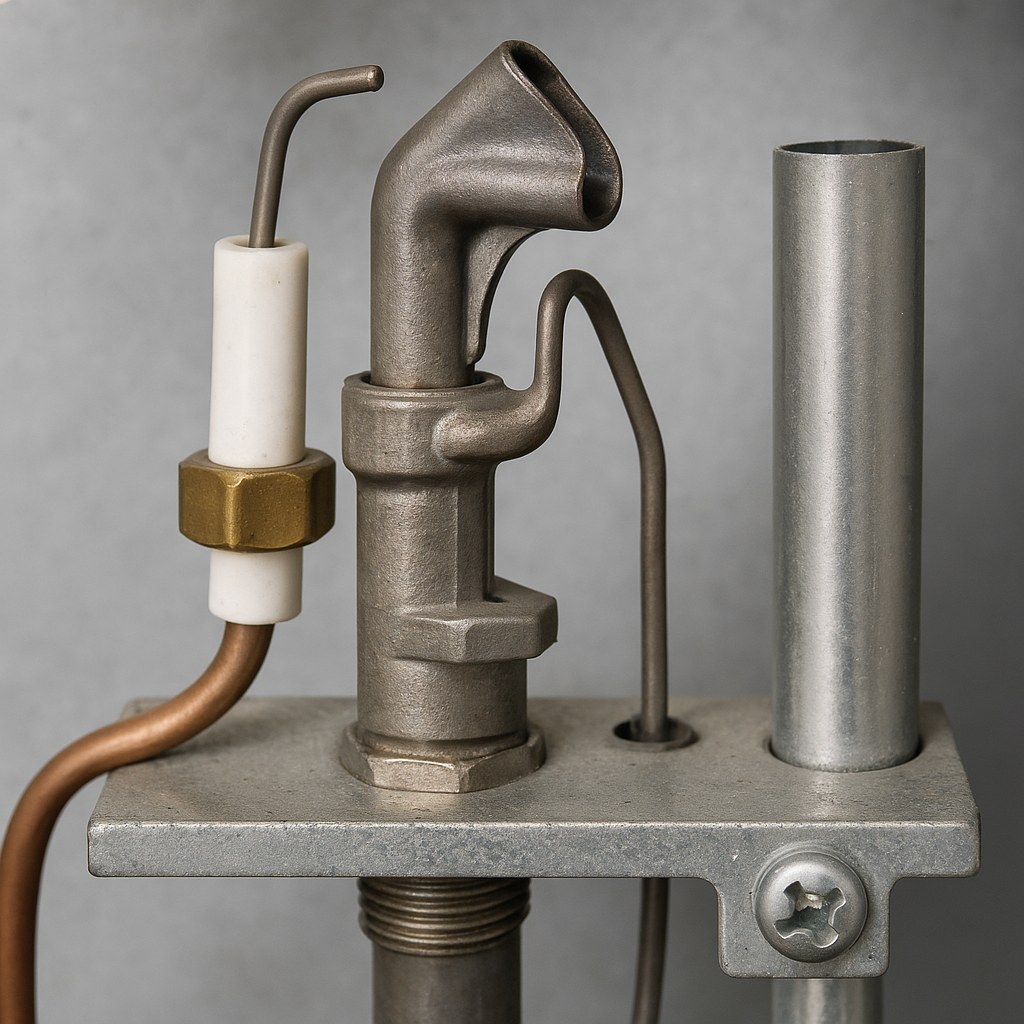
- Standing Pilot Light Furnace: These are typically older models. You can identify them by looking for a small, continuous blue flame that is always on, even when the furnace isn't actively heating. If this is the flame that’s out, you're in the right place.
- Electronic Ignition Furnace: Newer, more energy-efficient furnaces don't have a pilot light that stays on all the time. Instead, they use an electronic system (either a hot surface igniter or an intermittent pilot) to light the gas only when the thermostat calls for heat. If you have one of these, you can’t "relight" a pilot light because there isn't one. The fix is usually a simple reset.
Take a look inside your furnace's access panel. Do you see the assembly for a small, constant flame? If so, you have a standing pilot. If not, you likely have an electronic ignition.
Step 2: How to Relight a Standing Pilot Light
If you've determined you have a furnace with a standing pilot and you don't smell gas, let's get that flame relit. You'll likely need a long butane lighter or a long match to reach the pilot assembly safely.
Here’s how to do it, step-by-step:
- Locate the Gas Valve: Inside the furnace, you'll find a valve with a knob that has "ON," "OFF," and "PILOT" settings.
- Turn the Knob to "OFF": Turn the knob to the "OFF" position. This is a crucial safety step.
- Wait 5 Full Minutes: This allows any lingering gas in the chamber to dissipate completely. Don't skip this step! Set a timer if you need to.
- Turn the Knob to "PILOT": After five minutes, switch the knob to the "PILOT" setting.
- Press and Hold: Press and hold down the knob (or a separate red button, on some models). This starts the flow of a small amount of gas to the pilot assembly.
- Light the Pilot: While still holding the knob down, use your long lighter to ignite the gas at the pilot orifice. A small blue flame should appear.
- Keep Holding for 30-60 Seconds: Continue holding the knob down for at least 30 seconds after the flame is lit. This gives the thermocouple (we'll talk more about this part next) time to heat up.
- Slowly Release the Knob: Gently let go of the knob. If the pilot flame stays lit, congratulations!
- Turn the Knob to "ON": Switch the knob to the "ON" position.
- Replace the Panel and Test: Put the access panel back on the furnace. Go to your thermostat and turn the heat up. You should hear the main burners kick on within a minute or two.
If the pilot light stayed lit and your furnace is now producing heat, you've solved the problem! If the flame went out as soon as you let go of the knob, it's time for a little more troubleshooting.
Step 3: What If the Pilot Won't Stay Lit? Clean the Thermocouple
The most common reason a pilot light won't stay lit is a dirty or faulty thermocouple.
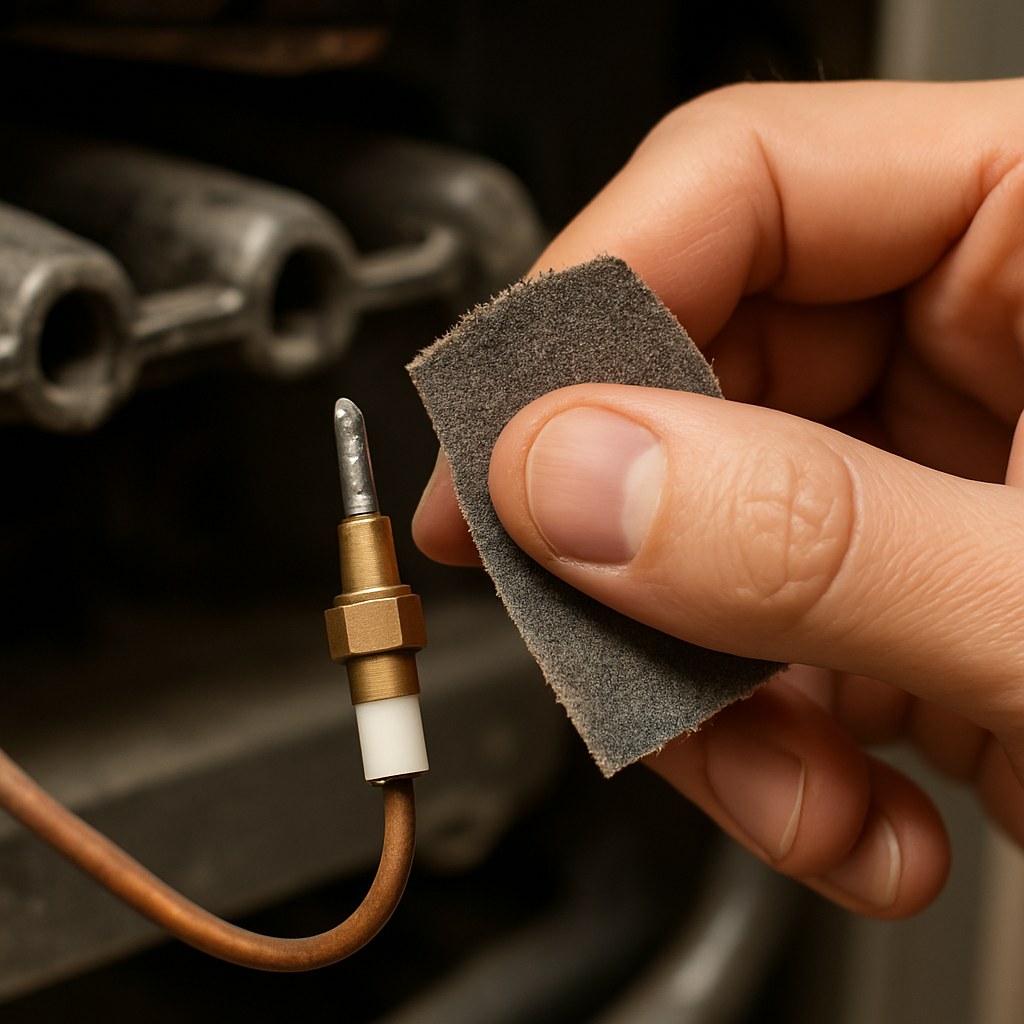
What’s a thermocouple? It's a small metal rod that sits right in the pilot flame. Its job is to act as a safety sensor. When it gets hot, it generates a tiny electrical current that tells the gas valve it's safe to stay open. If the pilot flame goes out, the thermocouple cools down, the current stops, and the valve shuts off the gas flow to prevent a leak.
Over time, this little sensor can get covered in soot or carbon buildup, which prevents it from getting hot enough to do its job. Cleaning it is often all that's needed.
- Turn the Gas Valve to "OFF": Make sure the knob is fully in the "OFF" position and wait another 5 minutes.
- Locate the Thermocouple: Find the thin copper or metal rod positioned directly in the path of where the pilot flame should be.
- Gently Clean It: Take a piece of fine-grit sandpaper, an emery cloth, or even the rough side of a dollar bill and lightly scrub the thermocouple rod. You just want to remove the layer of soot and expose the shiny metal underneath. Be gentle; you don't want to damage it.
- Wipe Away Debris: Use a dry cloth to wipe away any dust or residue from the cleaning.
- Try Relighting Again: Repeat the full sequence from Step 2 to relight the pilot. Hold the knob down, light the flame, and keep it held for a good 60 seconds before releasing.
If the pilot now stays lit, you've fixed it! The thermocouple just needed a quick cleaning. If it still goes out, the thermocouple itself may have failed and needs to be replaced, or there could be a deeper issue. At this point, it's best to call a professional.
Step 4: Troubleshooting an Electronic Ignition Furnace
If you have a modern furnace without a standing pilot, your problem isn't a pilot light—it's an ignition failure. Most of the time, this can be resolved with a simple power cycle, like restarting a computer.
- Turn Off the Power: Find the power switch for your furnace. It often looks like a standard light switch located on or near the unit. Flip it to the "OFF" position.
- Wait 30 Seconds: Leave the power off for at least 30 seconds. This allows the internal circuit board to reset and clear any temporary error codes or lockout states.
- Turn the Power Back On: Flip the switch back to "ON."
- Check the Access Panel: Make sure the furnace doors or panels are securely in place. Most modern furnaces have a safety switch that prevents them from running if the panel is ajar.
- Call for Heat: Turn your thermostat up a few degrees to trigger a heating cycle.
- Watch and Listen: Go back to the furnace and observe it for a few minutes. You should hear it click on, see a glow from the hot surface igniter (if you have one), and then hear the main burners ignite.
If the furnace fires up and stays running, your problem is solved! If it tries to start but fails, or if it doesn't do anything at all, look for a blinking LED light on the control board (usually visible through a small window on the access panel). The pattern of blinks is an error code that can tell a technician exactly what's wrong.
How Much Does It Cost to Fix?
Fixing a pilot light issue yourself can be incredibly cost-effective.
- DIY Cost: If you need to clean the thermocouple, the cost is virtually zero. If you determine the thermocouple needs replacing, the part itself is very inexpensive. According to Forbes Home, a new thermocouple can cost as little as $20.
- Professional Cost: Hiring an HVAC technician for a service call will typically cost between $100 and $250. This covers their time to diagnose the issue and perform a simple fix like relighting the pilot or cleaning the thermocouple.
Take Control of Your Home Maintenance
Navigating a furnace issue can feel intimidating, but by following these safe and simple steps, you can often solve the problem yourself and save hundreds of dollars. Understanding how your home's systems work is the first step toward becoming a confident homeowner.
For more easy-to-follow DIY guides, personalized maintenance reminders, and a direct line to vetted professionals when you need them, download the Casa app today. We're here to help you manage and maintain your home with ease, putting expert advice right in the palm of your hand. Stay warm