

Jan 20, 2026
How to Fix a Garage Door That Wont Open or Close
A garage door that won't open or close can disrupt your entire day. Our step-by-step guide helps you diagnose and fix common issues, from dead remote batteries and misaligned sensors to power problems and track obstructions.
There are few things more frustrating than a garage door that refuses to cooperate. Whether you’re stuck outside in the rain or can’t get your car out for an important appointment, a malfunctioning garage door can bring your day to a screeching halt.
Looking for more guidance? Take a look at our Repairs overview.
The good news is that many common garage door problems have simple solutions you can handle yourself in under an hour. You don't always need to call a technician right away. From simple power issues to misaligned safety sensors, we'll walk you through the troubleshooting process step-by-step.
Think of this guide as your friendly expert on the phone. We’ll help you diagnose the problem and get your door moving again.
Step 1: Is Your Garage Door Manual or Automatic?
Before we dive into fixing things, we need to figure out what kind of door you have. This might sound obvious, but it determines our troubleshooting path.
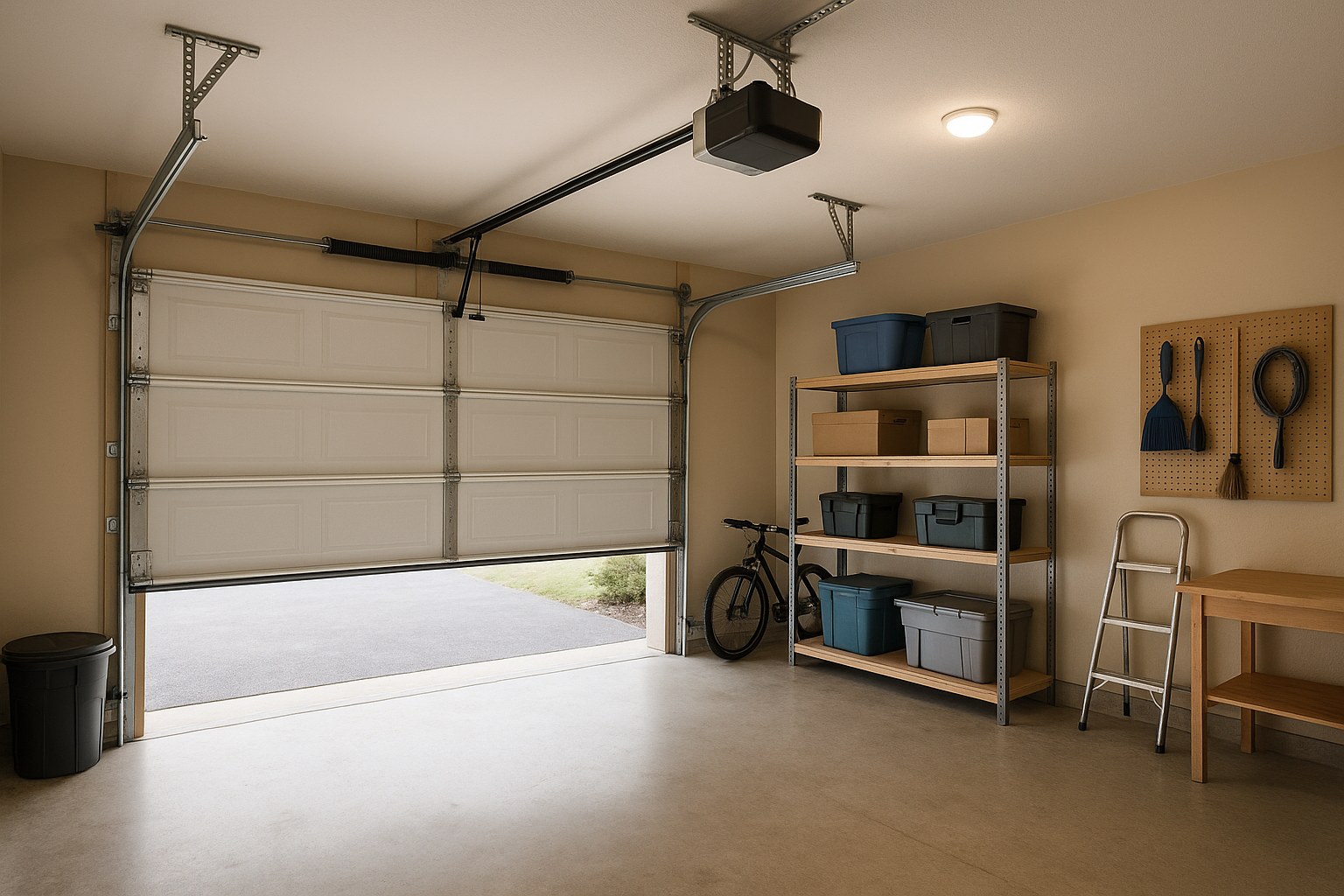
Stand inside your garage and look up. Do you see a large motor unit mounted to the ceiling, connected to the door by a long metal rail (the trolley rail)? Do you have a button on the wall or a remote control in your car that you use to open the door?
If you answered yes, you have a motorized (or automatic) garage door, and you can proceed to the next section.
If you normally open and close your door by lifting it manually and there's no motor in sight, you have a manual door. You can skip ahead to the section titled "Troubleshooting a Manual Garage Door."
How to Fix an Automatic Garage Door
For motorized doors, the problem usually lies with the opener system—the motor, the remote, the sensors, or the power supply. Let's start with the easiest and most common culprits first.
Step 2: Check for Power Issues
Your garage door opener is an electrical appliance, and just like any other, it won't work without power.
First, press the button on your wall-mounted control panel. Does the light on the motor unit turn on?
If the opener light does NOT turn on:
The opener isn't receiving power. This is often caused by a tripped circuit breaker.
- Locate your home's electrical panel. It’s usually in the basement, a utility room, or the garage itself.
- Open the panel door and find the circuit breaker labeled for the garage or "Door Opener."
- A tripped breaker will be in the middle position, between ON and OFF. To reset it, you must first push it firmly to the full OFF position, and then flip it back to ON.
- Once reset, go back and press the wall button. If the opener light turns on and the door operates, you've solved the problem!
If the breaker trips again immediately, or if resetting it doesn't restore power, there may be a wiring issue. At this point, it's best to call a licensed electrician or a garage door technician to investigate safely.
If the opener light DOES turn on but the door doesn't move:
This is great news! It means the opener has power, and the problem is likely with the remote, the sensors, or the door’s engagement mechanism. Let's move to the next step.
Step 3: Test Your Remote Control
If the wall button works but your remote doesn't, the problem is almost certainly the remote itself. The most common culprit is a dead battery.
- Slide open the battery compartment on your remote control.
- Most garage door remotes use a small, coin-shaped battery, often a CR2032. You can find these at most grocery or hardware stores.
- Replace the old battery with a new one, making sure it's installed correctly.
- Stand about 10 feet from your garage and test the remote.
If the door opens, congratulations! It was just a dead battery. If a new battery doesn't solve the issue, you may need to reprogram the remote to the opener or purchase a replacement.
Step 4: Inspect the Safety Sensors
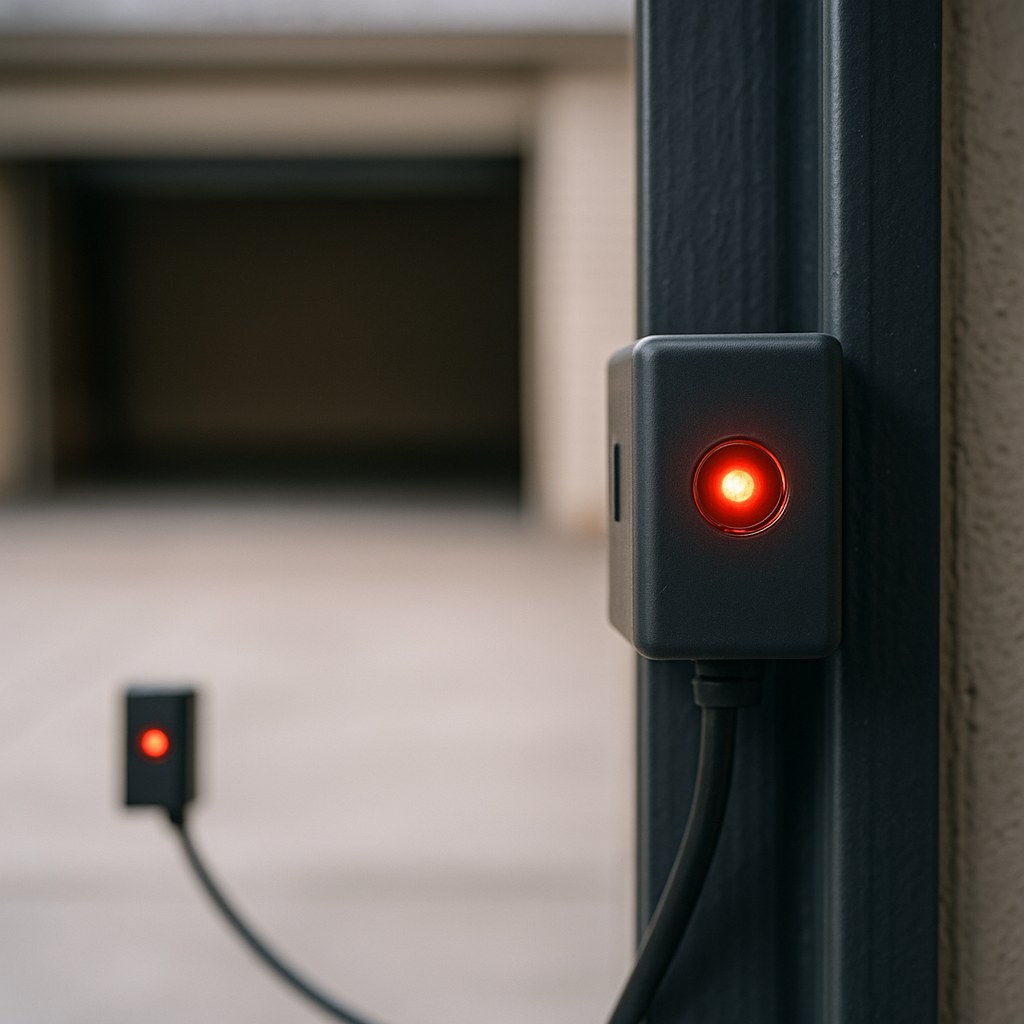
If the door starts to close but then reverses and goes back up, the problem is almost always the safety sensors. These are two small "eyes" located at the base of your garage door tracks, about 6 inches off the floor. They project an invisible infrared beam across the opening. If anything breaks this beam while the door is closing, the door automatically reverses to prevent injury or damage.
- Check for Obstructions: Look for anything blocking the path between the two sensors. This could be a box, a broom, or even just a buildup of cobwebs. Clear any obstructions.
- Clean the Lenses: The sensor lenses can get dirty, which can block the beam. Wipe each lens gently with a soft, clean microfiber cloth.
- Check the Indicator Lights: Each sensor has a small LED light on it. One is a sending unit (usually green) and the other is a receiving unit (usually amber or red). When they are properly aligned, both lights should be solid (not flickering or off).
- Align the Sensors: If one or both lights are flickering or off, the sensors are misaligned. The brackets holding them can get bumped easily. Gently bend the bracket by hand until the LED light on the receiving sensor turns solid and steady. You might hear a "click" when it locks into place.
Once both lights are solid, press the wall button. If the door now closes properly, you've fixed it! Misaligned sensors are one of the most frequent reasons for a garage door that won't close.
Step 5: Check the Manual Release Cord
Every automatic garage door opener has a manual release cord. It’s that red rope hanging from the trolley on the rail. Pulling this cord disengages the door from the opener, allowing you to open or close it by hand during a power outage. Sometimes, this can be pulled by accident.
- Locate the red release cord.
- To re-engage the opener, pull the cord down and toward the motor unit. You should hear a click as the trolley latch re-engages.
- Press the wall button again.
If the door now moves, the opener was simply in manual mode. If it still doesn't move, and you've tried all the steps above, there might be a mechanical failure within the opener itself, and it's time to call a professional.
Troubleshooting a Manual Garage Door
If you have a door that you operate by hand, the troubleshooting process is more mechanical.
- Check the Manual Lock: Many manual doors have a slide bolt or a lock bar on the inside that runs through the door track to secure it. Make sure this isn't engaged. If it is, simply turn the handle or slide the bolt to unlock it.
- Inspect the Tracks and Rollers: Look closely at the metal tracks on both sides of the door. Are they dented or bent? Is there any debris, like leaves, small stones, or grime, blocking the path of the rollers? Use a flashlight for a better view. Carefully remove any small debris by hand and wipe the tracks clean.
- Check for Broken Springs or Cables (With Caution!): Look at the large springs above the door (torsion springs) or along the sides (extension springs). WARNING: Garage door springs are under extreme tension and can cause serious injury or death if handled improperly. Do not attempt to adjust or replace them yourself. If you see a visible gap in a spring coil or a frayed/snapped lifting cable, the door will be extremely heavy and unsafe to operate. This is a job that absolutely requires a professional garage door technician.
If you've unlocked the door and cleared the tracks but it still won't move smoothly, a broken spring or cable is the most likely cause.
How Much Does It Cost to Fix a Garage Door?
The cost can vary widely depending on the problem.
- DIY Fixes: A new remote battery costs under $5. A replacement set of safety sensors can cost between $25 to $50.
- Professional Repair: According to Forbes Home, the average cost for a professional garage door repair is between $150 and $350. A simple service call for sensor alignment might be on the lower end, while replacing broken torsion springs can cost $200 to $400+.
While a DIY fix can save you money, safety should always be your top priority. For issues involving springs, cables, or electrical wiring, hiring a qualified technician is the smartest choice.
Final Thoughts
A garage door that won't open or close is a major inconvenience, but with a little systematic troubleshooting, you can often find and fix the problem yourself. By checking the power, remote, and sensors, you can solve the most common issues without spending a dime.
For more helpful home maintenance guides, expert advice, and an easy way to connect with trusted professionals for the bigger jobs, download the Casa app today. Casa empowers you to take control of your home maintenance, one project at a time.