

Mar 15, 2026
How to Fix a Humid and Musty Room
A musty room usually means trapped moisture. Learn how to track down leaks, safely clean minor surface mold, and improve airflow to get your room smelling fresh again.
Walking into a room and being hit by a wave of stale, musty air is unpleasant, but it is a very common homeowner experience. A musty smell is simply your home's way of telling you that moisture is trapped somewhere it shouldn't be.
Looking for more guidance? Take a look at our Repairs overview.
When a room lacks proper airflow or has a hidden water leak, humidity builds up. This creates an environment where stale air lingers and mold or mildew can briefly take hold. The good news is that diagnosing the source of the moisture is a straightforward process, and most mild cases can be completely resolved without calling a professional.
In this guide, we will help you track down the source of the humidity, address any minor water intrusions, and get your room smelling fresh again.
What the Symptoms Mean
A musty odor is usually the first sign of a problem, but it helps to look for visual clues. Keep an eye out for:
- Damp spots or water drips: These indicate an active leak from outside, a roof, or nearby plumbing.
- Peeling paint or wallpaper: Moisture trapped inside walls will push outward, breaking the bond of your paint or wallpaper.
- Stale, heavy air: This means the room's ventilation is poor, trapping everyday humidity inside.
- Visible mold or mildew: Dark, spotted patches on walls, ceilings, or belongings mean the moisture has been sitting long enough for spores to grow.
Step-by-Step Diagnosis and Repair
Step 1: Identify the Moisture Source
Before you can fix the smell, you need to find the water.
- Walk around the room and notice if the musty odor is stronger in certain corners or closets.
- Shine a flashlight across the walls, ceiling, and floor. The light will cast shadows on water-damaged drywall and highlight dark or wet areas.
- Touch suspicious spots to feel for dampness.
- Look closely at your window frames and baseboards for water stains or peeling paint.
- Check the floor corners for pooled water or damp carpet.
Step 2: Check and Stop Water Intrusion
If you found a damp spot, you need to figure out how the water is getting in.
- Inspect the ceiling directly above the damp patch. If you have an attic, safely look for wet wood or dripping near roof joints.
- If you are in a basement, look along the foundation wall for trickles or efflorescence (a white, powdery residue left behind when water evaporates through concrete).
- Examine the caulk lines around the outside of your window frames for cracks or gaps.
- Press a dry paper towel onto the suspect spot for five minutes to confirm if it is actively leaking right now.
Seal Minor Gaps If you find a small, reachable gap around a window frame or a minor wall crack, you can safely seal it yourself.
- Dry the damp area with a hair dryer on low heat for 5 minutes.
- Cut the tip of a tube of silicone caulk at a 45-degree angle.
- Slowly squeeze a bead of caulk along the gap.
- Smooth the bead with a wet finger to ensure full contact, and let it cure for 24 hours.
Step 3: Address Minor Mold Growth
If you see visible mold or mildew on surfaces, you need to clean it to stop the odor.
- Put on an N95 respirator mask to avoid inhaling spores.
- Fully open a window to improve ventilation.
- Mix 1 cup of household bleach with 1 gallon of water in a bucket.
- Dip a scrub brush into the solution and scrub the moldy areas until the stain lightens.
- Wipe the surface with a clean damp cloth to remove any leftover residue, and let the area air-dry completely.
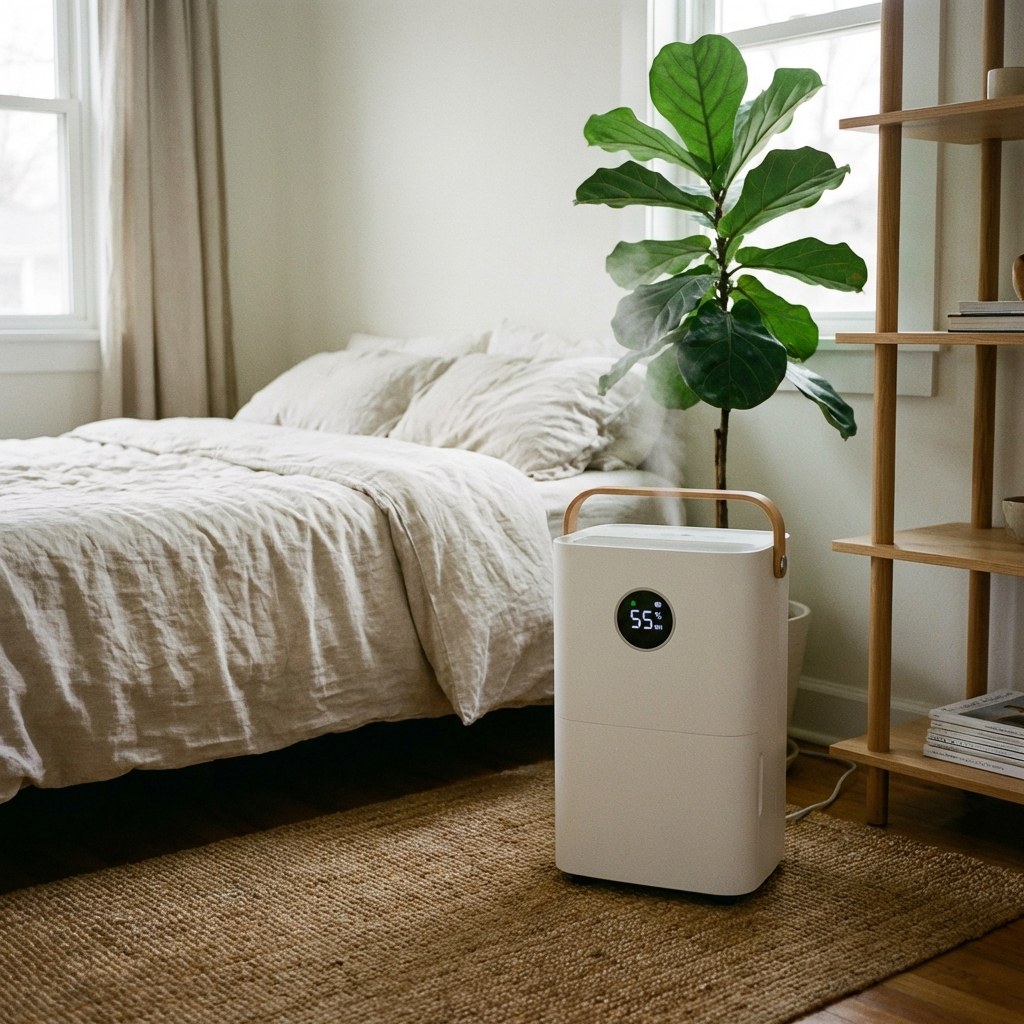
Step 4: Reduce Humidity with a Dehumidifier
If there are no leaks or mold, but the room still feels heavy and smells stale, you need to pull the moisture out of the air.
- Place a dehumidifier in the center of the room, away from walls.
- Close all doors and windows to keep outside humidity from getting in.
- Set the dehumidifier's target to 45 percent humidity.
- Check the collection bucket daily and empty it when full. Clean the filter if it looks dusty.
Run the unit for three days. If the humidity drops below 50 percent and the odor is gone, the problem is solved.
Step 5: Improve Air Circulation
Rooms with stagnant air will quickly become musty again. Improving daily airflow is the best preventative maintenance.
- Turn your ceiling fan to its highest setting to mix the room air.
- Move furniture and boxes at least 6 inches away from walls so air can flow behind them.
- Replace your HVAC system's air filter with a new pleated air filter.
- Open two opposite windows on days when the outside air is dry to create a cross-breeze.
- Position a box fan in a window facing outward for 30 minutes to aggressively exhaust damp air from the room.
Knowing When to Stop and Call a Professional
While managing humidity and sealing small window gaps is safe for homeowners, water damage can sometimes be more serious than it appears on the surface.
Safe to try yourself:
- Sealing small cracks around window frames with caulk.
- Cleaning minor surface mold from non-porous surfaces.
- Running dehumidifiers and replacing air filters.
When to stop and call a professional:
- Large or hidden leaks: If the leak is coming from inside the wall, a burst pipe, or a damaged roof, turn off your water (if plumbing-related) and call a water-damage professional.
- Returning mold: If you clean the mold and it returns within one week, the moisture problem is deep in the materials. Call a licensed mold-remediation contractor.
- Persistent humidity: If you run a dehumidifier and fans for several days but the room remains humid, call an HVAC technician to inspect your home's ventilation system.
Typical Time and Cost Ranges
Fixing a musty room usually requires more patience than money, as drying out spaces takes time.
- Time: Active working time is usually 30 to 60 minutes to inspect, seal gaps, and set up fans. Curing caulk and drying out the room with a dehumidifier will take 1 to 3 days.
- Cost of DIY: A tube of silicone caulk costs $5 to $10. A standard portable dehumidifier ranges from $150 to $250.
- Cost of a Pro: If you need to hire a professional for roof leaks, plumbing issues, or HVAC ventilation upgrades, costs typically start around $200 for minor diagnostics and can scale into the thousands for extensive mold remediation or roof repairs.
Final Thoughts
A humid, musty room is just a space struggling to breathe. By tracking down the source of the moisture, sealing simple gaps, and keeping the air moving, you can quickly restore a fresh and comfortable environment to your home.
Staying on top of your home's humidity levels and air filters is easier with a little organization. You can use the Casa app to log your home's HVAC filter sizes, set seasonal reminders to check your window caulking, and keep a maintenance record of any repairs you make.
Take the guesswork out of home maintenance and download the Casa app today.