

Oct 25, 2025
How to Fix a Loose Stair Baluster
A wobbly baluster is more than a minor annoyance—it's a safety hazard. Learn how to diagnose the problem and fix loose wooden or metal balusters yourself with our step-by-step guide, and know when it's time to call a pro.
That slight wobble in your staircase railing. You might notice it when you’re carrying laundry upstairs or when the kids grab onto it. A loose baluster (also known as a spindle) might seem like a small problem, but it compromises the safety and stability of your entire staircase. A sturdy railing is your first line of defense against trips and falls, which are unfortunately one of the leading causes of injuries in the home.
Looking for more guidance? Take a look at our Repairs overview.
The good news is that you don’t have to live with a wobbly railing. Fixing a loose baluster is often a straightforward DIY project that you can tackle in under an hour with just a few common tools and materials. Whether your balusters are classic wood or modern metal, we’re here to walk you through it.
In this guide, we'll help you diagnose the issue, provide step-by-step instructions for the most common fixes, and help you know when a loose baluster might be a sign of a bigger problem that requires a professional.
First Things First: A Quick Safety Inspection
Before you grab your tools, let’s make sure we’re dealing with a simple loose baluster and not a more serious structural issue. A single wobbly spindle is one thing, but if the whole system is unstable, it needs immediate attention from a professional.
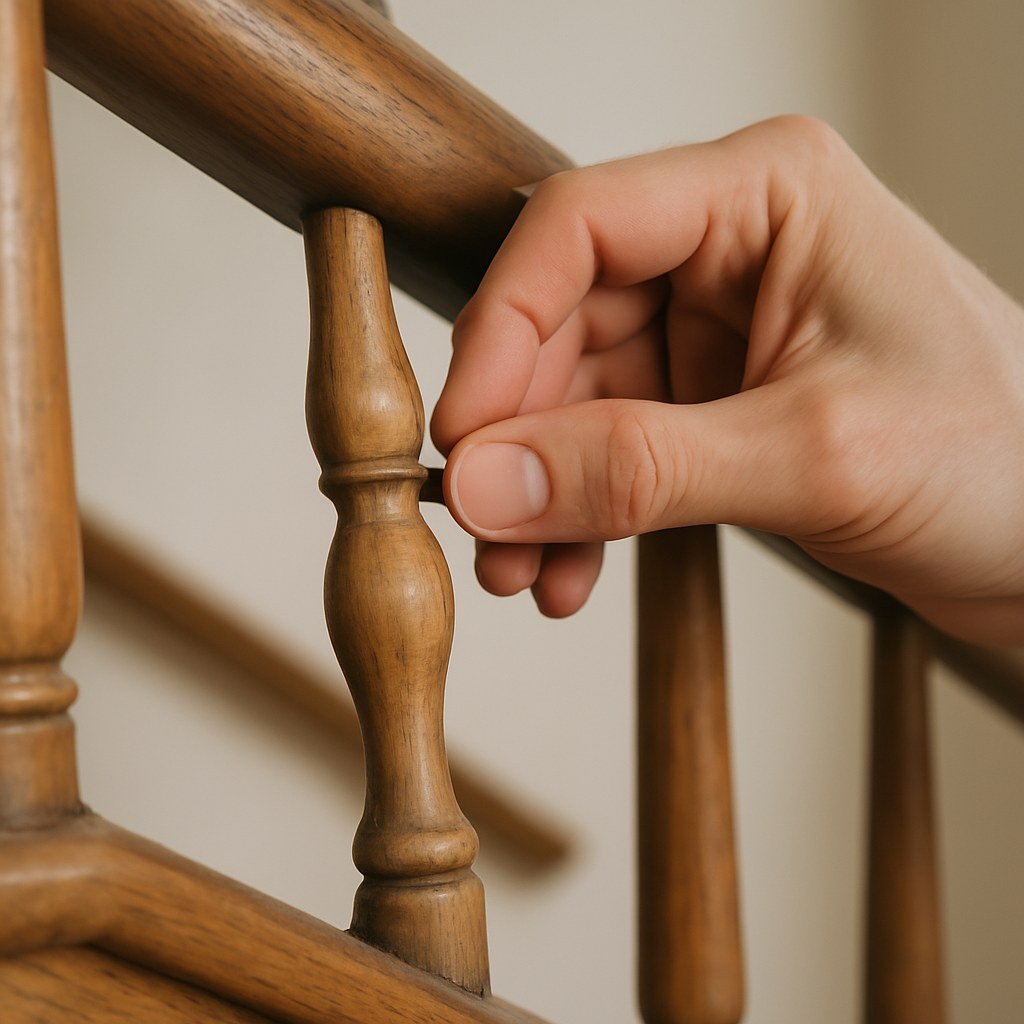
Start by performing a quick inspection:
- Visual Check: Stand at the bottom of your stairs and look up the length of the handrail. Do you see any obvious gaps or cracks where the balusters meet the rail or the stair treads?
- The Shake Test: Gently try to wiggle each baluster one by one. This will help you identify exactly which ones are loose and how much movement there is.
- The Weight Test: If you've found several loose balusters, it’s time to check the overall stability. Place one hand firmly on the handrail and put some of your weight on it, shifting side-to-side. Does the entire handrail feel rickety? Do the newel posts (the large posts at the top and bottom) move?
If the entire handrail wobbles or the staircase itself feels unstable, stop right there. This indicates a larger problem with how the railing system is anchored to your home’s structure. In this case, it’s best to call a professional carpenter or contractor to ensure the repair is done safely and correctly.
If you’ve confirmed the issue is isolated to one or two balusters, let's get to fixing it! The repair method will depend on whether your baluster is wood or metal.
How to Fix a Loose Wooden Baluster
Wooden balusters are typically installed in one of two ways: either secured with screws (sometimes hidden by wooden plugs) or fitted into holes in the tread and handrail with glue (a mortise and tenon joint).
Method 1: The Easiest Fix – Tightening Screws
This is the best-case scenario and takes only a few minutes.
You'll need:
- A Phillips screwdriver or drill
Steps:
- Locate the Screw: Carefully inspect the loose baluster at its top and bottom. Look for a screw head. It might be at the base where the baluster meets the stair tread, or angled up from underneath the handrail.
- Tighten It Up: Using your screwdriver, turn the screw clockwise until it’s snug. You should feel it bite into the wood and pull the baluster tight. Be careful not to overtighten, as this could strip the screw hole.
- Test Your Work: Give the baluster a gentle shake. If the wobble is gone, you’re done!
If the screw just keeps spinning without tightening, the wood hole is likely stripped. Don’t worry, we have a fix for that in the reinforcement section below.
Method 2: The Glue-and-Nail Method for Dowel-Style Balusters
If you don’t see any screws, your baluster is likely held in place by glue and a snug fit. Over time, the glue can fail and the wood can shrink, causing a wobble.
You'll need:
- Wood glue
- Hammer
- 2-inch finish nails
- Nail set
- Damp cloth
Steps:
- Remove the Baluster: Grip the baluster firmly and try to pull it free. You may need to gently lift it straight up to pull the bottom end out of its socket, then pull down to free the top from the handrail.
- Apply Wood Glue: Squeeze a thin ring of high-quality wood glue around the top and bottom ends (the tenons) of the baluster.
- Re-insert the Baluster: Carefully fit the top end back into its hole (mortise) under the handrail, then slide the bottom end back into its socket on the stair tread.
- Secure with Nails: For a much stronger, lasting repair, drive a 2-inch finish nail at an angle through the side of the baluster into the handrail. Drive a second nail through the base of the baluster into the stair tread.
- Set the Nails: Use a nail set and hammer to tap the nail heads just slightly below the surface of the wood. This makes them less visible and allows you to cover them with wood filler later if you wish.
- Clean Up and Cure: Wipe away any excess glue with a damp cloth. Allow the glue to cure for at least 30-60 minutes before putting any pressure on the railing.
How to Fix a Loose Metal Baluster
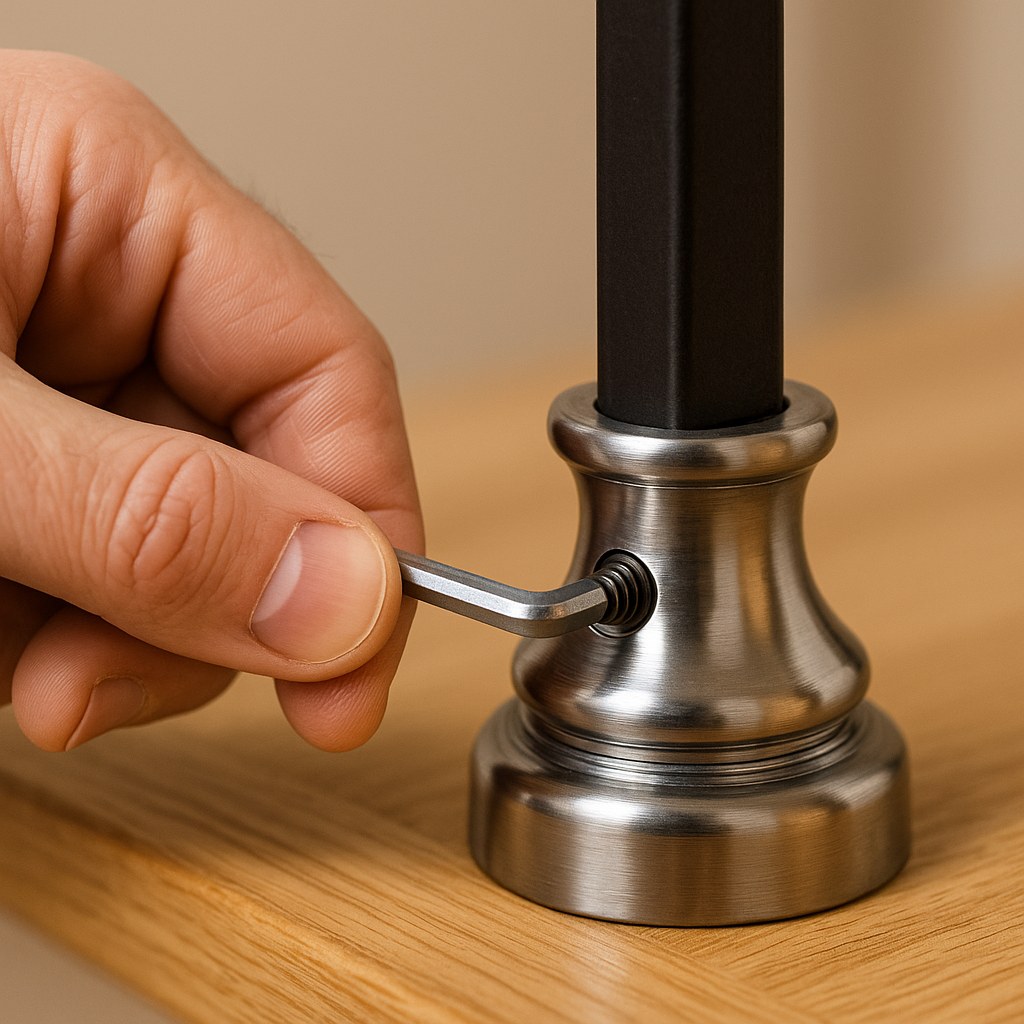
Metal balusters are almost always held in place by "shoes" at the top and bottom. These shoes often contain a hidden set screw that clamps down on the baluster.
Method 1: Tightening the Set Screw
This is the most common and easiest fix for a wobbly metal baluster.
You'll need:
- A hex key (also known as an Allen wrench)
Steps:
- Find the Set Screw: Look closely at the side of the metal shoe at the top and bottom of the baluster. You should see a small, recessed hexagonal screw.
- Select the Right Key: Find the hex key from your set that fits snugly into the screw.
- Tighten Securely: Insert the hex key and turn it clockwise. As you tighten, the screw will press against the baluster, eliminating any wobble. Make sure it's snug, but avoid stripping the screw.
- Check Both Ends: Most systems have a set screw at both the top and bottom shoe. Be sure to check and tighten both if necessary.
- Test It: Give the baluster a wiggle. The looseness should be gone.
Method 2: Using Epoxy for a Rock-Solid Hold
If your baluster shoe has no set screw, or if tightening it doesn't solve the problem, the baluster is likely loose in its mounting hole. A strong epoxy is your best friend here.
You'll need:
- Two-part epoxy
- Scrap cardboard for mixing
- Stir stick (like a toothpick or popsicle stick)
- Small, stiff wire brush
Steps:
- Expose the Gap: Many baluster shoes are decorative covers. Try to slide the shoe up the baluster to expose the gap where the baluster enters the stair tread.
- Clean the Area: Use a small wire brush to clean out any dust, old adhesive, or debris from the gap. A clean surface is crucial for a strong bond.
- Mix the Epoxy: Squeeze out a small, equal amount of the two-part epoxy onto your scrap cardboard and mix it thoroughly for about 30 seconds.
- Apply the Epoxy: Use your stir stick to carefully apply the mixed epoxy into the gap, all the way around the base of the baluster.
- Reset the Shoe and Hold: Slide the baluster shoe back down to cover your work. Hold the baluster perfectly straight and still for a few minutes to allow the epoxy to begin setting.
- Let It Cure: Epoxy needs time to cure fully. Check the package instructions, but plan to leave it undisturbed for at least 30-60 minutes before testing its stability.
When the Fix is More Complicated
If you tried the fixes above and the baluster is still loose, or if you discovered issues like stripped screw holes, cracked wood, or rot during your inspection, you’ll need a more robust repair. This often involves using epoxy wood filler to repair stripped holes before re-securing the baluster with glue and longer wood screws. For metal balusters, a strong construction adhesive can be used to completely re-seat the spindle in its socket.
These more advanced repairs require a bit more skill and confidence. If you're feeling out of your depth, that's what professionals are for!
How Much Does It Cost to Fix a Loose Baluster?
- DIY Cost: Fixing a loose baluster yourself is incredibly cost-effective. The materials are inexpensive: a bottle of wood glue might cost $5-$10, and a small tube of two-part epoxy is usually $10-$15. You likely already have the necessary hand tools.
- Professional Cost: Hiring a carpenter or handyman to fix a few loose balusters will likely cost between $100 and $300, depending on their hourly rate and the complexity of the repair. If the problem is more widespread, the cost will increase.
Don’t Let Small Problems Become Big Headaches
A secure staircase is essential for a safe home. By taking a few minutes to fix that wobbly baluster, you’re not just getting rid of an annoyance—you’re investing in your family’s safety. Regular checks of your handrails can help you catch these issues early.
Feeling empowered to tackle more home projects? Or maybe you've decided this one is better left to a pro? Either way, Casa has your back. Download the Casa app today for more easy-to-follow DIY guides, home maintenance reminders, and instant access to a network of vetted, trusted professionals for those jobs you need a helping hand with. Keep your home safe and sound with Casa.