

Oct 29, 2025
How to Fix a Noisy Heat Pump A DIY Guide
Is your heat pump making a rattling, grinding, or buzzing noise? This guide will help you diagnose the sound, perform simple DIY fixes for common issues, and know when it's time to call a professional HVAC technician.
That unexpected noise from your heat pump can be more than a little unsettling. Whether it's a sudden rattle, a persistent buzz, or a scary grinding sound, it’s a clear sign that your system is trying to tell you something. While your first instinct might be to panic about a costly repair, the good news is that many common heat pump noises can be fixed with some basic DIY troubleshooting.
Looking for more guidance? Take a look at our Repairs overview.
Your heat pump is a complex machine, working year-round to heat and cool your home. It’s normal for it to make some noise during operation—a gentle hum or the whoosh of air is perfectly fine. But when new, loud, or strange sounds appear, it’s time to investigate.
In this guide, we'll act as your friendly expert on the other end of the line. We’ll walk you through how to identify the specific noise your heat pump is making, what it likely means, and what steps you can take to quiet it down. Let's get to the bottom of that noise and restore peace and quiet to your home.
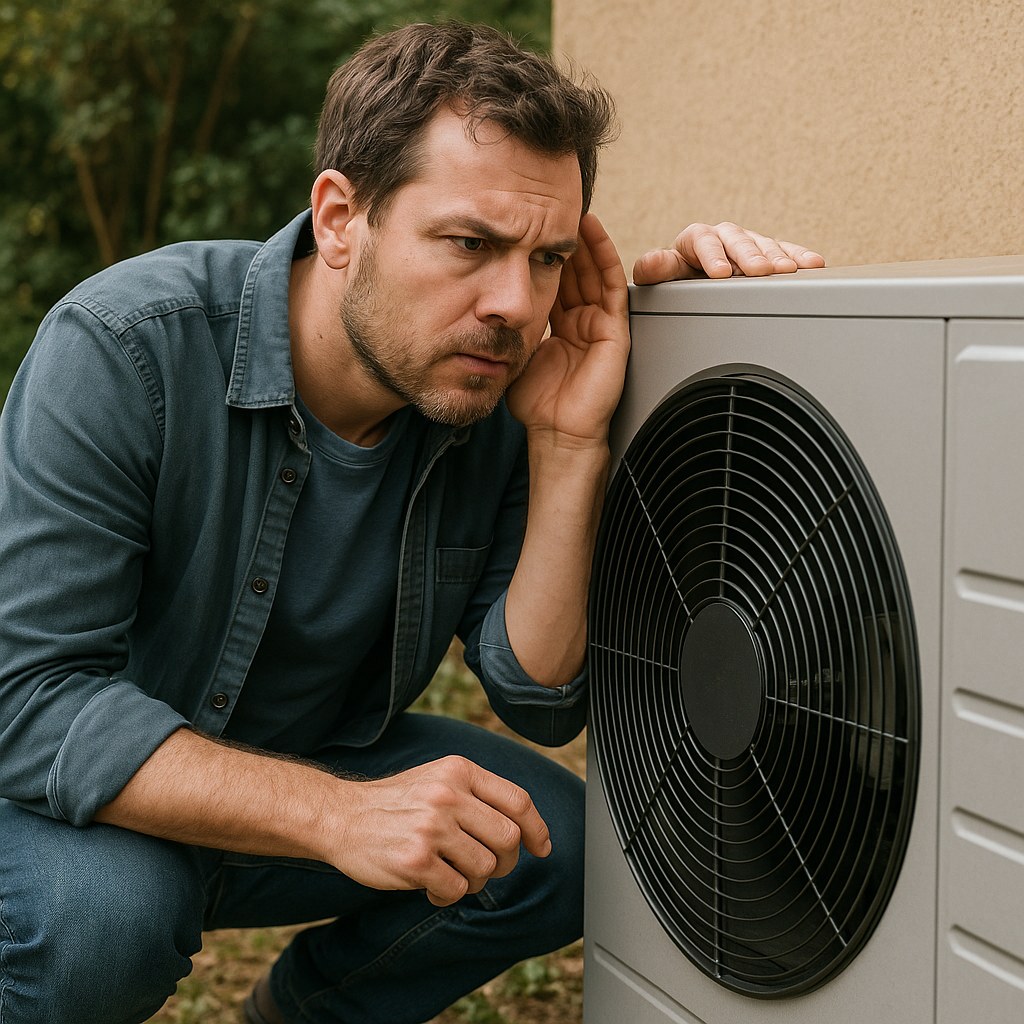
Step 1: Become a Sound Detective - Identify the Noise
Before we can fix the problem, we need to know exactly what we’re dealing with. Different sounds point to different issues, so your first task is to listen carefully.
- Eliminate Background Noise: Turn off your TV, music, or any other sources of noise in your home.
- Listen Closely: Stand near your indoor air handler and listen. What do you hear? Is it a rattle, a click, a buzz, or something else?
- Head Outside: Go to your outdoor condenser unit and repeat the process. Sometimes the noise is clearly coming from one unit or the other.
The most common problem sounds can be categorized as:
- Rattling or Vibrating: Often caused by loose parts or debris.
- Grinding or Squealing: Usually indicates a problem with a motor or bearings.
- Buzzing or Humming: Typically points to an electrical issue or vibrating components.
- Clicking: Can be normal, but if it's constant, it might signal a control or thermostat issue.
Once you’ve identified the type and location of the noise, you’re ready to move on to the fix.
How to Fix Rattling or Vibrating Noises
A rattling sound is probably the most common—and thankfully, often the easiest—noise to fix. It usually means something is loose.
If the Noise is Coming from the Outdoor Unit:
Loose panels or debris are the most frequent culprits here. Twigs, leaves, or even small toys can get inside the unit and rattle against the fan.
Here’s how to fix it:
- Safety First! Cut the Power: Turn off the heat pump at your thermostat. Then, go outside to the condenser unit and find the electrical disconnect box (a metal box on the wall nearby). Pull the handle out to completely cut power to the unit.
- Tighten the Casing: Use a Phillips screwdriver or a nut driver to check and tighten all the screws on the outer panels of the heat pump. They can loosen over time due to vibrations.
- Clear Out Debris: With the power off, you can safely remove the top grille (if necessary) to look inside. Carefully remove any leaves, twigs, or other debris that may have fallen into the unit.
- Restore Power: Put the panel or grille back on, then push the disconnect handle firmly back into place. Turn your thermostat back on and listen.
If the rattling is gone, you’ve just saved yourself a service call! If it persists, it’s time to have a professional check for an internal issue, like a problem with the compressor.
If the Noise is Coming from the Indoor Unit:
The same principle applies indoors—something is likely loose.
- Power Down Again: Turn the system off at the thermostat, then find the dedicated breaker for your indoor air handler in your main electrical panel and switch it to the OFF position.
- Check the Access Panels: The air handler has one or more access panels. Check that they are secure and tighten any loose screws.
- Inspect the Filter Cover: A loose air filter cover is a common source of rattling. Make sure it's latched firmly in place.
- Power Up: Reinstall any panels you removed, flip the breaker back on, and restart your system.
If the noise continues, an HVAC technician should inspect the blower assembly, as a component may have come loose internally.
How to Address Grinding or Squealing Sounds
Grinding or squealing is a more serious sound. It almost always points to a problem with a motor’s bearings, which are failing due to age or lack of lubrication. This needs to be addressed immediately to prevent the motor from failing completely.
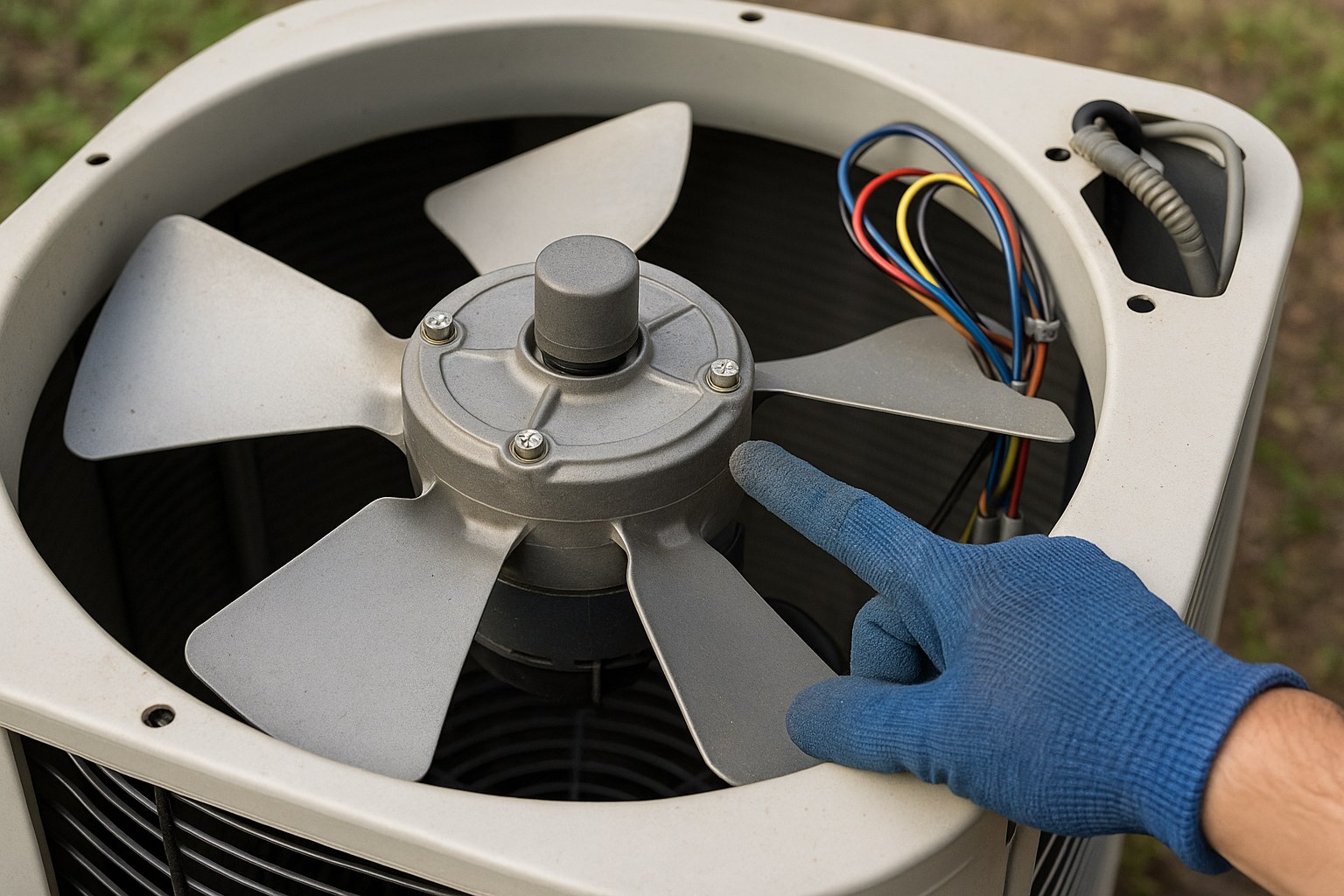
For the Outdoor Unit (Fan Motor):
- Kill the Power: Turn off the thermostat and pull the outdoor electrical disconnect.
- Access the Fan: You’ll likely need to remove the top grille with a socket wrench to get to the fan motor.
- Perform a Manual Spin Test: Gently spin the fan blade by hand (watch your fingers!). Does it spin smoothly and quietly? Or do you feel resistance, roughness, or a wobble?
- Check for Bent Blades: While you're there, look at the fan blades. A minor bend in a blade can cause a grinding noise and unbalance the motor. If you see a small bend, you can gently (while wearing gloves) try to bend it back into alignment.
If the fan feels rough when you spin it, the motor bearings are shot. Continuing to run the system can cause more damage. This is a job for a professional, as the fan motor will need to be replaced.
For the Indoor Unit (Blower Motor):
The process is similar for the indoor blower. After cutting power at the breaker, you’ll need to open the blower access panel. Gently spin the blower wheel (it looks like a hamster wheel) by hand. If you hear scraping or feel resistance, the motor bearings are failing. This also requires a professional repair.
What to Do About Buzzing or Humming Noises
A loud buzz or hum, especially when the unit tries to start, often signals an electrical problem.
Electrical Component Check (Outdoor Unit):
The two main culprits are the contactor (a relay that sends power to the unit) and the capacitor (which helps the motors start).
Warning: This involves high-voltage components. This is a VISUAL inspection only. Do not touch any electrical parts.
- Turn Off All Power: Shut off the thermostat and pull the outdoor disconnect.
- Open the Electrical Panel: Remove the access panel on the heat pump where the electrical wires enter.
- Look for Damage: Visually inspect the contactor and capacitor. Do you see any black or burnt marks? Is the top of the capacitor bulging or leaking?
- Close It Up: If you see any of these signs of failure, the part needs to be replaced. Put the panel back on, and call an HVAC technician. This is not a DIY job for untrained homeowners due to the risk of electric shock.
Vibrating Refrigerant Lines:
Sometimes, a humming noise is simply the copper refrigerant lines vibrating against the side of your house. This is an easy fix! While the unit is running, gently press on the lines where they touch the wall. If the noise stops, you've found the source. You can slide a piece of foam pipe insulation between the line and the wall to dampen the vibration permanently.
Decoding Clicking Noises
Clicking can be either completely normal or a sign of a problem.
- Normal Clicks: It’s normal to hear a click when the thermostat calls for heat or cooling, or when the system enters its defrost cycle in the winter. These clicks are brief and happen only during startup or shutdown.
- Constant Clicking: If you hear a repeated clicking noise during operation, it could be a failing relay or an issue with the thermostat. You can check the thermostat by removing its cover and ensuring all the low-voltage wires are securely screwed down. If that doesn’t solve it, you’ll need a pro to test the system’s control board and relays.
When to Call a Professional
While many noises have simple DIY solutions, some problems absolutely require a trained HVAC technician. You should always call a professional if you suspect:
- Failing Motor Bearings (Grinding/Squealing): The motor will need to be replaced.
- Bad Electrical Components (Buzzing/Visible Damage): Capacitors hold a dangerous electrical charge even when the power is off.
- Refrigerant Issues: Hissing sounds or poor performance alongside noise could indicate a refrigerant leak.
- You're Unsure or Uncomfortable: There's no shame in calling for help. Working on an HVAC system can be dangerous if you don't know what you're doing.
According to HomeAdvisor, the average cost for a heat pump repair is around $375, though it can range from $150 to $600 depending on the issue. While that may sound like a lot, it’s far less than the cost of replacing an entire unit damaged by a neglected problem.
Take Control of Your Home Maintenance with Casa
Fixing a noisy heat pump can be a rewarding DIY project that saves you time and money. By correctly identifying the sound and following these safe, step-by-step instructions, you can solve many common issues yourself.
For those bigger jobs or when you just need an expert eye, Casa is here to help. Download the Casa app today to get more helpful home maintenance guides, keep track of your repairs, and connect with trusted, pre-screened HVAC professionals in your area. We make homeownership easier, one fix at a time.