

Dec 23, 2025
How to Fix a Pool Pump That Is Not Circulating Water
Is your pool water stagnant and cloudy? A non-circulating pump is a common issue, but often an easy fix. Our guide walks you through troubleshooting power issues, priming the pump, and clearing clogs to restore your pool's sparkle.
There’s nothing quite like the promise of a refreshing dip in your pool on a hot day. But when you pull back the cover and find the water is still, cloudy, and uninviting, that dream can quickly turn into a frustrating reality. If your pool jets are weak or there’s no water movement at all, the culprit is likely your pool pump.
Looking for more guidance? Take a look at our Repairs overview.
A pool pump is the heart of your pool's circulation system. It pulls water through the skimmers, sends it through the filter, and pushes it back out through the return jets, keeping your water clean, clear, and healthy. When it stops circulating, your pool can quickly become a breeding ground for algae and bacteria.
The good news is that most circulation problems aren't catastrophic. Often, it's an issue you can diagnose and fix yourself in under an hour with no special tools. Whether your pump won't start, is humming but not moving water, or just seems weak, we’re here to walk you through it.
Let's dive in and get your pool back in top shape.
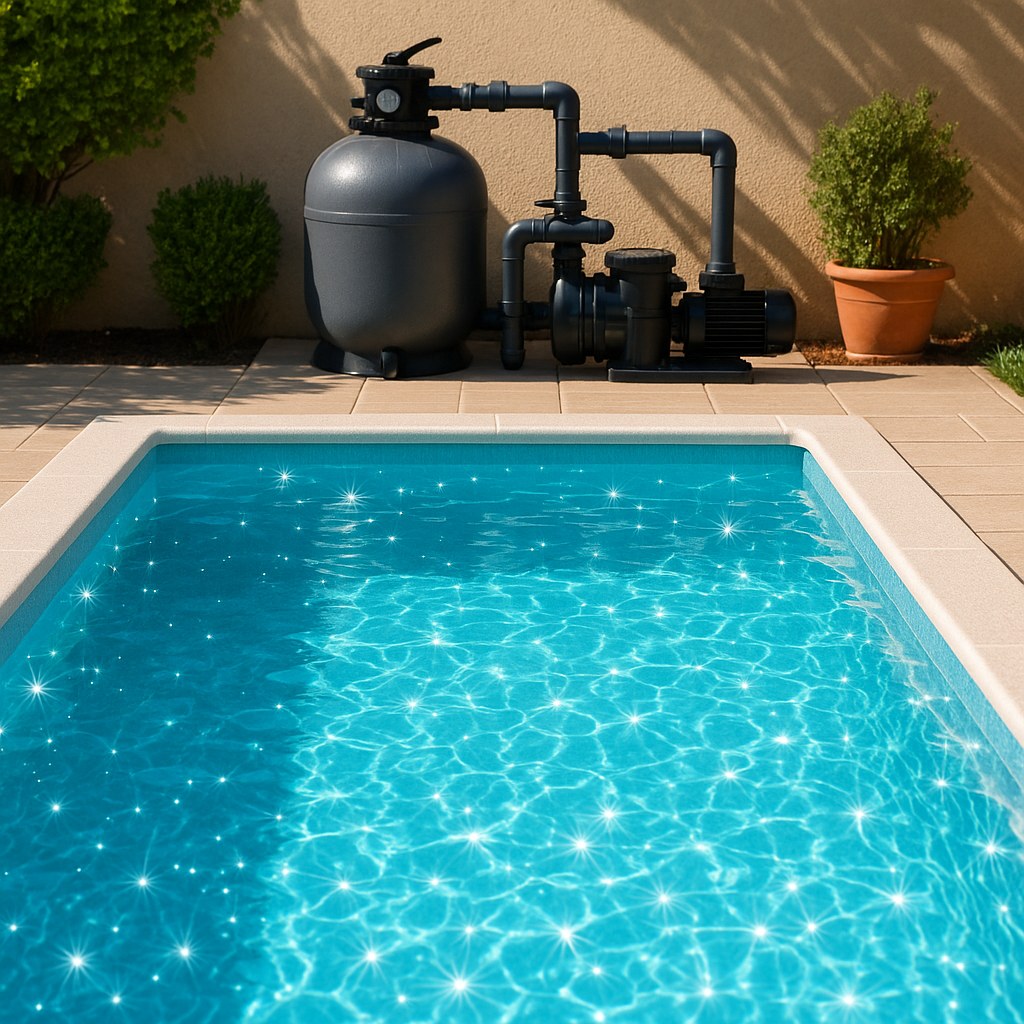
Why Isn't My Pool Pump Circulating Water? Common Causes
Before we start troubleshooting, let's understand the usual suspects. A pump that fails to circulate water typically suffers from one of three issues:
- No Power: The simplest explanation is often the right one. The pump may not be receiving electricity due to a tripped breaker or a switch being off.
- A Loss of Prime: The pump needs to be full of water to create the suction necessary to pull water from the pool. If air gets into the system, the pump "loses its prime" and can't move water. You might hear it running, but no water will be flowing.
- An Obstruction or Clog: Debris like leaves, twigs, and hair can clog up the system at various points, restricting or completely blocking water flow.
We’ll tackle these issues one by one, starting with the easiest fix.
Step-by-Step Guide to Fixing Your Pool Pump Circulation
Follow these steps in order to diagnose the problem and get your water moving again.
Step 1: Check if the Pump is Getting Power
First, let's confirm if the issue is electrical. Walk over to your pool equipment pad.
- Is the pump motor running? Listen for the familiar hum or whir of the motor. If it's completely silent when it should be on, you have a power problem.
- Is the timer switch on? Many pumps are controlled by a mechanical timer. Make sure the manual override switch is in the "ON" position.
If the pump is silent and should be running, it's time to check the circuit breaker.
How to Restore Power to Your Pump
- Locate the electrical sub-panel for your pool equipment. It's usually a small, gray metal box mounted on a wall near the pump.
- Open the cover and find the circuit breaker labeled "Pool Pump," "Filter Pump," or something similar.
- If the breaker is in the middle or "OFF" position, flip it all the way to "OFF" and then firmly back to the "ON" position to reset it.
- Return to the pump and try turning it on again.
If the pump starts up, great! But if it immediately trips the breaker again, you may have a more serious electrical issue or a problem with the motor itself. In this case, do not keep resetting it. It's time to call a licensed electrician or a pool service professional.
If the pump motor is now running, let's move on to the next step to check the water flow.
Step 2: Check if the Pump Has Lost its Prime
If your pump motor is running but the water in the pump's strainer basket isn't moving, or you see lots of air bubbles churning around, your pump has likely lost its prime. This means there's too much air in the system for it to create suction.
How to Prime Your Pool Pump
Priming sounds technical, but it’s just a fancy term for filling the pump with water manually.
- Turn Off the Pump: This is crucial. Never open the pump lid while the motor is running. Head to the breaker and turn the pump off.
- Close Skimmer Valves (Optional but Helpful): If you have valves, turn the one for the main drain off and keep the skimmer line open. This can help the pump prime faster.
- Relieve Pressure: If your filter has an air relief valve, open it to release any built-up pressure in the system.
- Open the Pump Lid: Slowly unscrew the clear lid on top of the pump's strainer basket. You might need a special wrench for this if it's on tight, but it's usually hand-tightened.
- Clean the Basket: While the lid is off, pull out the strainer basket and empty any leaves or debris. A clogged basket is a common cause of poor flow.
- Inspect the O-Ring: The rubber O-ring on the lid creates an airtight seal. Check it for cracks, dirt, or wear. A bad O-ring is a common source of air leaks. Wipe it clean and apply a small amount of pool lubricant if you have it. If it's damaged, you'll need to replace it.
- Fill it Up! Grab a garden hose and fill the pump strainer housing completely with water. Let it overflow a bit. You want to force as much air out as possible.
- Replace the Lid: Quickly screw the lid back on, making sure it's snug and secure to create a good seal. Do not over-tighten.
- Open Valves and Turn On: Open the air relief valve on your filter, open any valves you closed, and then turn the pump back on at the breaker.
- Wait and Watch: Water should start moving in the pump basket within a minute or two. Once a steady stream of water is flowing out of the air relief valve, close it.

Now, walk over to your pool and check the return jets. If you have strong, steady flow, congratulations—you've fixed the problem! If the pump doesn't prime or loses prime again quickly, you likely have an air leak somewhere in the system (a cracked pipe, a bad valve, or that pesky O-ring). Finding an air leak can be tricky, so this is another point where calling a pool professional is a good idea.
Step 3: Clear All Obstructions
If your pump is primed and running but the water flow is still weak, you have a clog somewhere in the system. Think of it like a clogged artery—the heart is pumping, but the flow is restricted.
Let's check the three most common choke points:
- Skimmer Baskets: Your skimmers are the first line of defense. Pop the lids off the skimmers around your pool deck, pull out the baskets, and dump all the leaves, bugs, and debris. A full skimmer basket can severely limit the amount of water reaching the pump.
- Pump Strainer Basket: We mentioned this in the priming step, but it's worth double-checking. Turn off the pump and ensure this basket is completely clean.
- The Pool Filter: This is the biggest and most common culprit for weak flow. Over time, the filter gets clogged with dirt and debris it has removed from the water. Look at the pressure gauge on top of your filter tank.
- What's the pressure? Note the pressure when your filter is clean (it's a good idea to write this down with a marker on the filter itself). If the current reading is 8-10 PSI or more above that "clean" pressure, your filter is dirty and needs to be cleaned.
- How to Clean Your Filter:
- For Sand or D.E. Filters: You'll need to "backwash" the filter. This involves turning a valve to reverse the water flow, flushing all the trapped debris out through a waste line. Follow the manufacturer's instructions, but the process is generally: turn off the pump, set the multiport valve to BACKWASH, run the pump for 2-3 minutes, turn it off, set to RINSE for 30 seconds, then turn it off and return to FILTER.
- For Cartridge Filters: You'll need to turn off the pump, relieve the pressure, open the filter tank, and remove the cartridges. You can then clean them thoroughly with a garden hose, spraying between the pleats to remove all the gunk.
After cleaning all the baskets and the filter, turn your system back on. You should see a significant improvement in flow from your return jets.
Step 4: A Note for Variable-Speed Pump Owners
If you have a modern two-speed or variable-speed pump, there's one more simple thing to check. These energy-efficient pumps are often programmed to run at a very low speed for daily filtering. If the pump is set to its lowest RPM, the flow can seem very weak.
Go to your pump's control panel and manually increase the speed to its highest setting. If the flow from the jets immediately becomes strong, then your pump is working correctly—it was just in low-power mode.
When to Call a Pool Professional
While many circulation issues are simple DIY fixes, some problems require an expert. It's time to call a pool technician if:
- The pump won't turn on after you've reset the breaker.
- The pump makes loud grinding, screeching, or humming noises.
- The pump won't hold its prime, indicating a persistent air leak.
- You've cleared all obstructions and the flow is still weak, which could point to a clogged impeller inside the pump.
Hiring a professional for a diagnosis typically costs between $75 and $150 per hour, plus the cost of any parts. It's a worthwhile investment to avoid causing further damage.

Final Thoughts
A non-circulating pool pump can be alarming, but it doesn't have to ruin your summer. By systematically checking for power, ensuring the pump is primed, and clearing any clogs, you can solve the vast majority of circulation problems yourself. Regular maintenance, like emptying baskets weekly and cleaning your filter as needed, will prevent most of these issues from happening in the first place.
Feeling overwhelmed or discovered a problem that's beyond a simple fix? That's where Casa comes in. Download the Casa app to get access to more easy-to-follow home maintenance guides and connect with trusted, vetted pool professionals in your area. We're here to help you keep your home—and your pool—in perfect working order.