

Oct 31, 2025
How to Fix a Sidewalk Cracked by Tree Roots A DIY Guide
Discovering tree roots cracking your sidewalk can be frustrating, but it's a fixable problem. This comprehensive guide walks you through assessing the damage, repairing minor cracks, and tackling major repairs with root barriers or tree removal to restore your walkway's safety and appearance.
There’s something beautiful about a mature tree lining a residential street. It provides shade, boosts curb appeal, and connects us with nature. But that beauty can come with a hidden cost when its powerful roots decide to wage a slow-motion war with your sidewalk. One day you notice a tiny hairline crack, and before you know it, you have a lifted, uneven slab that’s a tripping hazard for your family and neighbors.
Looking for more guidance? Take a look at our Repairs overview.
The good news is that you’re not powerless against the underground advance of tree roots. Fixing a sidewalk cracked by tree roots is a common home maintenance task that ranges from a simple afternoon DIY project to a more involved repair. The key is to correctly diagnose the problem and choose the right solution for your situation.
In this guide, we'll walk you through everything you need to know, just like we’re on the phone together. We’ll cover how to assess the damage, perform simple repairs, and plan for bigger fixes that protect both your sidewalk and your valuable trees.
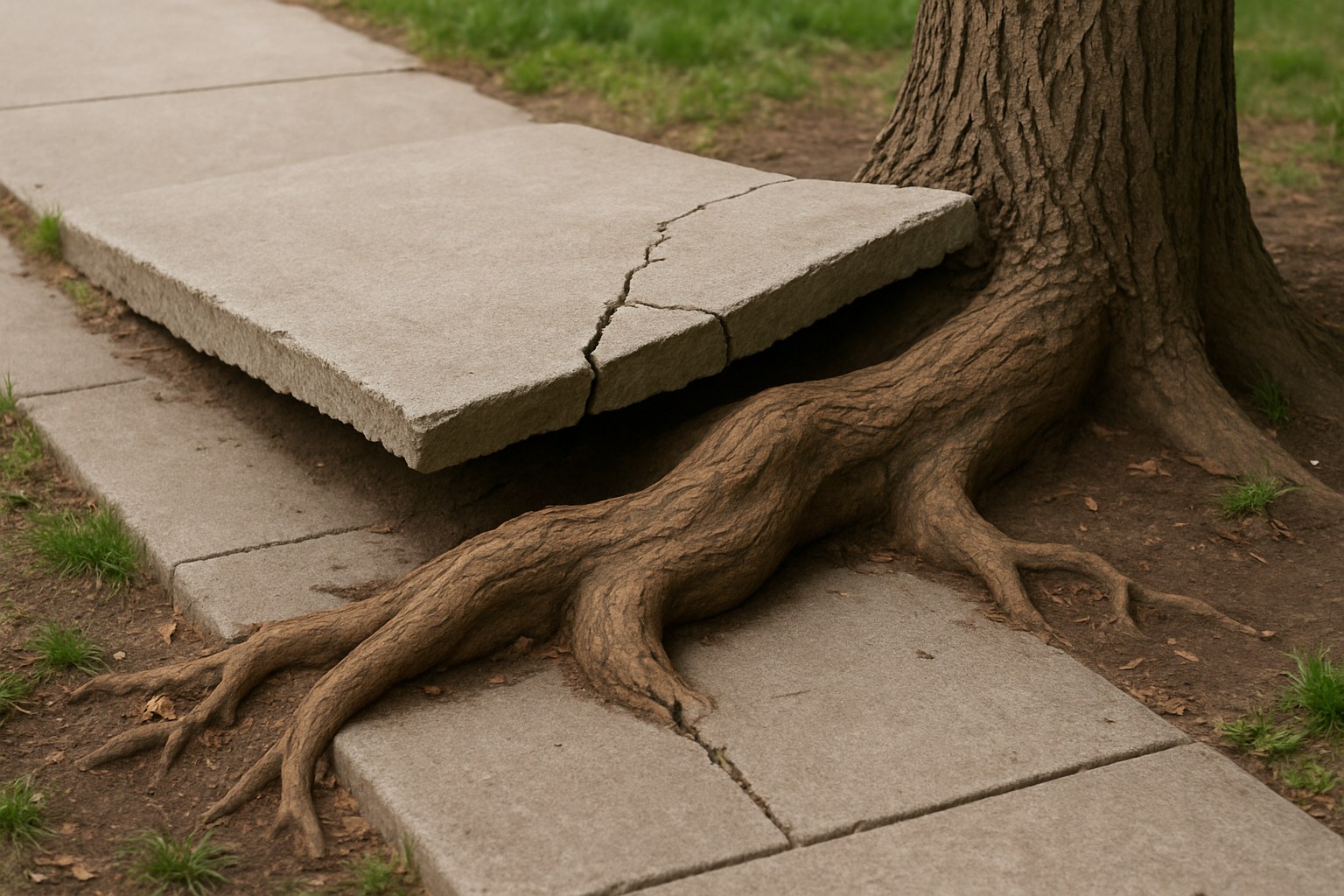
Why Do Tree Roots Crack Sidewalks Anyway?
Before we grab our tools, let's quickly understand the "why." Tree roots have one primary mission: to find water, oxygen, and nutrients. In an urban or suburban environment, the soil under a concrete sidewalk is often an ideal place for them. The concrete traps moisture, and the granular base beneath it is often looser and better aerated than compacted lawn soil.
As a tree's roots expand in search of these resources, they grow in diameter. This growth exerts a tremendous, steady pressure—often more than enough to lift and crack a 4-inch concrete slab. Certain trees with shallow, aggressive root systems, like Silver Maples, Willows, and Elms, are notorious for causing this kind of damage.
Step 1: Your Initial Assessment – Know What You're Dealing With
The first and most important step is to play detective. The solution you choose depends entirely on the severity of the damage and the health of the tree. Let’s grab a tape measure and a level, and take a walk.
- Survey the Damage: Walk the entire length of the affected sidewalk. Note every crack, lifted section, or uneven joint. Don't just focus on the most obvious spot.
- Measure the Cracks: Use your tape measure to find the width of the cracks at their widest point. A hairline crack less than 1/8-inch wide is a very different problem than a half-inch chasm.
- Check for Lifting: Place a 4-foot level across any lifted slabs to see exactly how uneven they are. A height difference of more than a quarter-inch can be a significant tripping hazard.
- Assess the Tree: Step back and look at the tree itself. Does it look healthy, with a full canopy of green leaves? Or are there large, dead branches and sparse foliage? The tree's health is a major factor in deciding whether to save it.
- Measure the Distance: Estimate the distance from the tree trunk to the damaged section of the sidewalk. The closer the damage is to the trunk, the more likely it is that major structural roots are involved.
- Document Everything: Take photos of both the sidewalk damage and the tree from a few different angles. These will be useful for reference, or if you need to consult with a professional.
- Check Local Regulations: This is a crucial step that many homeowners miss. Before you even think about cutting roots or removing a tree, search your city or municipality's website for terms like “tree ordinance,” “sidewalk repair,” or “tree removal permit.” Some areas have strict rules about what you can do, especially with trees on the parkway (the strip between the sidewalk and the street).
After your assessment, you can answer the key question: Is the damage limited to small (≤1/8-inch) cracks with no significant slab lifting? If the answer is yes, you can likely handle this with a simple repair. If not, you’re looking at a more involved solution.
Option A: How to Fix Minor Sidewalk Cracks
If your detective work revealed only minor, hairline cracks and a relatively level surface, you're in luck! This is an easy and inexpensive DIY fix you can complete in under an hour.
You'll need a few basic tools: a stiff brush, a shop vacuum, a bottle of flexible concrete crack filler, and a putty knife.
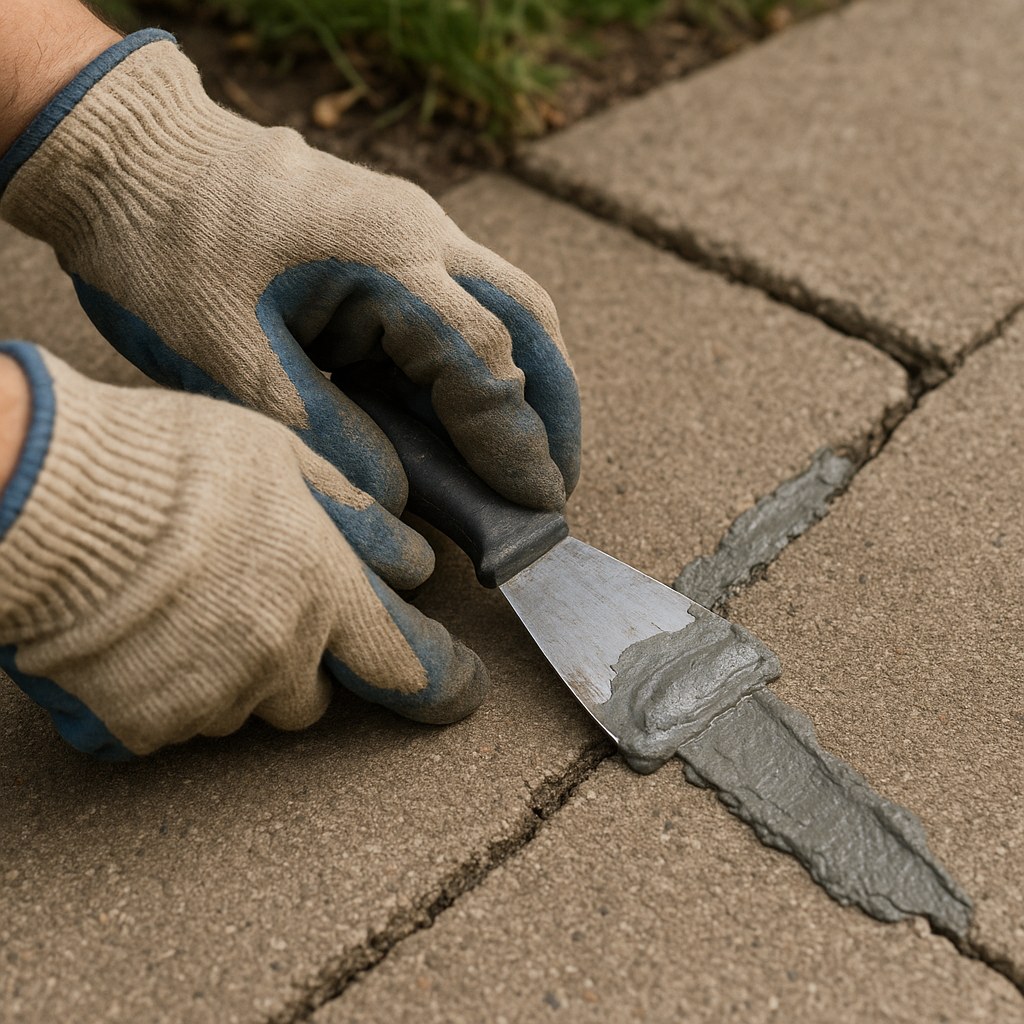
Here’s how to do it:
- Clean the Cracks: Use the stiff brush to sweep out any loose dirt, pebbles, and debris from inside the cracks.
- Vacuum the Dust: For the best adhesion, use a shop vacuum to remove all the fine dust and remaining particles from the cracks.
- Fill the Cracks: Shake the bottle of concrete crack filler well. Squeeze a steady bead of the filler into the crack, slightly overfilling it.
- Smooth the Surface: Immediately use your putty knife to smooth the filler, making it level with the surrounding sidewalk. Scrape away any excess from the surface.
- Let it Cure: Follow the instructions on the product label for curing time, which is typically 30-60 minutes. Avoid walking on the repaired area until it's fully cured.
Once cured, the flexible filler will seal the crack from water intrusion, preventing it from worsening during freeze-thaw cycles.
Option B: Tackling Major Damage When You Want to Save the Tree
If you're facing lifted slabs and large cracks, a simple filler won't cut it. This is where things get more complex. The goal is to repair the sidewalk while preventing the roots from causing the same problem again, all without killing a healthy tree. This usually involves installing a root barrier and replacing the damaged concrete section.
Warning: This is a physically demanding project that involves demolition and concrete work. While it's a feasible DIY for the experienced homeowner, many people choose to hire a professional for this.
First, Evaluate the Roots
Before you break up any concrete, you need to know what you're up against underground. Cutting major roots can destabilize a tree or even kill it.
- Call 811 Before You Dig: This is a non-negotiable first step. Dial 811 or visit their website to have all underground utility lines (gas, electric, water) marked on your property. This is a free service and is required by law.
- Dig a Test Trench: Once the utilities are marked, use a shovel to carefully dig a narrow trench parallel to the sidewalk, about 2 feet from the edge, in the area of the damage. Expose the roots carefully, brushing away soil with your hands.
- Identify Major Roots: Measure the diameter of the roots you uncover. Any root larger than 2 inches in diameter is considered a primary structural root. Cutting these can be very harmful to the tree. If you find large roots this close to the sidewalk, it's highly recommended to consult a certified arborist. An arborist can assess the tree's health and perform specialized root pruning that minimizes damage.
Installing a Root Barrier and Repouring the Sidewalk
If your test trench reveals only smaller roots (under 2 inches), you can proceed with the repair.
- Demolish the Old Slab: Wearing safety glasses and gloves, use a sledgehammer to break up the damaged concrete section. Remove the pieces with a wheelbarrow.
- Dig the Barrier Trench: Excavate a trench about 18 inches deep along the edge of the sidewalk closest to the tree.
- Prune Small Roots: Use clean, sharp hand pruners or a root saw to cut any roots under 2 inches that cross the trench line. Make clean cuts; don't tear or hack at them.
- Install the Root Barrier: Place a sheet of high-density polyethylene root barrier vertically into the trench. These barriers are designed to deflect roots downward, away from the sidewalk. Backfill the trench, tamping the soil down firmly.
- Prepare and Pour the New Slab: Re-pour the sidewalk section. This involves building forms, mixing and pouring the concrete, leveling it, and allowing it to cure properly.
This process preserves the tree while providing a long-term solution for your sidewalk.
Option C: When Tree Removal Is the Best Choice
Sometimes, saving the tree isn’t feasible. The damage might be too severe, the tree might be unhealthy, or it might be an undesirable species planted too close to your home. In these cases, removal is the most practical solution.
Do not attempt to remove a large tree yourself. This is a dangerous job that requires professional expertise and equipment.
- Check for Permits: As mentioned earlier, check with your city to see if a permit is required for tree removal.
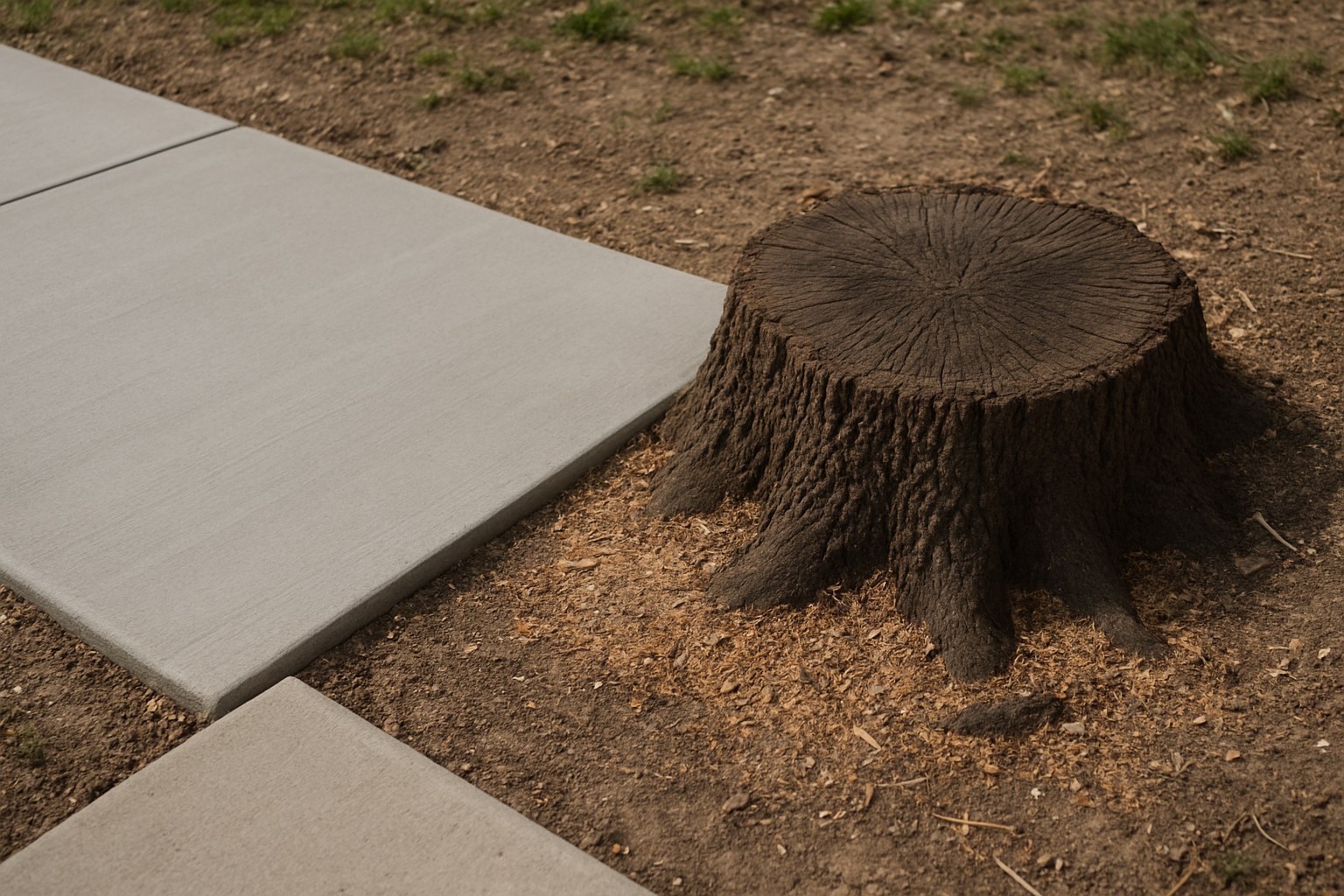
- Hire Licensed Professionals: Contact a licensed and insured tree removal company for a quote. Ensure the quote includes stump grinding to at least 12 inches below the surface to remove the source of the root problem.
- Hire a Concrete Contractor: Separately, hire a concrete contractor to remove the old, damaged sidewalk and pour a new one after the tree is gone.
- Coordinate the Work: Schedule the tree removal to happen before the concrete work begins.
Cost Considerations: DIY vs. Hiring a Pro
- Minor DIY Crack Repair: Very affordable. A bottle of concrete filler costs $10 - $20.
- Major DIY Repair (with Root Barrier): More expensive. You'll need to budget for concrete bags, gravel, a root barrier roll, and potential tool rentals. Expect to spend $200 - $500.
- Professional Help: Costs can vary widely.
- Arborist Consultation: According to Forbes, a consultation or root pruning can cost $300 - $700.
- Sidewalk Replacement: HomeAdvisor states concrete walkway replacement typically costs $8 - $20 per square foot.
- Tree Removal: Can range from $500 to over $2,000, depending on the tree's size and location.
Final Thoughts
Dealing with a sidewalk cracked by tree roots is a perfect example of how homeownership requires us to balance nature with our built environment. By carefully assessing the situation and understanding your options, you can choose a path that restores safety and beauty to your property, whether it's a quick patch-up job or a more permanent solution.
And remember, you don't have to figure it all out alone. For every home maintenance challenge, from simple fixes to finding trusted local professionals, the Casa app is here to help. Download Casa today to access step-by-step DIY guides, get organized with your home's upkeep, and connect with certified arborists, concrete contractors, and other experts right in your area.