

Mar 16, 2026
How to Fix a Vacuum Making Unusual Noises
Is your vacuum rattling, squeaking, or whining? Learn how to diagnose and fix common vacuum noises safely, from tangled brush rolls to clogged filters.
Vacuums are inherently noisy machines, but as a homeowner, you quickly learn what your vacuum is supposed to sound like. When that familiar hum is suddenly replaced by a high-pitched whine, a loud rattle, or a squeal, it is completely normal to worry that the motor is failing.
Looking for more guidance? Take a look at our Repairs overview.
Fortunately, a noisy vacuum rarely means the machine is ruined. More often than not, the unusual sound is simply your vacuum's way of asking for some routine maintenance. Tangled hair, a stretched belt, or a full dustbin are the most common culprits, and they are usually very easy to resolve yourself.
Let's walk through how to diagnose the sound and get your vacuum running smoothly again.
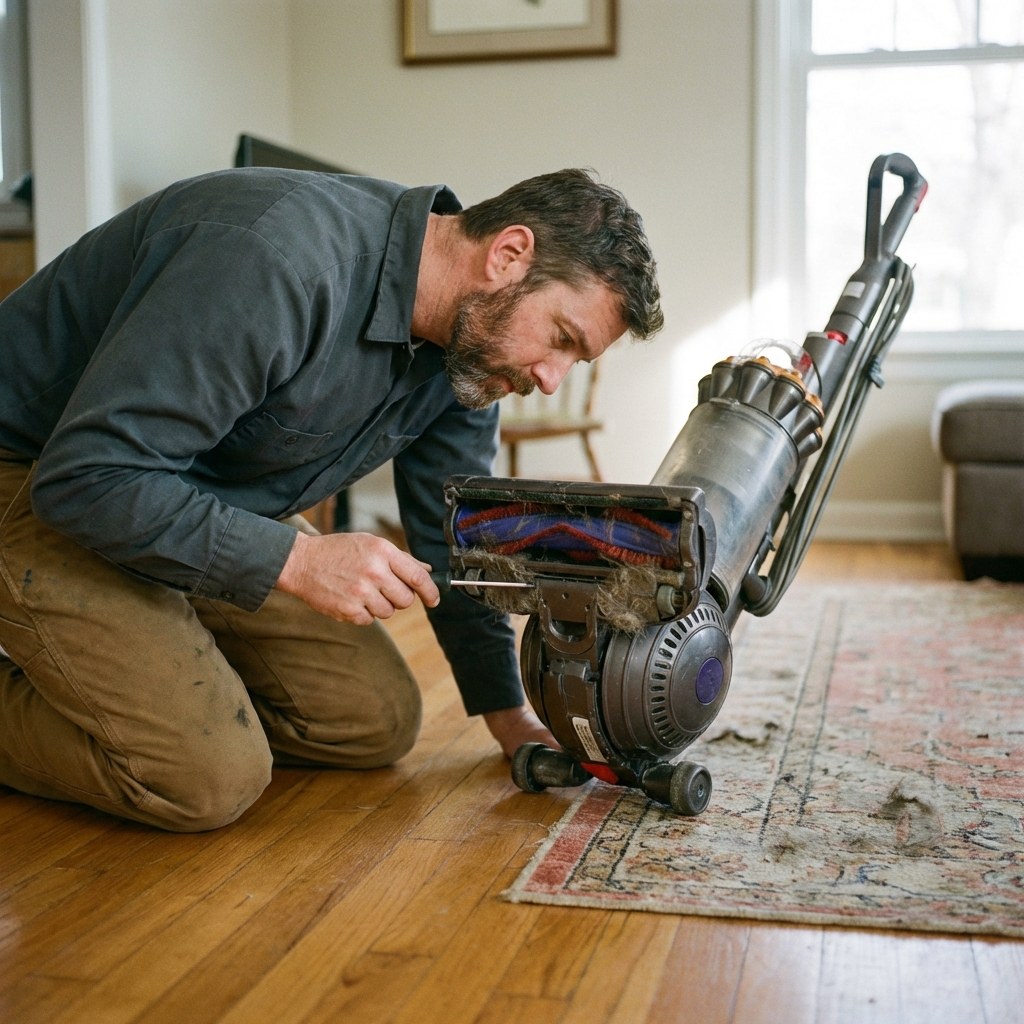
What the Symptoms Indicate
Different noises point to different parts of the vacuum. Knowing what to listen for will save you time:
- Rattling or squeaking near the floor: This usually points to the brush roll (the spinning cylinder with bristles) or the rubber vacuum belt that drives it.
- High-pitched whine: This almost always indicates restricted airflow. The motor is working harder than it should because a filter, hose, or dustbin is clogged.
- Grinding noise from the motor: This is a more serious symptom that often points to failing motor bearings.
- Loose, vibrating rattles: Often caused by a loose wheel, a poorly attached accessory, or a loose screw on the exterior housing.
Step-by-Step Diagnosis and Repair
Before doing any work on your vacuum, safety comes first. Always turn off the vacuum and unplug the power cord. If you are using a cordless model, remove the battery entirely.
Step 1: Locate the Source of the Noise
To start, briefly turn the vacuum on and run it over a carpeted area, then over a hard floor. Listen closely to pinpoint where the sound is coming from.
- If the noise is coming from the base where the vacuum touches the floor, proceed to Step 2.
- If the noise sounds like a high-pitched whine coming from the main body, jump to Step 3.
- If you hear external rattling, jump to Step 4.
Step 2: Inspect the Brush Roll and Belt (For Rattles and Squeaks)
If the bottom of the vacuum is making a racket, it is time to check the mechanics.
- Lay the unplugged vacuum on its back to expose the base.
- Use a Phillips screwdriver to remove the screws holding the bottom plate in place, then lift the plate off.
- Check the brush roll: Look for hair, string, or carpet fibers wrapped tightly around the cylinder. Use a pair of scissors to carefully cut away the debris. Pull out anything lodged in the bristles or the end caps, and ensure the brush roll spins somewhat smoothly by hand.
- Check the vacuum belt: The belt connects the motor spindle (the small metal rod) to the brush roll. If the belt is stretched, frayed, or broken, it will cause loud squealing or rattling.
How to replace a bad belt: If the belt is worn out, slide it off the motor spindle and brush roll. Loop a new replacement belt around the motor spindle first, stretch it over the brush roll pulley, and set the brush roll back into its slots. Reattach the bottom plate and tighten the screws.
Step 3: Check Filters and Dustbins (For High-Pitched Whines)
A high-pitched squeal or whine means your vacuum is suffocating.
- Remove the dustbin or open the bag compartment. If it is full, empty the bin into the trash and wipe it clean, or swap in a fresh vacuum bag.
- Locate your filters. Most vacuums have a pre-motor filter and an exhaust (or HEPA) filter.
- Tap loose dust into the trash. If your filters are washable, rinse them under lukewarm water until the water runs clear.
- Important: Allow washed filters to air-dry completely for at least 24 hours before putting them back. Running a vacuum with damp filters can severely damage the motor.
Tip: You can use the Casa app to track your vacuum's maintenance schedule, ensuring you never forget to replace your filters or bags.
Step 4: Tighten External Fittings (For External Rattling)
If the noise isn't internal, check the exterior. Inspect the wheels, hose connections, and any attachments for looseness. Press all attachments firmly into place until they click. Use your screwdriver to tighten any loose screws on the vacuum body or wheels. Shake the vacuum gently while unplugged to confirm nothing is rattling loose.
When to Stop and Call a Professional
The steps above are completely safe to try yourself. However, it is time to stop and call an appliance repair technician if:
- You hear a heavy grinding noise directly from the motor housing.
- You smell a strong burning odor (especially an electrical or burning plastic smell).
- You have cleaned the brush roll, replaced the belt, and cleared all filters, but the unusual noise persists.
Grinding motors usually mean the internal bearings are failing. This requires disassembling the motor, which is dangerous due to electrical components and best left to a professional.
Typical Time and Cost Ranges
Fixing a noisy vacuum yourself is quite affordable and fast:
- Time: Basic cleaning and diagnosis take about 5 to 15 minutes. Replacing a belt takes around 20 minutes. Washing filters takes 10 minutes (plus 24 hours of drying time).
- Cost: A replacement vacuum belt generally costs $5 to $15. Replacement filters range from $10 to $30.
- Professional Repair: If you need to hire an appliance repair technician for internal motor work, labor and parts typically range from $75 to $150+. Depending on the age and original price of your vacuum, replacing the unit entirely may be more cost-effective than a professional motor repair.

Summary
A vacuum making odd noises is usually asking for a little TLC. By systematically checking the brush roll for tangles, inspecting the belt for wear, and clearing out full dustbins or clogged filters, you can resolve the majority of squeaks, rattles, and whines in under half an hour.
Keeping track of home maintenance doesn't have to be stressful. From storing appliance model numbers for easy belt-ordering to setting reminders for filter replacements, the Casa app helps you stay organized and confident in your home. Download the Casa app today to simplify your home maintenance routines.