

Oct 1, 2025
How to Fix a Water Heater With No Hot Water
Waking up to a cold shower is no one's idea of a good morning. This guide will walk you through troubleshooting and fixing your water heater, whether it's a gas or electric, tank or tankless model. Learn how to check the pilot light, reset the breaker, and even flush sediment to get your hot water running again.
There are few things more jarring than stepping into the shower expecting a warm, relaxing start to your day, only to be hit with a blast of icy-cold water. A water heater that’s stopped working is a major inconvenience, but don't panic. Many of the most common issues are surprisingly simple to diagnose and fix yourself, without needing an expensive emergency call to a professional.
Looking for more guidance? Take a look at our Repairs overview.
Whether you hear strange noises coming from the tank, see an error code, or simply have no hot water, we’re here to help you get to the bottom of it. Think of us as your expert on the line, walking you through the steps to get that hot water flowing again.
In this guide, we'll cover everything from identifying your water heater type to performing basic resets and even more advanced maintenance like flushing the tank. Let's get that heater working!
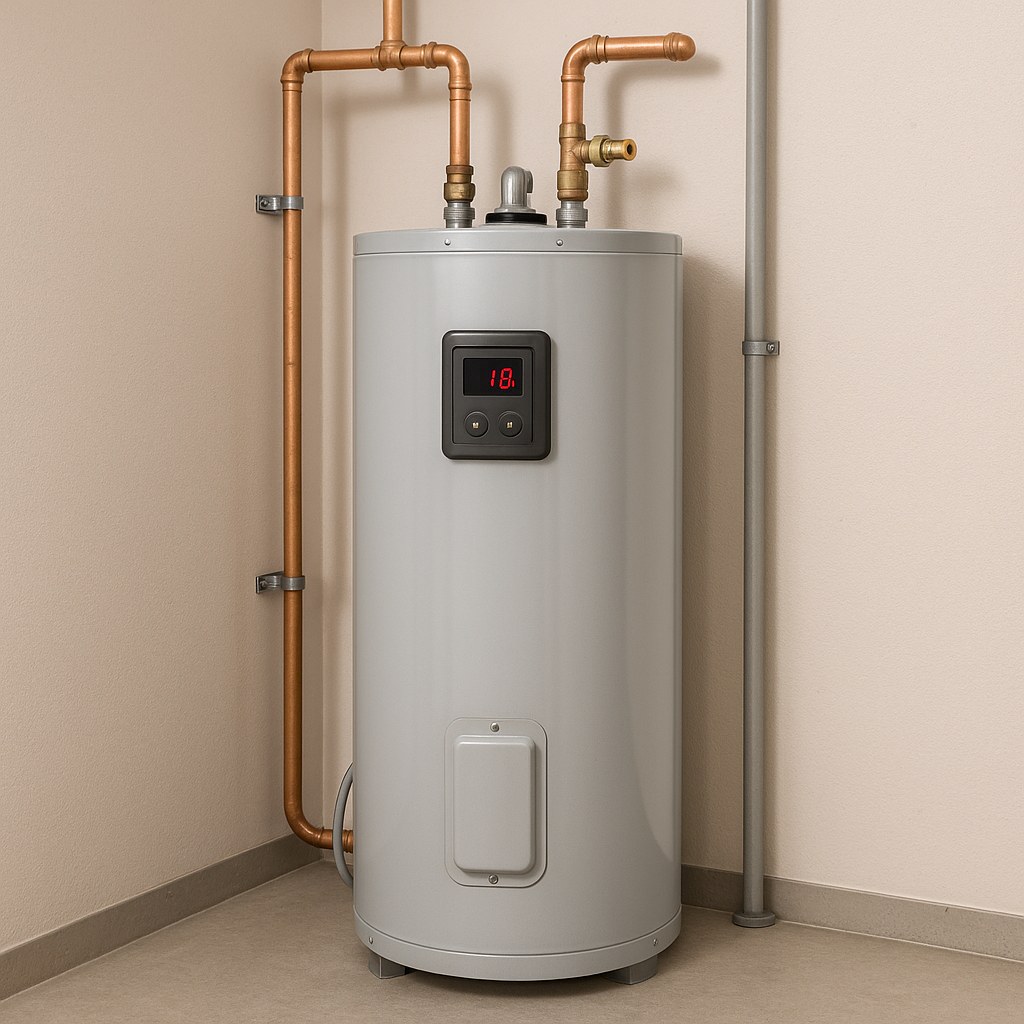
Why Is My Water Heater Not Working? Common Causes
Before we dive into the fixes, it helps to understand what might be going wrong. Your water heater is a relatively simple appliance, and most problems boil down to a few key culprits:
- No Power or Gas: For electric heaters, a tripped circuit breaker is a common issue. For gas models, the pilot light may have gone out.
- Tripped Safety Switch: Electric water heaters have a high-limit switch that can trip if the water gets too hot, cutting off power to the heating elements.
- Thermostat Issues: The thermostat could be set too low, or it could be faulty.
- Sediment Buildup: Over time, minerals in your water can settle at the bottom of the tank, forming a layer of sediment. This can insulate the water from the heating element or burner, reducing efficiency and eventually causing failure.
- Faulty Parts: Like any appliance, components like heating elements (in electric models) or the thermocouple (in gas models) can wear out and need replacement.
Now, let's figure out which one is causing your cold-water woes.
Step 1: Initial Assessment – Know Your Water Heater
First things first, we need to identify what kind of water heater you have. The troubleshooting steps are different for each type. You’ll typically find your water heater in a basement, garage, or a dedicated utility closet.
- Tank vs. Tankless: Does it have a large, cylindrical storage tank? That’s a conventional tank-style heater. If it’s a small, rectangular box mounted on the wall, you have a tankless (or on-demand) water heater.
- Gas vs. Electric: Look for the utility connections. If you see a rigid or flexible gas supply pipe (usually with a small shut-off valve) connected to the bottom of the unit, it’s a gas heater. If you see a thick electrical cable running from the wall into the top or side of the unit, it’s an electric heater.
Once you’ve identified your heater type, you can jump to the right section below.
Troubleshooting a Gas Tank-Style Water Heater
If you have a traditional gas water heater with a tank, these are the most common reasons it stops producing hot water.
Important Safety Note: If you smell gas (a rotten egg odor) near your water heater, stop immediately. Do not use any electronics or light switches. Leave the house and call your gas company's emergency line from a safe distance.
1. Check the Pilot Light
The pilot light is a small, continuously burning flame that ignites the main burner when your heater needs to make more hot water. If it goes out, you’ll have no hot water.
- Locate the Burner Access Door: This is a small metal panel at the very bottom of the tank. You may need to remove it to see inside.
- Look for the Flame: Peer through the sight glass (a small glass window) to see if you can spot a small, blue flame.
- If the Pilot Light is Out: Follow the instructions printed on your water heater (usually on a label near the gas control valve) to relight it. The general process is:
- Turn the gas control knob to the "PILOT" position.
- Press and hold down the pilot reset button.
- While holding the button, use a long-nose lighter or the built-in igniter button (piezo igniter) to light the pilot flame.
- Continue holding the reset button for about 30-60 seconds after the flame ignites to heat up the thermocouple, then release it slowly.
- If the Pilot Light Stays Lit: Success! Turn the control knob back to the "ON" or a temperature setting. You should hear the main burner kick on with a "whoosh" sound. It will take 30-60 minutes for the water to heat up.
- If the Pilot Light Won't Stay Lit: This often indicates a faulty thermocouple, which is a safety device that shuts off the gas if the pilot goes out. Replacing a thermocouple is a possible DIY job for some, but it may be best to call a professional.
2. Check the Thermostat
It might sound too simple, but make sure the temperature dial on the gas control valve hasn't been accidentally turned down or set to "VAC" (vacation) mode. For most homes, a setting of 120°F (49°C) is recommended for safety and efficiency.
Troubleshooting an Electric Tank-Style Water Heater
Electric water heaters use powerful heating elements to warm the water. Problems here are almost always electrical in nature.
1. Check the Circuit Breaker
Your electric water heater is a high-power appliance and is usually connected to two dedicated breakers in your electrical panel.
- Find your main electrical panel (breaker box).
- Look for one or two breakers labeled "Water Heater."
- If a breaker is tripped (usually in the middle position or shifted to "OFF"), flip it firmly to the full "OFF" position and then back to "ON."
If the breaker trips again immediately, you likely have a short in the wiring or a faulty heating element. Do not keep resetting it. This is a job for an electrician or an HVAC technician.
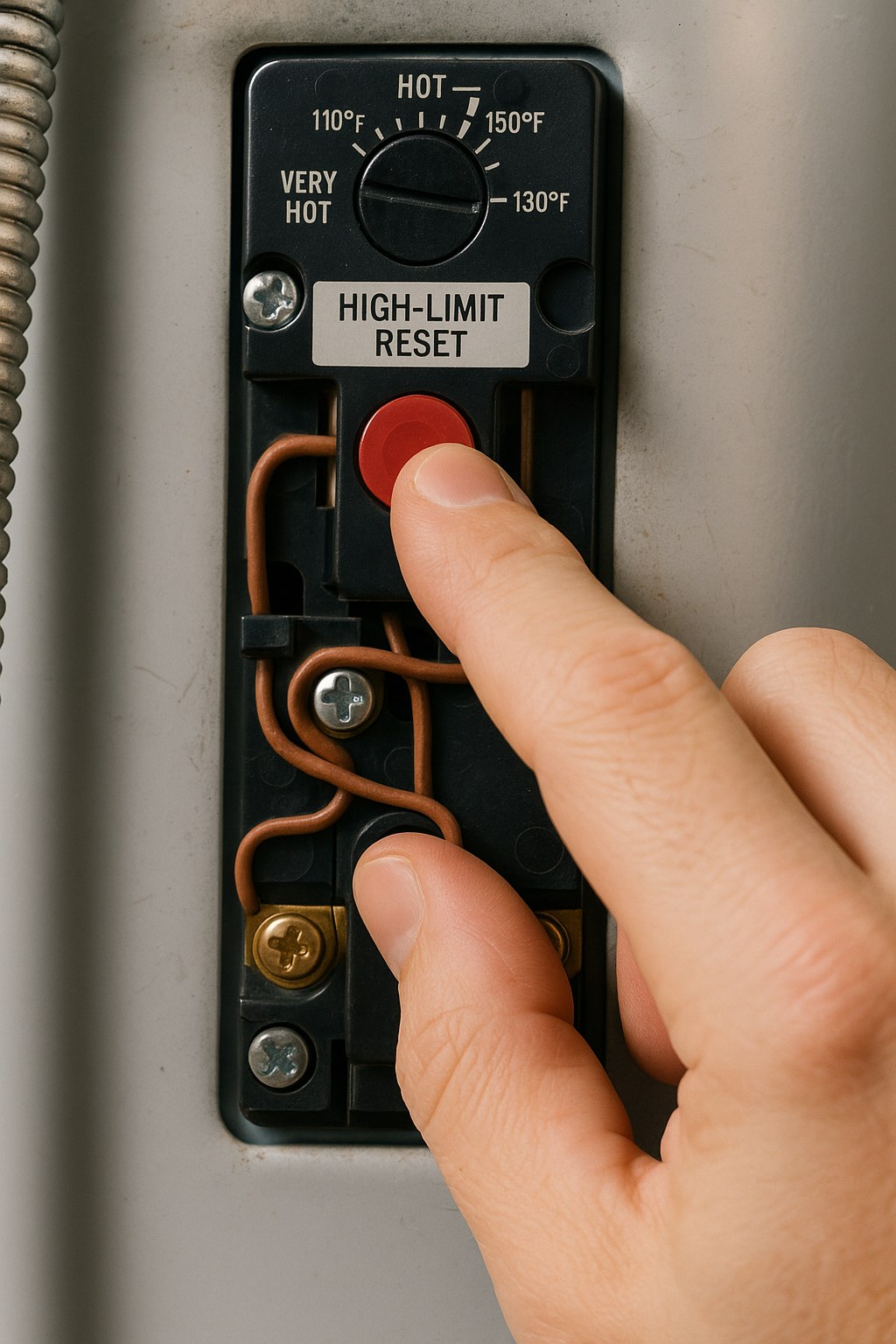
2. Reset the High-Limit Switch
Electric water heaters have a red reset button as a safety feature. It's a high-limit switch that cuts power if the water temperature exceeds a safe level (around 180°F).
- Turn off the power to the water heater at the circuit breaker.
- Locate the access panels on the side of the tank (there are usually two, one for the upper thermostat and one for the lower). Use a Phillips screwdriver to remove the upper panel.
- Move the insulation aside to reveal the thermostat. You should see a small red button labeled "Reset."
- Press this button firmly. You should feel or hear a click.
- Replace the insulation and the access panel, then turn the power back on at the breaker.
Wait about 30-60 minutes. If you have hot water, the reset worked! If this button frequently trips, it could be a sign of a faulty thermostat or heating element, and you should have it inspected.
Troubleshooting a Tankless Water Heater
Tankless heaters are more complex, but many issues can be solved with a simple reset.
1. Check for Power and Error Codes
- Power Cycle the Unit: Unplug the unit from the wall outlet (or turn off its dedicated breaker), wait a full minute, and then restore power. This can often clear a temporary fault.
- Look at the Display: Most tankless units have a digital display. If it's showing an error code, write it down and consult your owner's manual. The code will tell you exactly what the unit thinks is wrong (e.g., an ignition failure on a gas model or a flow sensor issue).
2. Check Gas and Water Valves
Ensure the gas shut-off valve and the cold and hot water service valves are fully open. Sometimes these can be accidentally closed during other household work.
Advanced Fix: Flushing or Descaling Your Water Heater
If the basic checks didn't work, your problem might be sediment (for tank heaters) or mineral scale (for tankless heaters). This buildup forces your heater to work harder and can eventually stop it from heating altogether. Flushing or descaling should be done annually as preventative maintenance.
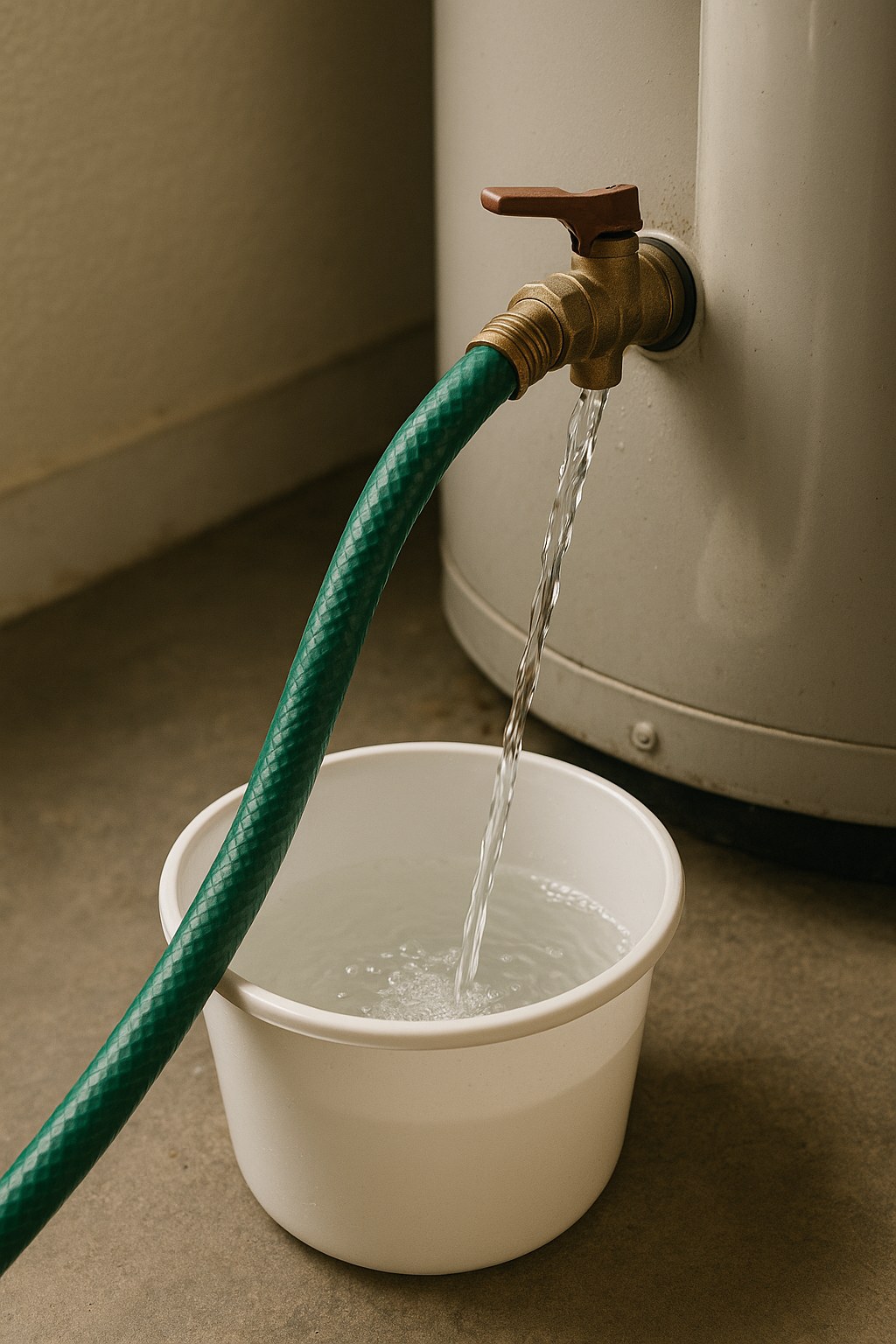
How to Flush a Tank-Style Water Heater
- Turn off the power (at the breaker for electric) or turn the gas control knob to "PILOT" (for gas).
- Close the cold-water inlet valve at the top of the tank.
- Connect a garden hose to the drain valve at the bottom of the tank. Run the other end of the hose to a floor drain, a large bucket, or outside.
- Open a hot water faucet somewhere in your house (like a bathtub) to let air into the tank, which helps it drain.
- Carefully open the drain valve on the heater. The water will be hot!
- Let the tank drain for 5-10 minutes. You may see discolored water or small particles come out—this is the sediment.
- Once the water runs clear, close the drain valve, disconnect the hose, and close the hot water faucet you opened earlier.
- Re-open the cold-water inlet valve to refill the tank.
- Once the tank is full (you'll hear the water stop running), restore power or turn the gas back to your desired temperature setting.
How Much Does It Cost to Fix a Water Heater?
Doing it yourself can save you a bundle. A simple reset costs nothing, and parts for common DIY repairs are very affordable.
- DIY Repair Costs: A new thermocouple can cost $10-$20, and a new heating element is typically $15-$30.
- Professional Repair Costs: According to Forbes Home, hiring a professional for a water heater repair can cost anywhere from $220 to $975, with the national average being around $598. An emergency or after-hours call will cost even more.
When to Call a Professional
While many issues are fixable, some problems require an expert. Call an HVAC technician if:
- You smell gas.
- A circuit breaker trips repeatedly.
- You see water pooling around the base of the tank (this often means the tank has rusted through and needs replacement).
- You're uncomfortable performing any of the steps above.
Stay Ahead of Problems with Casa
A lack of hot water can ruin your day, but with a little troubleshooting, you can often be your own hero. By following these steps, you can diagnose the problem and, in many cases, fix it yourself in under an hour.
For more easy-to-follow home maintenance guides, expert tips, and a direct line to vetted professionals when you need them, download the Casa app today. We make it simple to manage and maintain your home, so you can spend less time worrying about repairs and more time enjoying your space.