

Mar 16, 2026
How to Fix an Unstable or Leaning Fence
A leaning fence doesn't necessarily mean you need a total replacement. Learn how to inspect your fence posts, identify rot or rust, and decide whether to repair or call a pro.
When a fence starts to lean, wobble, or sag, it is easy to assume the worst: that you need to tear it all down and start over. Fortunately, that is rarely the case. Fences are exposed to high winds, shifting soil, and moisture year-round. Over time, individual posts can loosen or deteriorate while the rest of the fence remains perfectly fine.
Looking for more guidance? Take a look at our Repairs overview.
Fixing an unstable fence is a common part of homeownership. Often, the solution involves reinforcing or replacing just one or two posts. In this guide, we will walk you through how to inspect your fence, figure out exactly what is causing the instability, and decide whether it is a manageable weekend project or time to call in a professional.
Diagnose the Problem
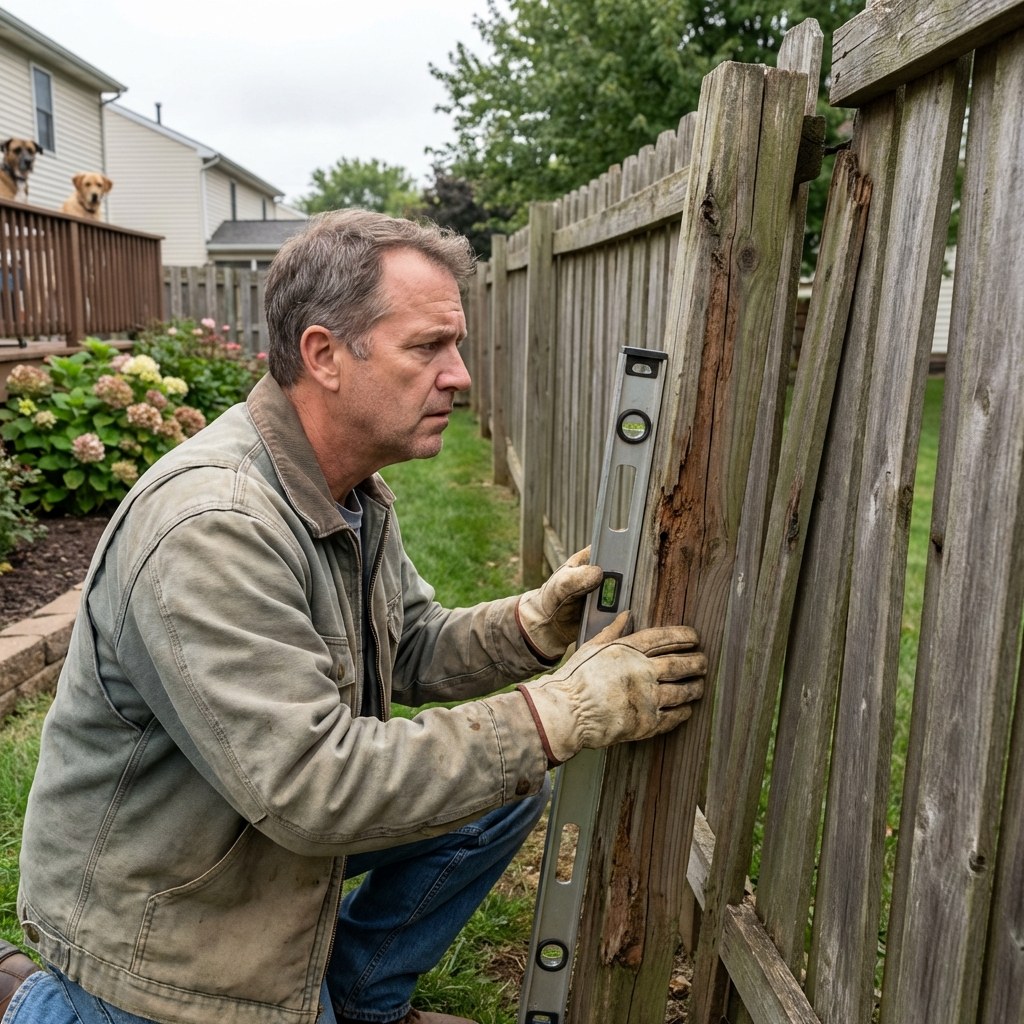
Before grabbing a shovel, you need to understand why the fence is failing. Put on a pair of heavy work gloves and walk your entire fence line.
- Step back and look: Stand about 10 feet back from the fence. Note any sections that are no longer vertical (plumb).
- The push test: Gently push on several fence posts to feel which ones are loose or give way.
- Identify the material: The repair process will depend heavily on whether your main posts are made of wood, vinyl, or metal (like chain-link).
Checking Wood or Vinyl Posts
If your fence is wood or vinyl, the most common culprit is a compromised base. Use a flathead screwdriver to probe the base of the loose posts, right where they meet the ground.
- Look for rot: If the wood is soft, crumbly, or you see heavy insect damage in the bottom 12 inches, the post is rotting.
- Look for cracks: Significant vertical splits or physical breaks mean the post's structural integrity is gone.
- Check the footing: If the post itself is solid wood but shifts freely in the ground when you shake it, the concrete footing below the soil has likely shifted.
Checking Metal Posts
For chain-link or metal fences, rust and impact damage are the primary issues. Inspect the entire post for bends or severe kinks. Use a stiff wire brush to scratch any heavy rust spots near the ground to see if the metal has thinned out or perforated completely.
When to DIY and When to Call a Pro
Understanding your limits will save you time, money, and frustration.
Safe to try yourself:
- Resetting a sound post: If the post (wood, vinyl, or metal) is in good condition but leaning due to loose soil or a shifted footing, adding new concrete is a straightforward repair.
- Replacing a single rotten wood post: Digging out an old post and setting a new one requires some manual labor, but it is highly manageable if you are comfortable using a shovel and mixing concrete.
When to stop and call a professional fencing contractor:
- Severely rusted or bent metal posts: Replacing metal posts often requires specialized tools to re-tension chain-link fabric safely.
- Widespread rot: If more than a few posts are rotting, the entire fence line may be nearing the end of its lifespan. A pro can help you weigh the cost of spot repairs versus a full replacement.
- Specialty materials: If your fence is masonry, wrought iron, or a complex composite material, rely on a specialist.
Safety note: Before you ever break ground with a shovel, you must call your local utility locating service (dial 811 in the US). They will mark underground gas, water, and electrical lines for free. Digging blindly puts you at severe physical and financial risk.
How to Reset a Leaning, Sound Post
If your post is in good shape but leaning, you do not need to remove it entirely. You just need to stabilize it.
- Detach the panels: Loosen or unscrew the fence panels or chain-link fabric from the leaning post so the post can move freely.
- Dig a trench: Use a post hole shovel to dig a 6-inch-wide trench on the side opposite the lean, going down until you reach the bottom of the existing concrete footing.
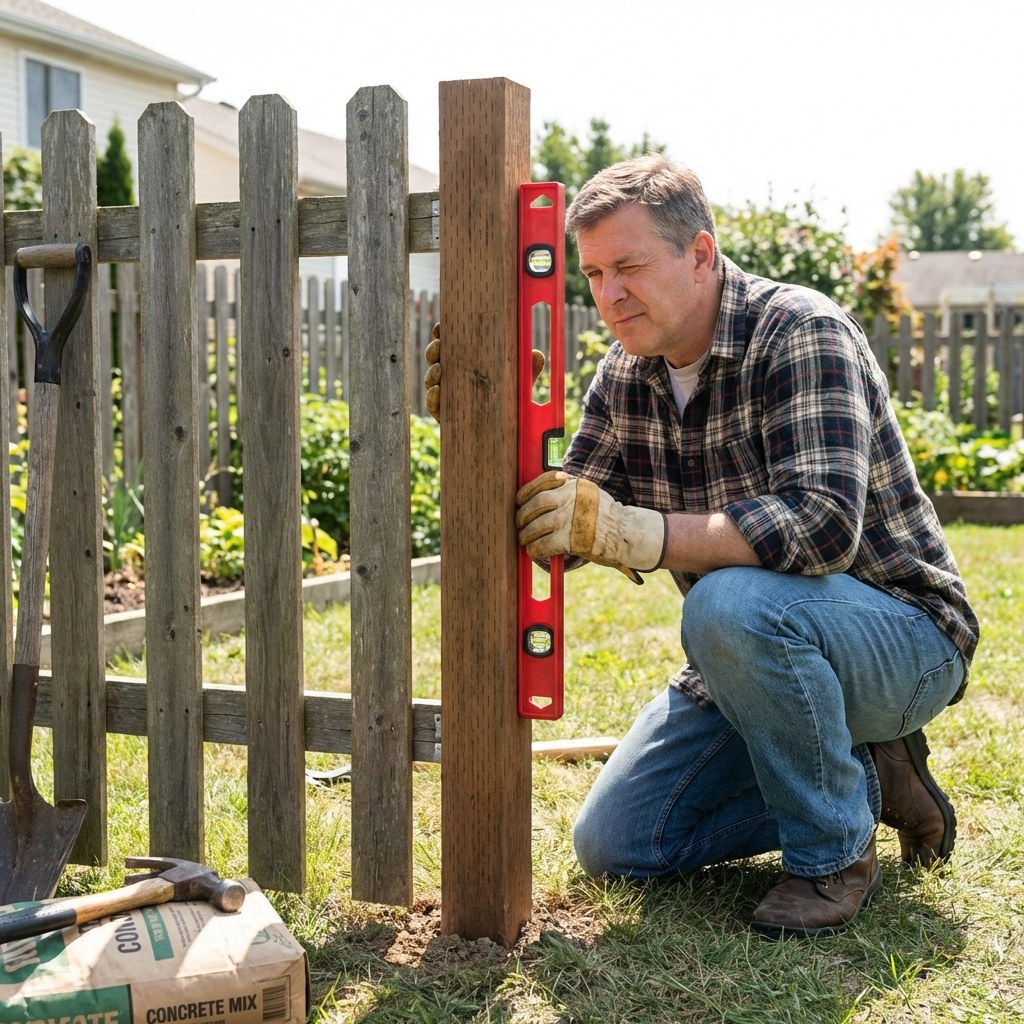
- Plumb the post: Push the post fully upright. Hold a post level against two adjacent sides to ensure it is perfectly straight.
- Brace it: Drive a temporary 2x4 brace (or steel stake for metal posts) into the ground and attach it to the post to hold it steady.
- Pour concrete: Mix a batch of fast-setting concrete in a bucket according to the package directions. Pour the wet concrete into the trench to fill the empty space around the old footing.
- Slope the top: Trowel the top of the wet concrete so it slopes slightly away from the post. This prevents water from pooling against the base.
- Cure and reattach: Let the concrete cure for 24 hours. Remove the brace and reattach your fence panels.
How to Replace a Rotten Wood Post
If the post is rotten or snapped, it has to come out.
- Remove panels and dig: Unscrew the fence panels and set them aside. Dig a 12-inch-wide hole around the rotten post to expose the old concrete footing.
- Extract the old post: Rock the post back and forth to loosen it, then lift it out along with the old concrete. Discard the debris.
- Prep the hole: Pour about 4 inches of crushed gravel into the bottom of the hole and tamp it flat with a digging bar. This improves drainage and prevents the new post from sitting in water.
- Set the new post: Place a new pressure-treated post in the hole. Use a post level to ensure it is plumb, and brace it with temporary 2x4s.
- Add concrete: Fill the hole two-thirds full with dry, fast-setting concrete mix. Add water according to the bag's instructions, using a digging bar to poke the mixture and remove air pockets. Slope the top away from the post.
- Wait and reassemble: Allow 24 hours for the concrete to cure fully before removing the braces and reattaching the heavy fence panels.
Typical Time and Cost Ranges
Fixing a fence post is generally very budget-friendly if you do it yourself.
- Materials: A new pressure-treated wood post, gravel, and a bag or two of fast-setting concrete will typically cost between $20 and $50 per post.
- Time: Expect to spend 1 to 2 hours of active working time per post, plus a mandatory 24-hour waiting period for the concrete to cure.
- Contractor costs: If you choose to hire a professional, repairing a few posts generally ranges from $150 to $400, depending on your region, soil conditions, and fence material.
Staying on Top of Maintenance
Fences are the unsung heroes of our yards, working around the clock to provide privacy and security. Taking a quick walk around your yard each spring to test your posts can catch a loose footing before it turns into a snapped post during a storm.
To help manage these seasonal checks, you can rely on the Casa app. Casa allows you to schedule routine maintenance reminders for outdoor fixtures, keeping your property secure without adding mental clutter to your day.
Download the Casa app today to start organizing your home repairs, tracking warranties, and keeping your home maintenance on a steady, manageable schedule.