

Sep 17, 2025
How to Fix Blinds That Wont Stay in Place
Are your window blinds refusing to stay put? Whether they're creeping up on their own or won't lock in place, this guide will walk you through fixing roller, Venetian, and Roman blinds with simple, step-by-step instructions.
There are few things more frustrating than carefully lowering your blinds to block out the sun, only to turn around and see them slowly creeping back up. Or maybe you pull the cord on your Venetian blinds, and they simply refuse to lock, sliding right back down. When your blinds won't stay in place, it can compromise your privacy, mess with your room's lighting, and frankly, just be a daily annoyance.
Looking for more guidance? Take a look at our Repairs overview.
The good news is that you don't have to live with rogue window treatments. In most cases, this is a problem you can fix yourself in under an hour with just a few basic tools. The issue usually comes down to a simple mechanical problem—a loss of tension, a dirty locking mechanism, or a frayed cord.
In this guide, we’ll walk you through how to diagnose and fix the most common types of blinds, including roller, Venetian, and Roman styles. Let’s get your windows looking sharp and functioning perfectly again.

Why Won't My Blinds Stay Put?
Before we dive into the fixes, it helps to understand what’s going wrong. Here are the most common culprits behind misbehaving blinds:
- Roller Blinds: The issue is almost always related to the spring mechanism inside the roller tube. The tension might be too loose, causing them to slide down, or too tight, causing them to shoot up.
- Venetian/Mini Blinds: These blinds rely on a cord lock mechanism inside the headrail. If this mechanism is dirty, jammed, or broken, it can't grip the lift cords to hold the blinds in place. Frayed cords can also be a cause.
- Roman Blinds: The problem often lies with the cord system on the back. If the cords are tangled, the rings are loose, or the dowels are uneven, the blinds won't hang or lift correctly.
Now, let's figure out what you're working with and get it fixed.
Step 1: Identify Your Blind Type
The first step is to correctly identify what kind of blinds you have, as the repair methods are completely different for each. Grab a sturdy step stool so you can get a good look at the headrail (the top bar) and the overall mechanism.
- Roller Blinds: These are the simplest. They consist of a single piece of fabric or vinyl that wraps around a hollow tube. They are operated either by a spring mechanism (you pull the bottom of the blind) or a continuous chain loop on one side.
- Venetian or Mini Blinds: These are the classic slatted blinds. They have horizontal slats made of vinyl, aluminum, or wood that are connected by thin ladder strings. They are raised and lowered with lift cords that run through holes in the slats.
- Roman Blinds: These are made from a single piece of fabric that folds up into neat, horizontal pleats when raised. You’ll see a system of cords and rings on the back that pulls the folds up.
Once you know your blind type, you can jump to the correct section below.
How to Fix Roller Blinds That Won't Stay Up (or Down)
A roller blind that won't cooperate is usually suffering from a tension problem. The internal spring has either lost its tension (so the blind won't retract) or has too much (so it won't stay down). Here’s how to reset it.
1. Adjust the Spring Tension
This process essentially "re-winds" the spring to give it the correct amount of tension.
- Pull the Blinds Down: Pull the shade all the way down until it can't go any further.
- Release and Roll: Gently unhook the blind from its brackets. You may need to push a retaining tab or rotate a lock to do this. Be careful not to let it drop.
- Roll it Up Manually: With the blind on the floor or a large table, manually roll the fabric back onto the roller tube as tightly and evenly as you can.
- Re-install the Blind: Place the roller tube back into the brackets.
- Test It: Pull the blind down about halfway. It should now have enough tension to retract smoothly and stay in place when you stop. If it still shoots up, it has too much tension; pull it all the way down, remove it again, and unroll it by hand for two full rotations before re-installing. If it's still too loose, repeat the process to add more tension.
If resetting the tension doesn’t work, the next thing to check is the installation itself.
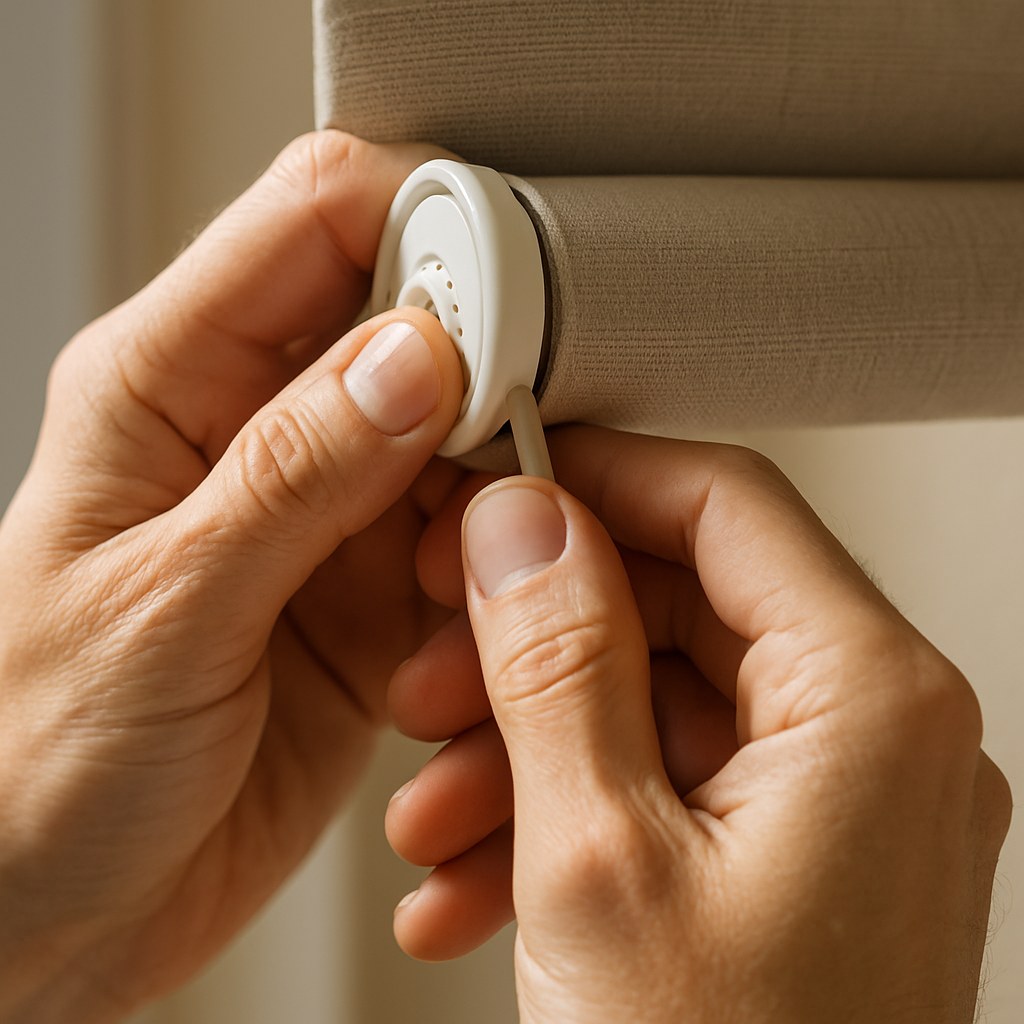
2. Check and Tighten the Brackets
If the brackets holding the roller tube are loose or not level, the blind can bind up and fail to operate correctly.
- Inspect the Brackets: With the blind in place, check if the brackets are securely screwed into the window frame or wall.
- Tighten the Screws: Use a Phillips screwdriver to tighten any loose screws on both brackets.
- Check for Level: Place a small level on top of the headrail. If it’s not perfectly horizontal, the blind won’t roll evenly. Loosen the screws on the lower side’s bracket, adjust its height until the headrail is level, and then retighten the screws.
If you’ve tried both of these fixes and the blind still won't work, the internal spring or clutch mechanism is likely broken and will need to be replaced. At this point, it may be best to contact a window-treatment professional.
How to Fix Venetian Blinds That Won't Lock
When Venetian blinds won't stay up, the problem is almost always inside the headrail with the cord lock. This small mechanism contains a pin or roller that is supposed to grip the cords when you pull them to the side. Dust, debris, or a worn-out part can prevent it from working.
1. Clean the Cord Lock Mechanism
- Work the Cords: First, try fully raising and lowering the blinds a few times to dislodge any minor jams.
- Access the Lock: To clean the lock, you'll need to get inside the headrail. Gently lift the headrail out of its brackets. It's usually held in place by small swing-away doors on the front of each bracket.
- Blast with Compressed Air: Locate the cord lock mechanism—it's where the lift cords feed into the headrail. Use a can of compressed air to blow out any dust and lint that has accumulated inside.
- Lubricate (Sparingly!): Apply a single drop of dry silicone lubricant spray into the mechanism. Don't use oily lubricants like WD-40, as they will attract more dust and gum up the works.
- Re-install and Test: Place the headrail back in its brackets and test the blinds. This simple cleaning often solves the problem.
2. Replace a Faulty Cord Lock or Frayed Cords
If cleaning doesn't work, you either have frayed cords that the lock can't grip or a broken lock mechanism.
- Replacing Frayed Lift Cords: This is a more involved repair but is very doable. You'll need to purchase a roll of polyester blind cord (usually 2mm). You'll remove the headrail, lay the blind flat, and carefully unthread the old cords from the bottom rail up through the slats. Then, you'll thread the new cord back through, re-install everything, and tie it off.
- Replacing the Cord Lock: You can buy a replacement cord lock mechanism online or from a hardware store. To replace it, you'll remove the headrail, slide the old lock out (it's usually held by a small tab), feed the cords through the new lock, and snap it into place.
These repairs require more patience, but they can save an otherwise good set of blinds from the landfill.
How to Fix Roman Blinds That Hang Unevenly
Roman blinds operate with a system of cords, rings, and dowels on the back. If they won't stay put or hang crooked, it means something in this system is out of alignment.
- Lower the Blinds: Fully lower the shade so you can see the entire back of it.
- Check the Rings and Cords: Inspect each plastic or metal ring sewn onto the back of the fabric. Make sure the lift cord is threaded through it and securely knotted. If a knot has come loose, re-tie it so the cord is snug.
- Inspect the Dowels: Many Roman blinds have horizontal dowels or rods that slide into fabric pockets to add weight and structure. Make sure each dowel is pushed firmly into its pocket and centered. An out-of-place dowel can throw off the balance.
- Untangle Cords: Check for any tangled or twisted cords. Straighten them out from the headrail down to the bottom rail.
- Test the Blinds: Raise the blinds halfway and see if they hold their position and hang evenly. These simple adjustments are often all that's needed.

DIY vs. Hiring a Pro: What's the Cost?
Fixing your blinds yourself is incredibly cost-effective.
- DIY Cost: A can of compressed air, silicone spray, or even a replacement cord lock will typically cost between $5 and $20. A full re-cording kit might cost around $15-$25.
- Professional Repair Cost: According to HomeAdvisor, hiring a window repair specialist can cost anywhere from $75 to $200, depending on the complexity of the repair.
For simple fixes, the savings are significant. However, if you're dealing with a broken internal spring in a roller blind or a complex cord mechanism in a high-end shade, calling a professional is a wise choice to avoid causing further damage.
Take Control of Your Home Maintenance with Casa
A finicky set of blinds is just one of the many small repairs that homeowners face. By tackling it yourself, you not only save money but also gain the confidence to handle future issues.
For more easy-to-follow DIY guides, expert tips, and a direct line to trusted home service professionals when you need them, download the Casa app today! Casa is designed to empower you to manage and maintain your home with ease, putting expert knowledge right in the palm of your hand. Stop letting small problems become big headaches—let Casa help you get it done.