

Updated Nov 23, 2026
How to Fix Stove Knobs That Won't Turn or Ignite
Clean a sticky stove knob, replace a cracked one, and learn when a stiff gas valve or a burner that won't light needs a technician instead of more force.
A stove knob that sticks is usually dirty, and one that spins freely usually has a cracked plastic insert. You can clean or replace the knob yourself. If the metal stem behind it is stiff, loose, or broken, stop. On a gas stove that stem is part of the gas valve.
Looking for more guidance? Take a look at our Repairs overview.
| What happens | Likely cause | Next step |
|---|---|---|
| Knob won't turn at all | Not pushed in, knob misaligned, or a seized valve or switch | Push in and turn, then check the fit |
| Knob feels gummy | Grease around the knob | Clean it |
| Knob spins but nothing happens | Cracked insert | Replace the knob |
| Knob is loose or falls off | Worn insert or missing spring clip | Replace the knob |
| Knob turns, clicks, no flame | Wet or dirty burner | Clean and dry the burner |
| Knob turns, no click, no flame | No power, lockout, or failed igniter | Check the plug and display, then call |
| Knob turns, electric burner stays cold | Coil, switch, or power problem | See the electric burner guide |
| Knob gets bumped on | Front-mounted knob with no lock | Use the control lock and check for a recall |
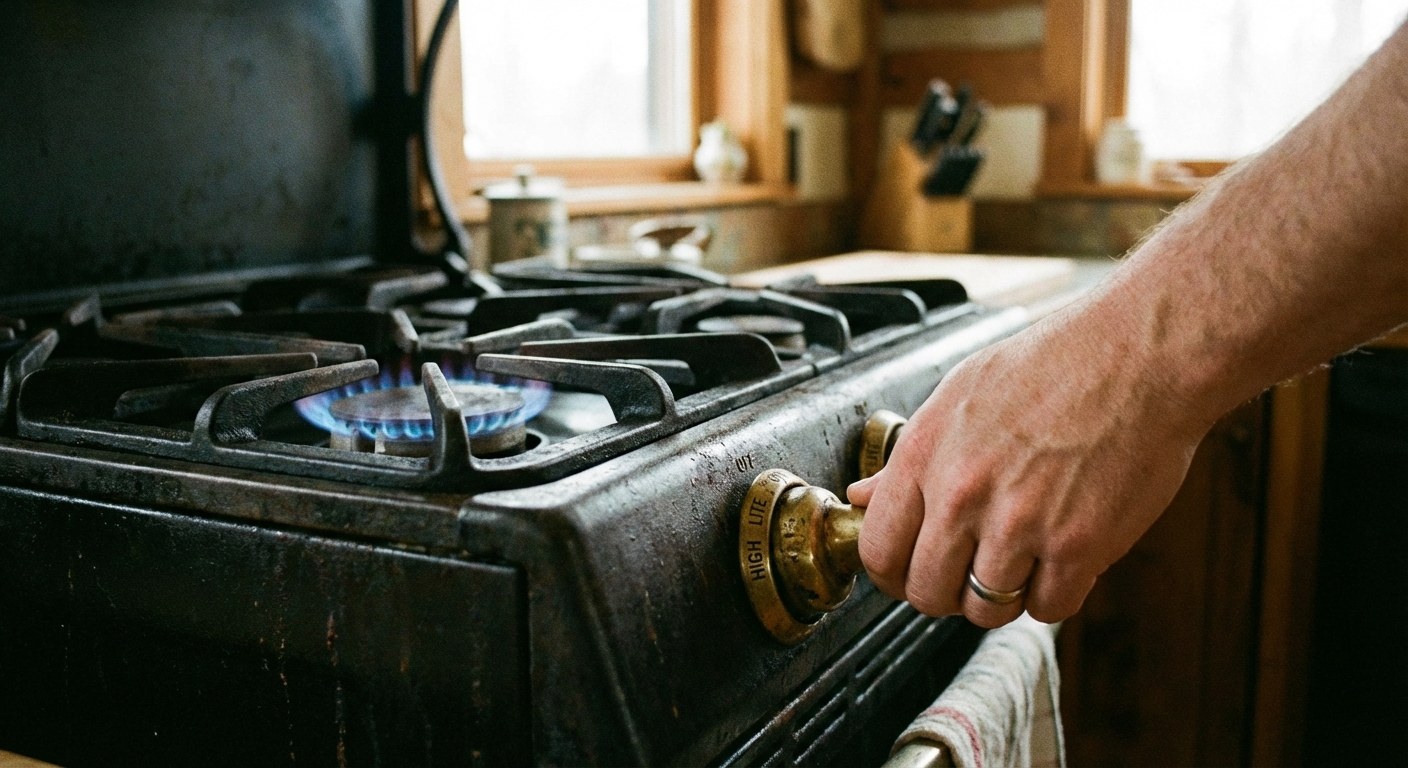
If You Smell Gas
Do not work on the knob. Leave the house without using light switches, phones, or flames. Call your gas utility or 911 from outside and stay out until they clear it. This is the advice from Kansas utility regulators, who also say not to look for the leak or try to shut valves.
Check the Easy Things First
- Push, then turn. Many gas and electric knobs must be pressed in before they turn.
- Look for a lock. Some models have a control lockout that stops the burners from turning on, including after a power cut.
- Check the fit. The knob's cutout has to line up with the flat side of the stem.
Diagnosing the Issue
Turn every burner off, let the stove cool, and pull the problem knob straight off. If another burner has an identical knob, swap the two. When the trouble follows the knob, the knob is worn. When it stays with the burner, the valve or switch behind the panel needs a technician.
For Gas Stoves
- Sticky, but the bare stem looks clean and straight: grease between the knob and the panel. Clean it.
- Spins with no resistance: the plastic insert has split and no longer grips the stem.
- Clicks, but no flame: the knob is doing its job. The burner is wet, dirty, or put back crooked.
- No click on one burner only: often moisture or a failed switch behind that knob. Let it dry after a spill or a cleaning. If it still won't click, call.
- No click on any burner: no power, or the controls are locked.
- Still stiff with the knob off: the valve itself is dry or worn. A technician services or replaces it. Oil and penetrating spray do not belong on a gas valve.
For Electric or Induction Stoves
Each electric knob turns a switch. If the insert is cracked, the knob spins and the switch never moves, so the burner stays cold. If the knob grips the stem and turns normally but nothing heats, the trouble is the coil, the switch, or the power. See an electric burner that won't heat.
A switch that has lost its click at Off, or that only works in one spot, is wearing out. On an induction cooktop, check the pan before you blame the knob. If a magnet won't stick to the bottom, the burner won't heat it.
Fix 1: Deep Cleaning Sticky Knobs and Shafts
Allow 20 to 30 minutes plus drying time. You need dish soap, a soft cloth, an old toothbrush, and a few cotton swabs.
- Turn every burner off and let the stove cool.
- Unplug the stove or turn off its breaker. Leave the gas connection alone.
- Take a photo of the knobs in place, then pull each one straight off. If it will not come off by hand, stop rather than pry.
- Wash the knobs in warm, soapy water with the cloth. GE says not to soak them. Use the toothbrush on the ridges and the opening in the back, then rinse and let them dry completely.
- Wipe the panel and the outside of the stem with a barely damp cloth. Use a barely damp swab on the grime around the base. Do not spray cleaner, pour water, or put oil or grease on the stem.
- Leave any cardboard splash guard or rubber seal behind the knob where it is.
- Dry everything, push the knobs back on in the Off position, and restore power.
- Check that each knob turns smoothly and returns fully to off.
With the knob off, the bare stem should look straight and undamaged. Do not turn a gas valve stem with pliers.
Fix 2: Clearing Gas Burner Ignition Ports
This is the fix when the knob turns and clicks but the burner won't catch. Skip it if you smell gas.
- Turn every knob off, let the burners cool, and unplug the stove or turn off its breaker.
- Lift off the grate, burner cap, and burner head.
- Find the small hole or notch beside the igniter. That is the ignition port.
- Clear it the way your manual says. KitchenAid uses a straight pin, not a wooden toothpick, and warns against enlarging the port.
- Wash the cap and head, shake out the water, and let every part air dry. A damp burner clicks without lighting.
- Put the parts back so the cap sits flat, restore power, and try once.
Fix 3: Replacing a Broken Knob
Look at the back of the knob. If the insert that grips the stem is split or rounded, replace the knob. The swap takes about five minutes once you have the part.
- Find the model number on the frame behind a drawer or door, and buy the part made for that model. Universal knobs exist, but many fit loosely or don't line up with the markings on your panel.
- Match it to the old one. Oven, griddle, and dual-ring burner knobs often differ from the rest.
- Push it on. GE says to hold it with Off facing up and press it over the stem. If it won't slide down, turn it slightly clockwise as you press until the shapes match.
- Check Off. The pointer should reach Off, and it should turn without rubbing the panel. A knob that does not seat well can leave a burner slightly on.
Do not pack a loose knob with foil or tape. It can slip while the burner is lit.
Melted knobs point to a different problem. GE says knobs can melt when oven racks are installed backwards, and to call for service if the racks are correct.
Knobs That Get Turned On by Accident
A knob on the front of the stove can be bumped by a hip, a child, or a pet. In 2024 Samsung recalled about 1.1 million slide-in electric ranges for this reason and now supplies free knob locks or covers. In 2025 LG recalled about 500,000 ranges and tells owners to use the control lock. Check your model number against both notices. Until then, keep the cooktop clear when you are not cooking.
If the Burner Still Won't Light
With no gas smell, turn the knob off and wait for any gas to clear before you try again. One manufacturer's manual says to turn the knob off if the gas has not lit within four seconds and wait at least two minutes. Then follow our guide to a gas burner that won't light.
If the Burner Won't Turn Off
On an electric stove, turn off the breaker. On a gas stove with a lit flame, do not force the knob or blow the flame out, because the gas would keep flowing. Keep people back and call your gas utility's emergency line. If gas is flowing unlit, or you smell it, leave and call from outside.
When to Call a Technician
Call an appliance technician when:
- The knob is clean and fits, but the control is still hard to turn. GE lists controls that won't turn or are very hard to turn as a service problem.
- The stem is bent, loose, or broken.
- A burner stays on with the knob off. Turn off the breaker for an electric stove. For gas, treat any unlit gas as a leak and leave.
- You see scorching or melted plastic behind the knob.
On an electric stove the usual repair is a new burner switch. On a gas stove it is a valve or an igniter switch, followed by a leak check, so ask the technician to confirm that check was done. Have the model number ready. If you rent, report it to the owner or property manager and stop using that burner.
HomeGuide puts the average stove repair at $100 to $300, which is the figure to compare if the technician finds a failed control rather than a loose knob.
How to Keep Knobs From Sticking
Wipe up splatter once the stove cools, and wash the knobs whenever they start to feel tacky. Spray cleaner on the cloth, not the panel. Run the hood when you fry, since airborne grease is what settles behind the knobs.
Can You Use WD-40 on a Stove Knob?
No. Sprays can burn, they attract more grease, and on a gas stove they can get into the valve. Soap and water handles a dirty knob. A stem that is still stiff afterward needs a technician.