

Mar 9, 2026
How to Repair a Cracked Patio
A cracked patio is a common issue caused by weather and settling. This guide helps you diagnose and fix concrete cracks, loose pavers, and damaged stone.
If you have noticed a new crack or a loose stone in your patio, you are not alone. Because outdoor surfaces are constantly exposed to temperature changes, rainfall, and natural ground settling, nearly all patios will show signs of wear eventually.
Looking for more guidance? Take a look at our Repairs overview.
It is easy to assume that a cracked patio means you need to tear it out and start over, but that is rarely the case. Most hairline concrete cracks, wide gaps, or loose pavers can be repaired over a weekend with basic tools. Keeping track of seasonal maintenance in your Casa app can help you catch these minor flaws before they turn into major tripping hazards.
In this guide, we will help you diagnose the problem based on your patio material and walk you through the proper repair steps.
Diagnosing Your Patio Surface
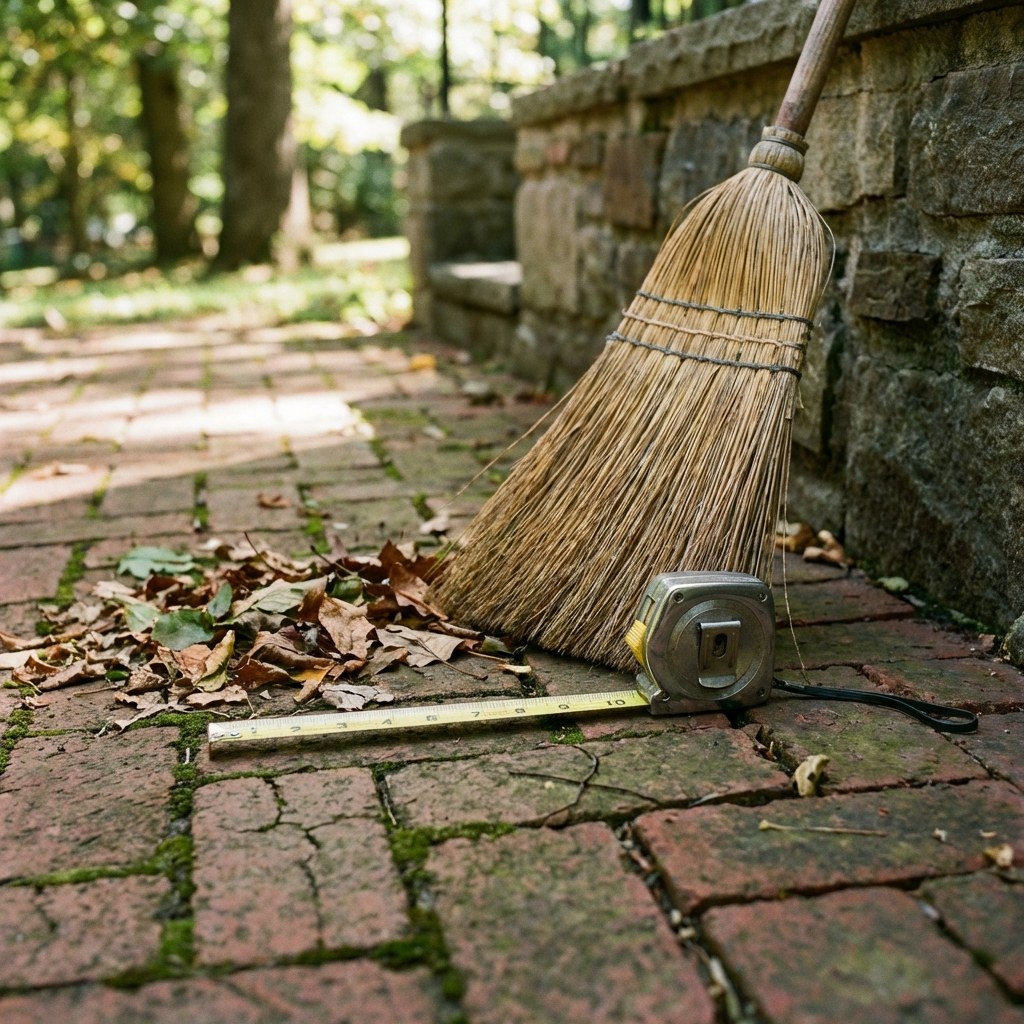
Before buying supplies, take a few minutes to inspect the area. Sweep the entire patio surface to remove loose debris, then walk the area slowly.
Ask yourself these three questions:
- What material is the patio made of? Concrete slabs, individual pavers, and natural stone all require different repair methods.
- How wide are the cracks? Use a tape measure. Cracks 1/8 inch wide or smaller are considered "hairline" and require different filler than wider gaps.
- Are there underlying drainage issues? If you see pooling water, soil erosion around the edges, or significant sinking, water is likely washing away the base layer beneath your patio.
Once you know what you are dealing with, you can move on to the appropriate fix.
Fixing a Concrete Patio
Concrete is durable, but it expands and contracts with the weather. Over time, this movement causes surface cracks.
Repairing Hairline Cracks (1/8 inch or less)
This is an easy project that takes about 30 minutes of working time.
- Brush the crack with a stiff wire brush to remove loose particles and dirt.
- Rinse the crack with a hose and let it dry completely.
- Cut the tip of a tube of polyurethane concrete crack sealant at a 45-degree angle and load it into a caulk gun.
- Squeeze the trigger to fill the entire length of the crack.
- Drag a putty knife lightly across the filler to level the surface.
- Keep foot traffic off the area for 24 hours to allow the sealant to cure.
Repairing Wide Cracks
Wider cracks require a concrete patching compound rather than a simple sealant.
- Use a cold chisel (a blunt, heavy-duty chisel used for masonry) and a hammer to gently tap along the edges of the crack. This widens it slightly and creates a rough edge so the new patch can bond securely.
- Sweep and rinse the crack, allowing it to dry.
- Mix powdered concrete patch in a clean bucket with water until it reaches the consistency of peanut butter.
- Use a margin trowel (a small, flat masonry tool) to firmly press the wet patch into the crack.
- Smooth the surface level with the surrounding patio.
- After one hour, lightly mist the patch with a spray bottle of water. This prevents the concrete from drying too fast, which can cause it to crack again.
- Avoid walking on the area for 48 hours.
Note: If your wide cracks are accompanied by puddles that sit for hours after a rainstorm, you likely have a drainage issue. Shovel and pack topsoil around the edges of your patio to create a gentle slope away from the concrete, or add crushed gravel to areas where water splashes back.
Fixing a Paver or Brick Patio
Pavers and bricks rarely crack; instead, they sink, shift, or come loose when the sand beneath and between them washes away.
Refilling Paver Joints
If your bricks are stable but the sand between them is missing, you simply need to refill the joints.
- Sweep debris out of the joints.
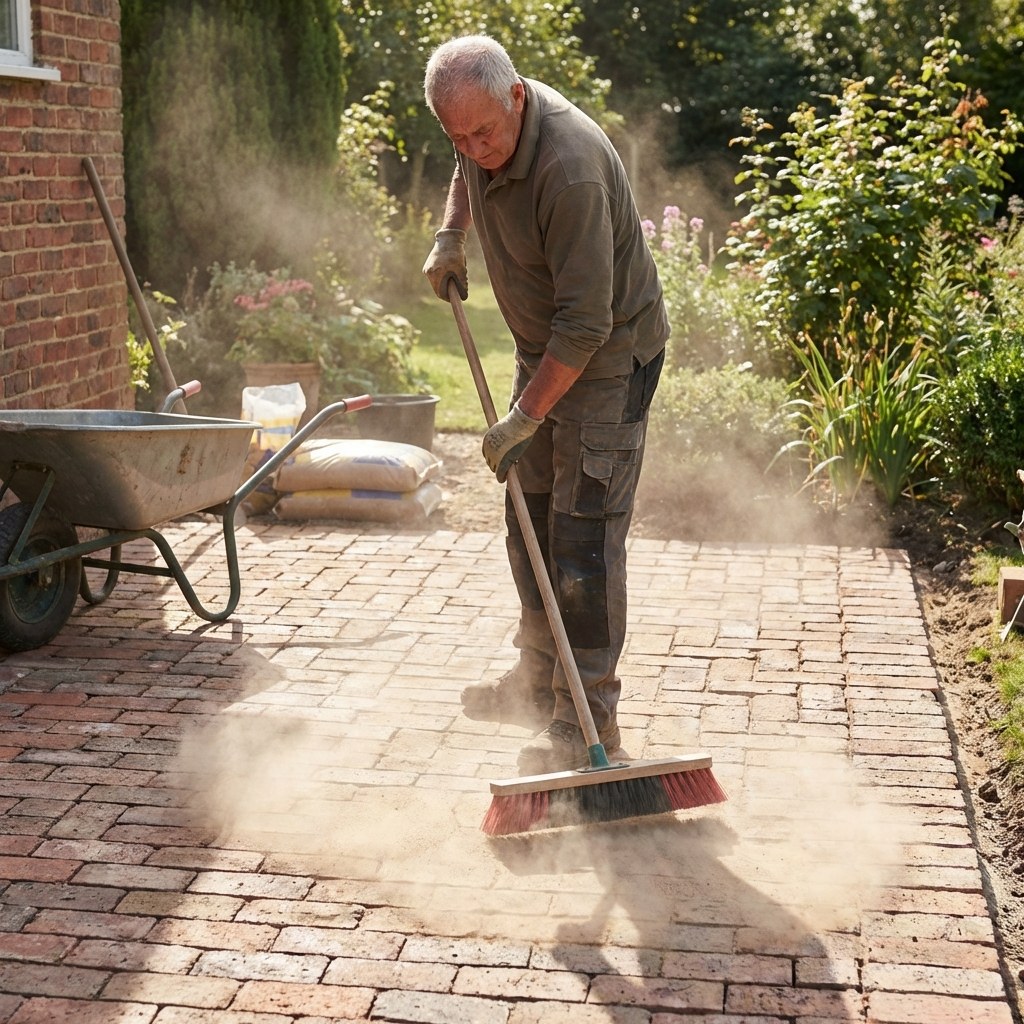
- Pour polymeric joint sand (a specialized sand that hardens when exposed to moisture) directly onto the surface.
- Sweep the sand back and forth until the joints are completely full.
- Use a leaf blower at a shallow angle to gently blow excess sand off the surface of the bricks.
- Lightly mist the surface with a hose to activate the hardening polymers in the sand.
- Let it dry and harden for 24 hours.
Replacing a Damaged Paver
If a brick is chipped or sunken, you can swap it out.
- Insert a flathead screwdriver into the joint next to the damaged brick and carefully pry it upward.
- Scoop out the old bedding sand beneath it with a trowel until the base is flat.
- Spread about 1/2 inch of fresh bedding sand into the empty cavity.
- Set the new brick into place, aligning it with its neighbors.
- Tap it gently with a rubber mallet until it sits level.
- Sweep polymeric sand into the surrounding joints and mist with water to lock it in place.
Fixing a Natural Stone Patio
Natural stone patios, like flagstone, are held together with mortar. Repairs here range from very simple to moderately difficult.
Filling Small Stone Cracks
If a stone has a small surface crack but is still firmly attached to the ground, you can seal it to prevent water from freezing inside and breaking it apart.
- Clean the crack with a brush, rinse it, and dry it with a cloth.
- Mix a two-part exterior epoxy surface repair compound on a scrap piece of cardboard.
- Push the epoxy deep into the crack with a putty knife and scrape the surface flush.
- Allow it to cure for 24 hours.
Replacing a Broken Stone
Replacing a damaged natural stone is a more advanced DIY project that requires breaking up old mortar.
- Use a cold chisel and hammer to chip away the mortar joint surrounding the broken stone.
- Carefully pry out the damaged stone and brush out the empty cavity.
- Spread a 1-inch layer of fresh mortar onto the bottom of the cavity.
- Set the new stone, tapping it level with a rubber mallet.
- Pack fresh mortar into the joints around the stone and smooth the lines with your trowel.
- Mist the repair lightly with water twice a day for three days to help the mortar cure properly.
Safe to DIY vs. When to Call a Pro
Safe to try yourself: Filling hairline concrete cracks, sweeping in new paver sand, and leveling a few individual bricks are highly manageable weekend tasks.
When to stop: If you are dealing with very heavy natural stone slabs, or if you begin chipping away mortar and realize the concrete base underneath the stone is crumbling, pause the project.
When to call a professional: If your concrete patio slab has lifted or sunk by more than an inch, or if large sections are heavily broken (often called "alligator cracking"), surface patches will not hold. A concrete contractor or masonry professional will need to assess the foundation and potentially pour a new slab.
Typical Time and Cost Ranges
Fixing patio cracks is generally budget-friendly.
- DIY Materials: Polyurethane sealants, concrete patch, and polymeric sand typically cost between $15 and $40 at your local hardware store.
- Time: Most surface repairs require 30 to 60 minutes of active working time, plus 24 to 48 hours of curing time where you cannot walk on the surface.
- Professional Help: If you hire a mason to replace large sections of natural stone or fix severe settling, expect costs to range from $300 to $900 or more, depending on your region and the patio size.
Ready to Maintain Your Home with Confidence?
A cracked patio doesn't have to be a source of stress. By catching small gaps early and addressing underlying water issues, you can extend the life of your outdoor living spaces for years to come.
If you are looking for an easier way to organize your home maintenance, plan seasonal projects, and understand exactly what your home needs, download the Casa app today. We are here to help you manage your home with clarity and confidence.