

Mar 14, 2026
How to Troubleshoot a Heat Pump That Is Not Heating
Is your heat pump blowing cold air? Learn how to troubleshoot common heat pump issues, from thermostat settings and dirty filters to frozen outdoor units.
When the temperature drops outside, the last thing you want to feel is cold air blowing from your home’s vents. If your heat pump is running but your house stays cold, it is easy to assume the worst.
Looking for more guidance? Take a look at our Repairs overview.
Fortunately, a heat pump that isn't heating properly does not always mean a broken system. Often, the issue comes down to a simple thermostat setting, a dirty air filter, or an interrupted power supply. Heat pumps operate differently than traditional gas furnaces, and understanding a few basics can save you an unnecessary and expensive service call.
In this guide, we will walk you through a few simple, safe steps to diagnose your heat pump and get your home warming up again.
Common Symptoms of a Heat Pump Issue
Before you begin troubleshooting, take a moment to notice exactly what the system is doing. You might be experiencing:
- Air blowing from the vents, but it feels lukewarm or cold.
- Weak or completely absent airflow.
- The indoor unit running, but the outdoor unit staying silent.
- The outdoor condenser unit covered in a thick layer of ice.
Any of these symptoms can point you toward the right fix. Let’s start with the easiest solutions first.
Step-by-Step Heat Pump Troubleshooting
Step 1: Check Your Thermostat Settings and Power
It sounds overly simple, but thermostats are frequently the culprit behind heating issues.
- Verify the mode and temperature: Make sure the thermostat is set to "HEAT." Then, increase the temperature so it is at least 3 °F higher than the current room temperature. This significant jump helps signal the system to kick on immediately.
- Check the fan setting: Ensure the fan is set to "AUTO" rather than "ON." If the fan is set to "ON," it will blow air continuously, even when the heat pump isn't actively heating the air. This can make the air coming from your vents feel cold.
- Check the power: If the thermostat screen is blank, it isn't communicating with your system. If it uses batteries, replace them with fresh AA or AAA batteries. If it is hardwired, move on to checking your electrical panel in Step 4.
Wait about 5 to 10 minutes after making adjustments. If warm air starts blowing, your problem is solved.
Step 2: Inspect Airflow and Replace the Filter
Heat pumps require a steady, unrestricted flow of air to work correctly. If the system is starved for air, it will struggle to distribute heat and may even shut itself down to prevent damage.
- Turn the thermostat to "OFF."
- Check your vents: Walk through your home and ensure all vent levers are fully open. Move any furniture, rugs, or curtains that might be blocking the airflow.
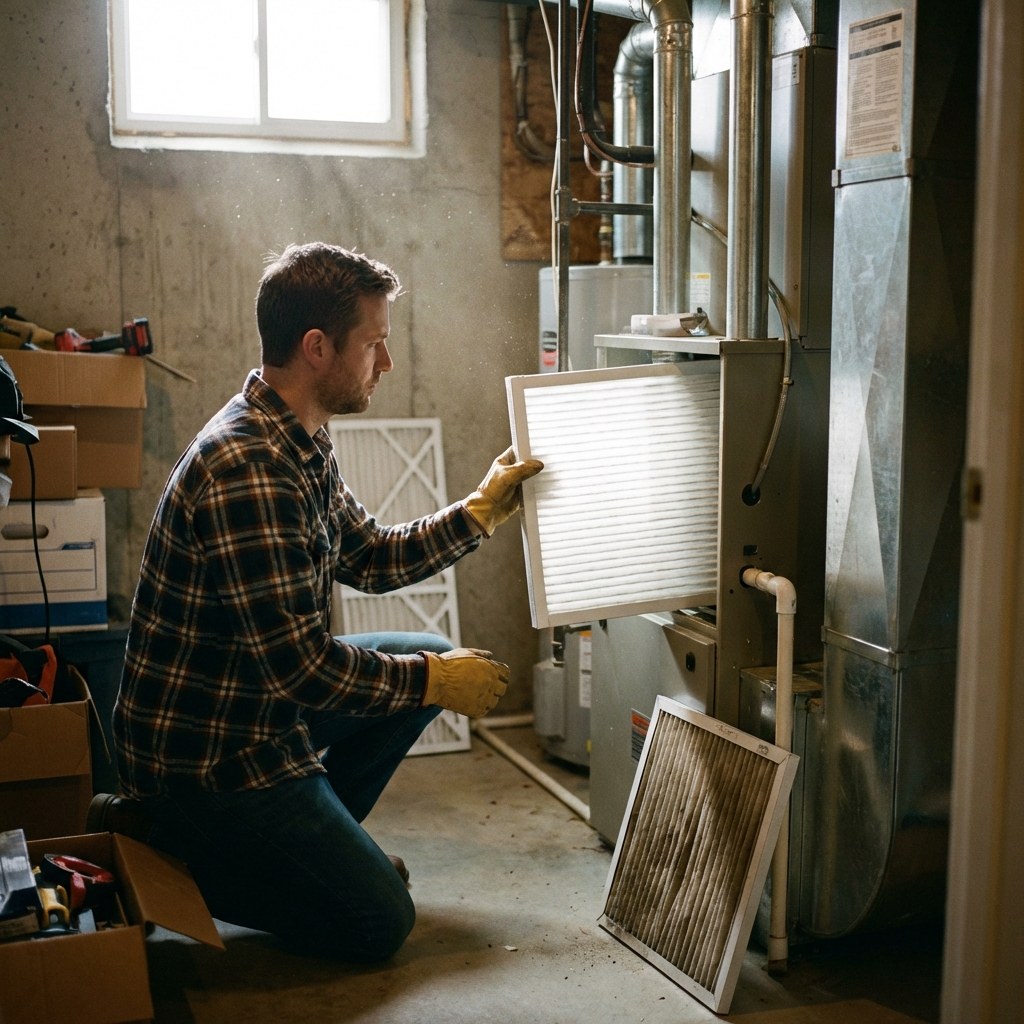
- Inspect the air filter: Locate your indoor air handler and slide out the air filter. Hold it up to a light source. If you cannot see light passing through it, or if it is heavily coated in dust, it needs to be replaced.
When installing a new filter, look for a pleated option with a MERV rating of 8 to 11. This captures dust and allergens without restricting the airflow your heat pump needs. Be sure the airflow arrow printed on the filter frame points toward the blower unit.
Tip: You can easily log your filter size and track your replacement schedule in the Casa app so you never forget to change it.
Step 3: Check the Outdoor Unit for Ice
In cold weather, it is entirely normal for a light layer of frost to form on the outside of your heat pump condenser. The system has a built-in "defrost cycle" that periodically melts this frost away.
However, if the unit is encased in ice thicker than ¼ inch, the heat pump cannot pull heat from the outside air, and the defrost cycle may be overwhelmed or failing.
- Turn your thermostat to "OFF."
- Go outside and clear away any leaves, snow, or debris within a 2-foot radius of the unit.
- Connect a garden hose to an outdoor spigot and spray the ice with a steady stream of warm or room-temperature water until it melts. Never use boiling water or sharp tools to chip the ice, as you can easily damage the delicate refrigerant coils.
- Go back inside, set the thermostat to "HEAT," and wait 20 minutes.
If the outdoor fan starts up and warm air returns to your vents, ice buildup was the issue.
Step 4: Check the Power Supply Breakers
A heat pump system usually has two separate power sources: one for the indoor air handler and one for the outdoor condenser. If one loses power, the system will not heat.
- Locate your home’s main electrical panel. Look for the breakers labeled "Heat Pump," "Condenser," or "Air Handler."
- Even if they don't look tripped, firmly push them fully to the "OFF" position, then snap them back to "ON."
- Next, check the outdoor disconnect box, which is usually mounted on the exterior wall near the heat pump. Pull out the handle or fuse block, wait 5 seconds, and push it back in securely.
- Return to the thermostat, set it to "HEAT," and wait 5 minutes.
When to Call a Professional
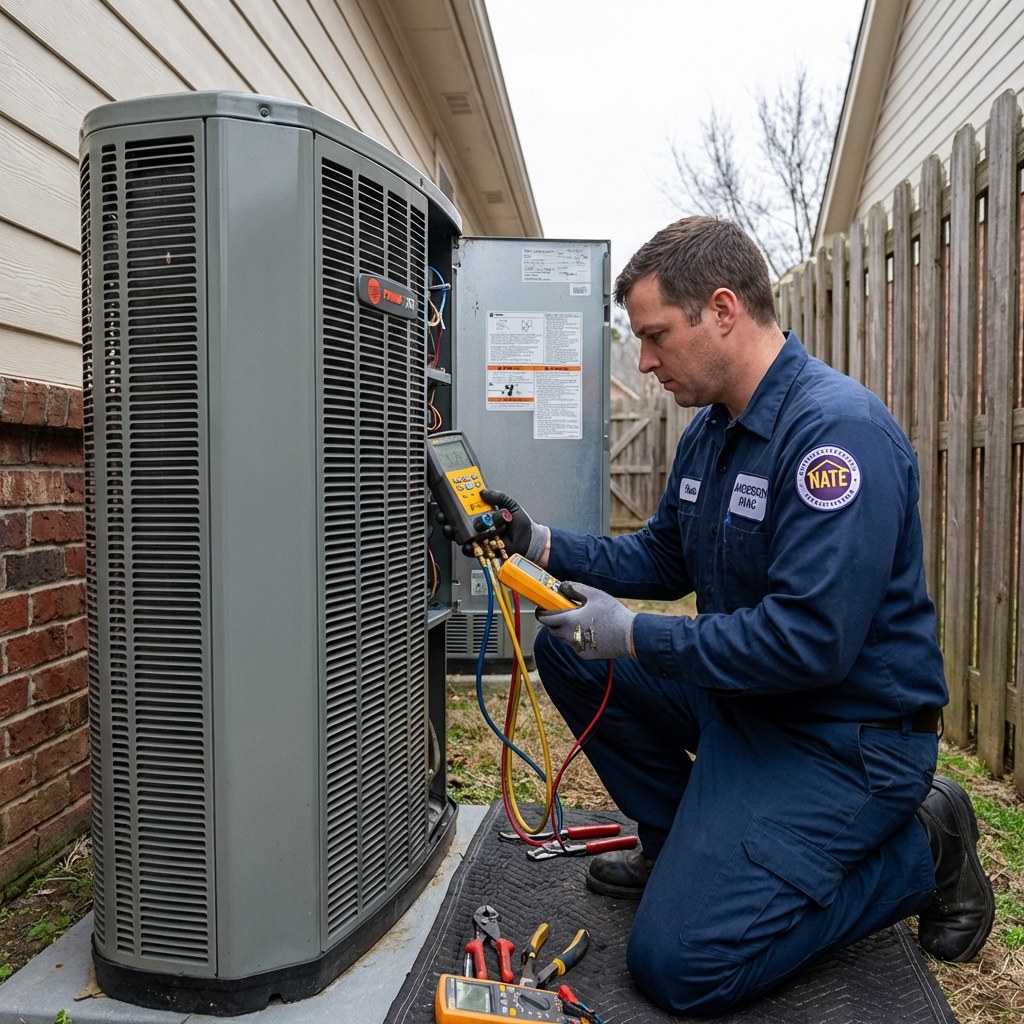
If you have walked through these steps—your filter is clean, the outdoor unit is clear of ice, the thermostat is set correctly, and the breakers are on—but the air is still cold, it is time to call a licensed HVAC technician.
Internal issues that require a professional include:
- A broken reversing valve: This is the part that switches the heat pump from cooling mode to heating mode.
- Low refrigerant: If your system has a leak, it cannot transfer heat. Handling refrigerant requires a special license.
- Faulty defrost controls: If your unit immediately freezes over again after you melt the ice, the internal defrost board or sensors likely need replacement.
Typical Costs to Expect
If you fixed the issue yourself, your only cost is a new air filter, which typically runs between $15 and $30.
If you need to call a professional, a standard diagnostic visit usually costs between $100 and $250. The final repair cost will depend on the exact part that has failed. Replacing a defrost control board or repairing a refrigerant leak will add to that total, but addressing it quickly prevents larger strain on your compressor.
Stay Ahead of Home Maintenance
Troubleshooting a cold heat pump can be stressful, but working through a methodical checklist helps you either fix the problem for free or confidently hand it over to a professional knowing you tried the basics first.
Keeping your home’s essential systems running smoothly doesn't have to be overwhelming. For step-by-step guidance, preventative maintenance reminders, and a better way to organize your home’s details, download the Casa app today. We'll help you stay prepared, comfortable, and in control of your home year-round.