

Mar 14, 2026
How to Troubleshoot and Fix Water in Your Basement
Finding water in your basement is stressful but common. Learn how to track the source, fix exterior drainage issues, and know when to call a professional.
Finding a puddle in your basement is a quick way to ruin your weekend. It is easy to assume the worst—that your foundation is failing or that you are looking at a massive, expensive repair.
Looking for more guidance? Take a look at our Repairs overview.
Fortunately, that is rarely the case. Most basement water issues are actually caused by poor exterior drainage rather than structural failures. By taking a step-by-step approach to tracking the water and checking a few key areas, you can often solve the problem with a Saturday afternoon DIY project.
Here is a straightforward guide to help you find out why water is appearing in your basement, what you can do to stop it, and when it is time to bring in an expert.
Track When the Water Appears
The most important clue to solving your basement water puzzle is timing.
Start keeping a log of exactly when you notice damp spots or puddles. You can use a notepad or the home logs in your Casa app to track the dates, the depth of the water, and the specific locations in the basement.
Ask yourself: Does the water appear within 48 hours of heavy rain or melting snow?
- If yes: The water is likely coming from outside. Your first targets will be gutters, downspouts, and the grading (the slope of the ground) around your foundation.
- If no: If water shows up during a dry spell, the source is likely internal, such as a plumbing leak, a failing appliance, or high indoor humidity.
Checking Exterior Drainage (Safe to Try Yourself)
If the water correlates with rain, the most common culprit is your roof drainage system. When gutters overflow or downspouts dump water right next to your house, that water eventually finds its way down into your basement.
1. Inspect and clean your gutters Set up a ladder on level ground, put on some work gloves, and scoop any leaves or debris out of your gutters. Once clear, use a garden hose to flush water through them. Look for any areas where water spills over the edge, which indicates a clog or a sagging gutter.
2. Check your downspouts Where does the water go when it leaves the downspout? If it empties right against your foundation walls, that is a problem. You can usually fix this by purchasing an inexpensive downspout extension from a hardware store. Attach it to the end of your downspout to ensure water is discharged at least 6 feet away from the house, ideally pointing downhill.
Ruling Out Internal Leaks (Safe to Try Yourself)
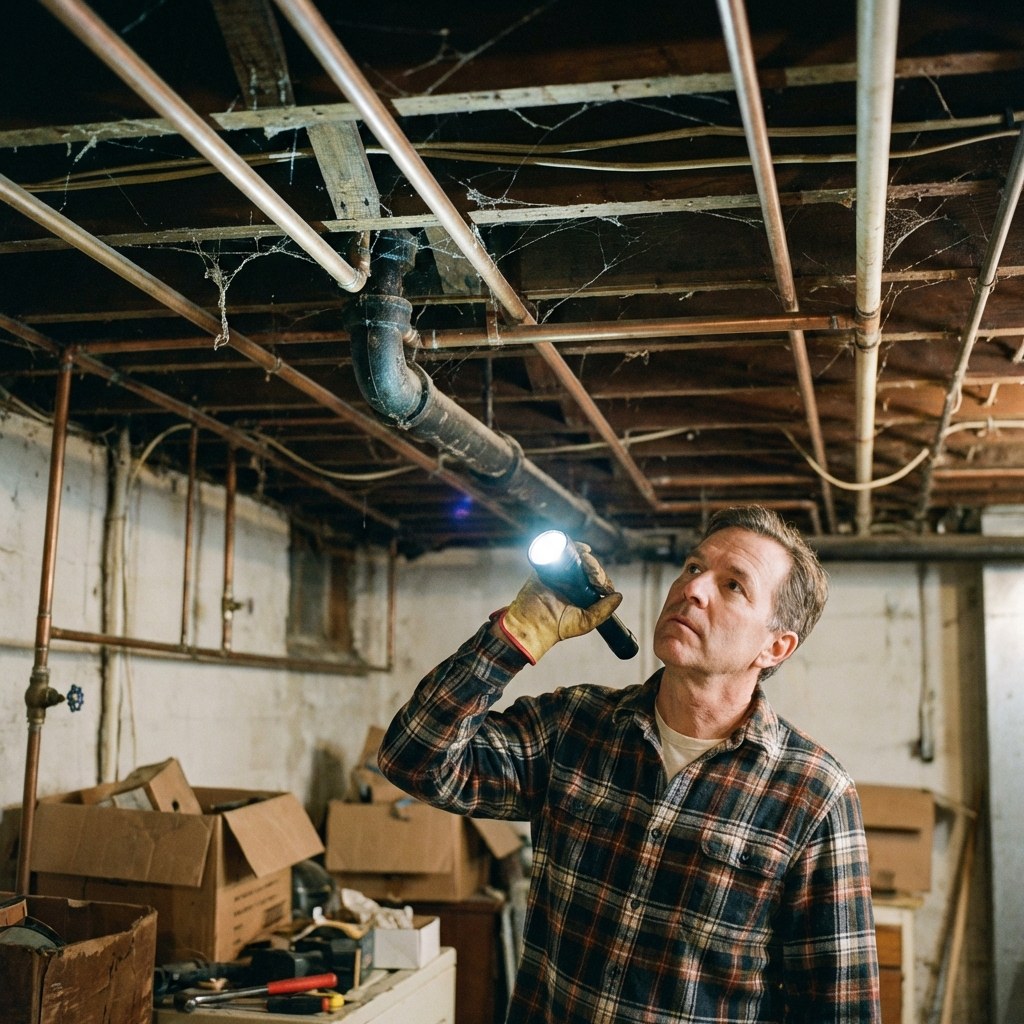
If the water appears when it hasn't been raining, take a quick tour of your basement's mechanical and plumbing systems.
- Pipes and joints: Look at the visible water supply pipes on your ceiling and walls. Feel along the main drain pipe joints for dampness.
- Appliances: Check the base of your water heater, the hoses behind your washing machine, and around your utility sink.
- Sump pump: If you have a sump pump (a pump installed in a pit in your basement floor to remove accumulated water), take off the lid. Make sure it isn't overflowing onto the floor.
If you find a minor pinhole leak in a pipe, you can often apply pipe repair tape as a temporary measure. Turn off your main water valve, dry and lightly sand the pipe, and wrap the tape tightly over the leak. Keep in mind that this is just a stopgap—you will still want to have a plumber replace that section of pipe eventually.
Diagnosing Foundation Seepage and Humidity
Sometimes, basement walls just look damp, or you might notice a musty smell without a clear puddle.
Walk the perimeter of your basement and look for hairline cracks or "efflorescence." Efflorescence is a white, powdery mineral deposit left behind on concrete when water seeps through and evaporates.
If you aren't sure whether the dampness is coming through the wall from the outside or if it is just interior condensation, try the plastic sheet test:
- Tape a 12-inch by 12-inch piece of clear plastic sheeting tightly over a damp spot on your concrete wall or floor. Seal all four edges with duct tape.
- Wait 24 hours.
- If moisture forms under the plastic, water is seeping through the foundation. If moisture forms on top of the plastic, you have high basement humidity causing condensation.
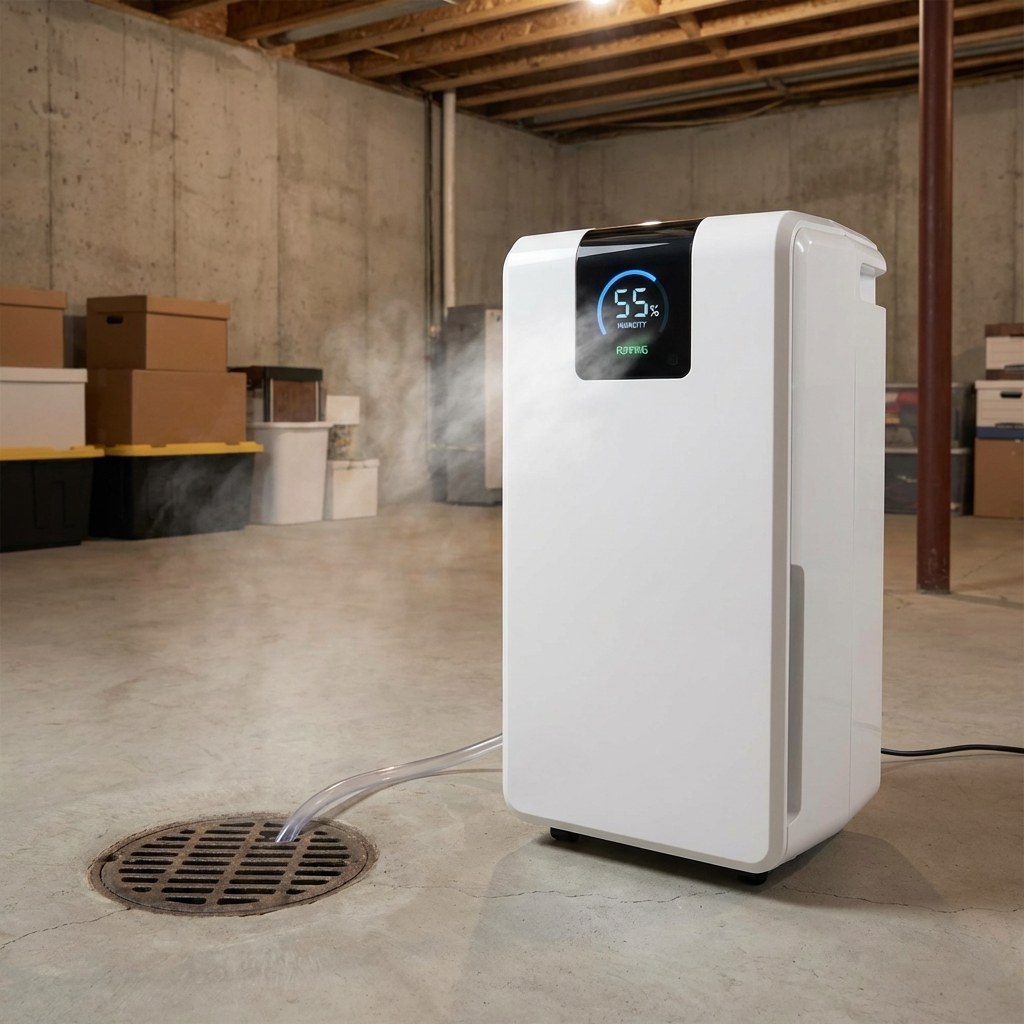
To fix condensation: Plug in a dehumidifier, close your exterior basement windows, and run the unit continuously for 48 hours. If the dampness clears up, your problem was simply humidity.
To fix minor seepage: Small, non-structural hairline cracks can often be cleaned with a wire brush and filled with hydraulic cement or a masonry repair caulk.
When to Stop and Call a Professional
While extending downspouts and running a dehumidifier are incredibly effective DIY fixes, some water issues require professional help. It is time to call a contractor or a licensed plumber if:
- You extended your downspouts 6 feet away, but water still floods in after a rainstorm.
- You find wide, expanding, or jagged cracks in your foundation walls.
- You need a French drain (an interior trench filled with perforated pipe and gravel) or a new sump pump installed, as this involves breaking up concrete floors.
- You have a significant plumbing leak that pipe tape cannot temporarily hold.
Typical Time and Cost Ranges
Understanding what to expect can help you make a confident decision about your next steps:
- Gutter cleaning and downspout extensions: Usually takes 1 to 2 hours. Downspout extensions generally cost between $15 and $30 each.
- Dehumidifiers: A quality unit suitable for a basement typically ranges from $150 to $300.
- Plumber visit: For standard pipe repairs, expect to pay between $150 and $400 depending on your location and the pipe's accessibility.
- Professional basement waterproofing: Installing interior drainage trenches or replacing a sump pump is labor-intensive. These projects broadly range from $2,000 to $6,000+, depending heavily on the size of your basement and the specific system needed.
Short Recap
Finding water in the basement usually points to simple exterior drainage issues. Start by tracking when the water appears. Clean your gutters, extend your downspouts away from the foundation, and check your indoor plumbing and humidity levels. If these easy adjustments don't solve the problem, or if you notice large structural cracks, it is time to bring in a professional.
For more straightforward troubleshooting guides and a convenient way to log your home's maintenance history, download the Casa app today. Casa helps you track the quirks of your home so you are always prepared to make confident, cost-effective decisions.