

Mar 4, 2026
I Saw a Mouse Outside: What Should I Do?
Spotting a mouse in your yard doesn't necessarily mean you have an infestation inside. Learn how to assess the risk, seal entry points, and discourage rodents from getting too close to your foundation.
Spotting a mouse scurrying across your patio or darting under your deck can be unsettling. Your immediate worry is likely, "If it’s out here, is it coming in there?"
Looking for more guidance? Take a look at our Repairs overview.
First, take a breath. Seeing a mouse outdoors is actually quite common and doesn't automatically mean you have an infestation inside your walls. Mice are part of the natural ecosystem, and they are constantly foraging for food and shelter. However, a sighting is a good reminder to check your home's defenses.
The goal isn't necessarily to eliminate every rodent in the neighborhood (which is impossible), but to create a "buffer zone" that discourages them from seeing your home as their next apartment.
In this guide, we’ll walk through how to evaluate the risk, when to set traps, and how to seal your home so outdoor mice stay outdoors.
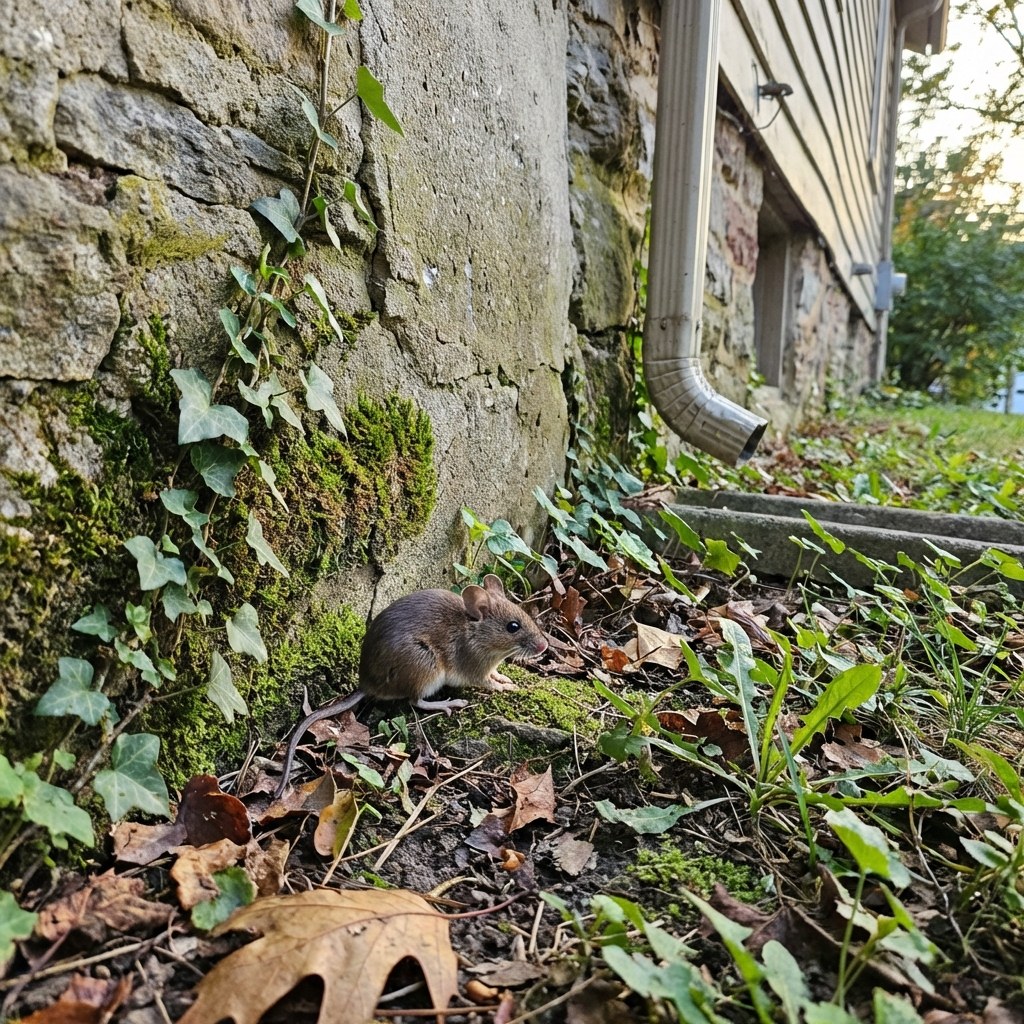
Signs Your Exterior Needs Attention
A single mouse running through the grass is one thing; signs that they are getting comfortable near your foundation are another. Look for these indicators:
- Repeated sightings: Seeing a mouse more than once in the same week, especially during the day.
- Droppings: Small, dark pellets (about the size of a grain of rice) concentrated near walls, woodpiles, or trash cans.
- Gnaw marks: Fresh chewing on wood siding, door frames, or plastic utility covers.
- Burrows: Small holes in the dirt directly against your foundation.
- Smells: A faint, musky, ammonia-like odor in sheltered corners of your porch or garage.
Step-by-Step Diagnosis and Action Plan
We need to determine if this is a random passerby or a potential roommate. Follow these steps to diagnose the severity of the situation.
Step 1: Observe the Sighting Details
Time: 5 minutes
Go back to where you saw the mouse. Look around for immediate attractants. Are there bird feeders dropping seeds? Is there a pet food bowl nearby? Is the trash bin lid slightly open?
Walk a slow 6-foot circle around the spot. If you don't see any droppings or gnaw marks, it might just be a random occurrence.
- If you have seen a mouse more than once in the last 7 days: Proceed to Step 2.
- If it was a one-time sighting near a door or vent: Skip to Step 4 (Sealing Entry Points).
- If it was a one-time sighting far from the house: Skip to Step 5 (Maintenance).
Step 2: Inspect the Perimeter
Time: 20 minutes
If you’re seeing regular activity, you need to check your perimeter. Put on disposable gloves and walk your home's foundation. Stay close to the wall—within 10 feet.
Look under bushes, behind HVAC units, and along the "sill plate" (where the house framing meets the concrete foundation). You are looking for droppings or fresh chew marks on siding and utility wires.
- Found droppings or damage? You have active pressure on your home. Move to Step 3.
- No signs found? The mice are likely visiting for food, not shelter. Move to Step 5.
Step 3: Set Protective Traps
Time: 15 minutes setup + 48 hours monitoring
If mice are living against your foundation, you want to reduce their numbers before they find a way in.
- Buy snap traps: Simple wooden or plastic snap traps work best.
- Bait them: Use a pea-sized amount of peanut butter.
- Protect the trap: To keep pets and birds safe, place the trap inside a small plastic storage bin or a sturdy cardboard box. Cut two 2-inch holes on opposite sides so the mouse can run through, but a dog or cat can’t reach the trap.
- Placement: Slide this box against the foundation wall where you saw signs.
- Monitor: Check the traps after 24 and 48 hours.
If you catch a mouse, double-bag it and toss it in the outdoor trash. If you catch nothing after 48 hours but still see signs, the mice may be shy or feeding elsewhere.
Step 4: Seal Exterior Entry Points
Time: 45 minutes
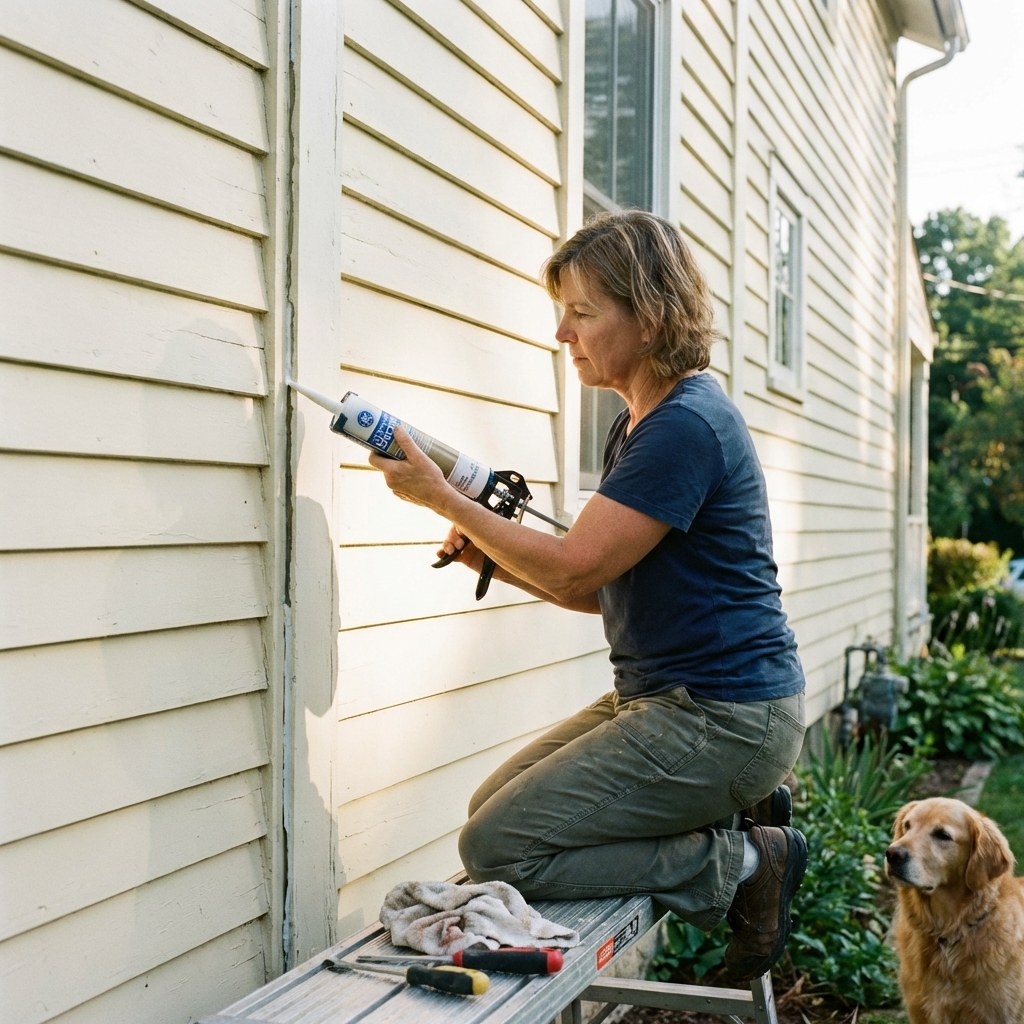
This is the most critical step for any homeowner. Whether you catch the mouse or not, you must physically block them out. A mouse can squeeze through a hole the size of a dime (roughly 1/4 inch).
- Grab supplies: You need steel wool and exterior-grade silicone caulk.
- Plug gaps: Stuff steel wool firmly into any gap around pipes, gas lines, or vents that is 1/4-inch to 1/2-inch wide.
- Seal it: Cover the steel wool with a bead of caulk to hold it in place and prevent rust.
- Check doors: Look at your door sweeps. If you can see light under the door, a mouse can get in. Adjust or replace the sweep.
- Check vents: Ensure foundation vents aren't broken. If they are, cover them with 1/4-inch hardware cloth (wire mesh).
Step 5: Remove Food and Shelter
Time: 30 minutes
Finally, make your yard boring to a mouse.
- Bird feeders: Sweep up spilled seed daily or move feeders at least 20 feet from the house.
- Storage: Keep grass seed and bird seed in metal cans with tight lids.
- Trash: Ensure bins latch securely.
- Landscaping: Trim shrubs so branches are at least 12 inches off the siding. This removes the "covered bridge" mice use to access your house unseen.
- Firewood: Move stacks away from the house and elevate them on bricks or a rack.
When to Call a Professional
You can handle most outdoor mouse sightings yourself. However, there are times when expert help is safer and faster:
- You hear scratching in the walls or ceiling. This means they are already inside.
- You catch multiple mice in traps but seeing more. This suggests a breeding colony nearby.
- You find signs of rats, not mice. Rats are larger, smarter, and more destructive; they often require professional baiting strategies.
Time and Cost
Handling this yourself is very low-cost and high-reward.
- DIY Cost: $20–$50 for traps, steel wool, caulk, and gloves.
- Professional Cost: $150–$300 for an initial inspection and exterior baiting program.
- Time: Expect to spend about 1 to 1.5 hours total on inspection and sealing.
The Recap
Seeing a mouse outside is a warning shot, not a disaster. By calmly inspecting your perimeter, sealing small gaps with steel wool, and keeping the area around your foundation clear of food and debris, you can turn your home into a fortress.
Home maintenance is often about these small, preventative habits. If you want to keep track of seasonal tasks like checking your foundation or winterizing your hose bibs, download the Casa app. Casa helps you stay organized so you can enjoy your home without the stress of surprise repairs.