

Feb 23, 2026
Why Is My Fireplace So Smoky? A Troubleshooting Guide
A smoky fireplace can ruin a cozy night and trigger alarms. Learn to troubleshoot common causes like closed dampers, wet wood, or blocked chimney caps before calling a pro.
There are few things as disappointing as lighting a fire for a cozy evening, only to end up coughing, waving towels at the smoke detector, and opening every window in the house.
Looking for more guidance? Take a look at our Repairs overview.
If your fireplace is pushing smoke into the room instead of up the chimney, don't panic. While it can feel alarming, a smoky fireplace is rarely a sign of a catastrophic failure. usually, it comes down to simple physics: air needs to flow in a specific direction, and something—often a minor obstruction or a temperature imbalance—is getting in the way.
In this guide, we will walk through how to identify the source of the smoke and get your fireplace drawing air correctly again.
Common Signs of a Draft Issue
Smoke entering the room is the obvious symptom, but there are other clues that your fireplace isn't venting correctly:
- The "campfire" smell: Your living room smells like soot even when the fire isn't lit.
- Soot stains: You see black, glossy spots (creosote) or heavy soot buildup on the bricks above the fireplace opening.
- Hard-to-start fires: The fire smolders and dies constantly rather than catching quickly.
- Cold air: You feel a distinct draft of cold air coming down the chimney when the fire is out.
First: Identify Your Fireplace Type
Before troubleshooting, take a quick look at your setup. The fix depends entirely on what fuel you are burning.
- Wood-burning: You use actual logs. These rely heavily on natural airflow (draft) to pull smoke up.
- Gas: You have a switch, remote, or control knob, and likely artificial logs or glass stones.
- Pellet Stove: You pour compressed wood pellets into a hopper. These use fans to force air circulation.
Step-by-Step Diagnosis
1. Check the Damper (Wood & Gas)
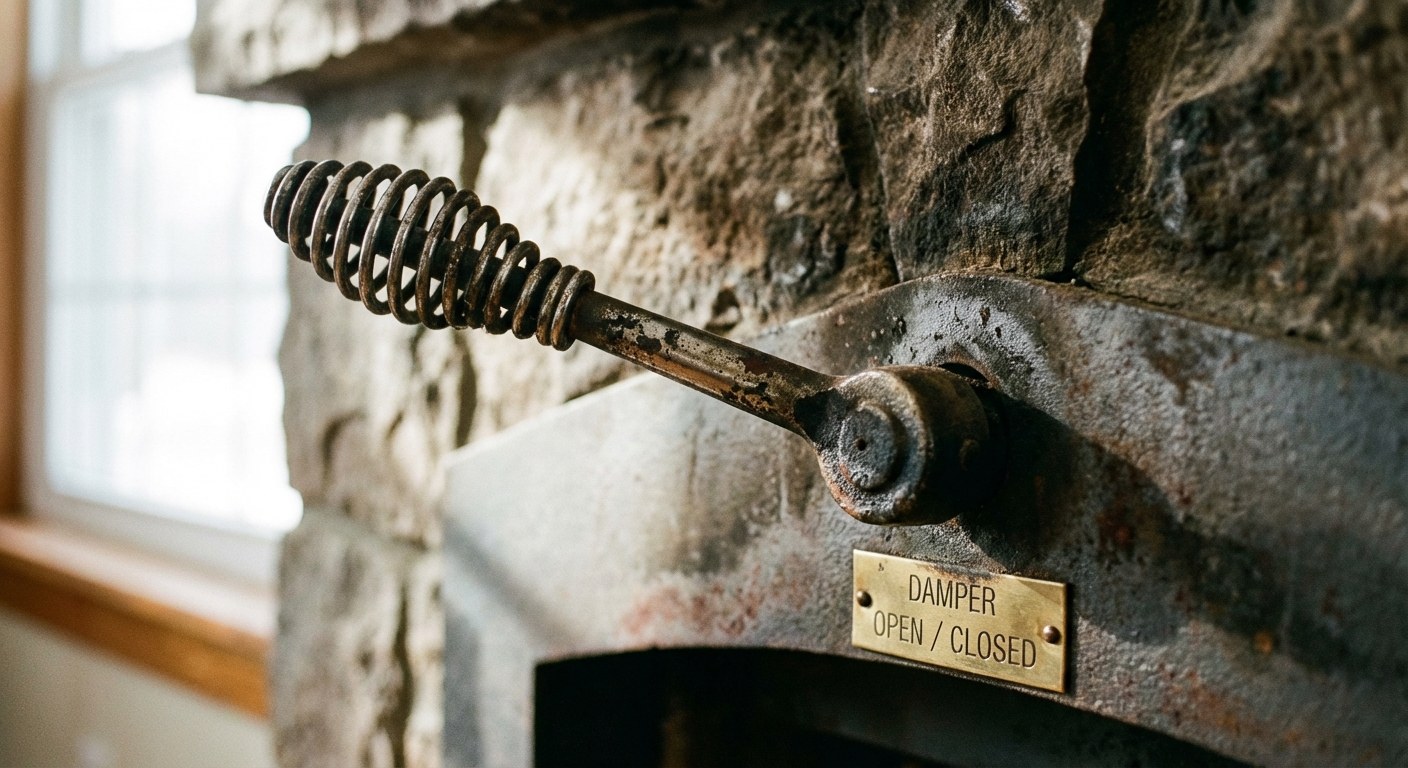
The most common cause of a smoky room is the simplest one: the damper is closed or only partially open. The damper is a metal plate that seals the chimney when not in use to keep heat in your home.
- The Fix: Locate the handle or pull chain inside the "throat" of the fireplace (just above the firebox). Push or pull it until it stops in the fully open position.
- Test: Shine a flashlight up the chimney. You should see a clear path up the flue. If you see a metal plate blocking the view, it's still closed.
Note: If the handle moves but the plate doesn't, or if the handle is stuck frozen, stop. Do not force it, as you could snap the mechanism. This is a job for a pro.
2. Check Your Fuel (Wood & Pellet)
If the damper is open but the room is still smoky, your fuel might be the culprit.
- Wood: Burning "green" (unseasoned) wood creates massive amounts of heavy smoke that moves slowly and cools down the chimney, causing it to sink back into the room.
- The Fix: Switch to dry, seasoned hardwood. It should look grey/cracked on the ends and make a hollow "clunk" sound when two logs are hit together. A moisture meter should read below 20%.
- Pellets: Damp or low-quality pellets create ash buildup that chokes the airflow.
- The Fix: Scoop out old pellets and replace them with fresh, premium-grade dry pellets.
3. Check for the "Cold Chimney" Effect (Wood)
Chimneys work on the principle that hot air rises. If it’s very cold outside and your chimney is on an exterior wall, a column of cold, heavy air can form inside the flue, acting like a plug. When you light a fire, the smoke hits that cold air plug and bounces back into the room.
- The Fix: "Prime" the flue before lighting the main fire. Roll up a newspaper into a torch, light the end, and hold it up near the open damper for 30–60 seconds. You should see the smoke start to suck upward as the air warms. Once the draft is established, light your logs.
4. Check the Chimney Cap
If the damper is open and the wood is dry, something might be physically blocking the exit.
- Diagnosis: Go outside and look up at your chimney (use binoculars if needed). Do you see a bird's nest, piles of leaves, or debris covering the mesh screen?
- The Fix: If you are comfortable on a ladder, you can brush this debris off with a stiff wire brush. If the roof is steep or high, call a professional chimney sweep.
5. Assess House Pressure
Modern homes are sealed tightly for energy efficiency. If you run the kitchen range hood, bathroom fans, and clothes dryer simultaneously, you pump air out of the house. This creates a vacuum (negative pressure) that sucks air down the chimney to compensate.
- The Fix: Turn off exhaust fans and crack a window near the fireplace by one inch. If the smoke immediately clears up and goes up the chimney, you have a negative pressure issue. You may need to keep a window cracked during fires or install a dedicated air intake.
When to Stop and Call a Professional
While many smoke issues are simple operational errors, some indicate dangerous conditions. Stop troubleshooting and call a professional if:
- You see glossy, tar-like substance (creosote): This is highly flammable. If you see thick, shiny black buildup on the flue walls, do not light a fire. You need a professional sweeping immediately to prevent a chimney fire.
- The damper is broken: If the metal plate has detached or the handle is sheared off, you cannot fix this safely yourself.
- Gas fireplace vent issues: If a gas fireplace is smoking, it is often a sign of a blocked vent or a combustion issue. Because gas leaks are invisible and dangerous, turn the unit off and call a technician.
- Pellet stove mechanical failure: If cleaning the pot and switching pellets doesn't work, the combustion blower fan may have failed.
Time and Cost to Fix
Fixing a smoky fireplace varies significantly depending on the root cause.
- DIY Fixes (Damper, Fuel, Priming): $0 – $20 (cost of new wood).
- Time: 5–15 minutes.
- Chimney Cap Cleaning (DIY): $0.
- Time: 30 minutes.
- Professional Chimney Sweep: $150 – $300.
- Time: 1–2 hours.
- Damper Repair/Replacement: $200 – $600.
- Gas/Pellet Stove Service Call: $150 – $400.
Using the Casa app is a great way to keep track of when you last had your chimney swept, so you aren't guessing if buildup is the problem.
Summary
A smoky fireplace is usually a solvable airflow problem, not a disaster.
- Check the damper first: It must be fully open.
- Inspect your fuel: Wet wood creates smoke; dry wood creates heat.
- Prime the flue: Warm the air in the chimney before lighting the fire.
- Manage air pressure: Turn off exhaust fans or crack a window.
- Look up: Ensure the chimney cap isn't blocked by debris.
If you have gone through this checklist and smoke still pours into the room, it's time to bring in a certified chimney sweep. They can inspect the flue for hidden blockages or structural design flaws that might be causing the draft to fail.
For more help diagnosing home maintenance issues and organizing your repair history, download the Casa app. It’s the easiest way to feel prepared and confident about managing your home.