

Feb 4, 2026
Why Is My Refrigerator Beeping or Making Loud Noises
A beeping or humming refrigerator can be alarming. Our guide helps you identify the noise, troubleshoot common causes like door alarms or dirty coils, and know when to call a pro.
A sudden beeping or a new, loud humming noise from your refrigerator can be unsettling. This appliance is the quiet workhorse of the kitchen, running constantly in the background, so any change in its sound pattern is immediately noticeable.
Looking for more guidance? Take a look at our Repairs overview.
It’s natural to feel a sense of urgency, but most of these sounds are not signs of a complete failure. Think of them as signals. A repeating beep is often an alert designed to get your attention, while a loud mechanical noise usually points to a specific part that needs cleaning or adjustment.
This guide will help you translate what your refrigerator is trying to tell you. We'll walk through the common causes for both beeping alarms and loud mechanical sounds, helping you diagnose the issue and, in many cases, fix it yourself.
First, Identify the Type of Noise
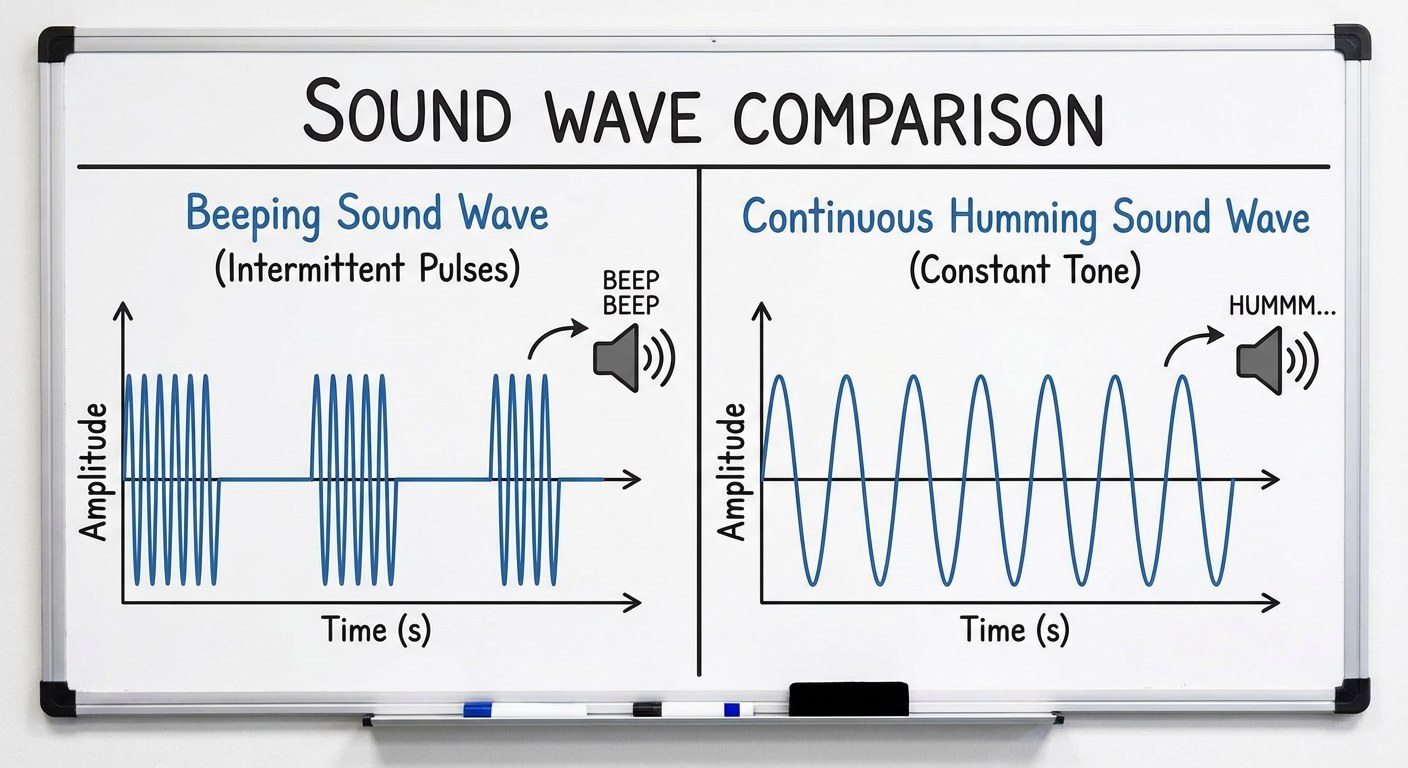
Before you can solve the problem, you need to know what you’re listening for. Stand near your appliance for a moment and listen closely. The sounds generally fall into two categories:
- Electronic Beeping: A sharp, repeating sound, often at regular intervals. This is an alarm or alert from the refrigerator's control board.
- Mechanical Noise: A continuous humming, rattling, or buzzing sound. This is caused by a moving part, like a fan or the compressor.
Once you’ve identified the type of noise, you can follow the right set of steps below to troubleshoot it.
How to Stop a Beeping Refrigerator
A beeping refrigerator is almost always an alert. The appliance has detected something is not right and is trying to let you know. Here are the most common causes and how to address them.
1. Check the Door and Gasket
The most frequent cause of beeping is a door that isn't fully closed. If the door is even slightly ajar, warm air gets in, and the internal temperature rises, triggering a high-temperature alarm.
- Firmly close the door. Push it shut until you feel the latch or magnetic seal engage.
- Wipe the gasket. The gasket is the flexible rubber seal around the edge of the door. Use a damp cloth to wipe away any food debris or sticky residue that might be preventing a tight seal.
- Check for obstructions. Make sure no containers, drawers, or food items inside are blocking the door from closing completely.
- Check if the unit is level. If your refrigerator leans forward, the door may not stay closed on its own. Place a level on top of the unit; if it’s not level, adjust the front feet until it is.
Often, one of these simple checks will solve the problem and stop the beeping.
2. Look for an Error Code
If the door is securely closed and the beeping continues, check the control panel display (if your model has one). Many modern refrigerators will display a specific error code to tell you exactly what’s wrong.
- Write down the code you see.
- Find your refrigerator’s model number, which is usually on a label inside the fresh food compartment.
- Look up the error code in your owner's manual or on the manufacturer's website. The manufacturer will provide specific instructions for that code, which may range from a simple reset to a recommendation to call for service.
3. Reset the Appliance (Power-Cycle)
If there's no error code and the beeping persists, the control board may just have a temporary glitch. A simple reset, also known as a power-cycle, can often resolve this.
- Safely unplug the refrigerator from the wall outlet. If the outlet is inaccessible, turn off the dedicated breaker for the refrigerator in your home’s electrical panel.
- Wait for five minutes. This gives the internal electronics enough time to fully power down and reset.
- Plug the appliance back in or turn the breaker back on.
- Listen for a few minutes. If the beeping does not return, the reset was successful.
How to Quiet a Loud Humming or Rattling Refrigerator
If the sound is a mechanical hum, buzz, or rattle, the cause is a physical component. Your first step is to locate where the sound is loudest. Is it coming from the back and bottom of the unit, or from inside one of the compartments?
If the Noise Comes From the Back or Bottom
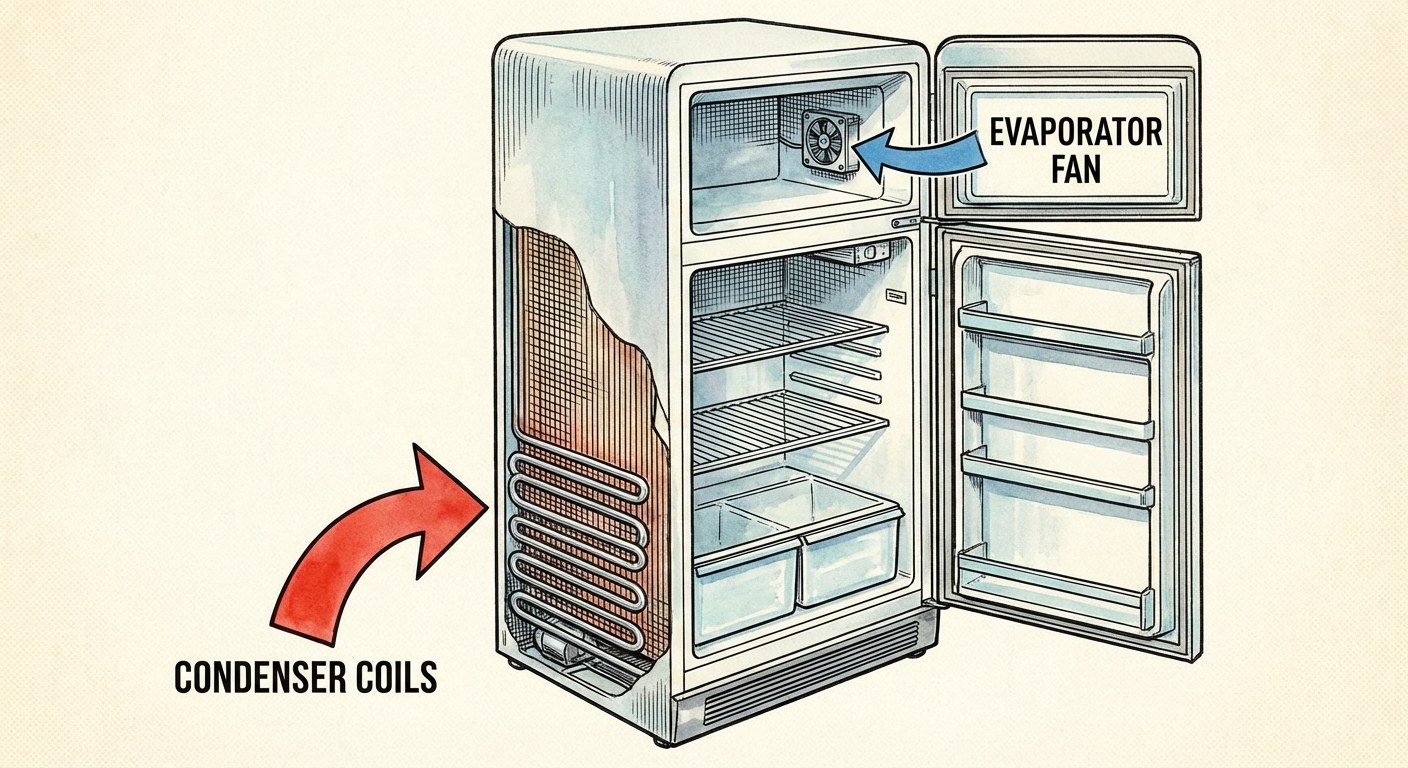
The machinery that does the cooling—the compressor and condenser coils—is located here. Noise from this area is often related to cleaning or a minor adjustment. This is a safe project to try yourself.
Tools you may need: Phillips screwdriver, coil-cleaning brush, vacuum with a crevice tool.
- UNPLUG THE REFRIGERATOR. This is a critical safety step before you begin.
- Carefully pull the unit away from the wall to access the back.
- Most refrigerators have a thin cover panel at the bottom of the back. Use a screwdriver to remove the screws and take it off.
- Clean the condenser coils. These coils are responsible for releasing heat. Over time, they get covered in dust, pet hair, and debris, which makes the compressor work harder and louder. Use a long, flexible coil-cleaning brush to gently sweep the dust off the coils, then use a vacuum to clean up the debris.
- Check the condenser fan. While you’re back there, look at the small fan near the compressor. Make sure no wires or debris are touching the fan blades, which could cause a rattling noise.
- Replace the back panel, slide the refrigerator back into place, and plug it in. The noise should be significantly quieter.
If the Noise Comes From Inside the Fridge or Freezer
A loud whirring or rattling from inside one of the compartments usually points to the evaporator fan. This fan circulates cold air, but its blades can get blocked by ice buildup.
Tools you may need: Phillips screwdriver.
- UNPLUG THE REFRIGERATOR.
- To access the fan, you’ll need to empty the food and shelves from the compartment where the noise is coming from (usually the freezer).
- The evaporator fan is located behind a panel at the back of the compartment's interior. Unscrew this panel and carefully remove it.
- Look for ice buildup. You will likely see the fan and a set of coils behind the panel. If you see ice blocking the fan blades, you've found the source of the noise.
- Let the ice melt naturally. Leave the refrigerator unplugged with the door open for 30-60 minutes to allow the ice to thaw. Do not use a hairdryer or heat gun, as this can damage the plastic components.
- Once the ice is gone, re-install the interior panel, replace the shelves and food, and plug the unit back in.
When to Call a Professional
Many refrigerator noises are manageable with a bit of troubleshooting. However, some issues require an expert. It’s time to call a certified appliance technician if:
- You’ve tried the steps above and the noise persists.
- The control panel shows an error code that recommends professional service.
- The loud noise is a metallic clanking or grinding, which could indicate a failing compressor or fan motor.
An appliance repair technician can diagnose the issue safely and replace any worn-out components. A typical service call and diagnosis may cost between $100 and $200, with repairs for parts like a fan motor or thermostat often falling in the $200 to $400 range.
A Quiet Kitchen is a Calm Kitchen
Strange refrigerator noises can be disruptive, but they are often fixable. By identifying the type of sound and following a few diagnostic steps, you can restore peace to your kitchen and ensure your appliance is running efficiently. Keeping track of simple maintenance, like cleaning the condenser coils once a year, can prevent many of these issues from happening in the first place.
Ready to take control of your home maintenance? Download the Casa app. It’s your always-on home advisor, helping you manage repairs, plan for maintenance, and connect with trusted pros when you need them.