

Sep 4, 2026
A Clear Framework for Managing Your Home with Confidence
Learn how to manage your home without the overwhelm. Understand the four core pillars of homeownership and how to make confident decisions for your property.
When you receive the keys to your home, there is rarely an operating manual attached to the keychain. In the first few months or years, many homeowners experience a sudden wave of quiet panic. Every unfamiliar hum from the basement or small drip beneath the sink can feel like an impending financial crisis.
Looking for more guidance? Take a look at our AI Home Advisor overview.
Feeling overwhelmed by homeownership is entirely normal. You are managing a complex, physical asset with dozens of interconnected systems, usually while balancing work, family, and a personal budget. The goal of responsible homeownership is not to know how to fix every pipe or rewire an electrical panel yourself. Instead, it is about having a steady, reliable framework so you always know what to do next.
Why Scattered Advice Creates Unnecessary Stress
Most homeowner anxiety does not come from a lack of information. It comes from having too much unorganized information.
When an issue arises, the typical response is to search online forums, watch random video tutorials, or ask relatives with varying opinions. You often end up with three contradictory recommendations:
- One source tells you to tear everything out and replace it immediately.
- Another suggests a temporary, cheap fix that might violate local building codes.
- A third tells you not to worry about it at all.
This scattered advice creates decision fatigue. Without a clear reference point, every household task feels urgent, expensive, and risky. Managing a home becomes far simpler when you organize your responsibilities into four distinct, manageable pillars.
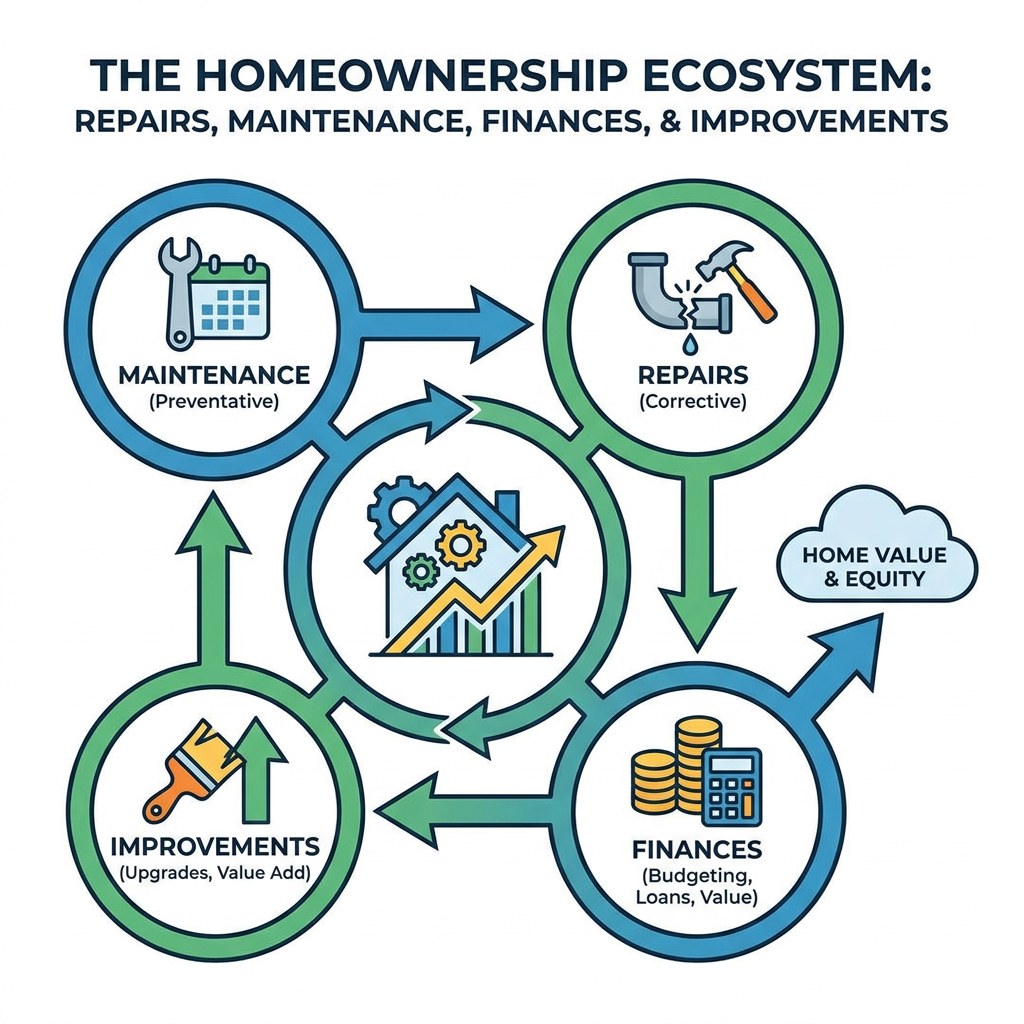
The Four Pillars of Responsible Home Management
Every decision you make for your home falls into one of four core categories. Understanding which bucket a task belongs to helps you determine the right budget, timeline, and level of effort.
1. Repairs
Repairs address things that are already broken, malfunctioning, or failing to perform their basic function.
- The mindset: Focus on stabilization and triage.
- The approach: Distinguish between true emergencies (active water leaks, loss of heat in freezing weather) and non-urgent repairs (a squeaky hinge, a running toilet in a guest bathroom). Most repairs can be evaluated calmly over a few days rather than solved within minutes.
2. Maintenance
Maintenance involves routine, predictable care designed to keep systems operating safely and extend their usable life.
- The mindset: Prevention and preservation.
- The approach: Regular filter changes, seasonal gutter cleanings, and annual appliance servicing are not glamorous, but they prevent premature equipment failure. Routine maintenance protects your future budget by keeping small wear-and-tear issues from turning into major repairs.
3. Finances
Your home is likely your largest financial commitment. This pillar includes understanding your baseline operating costs, property taxes, insurance coverage, and reserve funds.
- The mindset: Preparedness and long-term security.
- The approach: Unexpected expenses are a normal cost of ownership, not a personal failure. Setting aside a dedicated emergency fund and understanding your insurance deductible reduces the emotional friction when a system eventually needs work.
4. Improvements
Improvements are intentional changes, upgrades, or renovations that enhance your day-to-day living experience, increase energy efficiency, or build property value.
- The mindset: Patience and prioritization.
- The approach: Improvements should generally wait until you understand how you use the space and have established a healthy financial safety net. A home does not need to be updated all at once to be functional and comfortable.
How Decisions Connect Across the Pillars
These four areas do not exist in isolation. A single choice in one category ripples through the others:
[ Maintenance ] ── Neglect leads to ──> [ Repairs ]
       │                                     │
   Preserves                              Drains
       ▼                                     ▼
 [ Improvements ] <── Funded by ─────── [ Finances ]
- Deferred maintenance creates emergency repairs: Skipping seasonal drainage maintenance can lead to foundation water intrusion, transforming a minor chore into an expensive emergency repair.
- Unexpected repairs disrupt planned improvements: If you have not set aside cash in your maintenance reserve, a sudden water heater failure might pull funds directly away from a planned kitchen refresh.
- Smart improvements reduce operating costs: Upgrading insulation or replacing drafty windows can lower your monthly utility bills and reduce mechanical strain on your heating and cooling equipment.
When you view your home as a connected system, you stop reacting to isolated problems and start making balanced, deliberate choices.
What Most New Homeowners Get Wrong
Navigating the learning curve is easier when you recognize the common traps that catch early homeowners off guard:
1. Treating the home like an urgent checklist
Many new owners feel pressure to fix, paint, and upgrade everything within the first six months. Living in a home for a full year through all four seasons allows you to observe how sunlight moves, how rooms feel in winter, and what truly needs your attention first.
2. Prioritizing aesthetics over core systems
It is tempting to spend money on cosmetic updates like countertops, lighting fixtures, or new paint before verifying the health of your roof, plumbing, and electrical panel. A beautiful room provides little comfort if the roof above it begins to leak.
3. Assuming every contractor visit requires a full replacement
When an older appliance or mechanical system acts up, you do not always have to replace it entirely. A capable, honest technician can often perform a targeted component repair that buys you several more years of safe operation, giving you time to budget for a planned replacement later.
How to Stay Organized Without Making This a Second Job
Managing a home responsibly does not mean spending your weekends tracking spreadsheets or worrying about hidden risks. You only need a few basic habits to maintain control:
- Centralize your records: Keep appliance manuals, model numbers, installation dates, and contractor receipts in a single, accessible location.
- Establish a light seasonal rhythm: Dedicate an hour at the start of spring and fall to review basic maintenance tasks rather than trying to monitor systems constantly.
- Know your emergency shutoffs: Ensure everyone in the household knows where the main water shutoff valve and electrical breaker panel are located.
- Use a dedicated advisor: Tools like Casa help you keep system lifespans, seasonal schedules, and service history organized in one place, so you always know what deserves your attention and what can wait.
Managing Your Home with Fortitude
Homeownership is a long journey made up of steady, everyday decisions. You do not need to be a construction expert, an electrician, or a master carpenter to care for your property well.
By organizing your home into the four pillars—repairs, maintenance, finances, and improvements—you can approach every project and unexpected sound with clarity rather than stress. Take your time, assess situations calmly, and make decisions that protect both your home and your peace of mind.
Ready for a simpler way to manage your home? Download the Casa app to keep your maintenance schedules, repair histories, and home finances organized in one steady, reliable place.
Related Reading
- A Strategic Framework for Managing Your Home with Confidence
- The Modern Playbook for Managing Your Home with Confidence
- A Strategic Guide to Managing Your Home with Confidence
- The Fundamentals of Managing Your Home With Confidence
- How to Manage Your Home With Confidence and Clarity
- A Calm Strategy for Managing Your First Home
- A Clear Guide to Managing Your Home with Confidence
- The Modern Guide to Managing Your Home with Confidence