

Aug 27, 2026
Understanding High Energy Bills and How to Lower Them
Feeling overwhelmed by a high utility bill? Learn where your home is actually losing energy, why new windows might not be the answer, and practical ways to save.
Opening a surprisingly high utility bill is a rite of passage for almost every homeowner. Whether it is a spike during the peak heat of summer or a sudden jump in the depths of winter, an expensive energy bill can cause immediate stress.
Looking for more guidance? Take a look at our Finances overview.
When utility costs rise, it is common to jump to worst-case scenarios. Many homeowners assume their heating, ventilation, and air conditioning (HVAC) system is failing, or they believe they need to spend tens of thousands of dollars on replacement windows to stop drafts.
Fortunately, this is rarely the case. Most high utility bills are the result of small, cumulative inefficiencies rather than massive structural failures. By understanding how your home uses—and loses—energy, you can make targeted, cost-effective decisions that lower your bills without draining your savings.
The Fundamentals of Home Energy Loss
To understand your utility bills, you first need to understand your home’s building envelope. The building envelope is the physical barrier between the conditioned air inside your home and the unconditioned air outside. This includes your roof, walls, windows, doors, and foundation.
When your building envelope has gaps, your home loses the air you just paid to heat or cool. According to the U.S. Department of Energy, heating and cooling account for roughly half of a typical home’s total energy use. When drafts and poor insulation allow that air to escape, your HVAC system has to run longer and work harder to maintain a comfortable temperature.
This increased effort is called the HVAC load. A high load not only drives up your monthly utility bill, but it also puts unnecessary wear and tear on your equipment.
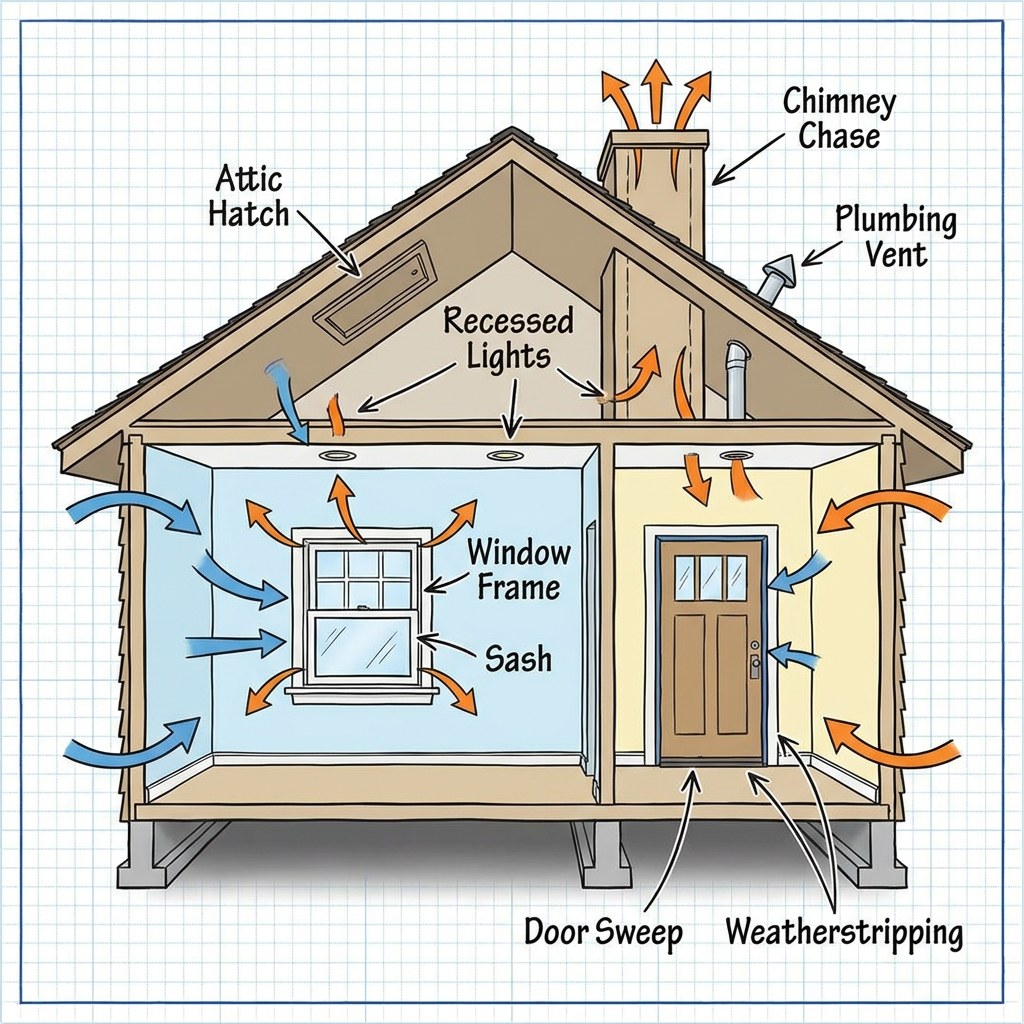 imageAlt: "Illustration showing where homes typically lose heated and cooled air"
Comparing Your Options: From Quick Fixes to Major Upgrades
When deciding how to tackle high energy bills, it helps to categorize your options by cost, effort, and return on investment.
Safe to try yourself: Air sealing and basic maintenance The most cost-effective way to lower your energy bills is to stop drafts. Caulking around window frames, adding weatherstripping to exterior doors, and sealing gaps where plumbing pipes enter the home are all tasks you can complete in a weekend for under $50. Furthermore, simply changing your HVAC air filter every one to three months ensures your system isn't struggling to pull air through a wall of dust, which alone can improve efficiency.
Worth waiting or monitoring: Smart thermostats A programmable or smart thermostat can help you manage energy use by automatically adjusting the temperature when you are asleep or away from home. While they are useful tools that generally cost between $100 and $250, they cannot fix a leaky building envelope. It is best to monitor your usage and seal drafts first before assuming a new thermostat will solve the core issue.
Time to stop and call a professional: Insulation and ductwork If your home is draft-free but still struggles to hold a temperature, the issue is likely insufficient insulation or leaking air ducts. This is where professional help is required. Adding blown-in insulation to an attic or having a professional seal your ductwork requires specialized equipment. While the upfront cost is higher, these improvements offer excellent long-term returns.
Cost Implications and Time Horizons
A common financial pitfall for homeowners is spending heavily on the wrong upgrades in the name of energy efficiency. It is important to consider the time horizon—how long it will take for the upgrade to pay for itself in energy savings.
- Air sealing (DIY): Spending $50 on caulk and weatherstripping often pays for itself in just a few months of reduced utility bills.
- Attic insulation: Depending on your home's size, professional attic insulation generally ranges from $1,500 to $3,000. Because a poorly insulated attic is a primary source of energy loss, this upgrade typically pays for itself in three to six years.
- Replacement windows: This is where many homeowners make an expensive mistake. Replacing the windows on a standard home can easily cost $10,000 to $20,000 or more. While new windows are highly efficient, it can take 20 to 30 years to recoup that cost through energy savings alone. You should replace windows if they are rotting, broken, or allow water inside, but they are rarely the right financial choice if your only goal is lowering your utility bill.
How This Affects Your Long Term Home Costs
Addressing high energy bills does more than just keep money in your checking account each month. It plays a critical role in protecting your long-term home equity and managing future expenses.
When you seal leaks and improve insulation, you reduce the workload on your HVAC system. A system that runs less frequently experiences fewer mechanical breakdowns and generally lasts years longer than one that runs constantly. Delaying the replacement of an HVAC system—a project that often costs between $8,000 and $12,000—is one of the most effective ways to protect your finances.
Furthermore, the money you save on monthly utilities can be redirected into a dedicated home maintenance fund. Building a cash reserve ensures that when an appliance does eventually fail, or a major repair is needed, you have the funds readily available without relying on high-interest credit cards.
3 Smart Money Moves
To get your utility costs under control and make informed financial decisions, start with these practical steps:
- Schedule a home energy audit. Many local utility providers offer free or heavily discounted energy audits. A professional will visit your home, identify exactly where you are losing energy, and provide a prioritized list of repairs.
- Tackle the low-hanging fruit first. Before committing to expensive contractor work, address the basics. Replace your HVAC filters, lock your windows (which pulls the sashes tightly together to form a seal), and apply weatherstripping to drafty doors.
- Track your maintenance intervals. Use the Casa app to set reminders for changing air filters and scheduling seasonal HVAC tune-ups. Keeping your equipment clean is the simplest way to maintain its efficiency over time.
Wrapping Up
High utility bills can be frustrating, but they are a manageable part of homeownership. By understanding the building envelope, avoiding the temptation to buy expensive replacement windows unnecessarily, and focusing on basic air sealing and insulation, you can take control of your energy costs. Take it one step at a time, start with the smallest fixes, and monitor how your home responds.
Ready to get organized and stay on top of the routine tasks that keep your home running efficiently? Download the Casa app today to build your customized home maintenance plan and track your seasonal upkeep with confidence.