

Nov 12, 2026
Utility Budget Billing Explained What Every Homeowner Needs To Know
Learn how utility budget billing works, whether balanced payment plans actually save you money, and how to lower baseline energy costs without surprise bills.
Opening your first winter or summer utility bill after buying a home can be an unsettling moment. When heating or cooling demands climb, a monthly bill that hovered around $120 during the mild spring months can suddenly leap to $350 or more.
Looking for more guidance? Take a look at our Finances overview.
When those seasonal spikes hit, electric and natural gas providers often suggest a solution: "budget billing" (sometimes labeled as balanced billing, equal payment plans, or levelized billing).
It sounds appealing on paper, but many homeowners misunderstand what these programs actually do. Budget billing is not a discount program, nor is it a sign of predatory billing. It is simply a cash-flow management tool. Understanding how it operates lets you decide whether it supports your financial stability or hides problems you need to solve.
The Common Misunderstanding About Balanced Utility Plans
The most common misconception about budget billing is that signing up will lower your annual energy costs. It will not.
Budget billing does not change the rate you pay per kilowatt-hour (kWh)—the standard unit of measurement for electricity—or per therm for natural gas. It does not reduce the volume of energy your furnace, heat pump, or water heater consumes.
Instead, budget billing alters the timing of your payments. It takes your estimated annual energy expenses and divides them into twelve predictable monthly installments. While this makes your monthly budgeting significantly smoother, it separates your day-to-day energy habits from the bill you see each month.
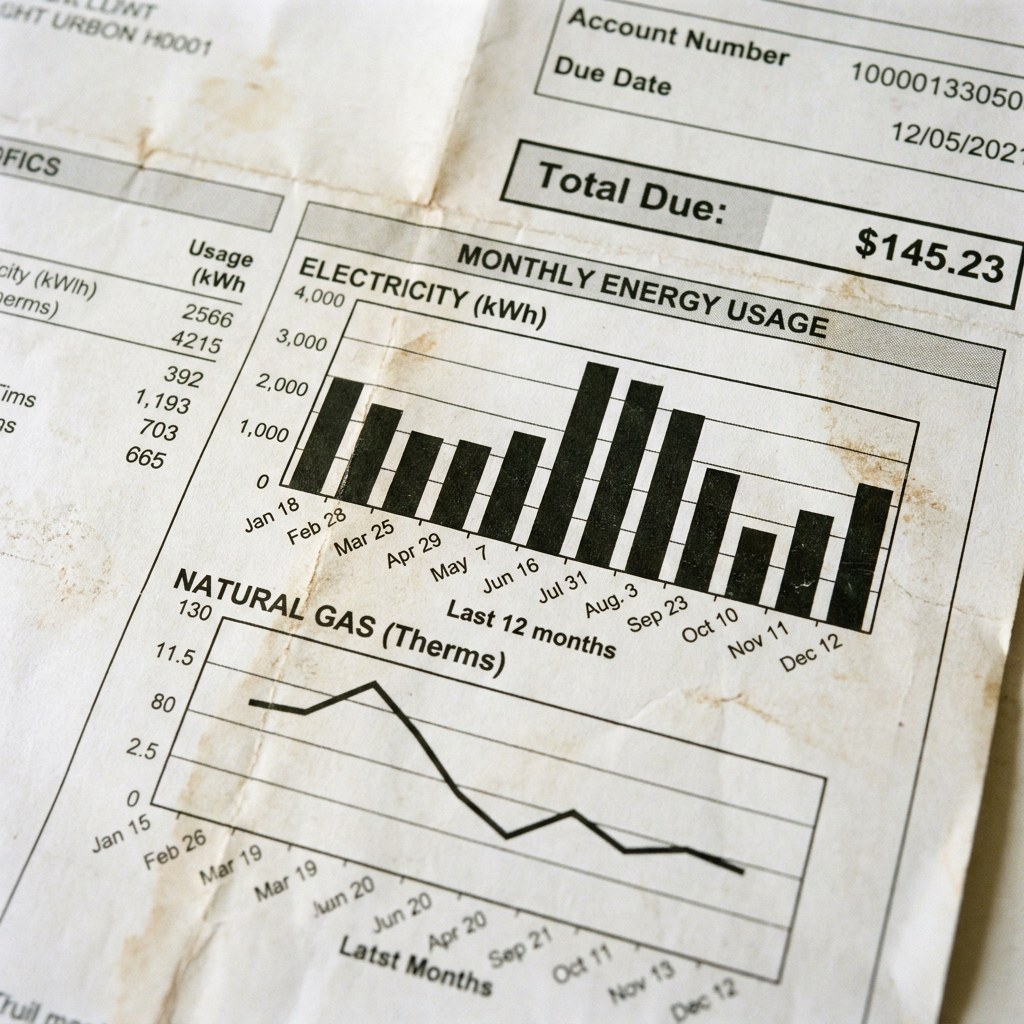
How Budget Billing Works
Utility companies calculate your monthly payment using a straightforward formula:
- Historical Analysis: The utility looks at the past 12 months of energy consumption at your property. If you recently moved in, they typically rely on the previous occupant’s usage data.
- Rate Application: They project future costs based on current fuel and power rates, plus anticipated seasonal rate adjustments.
- Monthly Averaging: They divide that total projected cost by 12 to set your flat monthly payment.
Here is the critical mechanism every homeowner must understand: the true-up period.
Because weather fluctuates and household habits differ, your flat monthly payments will almost never match your exact usage. If you consume more energy than projected, you build up a balance you owe the utility (a deferred debit). If you consume less, you build a credit (a deferred asset).
Once or twice a year, the utility company conducts a "true-up" calculation. If your household ran a deficit, you must pay the difference—either as a lump sum or rolled into an increased monthly rate for the following year. If you generated a credit, the utility applies it to reduce future bills or issues a refund.
Comparing Your Billing Options
Neither approach is inherently superior; the right choice depends on your household budget style and personal preferences.
| Feature | Standard Usage Billing | Budget Billing | | :--- | :--- | :--- | | Monthly Payment | Fluctuates with the weather and daily use | Consistent every month | | Visibility into Consumption | Immediate feedback on high-use months | Delayed feedback until true-up periods | | Cash Flow Impact | High winter or summer spikes | Predictable, stable outflow | | End-of-Cycle Risk | None; you pay what you use each month | Risk of a surprise true-up balance owed | | Best Suited For | Households with flexible emergency cash | Fixed budgets requiring predictable expenses |
Standard billing keeps you acutely aware of how your home performs. If a drafty door or a failing heat pump causes your usage to spike, you notice it right away.
Budget billing protects your checking account from sudden $200 swings, which helps when setting up automatic transfers to a home maintenance reserve. However, it requires the discipline to check your actual meter usage online so you are not caught off guard at the settlement date.
Cost Implications and Time Horizons
According to data from the U.S. Energy Information Administration (EIA), space heating and cooling represent more than half of the energy consumed in an average American home. That makes heating and cooling costs the primary driver of monthly utility volatility.
In the short term (1 to 6 months), budget billing protects cash flow. For new homeowners managing the early expenses of moving, furnishing, and initial repairs, stable monthly costs provide peace of mind.
In the medium to long term (12 months and beyond), reliance on budget billing without checking your actual consumption can backfire. If energy rates rise or an unusually cold winter forces your heating system to work overtime, your true-up bill at month twelve could equal several hundred dollars.
If you plan to sell your home or move, keep in mind that closing your utility account requires settling any deferred balance immediately.
Risks and Common Pitfalls to Avoid
- Relying on the Previous Owner's Baseline: If the prior owners were a retired couple who kept the house at 65 degrees, and your household has three children and runs multiple electronics, the utility’s initial monthly estimate will be far too low. You could face a substantial true-up bill at the end of year one.
- Phantom Consumption Creep: When your bill stays the same every month regardless of your thermostat setting, it is easy to let habits slip. Leaving space heaters running or skipping air filter changes will not raise your bill this month, but it will catch up with you during the true-up review.
- Ignoring the True-Up Month: Many homeowners forget when their settlement month occurs. If a $400 true-up balance hits the same month your property taxes or car insurance are due, it can disrupt your finances.
Using a system like Casa allows you to log your true-up date alongside seasonal HVAC maintenance, ensuring that changes in system performance and billing cycles never catch you by surprise.
How This Affects Your Long Term Home Costs
Your utility bills are not fixed taxes; they are direct operating expenses that impact your home's total cost of ownership. Every dollar saved on seasonal utility spikes is a dollar that can remain in your high-yield maintenance fund or help pay down your principal mortgage balance.
Furthermore, managing your energy costs systematically protects long-term equity. Homes with documented lower operating expenses—achieved through modest efficiency updates rather than just payment smoothing—are increasingly attractive to future buyers. Addressing the underlying causes of high bills (such as poor attic insulation or air leaks around windows) reduces wear and tear on expensive heating and cooling equipment, extending its operational lifespan.
3 Smart Money Moves
- Review your utility portal mid-cycle. Log into your electric and gas accounts quarterly. Check your "deferred balance" to see whether you are running a surplus or deficit before the annual true-up arrives.
- Target low-cost thermal boundaries first. The U.S. Department of Energy estimates that simple air sealing and proper weatherstripping can save up to 15% on heating and cooling costs. Seal around exterior door frames and window trims before spending thousands on major equipment replacements.
- Capture seasonal bill dips in a maintenance reserve. If you opt for standard billing and enjoy low bills during the spring and autumn, transfer the difference directly into your home maintenance fund. This builds an organic cash buffer for winter heating demands.
Summary
Utility budget billing is a helpful tool for stabilizing your monthly cash flow, but it does not change your actual energy costs. By treating budget billing as a predictability plan rather than a savings plan, you can avoid year-end payment surprises. Monitor your actual consumption regularly, address simple home drafts, and direct any seasonal savings toward your long-term maintenance reserve.
Managing monthly home expenses does not have to involve guesswork. Casa helps you track seasonal system performance, schedule maintenance, and keep your home running efficiently. Download the Casa app today to stay ahead of home costs with confidence.