

Nov 24, 2026
What a Home Inspection Doesn't Cover
Know what a standard home inspection leaves out, from sewer lines and radon to what's inside the walls, and how to fill the gaps before you buy.
A standard home inspection is a visual check of what's accessible on one day. It generally doesn't cover sewer lines and other buried items, radon, mold testing, asbestos, lead paint, termites, septic systems, wells, pools, or anything inside the walls. It also won't tell you what repairs cost, whether the home is insurable, or whether to buy it.
Looking for more guidance? Take a look at our Finances overview.
None of that makes an inspection less worth having. It just means you'll want to add a few things.
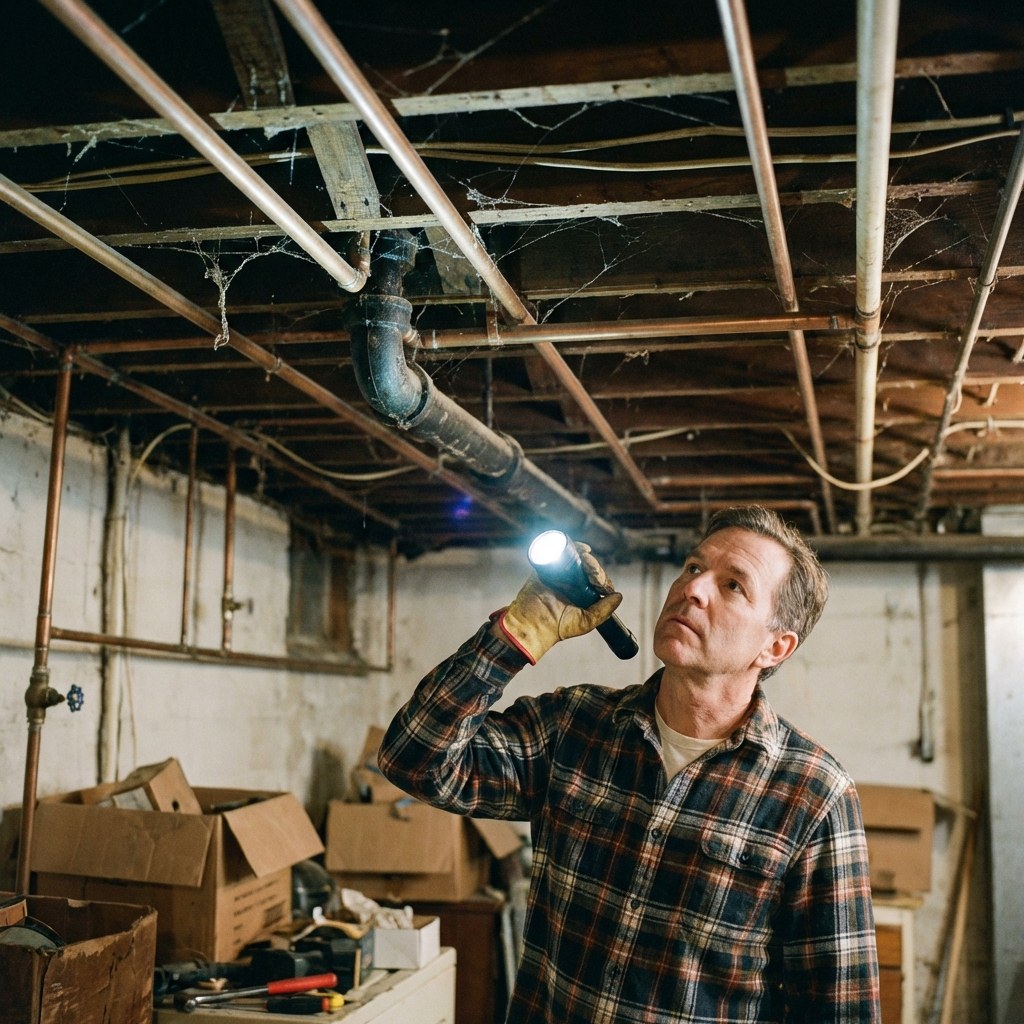
What's Usually In and Out
This follows InterNACHI's standard. Your inspector's agreement and your state's rules can add to it or take away from it.
| Usually included | Usually not included |
|---|---|
| Roof from the ground or eaves | Walking a roof the inspector thinks is unsafe |
| Visible foundation and structure | Engineering opinions, or what's behind finished walls |
| Panel, visible wiring, a sample of outlets | Wiring in the walls, low-voltage and security systems |
| Visible plumbing, fixtures, water heater | Sewer line, septic, well, sprinkler system |
| Heating and cooling with normal controls | Size, efficiency, or remaining life |
| Attic and crawl space, if safe to reach | Areas blocked by belongings, snow, or a locked door |
| Doors, windows, stairs, garage doors | Moving furniture, rugs, or stored items |
| Signs of moisture | Finding the source inside a wall, or testing for mold |
| What's there that day | Pests, recalls, code history, property lines, what comes next |
The Gaps That Cost the Most
| Gap | Why it matters | How to fill it |
|---|---|---|
| Sewer line | Buried, and usually yours to fix | Camera scope, $125 to $500 |
| Radon | Can't be seen or smelled | Test, $217 to $480 |
| Termites | Damage hides in framing | Inspection, $148 to $511 |
| Septic | A failed field is a major expense | Inspection, $358 to $1,398 |
| Well | Water quality isn't visible | Inspection, $281 to $455, plus a lab test |
| Chimney flue | Not seen from the firebox | Inspection, $253 to $1,063 |
| Pool | Equipment and shell are usually excluded | Inspection, $238 to $603 |
| Asbestos | Only a lab can confirm it | Testing, $255 to $579 |
| Underground oil tank | Cleanup can be costly | Tank sweep, and ask about records |
| Permits | Unpermitted work can be yours to fix | Search the city's records |
| Insurance | Roof, wiring, and claims history affect price | Call an agent with the address |
| Flood risk | Not part of an inspection | Check the map and ask about past water |
For who to call, see which specialist for which finding.
What "Not Inspected" Is Telling You
Inspectors don't have to enter places they think are unsafe, move belongings, or operate anything that's shut off. So a report may have blanks.
- Utilities off. Plumbing, heating, and appliances weren't tested. Ask for them to be turned on and for a return visit.
- Too cold or too hot. Air conditioners often aren't run in winter. Ask about a check when it's warm, or a credit.
- Snow on the roof, stored boxes, locked rooms. Ask for access and a second look at those areas.
- No attic or crawl space hatch. Two of the most useful places in the house. Ask whether one can be made safely.
Don't let a blank become an assumption. Ask for another visit in writing, before your deadline.
An Inspection Isn't an Appraisal
They answer different questions. An appraisal supports the loan by estimating value. An inspection tells you about condition. HUD reminds buyers using FHA loans that an appraisal isn't an inspection and that FHA doesn't guarantee the home.
It's Also Not a Code Check
Inspectors aren't checking whether every part meets today's code, and older homes usually don't have to. If a finding says "doesn't meet current standards," ask whether it's a safety problem, whether it was legal when built, and what you'd have to upgrade if you remodel.
It Can't Predict
A furnace can work perfectly on Tuesday and fail on Friday. The standard says an inspection is based on what was observed that day, and not a prediction. That's why a repair fund matters from the first month. Here's how much to keep.
Fill the Gaps, in Order
- Read the agreement before the inspection. It lists what's excluded.
- Ask about add-ons when you book: radon, sewer scope, termite, thermal camera, pool.
- Ask the seller: past leaks, insurance claims, permits, repairs, warranties, service records.
- Search public records for permits and flood maps.
- Call an insurance agent with the address, roof age, and wiring type.
- Walk the block after rain, and at night.
- Get specialists in for anything the report couldn't answer.
A few hundred dollars here is cheap. A sewer line or a failed septic field isn't.
Where Casa Helps
Upload your report and Casa points out what wasn't inspected, along with what was, so you can decide what to check before you go on. It can also help you find a local specialist. You can start without an account.
Questions People Ask
Does a home inspection include the sewer line? Not usually. It's a separate camera inspection.
Do inspectors check for mold? They note visible signs and moisture. Testing is separate, and finding the water source matters more than the test.
Do they look inside walls? No. The inspection is non-invasive.
If the inspector missed something, can I get my money back? It depends on the contract, the state, and whether it was visible that day. Read the limits on liability before you sign.