

Nov 17, 2026
How to Clean an AC Condensate Drain Line and Prevent Water Damage
Learn how to clear your air conditioner condensate drain line to prevent indoor water leaks, protect your HVAC equipment, and avoid costly home repairs.
When you look at your central heating and cooling system, the small PVC pipe running out of the indoor air handler probably does not look like a priority. It is easy to view routine upkeep on parts like this as busywork.
Looking for more guidance? Take a look at our Maintenance overview.
In reality, routine maintenance on your air conditioner's condensate drain line is direct cost prevention.
During warm weather, your air conditioner does more than lower indoor temperatures; it pulls gallons of moisture out of the air every day. That collected moisture collects in an internal pan and flows through a narrow drain pipe out of your home. When that pipe stays clear, your cooling system runs quietly in the background. When it clogs, the resulting water has nowhere to go except into your living spaces.
Taking ten minutes to flush this line is one of the highest-return tasks a homeowner can manage independently.
What Typically Goes Wrong If Ignored
Because the drain line carries cool, dark, standing moisture, it creates an ideal environment for algae, mold, dust, and slime to grow. Over several months, this organic buildup forms a soft blockage inside the pipe.
When water cannot exit through the line, it backs up into the drain pan beneath your indoor evaporator coil (the unit typically located in an attic, basement, or utility closet).
From there, one of two things usually happens:
- The system shuts down completely. Modern HVAC systems often feature a float switch—a safety sensor that cuts power to the unit if the drain pan fills up. While this prevents a flood, it leaves your home without cooling on hot summer days.
- Water overflows into the home. If your unit lacks an operational safety switch, the water spills over the pan. In an attic installation, this can mean ruined insulation, stained ceilings, and warped drywall. In a closet or basement, it can ruin subfloors and baseboards.
What This Task Protects
Routine drain line care protects three major parts of your home:
- System Lifespan: A backed-up drain line increases humidity inside the air handler cabinet, which can accelerate rust on delicate electrical connections and the blower assembly.
- Home Structure and Finishes: Keeping water flowing outside eliminates the primary cause of AC-related ceiling collapses and floor rot.
- Indoor Air Quality: Stagnant water sitting in an air handler tray can circulate musty smells and mold spores through your ductwork whenever the fan runs.
Step-by-Step Cleaning Checklist
Cleaning the drain line requires minimal tools and simple household items.
Tools and Materials Needed
- 1 to 2 cups of regular distilled white vinegar
- A small funnel
- A clean rag
- A standard wet/dry shop vacuum (helpful if a minor clog is present)
The Step-by-Step Process
- Turn off power to the HVAC system. Switch off your thermostat and flip the breaker connected to your indoor unit. Moving parts and sensors should stay off while you work.
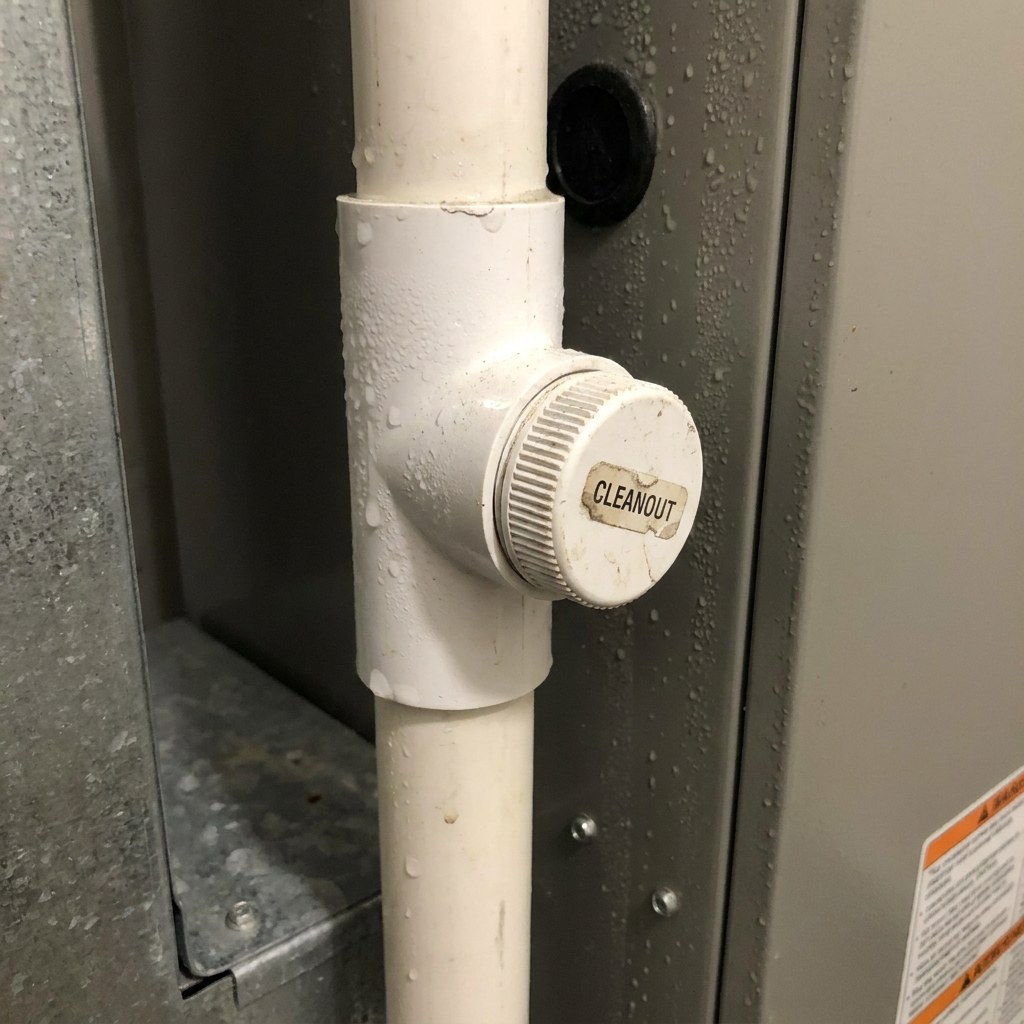
- Locate the drain line access point. Near your indoor unit, locate the white PVC pipe. You will usually find a vertical pipe segment shaped like a "T" with a small cap on top. This is the cleanout port.
- Remove the cap. In most installations, this cap is not glued on. Simply lift or twist it off by hand. If it is glued shut, do not force it; locate the secondary cleanout point or seek professional guidance.
- Inspect the pipe. Shine a flashlight down the opening. If you see standing water near the rim of the pipe, the line is already clogged.
- Add the vinegar. Place your funnel into the opening and slowly pour in roughly one cup of distilled white vinegar. Vinegar produces a mild acidity that breaks down algae and mineral buildup without degrading the PVC or rubber seals.
- Let it sit. Allow the vinegar solution to rest in the pipe for 30 to 45 minutes to dissolve buildup.
- Flush with clean water. Slowly pour a cup or two of tap water through the funnel. Listen or look to ensure the water flows down easily.
- Check the exterior drain line. Walk outside to where the drain line exits the foundation wall. You should see water dripping steadily onto the ground, confirming the line is unobstructed.
- Replace the cap and restore power. Put the cap securely back on the cleanout pipe (do not glue it), and turn your breaker and thermostat back on.
How Often It Should Be Done
For most homes, flushing the condensate line every 30 to 60 days during peak cooling months is sufficient.
If you live in a region with high humidity where the air conditioner runs almost continuously, or if your system is located in an unconditioned attic, checking it monthly from late spring through early autumn helps prevent surprises. In drier climates, once at the start of summer and once mid-season is usually plenty.
What Signs Indicate You Have Waited Too Long
It is common to overlook this task until the system alerts you. Watch for these warning signs:
- A suddenly unresponsive thermostat: The display may be blank, or the system simply refuses to kick on because the float switch opened the circuit.
- Standing water in the pan: If you inspect the indoor unit and see standing water in the auxiliary metal pan beneath it, the primary line is blocked.
- A damp, musty odor: When air flowing from your supply vents smells stale or damp, stagnant water in the drain tray is often the source.
- Watermarks on drywall: Any bubbling paint, discoloration, or damp spots on ceilings directly beneath an attic unit demand immediate inspection.
Cost of Neglect vs. Cost of Maintenance
The economics of condensate line care are straightforward:
| Maintenance Approach | Direct Cost | Potential Consequences | | :--- | :--- | :--- | | Routine DIY flushing | $3 for white vinegar; 10 minutes of time | Reliable cooling; dry ceilings; prolonged equipment life | | Professional clearing | $150 to $350 for a service call | Minor inconvenience; manageable diagnostic cost | | Unchecked overflow | $1,000 to $4,000+ | Drywall replacement, insulation removal, floor repairs, and mold remediation |
Taking ten minutes to clear the pipe prevents an expense that easily rivals a full month of mortgage payments.
Safety Boundaries
Knowing what to handle yourself—and when to stop—keeps this task low-stress.
- Safe to handle yourself: Removing the slip cap, inspecting the opening, pouring in vinegar, and vacuuming the outdoor exit pipe with a shop vac to pull out loose algae.
- Worth monitoring: A drain line that clears slowly after a flush. Keep an eye on it over the next week to ensure water does not rise in the pan.
- Time to stop and call a professional:
- Water is actively overflowing from the unit onto surrounding floors or joists.
- You notice electrical components, control boards, or wiring that have become wet.
- The pipe remains completely blocked after light flushing, and using a wet/dry vac on the exterior outlet does not draw water through.
- You suspect the line was installed without a proper P-trap (the U-shaped bend in the pipe that regulates air pressure) or proper slope.
Avoid using chemical drain cleaners formulated for bathroom sinks or toilets. Harsh caustic chemicals can soften thin-walled PVC joints, damage the internal components of your air handler, and release unpleasant fumes into your air supply.
How to Build This Into Your Home Maintenance Schedule
Home maintenance works best when individual tasks are connected to existing habits rather than remembered in isolation.
A simple approach is to tie your condensate line check to changing your HVAC air filters. Whenever you slide a clean filter into the slot, grab your bottle of vinegar and flush the drain pipe. Pairing the two tasks ensures neither is forgotten during the months your system works hardest.
If you prefer structured reminders, home advisor tools like Casa can track your equipment details and prompt you when seasonal cooling maintenance is due, helping you keep your home running smoothly without maintaining complicated spreadsheets.
Recap
Your AC condensate drain line is a small component with a critical job. Moisture build-up naturally encourages organic matter to gather inside the pipe, but spending a few minutes flushing it with standard white vinegar every month or two during warm weather keeps water flowing safely outside.
By handling this simple preventive step, you protect your ceilings, keep your indoor air fresh, and eliminate one of the most common causes of summer cooling breakdowns.
Managing regular home maintenance is simpler when you have clear, guided steps at your fingertips. Download the Casa app to track your seasonal tasks, organize your home systems, and stay ahead of repairs before they become costly.