

Jun 30, 2026
How to Clean Refrigerator Coils and Save Money
Learn how to clean your refrigerator coils in 15 minutes. This simple task reduces energy bills and prevents expensive appliance breakdowns.
Most of us view home maintenance as a list of tedious chores, but it is much more helpful to see it as a strategy for protecting your bank account. Cleaning your refrigerator coils is a perfect example.
Looking for more guidance? Take a look at our Maintenance overview.
It sounds like busywork, but taking 15 minutes to clear dust from your refrigerator can be the difference between a minor routine task and a major appliance replacement.
What Typically Goes Wrong If Ignored
Your refrigerator uses a chemical called refrigerant to pull heat out of the food compartment. It then pumps that heat into the condenser coils—the metal tubes located on the back or underneath your fridge—so the heat can dissipate into the room.
When those coils get covered in a thick layer of household dust, dirt, and pet hair, that debris acts like a warm winter blanket. The heat cannot escape. To compensate, the compressor, which is essentially the engine of your refrigerator, has to work overtime. It runs constantly, gets dangerously hot, and over time, the continuous strain causes it to burn out and fail completely.
What This Task Protects
- System lifespan: Replacing a burned-out compressor is one of the most expensive appliance repairs in a home. Keeping the coils clean prevents engine strain and extends the life of the entire refrigerator.
- Energy efficiency: A refrigerator struggling to cool down uses significantly more electricity. Clean coils allow the appliance to work efficiently, keeping your utility bills steady.
- Food safety: When a refrigerator struggles to regulate its internal temperature, your food is at risk. A healthy appliance maintains safe, consistent temperatures to prevent premature spoilage.
Step-by-Step Checklist for Cleaning Coils
You do not need to be an appliance expert to handle this. Give yourself about 15 minutes and follow these steps:
- Unplug the refrigerator: Always disconnect the power before working on an appliance to ensure your safety.
- Locate the coils: On older models, the coils are a large black grid on the back of the fridge. On newer models, they are typically hidden beneath the unit, behind a snap-off grille panel at the floor level.
- Gain access: If the coils are on the back, carefully pull the refrigerator away from the wall. If they are underneath, remove the base grille (usually by popping it off or removing a couple of screws).
- Vacuum the loose dust: Using a narrow crevice tool attachment on your vacuum cleaner, gently suck away the visible dust and lint.
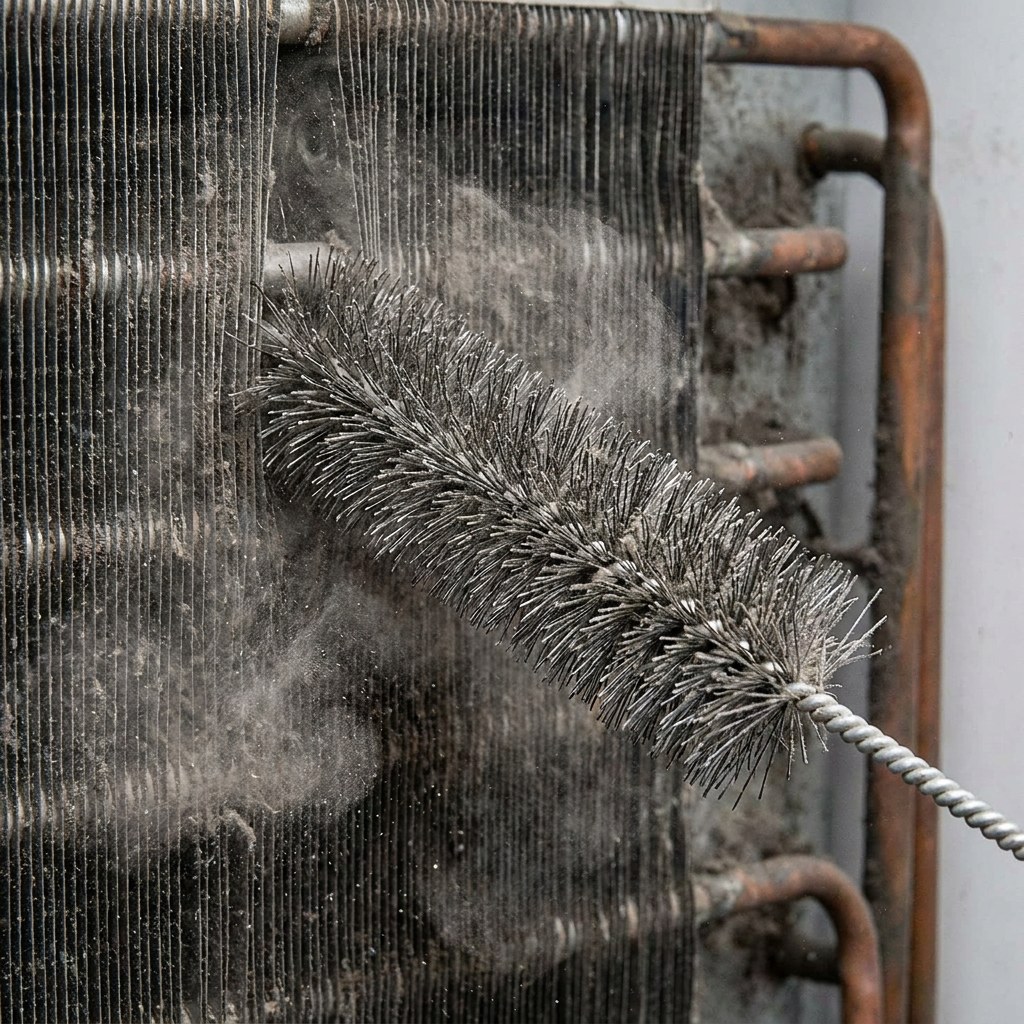
- Use a coil brush: A coil brush is a long, flexible, cylindrical brush designed specifically to fit between tight metal tubes. Slide the brush into the gaps to loosen stubborn dirt and trapped hair.
- Vacuum again: Pick up all the dust you just knocked loose with the brush.
- Restore the area: Reattach the base grille or gently push the refrigerator back into place, and plug the power cord back into the outlet.
How Often It Should Be Done
For the average household, cleaning your refrigerator coils every six months is plenty. However, if you have multiple shedding pets in the house, pet hair will accumulate quickly. In that case, checking and cleaning the coils every three to four months is a safer approach.
Signs You Have Waited Too Long
Your refrigerator will often tell you when it is struggling to breathe. Watch for these warning signs:
- The refrigerator motor seems to run constantly without taking a break.
- The sides or the back of the refrigerator feel unusually hot to the touch.
- Your food is at the wrong temperature—ice cream in the freezer feels soft, or liquids in the refrigerator section are freezing over.
The Cost of Neglect vs. The Cost of Maintenance
The cost of maintaining your coils is incredibly low. A specialized coil cleaning brush costs between $10 and $15 at any hardware store, and you can reuse it for years.
The cost of neglect is steep. If your refrigerator stops cooling, a professional service call to diagnose the issue typically starts around $150. If the compressor has failed due to overheating, the repair bill usually runs between $300 and $800. Often, homeowners find that replacing the compressor is not cost-effective and are forced to spend $1,000 or more on a brand-new refrigerator.
Safety Boundaries
It is important to know your limits when working around home appliances.
Safe to try yourself: Unplugging the unit, removing the front grille, brushing the coils gently, and vacuuming up the dust are all safe for a homeowner to do.
Worth waiting or monitoring: If you check the coils and see only a very light dusting, you can wait another few months before breaking out the brush. You only need to intervene before the dust begins to form a thick, blanket-like layer.
Time to stop and call a professional: Never use sharp metal tools like knives or screwdrivers to scrape dirt off the coils. If you accidentally puncture a tube, the refrigerant will leak out, ruining the appliance. If you notice the coils are already damaged, if you smell a sweet chemical odor near the fridge (a sign of a refrigerant leak), or if the refrigerator continues to run constantly even after a thorough cleaning, stop what you are doing and call an appliance repair technician.
How to Build This Into Your Home Maintenance Schedule
Home maintenance is easiest when you do not have to hold all the dates and deadlines in your head. The best way to remember to clean your coils is to pair it with another task you do twice a year. For example, make it a habit to clean the refrigerator on the same weekend you test your smoke detectors or replace your HVAC filters.
To make it even easier, you can log this task into your Casa app. Setting up a recurring reminder allows you to free up mental space, trusting that you will be notified exactly when it is time to grab the vacuum again.
Short Recap
Cleaning your refrigerator coils is a minor, 15-minute task that provides significant financial protection. By keeping the condenser coils clear of dust and pet hair, you allow your refrigerator to cool efficiently. This simple habit keeps your utility bills in check, protects your food, and prevents the engine from burning out ahead of its time.
Managing your home does not have to feel overwhelming. For clear guidance on what to check, when to check it, and how to keep your home running smoothly, download the Casa app today.