

Oct 20, 2026
How to Clear an AC Condensate Drain Line
Learn how to flush your AC condensate drain line with simple steps to prevent water leaks system shutdowns and costly repairs. A quick guide for homeowners.
When the weather turns warm, your air conditioner does more than cool the air inside your home. It also acts as a dehumidifier, pulling gallons of water out of humid air every single day.
Looking for more guidance? Take a look at our Maintenance overview.
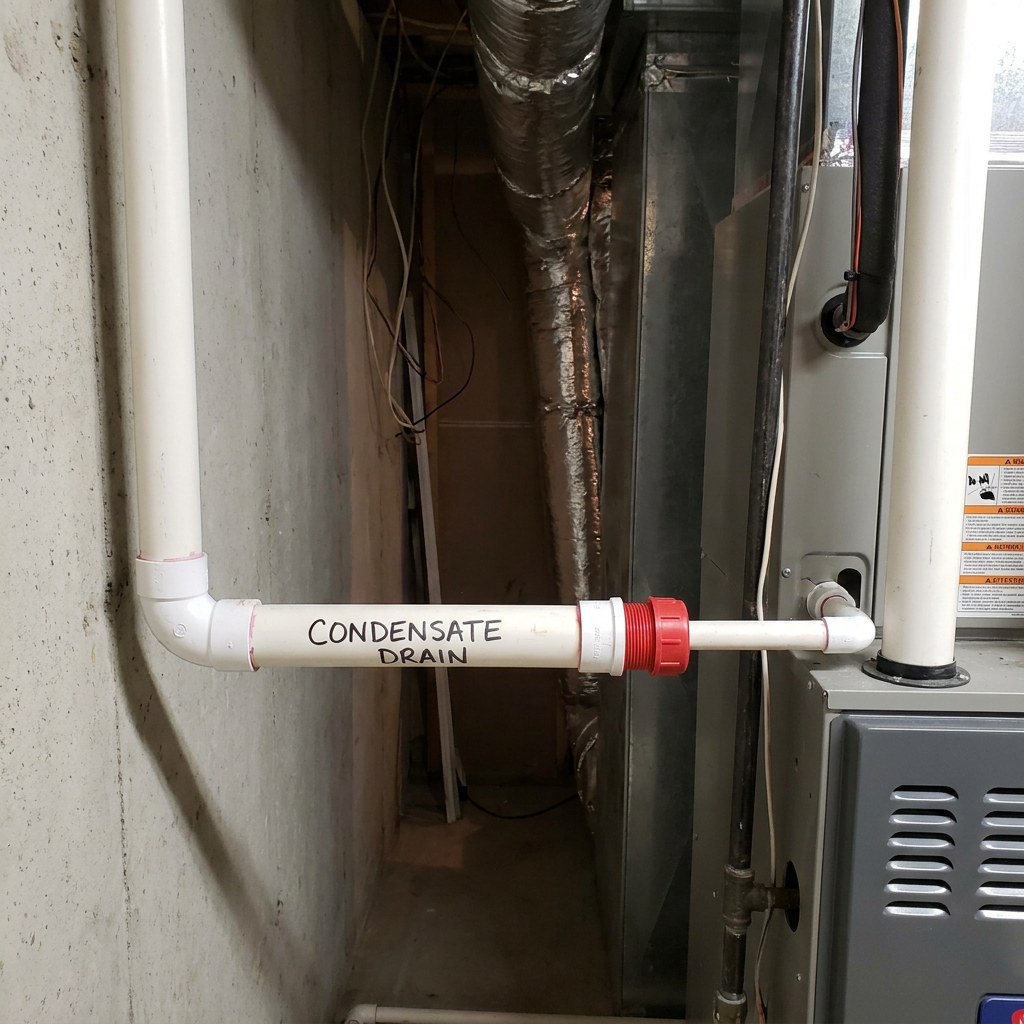
That moisture collects on the cold evaporator coils inside your indoor unit and drips into a small pan. From there, it flows through a thin white plastic pipe—known as the condensate drain line—out of your home.
Because that pipe stays dark, warm, and damp for months at a time, it is an ideal environment for algae, mold, and dust sludge to collect. Flushing this line takes about ten minutes and costs almost nothing. Looking at it as simple cost prevention, rather than a weekend chore, helps put its value into perspective: a few minutes of effort prevents thousands of dollars in water damage.
What Typically Goes Wrong If Ignored
When a condensate line clogs, the water created by your air conditioner has nowhere to go.
In modern systems, a safety device called a float switch is installed in the drain pan. If the drain backs up, the water lifts the switch and automatically shuts the system off to prevent an overflow. While this protects your home, it often leaves you without cooling on the hottest afternoon of the summer, waiting on a service call for an issue that takes minutes to prevent.
In older systems—or if a float switch fails—the backed-up water overflows the drain pan. Depending on where your indoor unit is located (an attic, a closet, or a basement), that water can seep directly into your ceilings, drywall, and subflooring before you even realize there is a problem.
What This Task Protects
Keeping this simple line clear protects three key areas of your home:
- System lifespan: Standing water in an air handler promotes rust on electrical components, coils, and the cabinet itself, leading to premature equipment replacement.
- Structural safety and indoor health: Preventing leaks stops drywall rot and hidden mold growth behind walls and in ceilings.
- Energy efficiency and comfort: A clear, working drainage system ensures your air conditioner runs its full cooling cycle without unexpected safety shutoffs.
Step by Step Checklist to Flush Your Drain Line
You do not need specialized plumbing tools for routine maintenance. A bottle of regular distilled white vinegar is usually all it takes.
Tools and Supplies Needed
- 1 to 2 cups of distilled white vinegar
- A clean funnel (optional, but helpful)
- A small rag or cloth
Step 1: Turn Off the HVAC System
Switch off your thermostat. For added safety, switch off the breaker dedicated to your indoor air handler at your main electrical panel.
Step 2: Locate the Drain Line Access Point
Find your indoor unit, usually located in a utility closet, attic, or basement. Near the base, you will see a white PVC pipe running outward. Look for a T-shaped pipe fitting pointing upward with an unglued cap on top. This is your cleanout access point.
Step 3: Remove the Cap
Gently pull off the slip cap. It should not be glued in place. If it feels stuck, give it a slight twist. Set the cap aside and inspect the opening with a flashlight to see if there is visible standing water or thick sludge right at the top.
Step 4: Pour in Distilled White Vinegar
Using a funnel, slowly pour 1 to 2 cups of distilled white vinegar into the open pipe. Vinegar is mild enough that it will not damage your PVC piping or corrode plastic components, but acidic enough to dissolve early algae and bacterial growth.
Step 5: Let It Rest
Allow the vinegar to sit in the line for 30 to 45 minutes to break down any organic buildup inside the pipe walls.
Step 6: Verify the Exit Point Outside
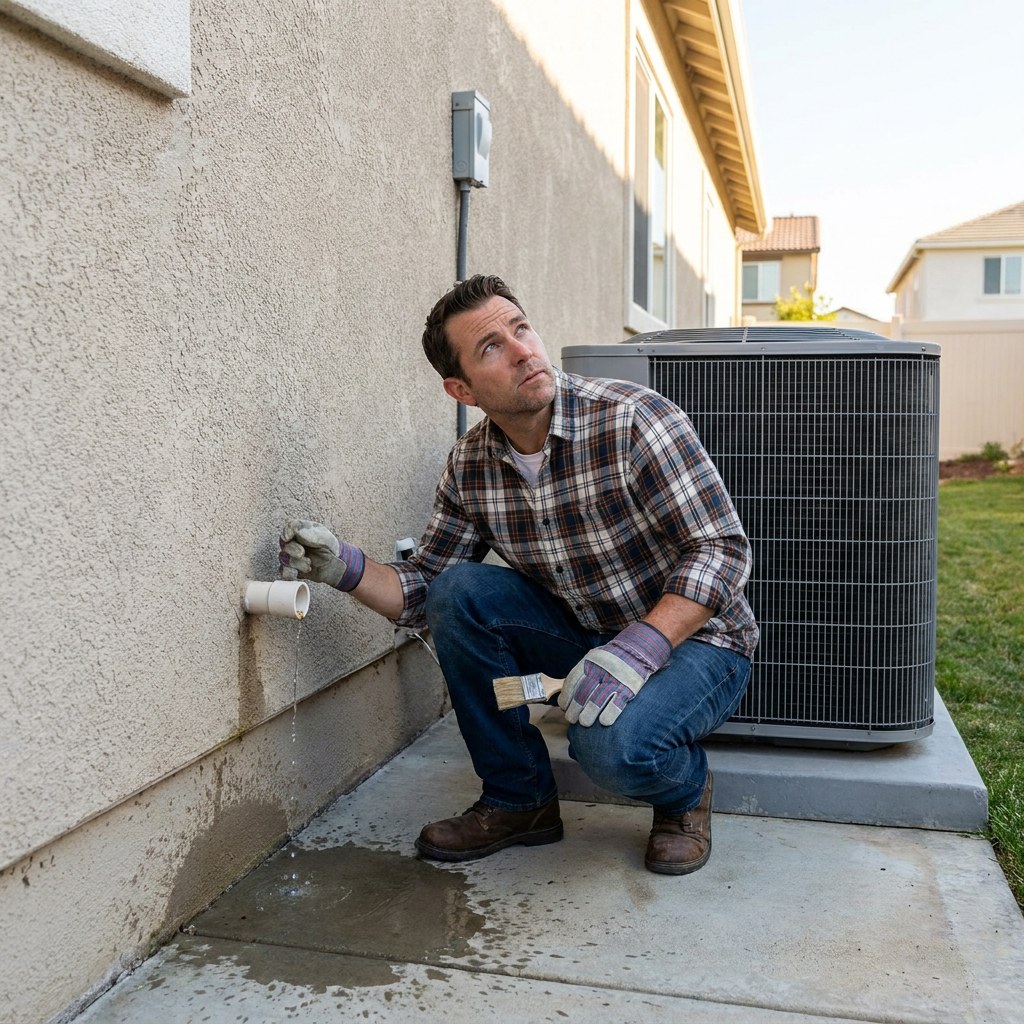
Head outside your home and locate the exterior drain pipe, typically a small PVC stub protruding from the exterior wall near your outdoor condenser unit. Ensure the opening is free of dirt, leaves, or insect nests. You should notice a slight trickle or vinegar smell as it clears.
Step 7: Replace the Cap and Restore Power
Return to your indoor unit, push the PVC cap firmly back onto the access pipe, restore power at the breaker, and turn your thermostat back on.
How Often It Should Be Done
In most climates, flushing the condensate line once every 30 to 60 days during peak cooling season keeps algae from gaining a foothold.
If you live in a region with high humidity and run your cooling system for extended months, aim for a monthly flush from late spring through early autumn. In drier climates, once at the start of the summer and once halfway through the season is usually sufficient.
Signs You Have Waited Too Long
Routine flushing is preventive. If any of the following occur, a clog has already begun to form:
- Standing water in the drain pan: If you remove the cap or look under the unit and see water sitting still, the pipe is blocked downstream.
- A sudden AC shutdown: The system stops cooling even though the thermostat is set low, often indicating the float switch has triggered.
- Musty odors: A damp, stale smell coming from your supply vents or around the utility closet often signals standing water in the drain pan.
- Water stains on nearby walls or ceilings: Discoloration on drywall directly underneath an attic or second-floor unit means water has already escaped the system.
Cost of Neglect vs. Cost of Maintenance
The economics of this small task are straightforward:
- Cost of routine maintenance: A jug of distilled white vinegar costs around $3 to $5 and lasts for multiple cleanings. The process takes less than 15 minutes.
- Cost of a service call: Having an HVAC technician clear a clogged drain line typically costs between $150 and $300 for a standard service visit.
- Cost of water damage repairs: If backed-up water leaks through ceilings or ruins subflooring, drywall repair, painting, and water remediation can easily run from $1,000 to over $4,000 depending on the extent of the damage.
Safety Boundaries
Knowing when to step in yourself and when to bring in a professional keeps your home safe and avoids accidental equipment damage.
Safe to Try Yourself
- Routine vinegar flushes when the system is operating normally.
- Inspecting the exterior drain opening and clearing away grass clippings or leaves.
- Checking the drain pan for signs of moisture.
Worth Monitoring
- Slow-draining lines where vinegar drains very slowly. You can flush again with warm water after the vinegar has sat for an hour, but keep a close eye on the drain pan over the next 24 hours.
Time to Call a Professional
- The drain pan is completely full of water and the line will not drain at all.
- You notice water damage on ceilings, baseboards, or walls.
- The drain line does not have an accessible cleanout port and requires cutting or modifying PVC piping.
- A note on chemicals: Avoid pouring harsh chemical drain cleaners (like those formulated for bathroom sinks) or concentrated bleach into an AC drain line. Harsh chemicals can weaken PVC glue joints, damage internal coils, and produce irritating fumes that circulate through your home's air duct system.
How to Build This Into Your Home Maintenance Schedule
Preventive maintenance works best when tied to an existing habit. The simplest way to remember this task is to pair it directly with your air filter checks.
Whenever you inspect or replace your HVAC air filter, grab your vinegar bottle and flush the drain line at the same time. You can also use Casa to track your seasonal home tasks and receive gentle reminders before cooling season begins, helping you stay ahead of maintenance without cluttering your calendar.
Short Recap
- Your AC drain line carries away moisture, creating an environment where algae and dust sludge collect naturally.
- Flushing the pipe with 1 to 2 cups of distilled white vinegar every 30 to 60 days prevents sudden clogs.
- A clogged line can trip a safety switch, leave you without air conditioning, or overflow into living spaces.
- Never use harsh chemical drain cleaners in your HVAC system.
- If you encounter standing water you cannot clear, stop and contact a licensed HVAC technician.
Keeping your home running smoothly does not require technical expertise—just steady, small habits. To take the guesswork out of home upkeep and build a maintenance routine that protects your budget, download the Casa app today.