

Oct 27, 2026
How to Flush Your Water Heater Tank and Prevent Sediment Buildup
Learn how flushing your water heater tank once a year protects system lifespan, keeps energy costs predictable, and prevents unexpected basement floods.
Most homeowners rarely think about their water heater until a morning shower turns unexpectedly cold. Because the tank sits quietly in a basement, garage, or utility closet, it is easy to treat it as an appliance that runs entirely on its own.
Looking for more guidance? Take a look at our Maintenance overview.
Draining and flushing the tank can sound like tedious mechanical chores. In reality, this single 45-minute task is one of the most effective ways to protect your budget. It transforms an unpredictable, expensive appliance replacement into a predictable, long-term system you control.
The Real Cost of Neglected Sediment
Water enters your home carrying dissolved minerals like calcium and magnesium. When your water heater warms that water, those minerals separate and settle to the bottom of the tank as solid sediment.
Over time, that sediment creates an insulating blanket between the heat source and the water:
- In gas water heaters: The burner has to heat through a thick layer of mineral sludge before it can reach the water. This overheats the steel bottom of the tank, weakening the metal and breaking down the glass lining designed to prevent rust.
- In electric water heaters: Lower heating elements get buried in sediment. The trapped heat causes the element to overheat and burn out prematurely.
- Throughout the tank: Water trapped beneath dense sediment can boil and turn to steam, creating popping or knocking sounds that stress the tank walls.
Left unaddressed, that mineral layer slowly degrades the tank from the inside out until it cracks, leading to sudden tank failure and dozens of gallons of water on your floor.
What This Maintenance Task Protects
Spending an hour once a year to clear that sediment protects three critical areas:
- System lifespan: A standard storage tank water heater is built to last 8 to 12 years. Regular flushing helps you reach or exceed that window rather than replacing the unit at year five.
- Energy efficiency: Water heats faster when the burner or element touches water directly rather than heating through inches of sand-like minerals. This keeps your monthly gas or electric usage steady.
- Quiet, reliable operation: Clearing the tank prevents the banging and rumbling that comes with trapped steam bubbles, keeping water temperature consistent across your home.
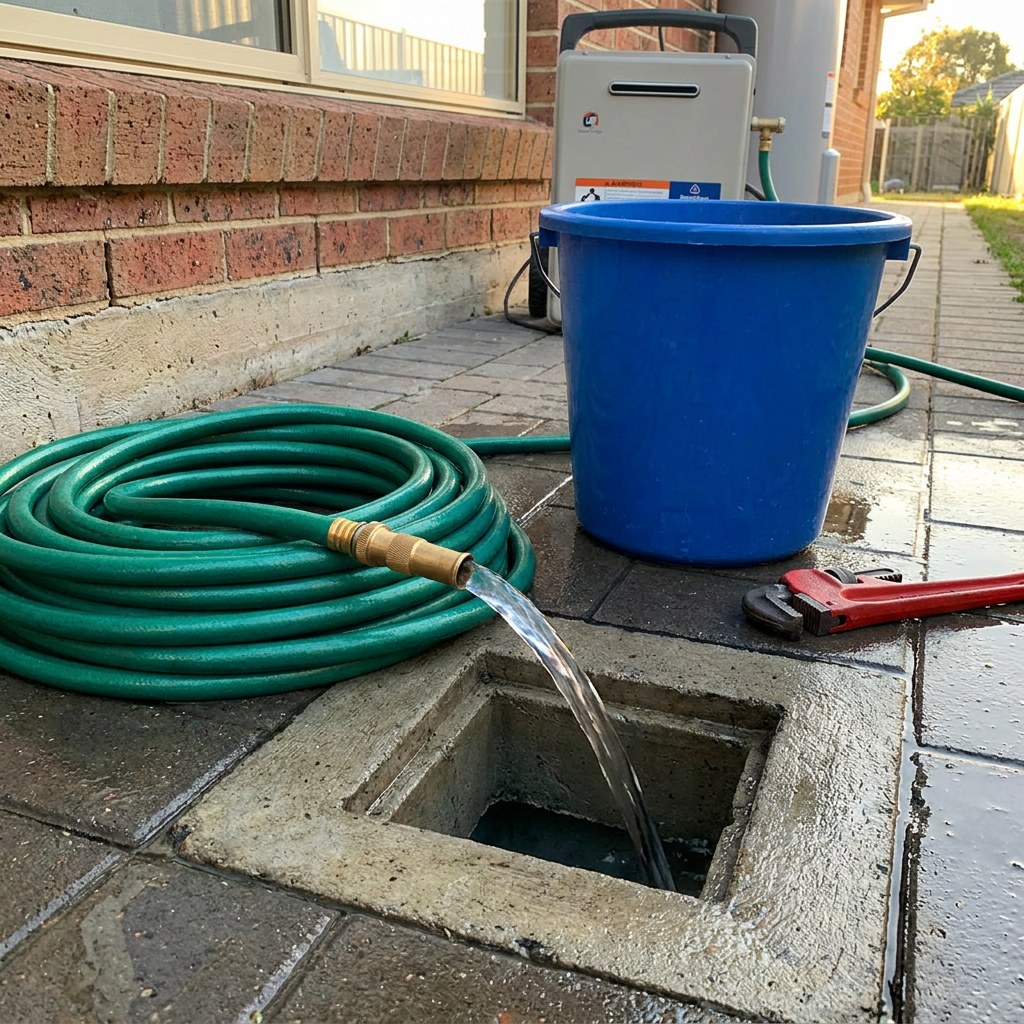
Step-by-Step Water Heater Flushing Checklist
Flushing a water heater is straightforward, but it requires following the correct sequence to protect the heating components.
Tools You Need
- A standard garden hose (long enough to reach outdoors or a floor drain)
- A flathead screwdriver or pliers (to turn the drain valve)
- Work gloves and eye protection (water from the tank will be hot)
- A bucket (if you want to inspect the sediment)
The Process
- Turn off the heat source:
- For electric heaters: Turn off the dedicated breaker in your electrical service panel. Never drain an electric unit while powered, or the heating elements will burn out in seconds.
- For gas heaters: Turn the thermostat dial on the gas valve to the "Pilot" or "Vacation" setting.
- Shut off the cold water supply: Locate the cold water shutoff valve at the top of the tank (usually a blue handle or a round wheel) and turn it completely off.
- Attach your garden hose: Thread the hose securely onto the drain valve near the bottom of the tank. Run the other end to a floor drain, a basement sump basin, or outside downhill.
- Relieve pressure: Open a hot water faucet on the floor above the water heater. This lets air into the plumbing lines so the tank can drain smoothly, similar to taking your thumb off the top of a drinking straw.
- Open the drain valve: Use your screwdriver or hand to open the drain valve. Let the water drain out through the hose. Use caution, as this water may be hot.
- Perform a fresh rinse: Once the tank is empty, briefly turn the cold water supply valve back on for 1 to 2 minutes. The pressurized burst of incoming water stirs up settled sediment at the bottom and carries it out through the hose. Repeat this until the drain water runs clear.
- Close the drain valve: Disconnect the garden hose and make sure the drain valve is fully closed and not dripping.
- Refill the tank completely: Turn the cold water supply back on. Go to the faucet you opened in step 4; when water flows steadily without sputtering air, the tank is full. Turn the faucet off.
- Restore power or gas: Only after the tank is completely full of water should you switch the circuit breaker back on or turn the gas valve back to your preferred temperature setting.
How Often to Complete This Task
For most households, flushing the tank once every 12 months is sufficient.
If your home has hard water (more than 7 grains per gallon) or draws from a private well without a water softener, sediment forms much faster. In those conditions, flushing the tank every six months helps prevent hard mineral crusts from solidifying at the bottom.
Signs You Have Waited Too Long
If you have lived in your home for several years without touching the water heater, look for these warning signs:
- Popping, rumbling, or kettle-like noises: This indicates water is boiling beneath a deep layer of settled minerals.
- Lukewarm or slow-recovering hot water: Thick sediment is restricting heat transfer to the water.
- Cloudy or rusty hot water: Minerals or internal corrosion are circulating through your household fixtures.
- A stuck or brittle plastic valve: If the drain valve is plastic and feels brittle or refuses to turn, forcing it can crack the valve and trigger an uncontrollable leak.
A cautionary note: If a water heater is more than 8 to 10 years old and has never been flushed, aggressive draining can sometimes dislodge sediment that was sealing small pinhole corrosion spots. In older, unmaintained tanks, proceed cautiously or consult a professional first.
Cost of Neglect vs. Cost of Maintenance
| Category | Routine Maintenance | Unaddressed Neglect | | :--- | :--- | :--- | | Direct Expense | $0 to $15 (garden hose) | $1,500 to $3,200 (premature replacement) | | Energy Impact | Optimal heating efficiency | 10% to 20% higher water heating costs | | Secondary Risk | Minimal | $2,500+ in potential water damage cleanup | | Time Investment | 45 minutes once a year | Emergency calls, lost hot water for days |
Regular flushes require almost no capital expense, only a small block of time. Ignoring the system shortens its lifespan and turns a planned replacement into an urgent, costly repair.
Safety Boundaries: When to Call a Professional
Most water heater flushes are well within safe DIY limits, but know where to draw the line:
- Safe to handle yourself: Routine draining on units under 7 years old with accessible, functioning drain valves.
- Pause and monitor: Minor sediment flakes appearing in the hose water during an annual flush—this is normal and confirms the flush is working.
- Call a licensed plumber: If the drain valve will not budge or leaks after closing; if you see moisture pooling under the tank base; or if you smell gas near the appliance.
How to Build This Into Your Home Maintenance Schedule
Preventive maintenance works best when you do not have to rely on memory. Because flushing a water heater only happens once a year, it is easy to forget until symptoms appear.
Tie this task to an existing annual habit, like testing your smoke alarms or shutting down outdoor hose bibs in the fall. You can also log your water heater details in the Casa app to receive automated reminders when it is time to flush the tank, track the age of your unit, and store your equipment manual in one place.
The Bottom Line
- Sediment is inevitable, but damage is not: Dissolved minerals settle naturally, but draining them prevents tank degradation.
- Sequence matters: Always cut power or gas before draining, and always refill the tank completely before turning the heat back on.
- Consistency saves money: Forty-five minutes once a year keeps your water heater running quietly and delays a costly replacement.
Staying ahead of plumbing upkeep does not require trade expertise—just straightforward, routine care. For guided maintenance tracking, customized seasonal checklists, and step-by-step home support, download the Casa app today.