

Updated Nov 23, 2026
How to Get Rid of Carpet Smells: A Complete DIY Guide
Track down a carpet smell and fix it by cause, from damp spots and pet accidents to stale rooms, and know when the problem is under the carpet.
Find where the smell is strongest, then match the fix to the cause. Dry out anything damp first. Use an enzyme cleaner on pet accidents. For stale or old-spill smells, leave baking soda on overnight and vacuum it up. If a musty smell stays after the carpet is fully dry, look for mold underneath.
Looking for more guidance? Take a look at our Maintenance overview.
What’s Causing That Smell?
Before you start scrubbing, you need to identify the culprit. Carpet odors generally fall into a few categories:
- Moisture and Mildew: This is a common one, especially in basements or humid climates. A spill that wasn't dried properly or a hidden leak can lead to mold and mildew growth, resulting in a distinct musty smell.
- Pet Accidents: We love our furry friends, but their accidents can leave behind powerful, lingering odors caused by uric acid, which doesn’t break down easily.
- Spills and Stains: Food, drinks, and other organic materials can start to decompose within carpet fibers, leading to unpleasant smells.
- General Grime: Over time, dust, dirt, and everyday foot traffic can create a general stale or dusty odor that permeates the entire carpet.
Step 1: The Initial Assessment - Finding Ground Zero
Is it one specific spot, or is the entire room affected?
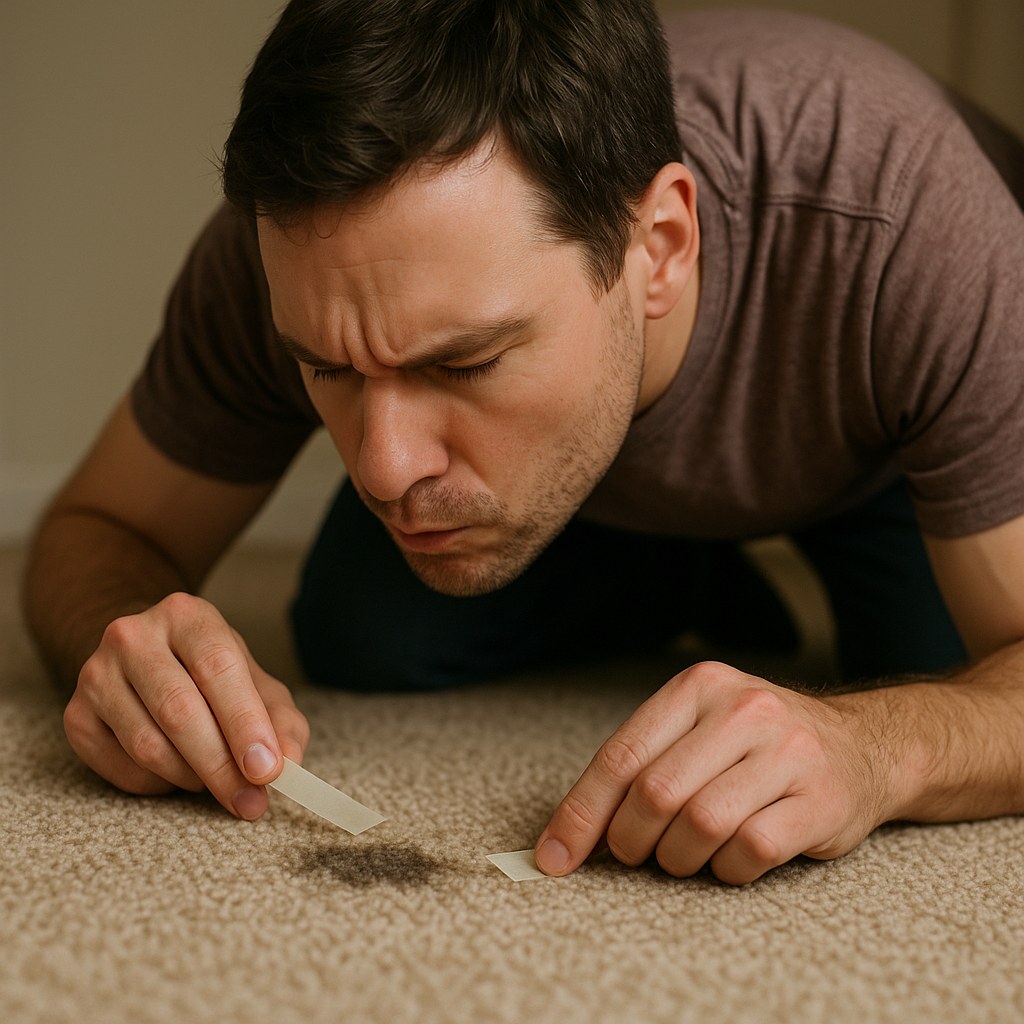
- Do a Slow Walk-Through: Walk slowly around the room, getting down closer to the carpet level if you need to. Use your nose to determine where the smell is strongest.
- Mark the Spot: Once you find a potential source, mark it with a small piece of masking tape. It saves you from sniffing it out again later.
- Test any cleaner first: Try it on a hidden corner, wait, and blot with a white cloth. Wool and some dyes don't like vinegar or enzyme cleaners, so check the carpet's care label.
Path 1: How to Fix Localized Carpet Smells
A specific spot is usually the easiest to fix. Kneel down at the marked spot and use the back of your hand to touch the carpet fibers. Does it feel cool or damp?
If the Spot is Damp: Localized Moisture Treatment
Act fast. The EPA says to dry wet areas within 24 to 48 hours to prevent mold. First find out why it's wet, whether that's a spill, a leaking pipe, or rain coming in. If it was sewage or floodwater, stay off it and call a water damage company.
What You'll Need:
- Rubber gloves
- Clean towels, or a wet/dry vacuum plugged into a GFCI outlet
- Dish soap
- Baking soda
- A soft-bristled brush
- A fan
Step-by-Step Instructions:
- Check underneath: Lift a corner near the spot if you can do it easily. If you see mold, or the padding is soaked, stop and see mold under your carpet.
- Blot, Don't Rub: Place a thick, clean towel over the damp spot and press down firmly (you can even stand on it) to absorb as much moisture as possible. Repeat with dry sections of the towel until you can't pull up any more water.
- Clean It Lightly: Mix a teaspoon of dish soap in a cup of warm water. Dampen a cloth, blot the area, and use the soft brush gently. Use as little water as you can.
- Rinse and Blot Again: Blot with a cloth dampened in plain water, then press with a dry towel.
- Dry It Completely: This is the step that matters most. Aim a fan across the spot and leave it running until the carpet feels completely dry, then a few hours longer. Lingering moisture will bring the smell right back.
- Deodorize Once It's Dry: Sprinkle baking soda, leave it overnight, and vacuum it up.
If the odor persists, moisture has probably reached the padding or the floor underneath. Have a carpet cleaner or water damage company take a look.
If the Spot Isn't Damp (But You Have Pets): Localized Pet Odor Treatment
Pet urine contains uric acid crystals that don’t dissolve in water, which is why the smell can return on humid days even after you’ve cleaned it. An enzyme cleaner breaks down what soap leaves behind.
What You'll Need:
- Rubber gloves
- Clean towels
- Dish soap
- A bowl
- An enzyme cleaner made for pet urine
- A fan
Step-by-Step Instructions:
- Blot Up Excess: If the spot is fresh, blot it with a clean towel to absorb as much liquid as you can.
- Create a Cleaning Solution: Mix one tablespoon of clear dish soap with one cup of warm water.
- Clean Gently: Dampen a cloth in the soapy solution and blot the spot from the outside in. Don't push it deeper.
- Rinse and Blot: Dampen a new, clean towel with plain water and blot the area to "rinse" out the soap. Then, blot with a dry towel to remove as much moisture as possible.
- Apply the Enzyme Cleaner: Use enough to reach as deep as the accident did, and leave it for the time on the label, which can be hours. Don't use other cleaners at the same time, since they can stop the enzymes working.
- Final Blot and Dry: Blot the area, then aim a fan at it until it's completely dry. Old spots often need a second round.
Skip ammonia-based cleaners, which smell like urine to a pet, and don't use a steam cleaner on it, since heat can set the odor. If the smell stays, the padding may need to be replaced. A carpet cleaner who handles pet odor can tell you.
If the Spot is Dry and Not Pet-Related: Localized General Odor Treatment
For mystery spots or old spills (like milk or juice), a simple deodorizing treatment is often all you need.
What You'll Need:
- Vacuum
- Baking soda
- White vinegar
- A spray bottle
Step-by-Step Instructions:
- Vacuum First: Thoroughly vacuum the area to remove any loose dirt or debris.
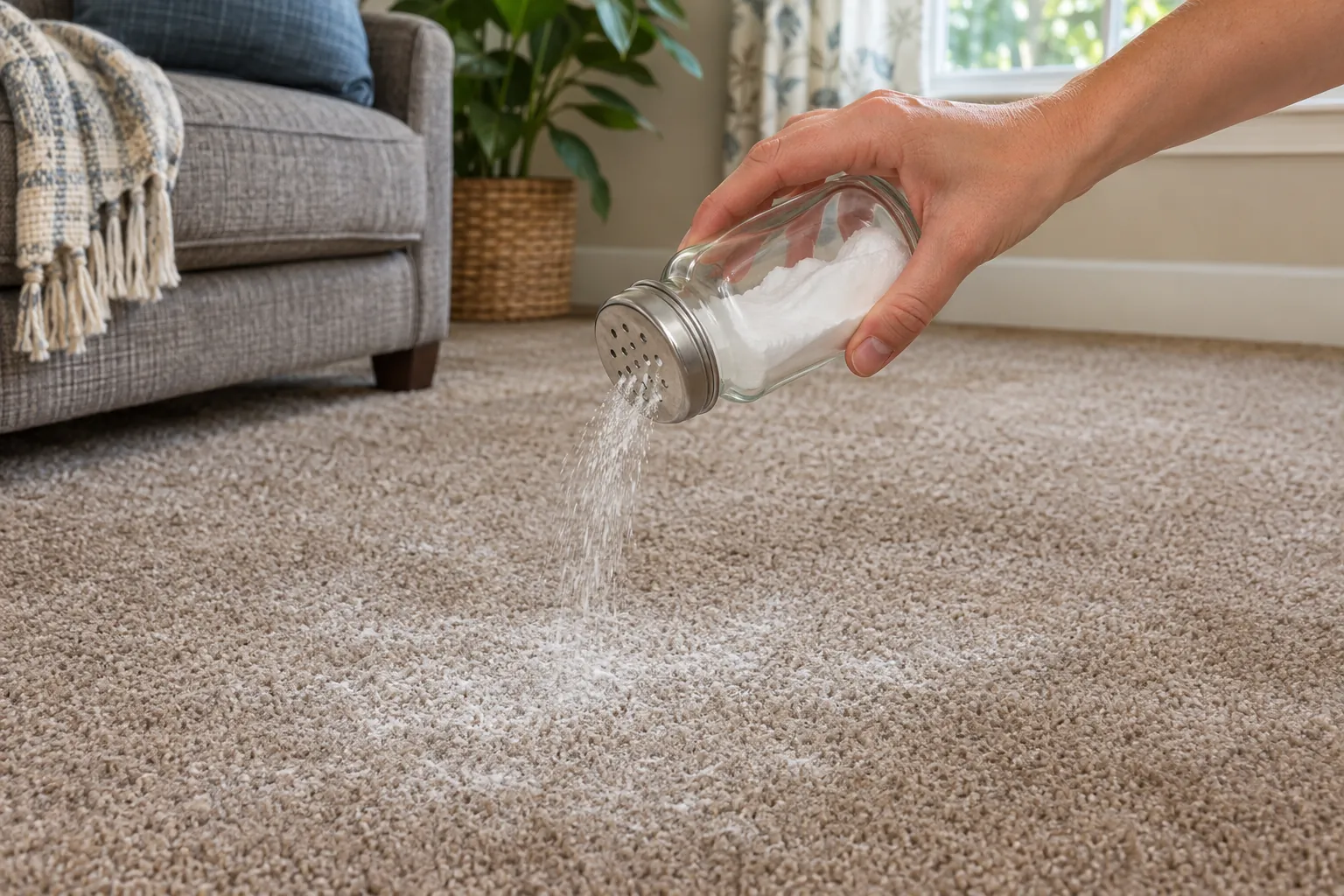
- The Baking Soda Trick: Sprinkle a good layer of baking soda over the smelly spot.
- Let it Sit: Allow the baking soda to sit for at least an hour—overnight is even better. It will absorb the odor molecules from the carpet fibers.
- Vacuum Again: Carefully vacuum up all the baking soda.
- Light Vinegar Mist: Mix a solution of one part vinegar to three parts water in a spray bottle. Lightly mist the area. The vinegar smell will be strong at first but will disappear as it dries, taking other odors with it.
- Air Dry: Let the spot air dry completely. Open a window to improve ventilation.
This simple process is often enough to eliminate lingering food or dirt smells. If not, it may be time to call a professional for a targeted deep clean.
Path 2: How to Tackle Pervasive, Room-Wide Odors
If the smell seems to be everywhere, first check the room for signs of widespread moisture—check for leaks near baseboards, windows, or radiators, and note if the air feels damp or heavy.
If the Room is Humid or the Carpet is Damp: Pervasive Moisture Treatment
A whole damp carpet needs attention today. If the water came up from a drain, a flood, or an unknown source, or if it's near outlets or cords, stay off it and call a water damage company.
What You'll Need:
- Rubber gloves and an N95 mask
- A wet/dry shop vacuum
- A dehumidifier
- Fans
- Baking soda
Step-by-Step Instructions:
- Extract Water: With a wet/dry vacuum plugged into a GFCI outlet on a dry part of the floor, extract as much water as possible from the entire carpet. Work in slow, overlapping lines.
- Set Up Drying Equipment: Place a dehumidifier in the center of the room and set it to about 45% humidity. Position multiple fans on opposite sides of the room to create cross-ventilation, ensuring air flows over the entire carpet surface.
- Deodorize with Baking Soda: Once the surface feels less saturated, sprinkle a light layer of baking soda over the entire carpet.
- Wait and Dry: Let the dehumidifier and fans run continuously for at least 24-48 hours. Allow the baking soda to sit for at least 12 hours during this time before vacuuming it up.
If a musty smell remains after the carpet is bone-dry, you should contact a water-damage restoration specialist. They can check for mold under the carpet and padding.
If the Carpet is Dry: Pervasive General Odor Treatment
For general staleness from smoke, cooking, or years of use, a full carpet deep clean is the best solution.
What You'll Need:
- A high-quality vacuum
- A carpet cleaning machine (you can rent one)
- Carpet shampoo
- Baking soda
Step-by-Step Instructions:
- Thorough Vacuuming: Go slowly in overlapping rows, and then do it again in the opposite direction to lift dirt from all sides of the fibers.
- Deep Clean: Rent a carpet cleaner from a local hardware or grocery store. Follow the machine’s instructions, filling it with hot water and the recommended amount of carpet shampoo.
- Work in Sections: Clean the carpet in straight, slightly overlapping lines. Try not to oversaturate the carpet, as this can lead to moisture problems.
- Dry Completely: Allow the carpet to air-dry for at least 8-12 hours. Keep the room well-ventilated by opening windows or using fans.
- Final Deodorizing Pass: Once the carpet is completely dry, sprinkle baking soda evenly across the entire surface. Let it sit overnight.
- Final Vacuum: The next day, vacuum up all the baking soda. Your carpet should look and smell significantly fresher.
When to Call a Professional
Call a carpet cleaner, or a water damage company if it's wet, when:
- The odor returns quickly after cleaning.
- You suspect a serious mold or mildew problem.
- The smell is from a source that requires specialized chemical treatment (like severe pet damage).
- You've tried everything and the smell just won't budge.
Thumbtack puts the national average for carpet cleaning at $147 to $288. Ask whether the price is per room or by area, whether pet treatment and furniture moving cost extra, and how long the carpet will take to dry.