

Sep 29, 2026
How to Inspect and Maintain Downspout Extensions to Protect Your Foundation
Learn how inspecting and clearing downspout extensions prevents costly foundation damage, basement leaks, and yard erosion with simple seasonal checks.
Preventive Care Is Foundation Protection
Looking for more guidance? Take a look at our Maintenance overview.
It is easy to view walking around your yard to check downspouts as simple yard chores or busywork. In reality, managing where rainwater goes is one of the highest-return investments you can make in your home.
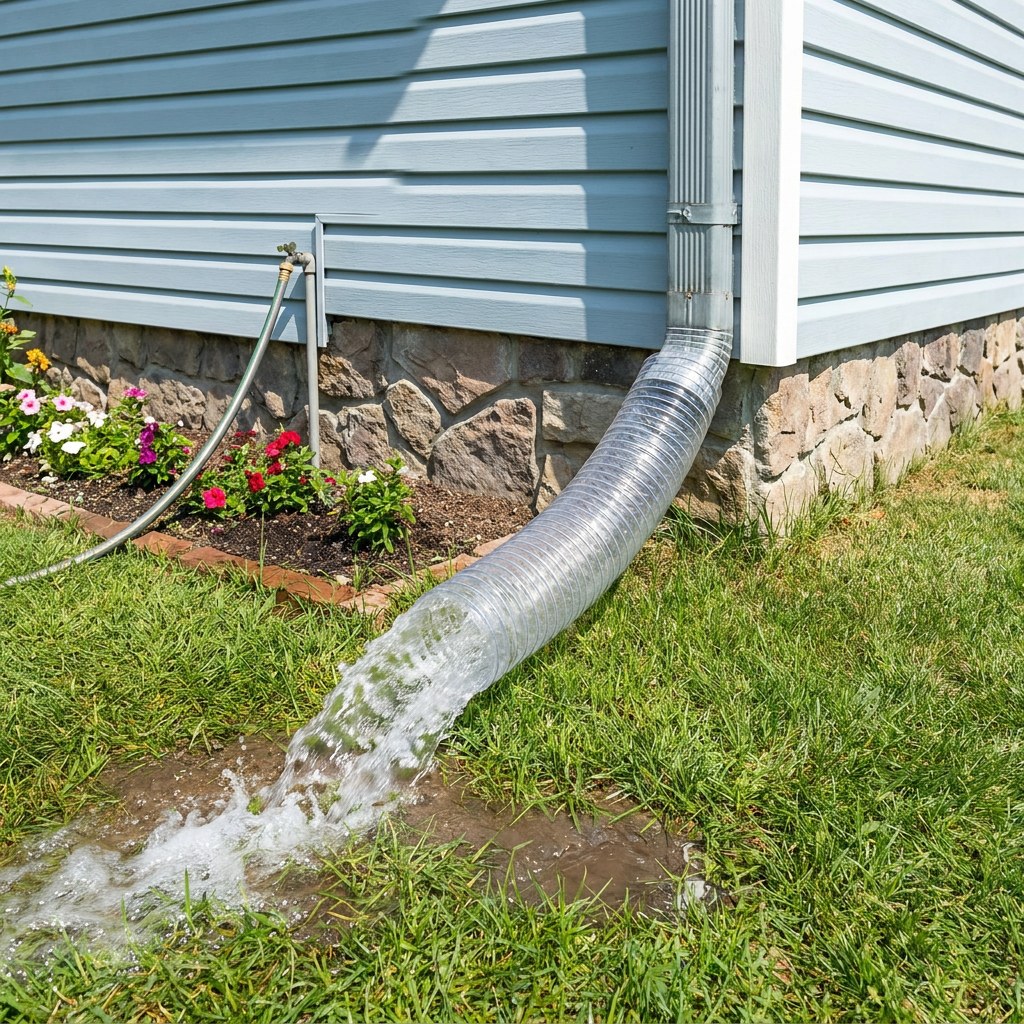
Your roof collects thousands of gallons of water during a typical rainstorm. Gutters catch that volume, but your downspout extensions do the heavy lifting of carrying it safely away from your home. When extensions are disconnected, crushed, or clogged, that water is dumped directly against your foundation walls.
Taking thirty minutes twice a year to inspect and clear your downspout extensions prevents minor surface water from turning into a four-figure basement repair.
What Typically Goes Wrong If Ignored
Water always takes the path of least resistance. When downspouts empty too close to the house, several issues develop quietly over time:
- Hydrostatic pressure builds up: Water saturates the soil surrounding your foundation. The expanding, heavy soil pushes inward against concrete or masonry walls, eventually causing cracks and bowing.
- Basement and crawl space leaks: Water finds micro-fissures in foundation walls, creating damp basements, musty smells, and standing water.
- Soil erosion and pooling: Heavy runoff washes away topsoil, exposing footings and creating low spots near the house that trap even more standing water.
- Winter frost heave: Saturated soil around your foundation freezes and expands in cold weather, which can shift footings, porches, and exterior walkways.
What This Task Protects
Keeping your downspout extensions clear and properly directed protects three critical areas of your home:
- Structural integrity: It keeps the soil moisture levels around your foundation stable, reducing the risk of differential settling (where one part of a foundation settles faster than another).
- Indoor air quality and living spaces: Keeping water outside prevents high humidity, subterranean dampness, and moisture that can ruin finished basements or insulation.
- Landscape and grading investment: Proper drainage prevents mulch, groundcover, and topsoil from washing away every time a storm passes through.
Step-by-Step Maintenance Checklist
You do not need specialized tools to maintain downspout extensions. A garden hose, a pair of work gloves, and a few spare screws are usually all it takes.
1. Clear debris at the connection
- Remove leaves, twigs, and asphalt shingle grit that collect where the vertical downspout meets the horizontal extension.
- If your home uses flexible corrugated plastic pipe, disconnect it briefly to tap out accumulated debris.
2. Verify proper distance from the foundation
- Ensure the extension carries water at least 4 to 6 feet away from the foundation wall. For homes with basements or expansive clay soils, 8 to 10 feet is even safer.
- Check that the slope moves downward away from the house, dropping at least 1 inch for every 10 feet of horizontal run.
3. Check physical connections
- Make sure metal elbows and extensions are firmly joined with short sheet metal screws rather than friction alone.
- If you use splash blocks (sloped plastic or concrete troughs placed on the ground), verify they are sloped away from the house and have not settled backward toward your siding.
4. Test water flow
- Run a garden hose down the gutter or directly into the downspout for two minutes.
- Confirm water discharges freely from the end without leaking out of the seams near your home.
5. Clear the exit point
- Make sure lawn clippings, groundcover, or encroaching mulch do not block the discharge opening.
- If your system drains into a pop-up emitter (a small spring-loaded lid set in the lawn), clear away grass roots and press the cap down by hand to ensure the spring moves freely.
How Often It Should Be Done
Check your downspout extensions twice a year:
- Late spring: After winter snowmelt and spring winds have dropped debris, and before heavy seasonal rains begin.
- Late autumn: After the majority of leaves have fallen and before the first hard freeze, ensuring water does not freeze inside a clogged pipe.
It is also wise to perform a quick visual check during or immediately following a severe rainstorm once a year. Watching the system in action will quickly reveal leaks or pooling you might miss on a dry afternoon.
Signs You Have Waited Too Long
If routine maintenance has slipped, look for these warnings around your exterior and basement:
- Visible pooling during rain: Water pooling within 3 feet of your exterior wall during moderate rainfall.
- Soil depressions: A ditch or crater directly beneath the downspout elbow where an extension should be.
- Efflorescence on basement walls: A white, powdery mineral deposit on interior basement concrete, which indicates water is migrating through the wall and evaporating indoors.
- Sump pump running constantly: An overworked pump during light showers often means your own roof runoff is cycling straight back down into your drain tile.
Cost of Neglect vs. Cost of Maintenance
The financial contrast between simple drainage upkeep and deferred repairs is stark:
| Maintenance Approach | Typical Cost | What It Covers | | :--- | :--- | :--- | | Routine DIY Maintenance | $0 – $50 | Cleaning tools, replacement screws, or a new 6-foot extension pipe. | | Minor Professional Adjustment | $150 – $350 | A handyman extending lines or resetting splash blocks properly. | | Basement Crack Injection | $500 – $1,500 | Sealing localized foundation cracks caused by water pressure. | | Full Exterior Waterproofing | $5,000 – $15,000+ | Excavating foundation walls, installing exterior membrane, and replacing weeping tiles. |
Spending an hour each year adjusting inexpensive surface pipes helps you avoid invasive excavation and structural foundation work.
Safety Boundaries
Most drainage checks are completely safe to handle yourself, but keep these boundaries in mind:
- Safe to do yourself: Clearing surface pipes, reattaching disconnected elbows, replacing splash blocks, and extending pipes across garden beds.
- Wait and monitor: Minor surface pooling that drains fully within an hour after the rain stops, or mild gutter drip during unusually severe cloudbursts.
- Call a professional: Noticeable diagonal cracks wider than a quarter-inch in your foundation wall, persistent standing water in a crawl space, or underground drainage pipes that remain completely backed up despite clearing surface openings.
How to Build This Into Your Home Maintenance Schedule
Home maintenance works best when tied to recurring habits rather than sudden emergencies. You can pair downspout inspections with other standard seasonal chores, like testing your smoke detectors or swapping furnace filters.
Using a tool like Casa helps you keep these outdoor tasks organized alongside your seasonal home checklist. Casa tracks your maintenance rhythms and reminds you when it is time to walk the perimeter before the rainy season arrives. If you encounter an underground pipe you cannot clear or notice new settling near a foundation wall, Casa can help you understand the issue and connect with an experienced local drainage specialist.
Take the Next Step
Keeping your foundation dry does not require complicated engineering. It starts with ensuring the water from your roof flows away from your walls rather than soaking into the ground beside them. Take thirty minutes this weekend to walk your exterior perimeter, check your discharge points, and verify your extensions are clear.
To stay on top of seasonal tasks and take the guesswork out of home care, download the Casa app today.