

Aug 25, 2026
How To Prepare Gutters And Downspouts For Fall
Learn how to clean and inspect your gutters before fall weather arrives. Protect your foundation and roof from water damage with this simple seasonal checklist.
As summer winds down and we look toward the changing seasons, a home’s exterior is about to be tested by rain, falling leaves, and eventually, freezing temperatures. One of the most practical things you can do to prepare your home is to check your gutters and downspouts.
Looking for more guidance? Take a look at our Maintenance overview.
It is easy to view gutter cleaning as a repetitive, tedious chore. However, it helps to reframe this task: clearing your gutters is not just about removing leaves; it is a critical cost-prevention measure. Your gutters act as your home’s primary water management system. By ensuring water flows exactly where it is supposed to, you are actively protecting your home from structural stress and expensive water damage.
What Typically Goes Wrong If Ignored
When leaves, pine needles, and twigs build up in your gutters, they create blockages. During a heavy rainstorm, the water entering the gutter hits this blockage and has nowhere to go but over the sides.
Instead of being carried safely away from your home, the overflowing water dumps directly next to your foundation. Over time, water pooling against the foundation slowly seeps into the soil, putting pressure on basement walls and often leading to interior leaks.
In colder climates, ignored gutters present another risk. Trapped, standing water will freeze when temperatures drop. This forms heavy blocks of ice that can bend the guttering or tear it away from the house entirely. It also heavily contributes to "ice dams"—thick ridges of solid ice that build up along the edge of your roof. Ice dams block melting snow from draining, forcing water to back up under your roof shingles and leak into your attic or ceilings.
What This Task Protects
Keeping your gutters and downspouts clear protects several major components of your home:
- Foundation and Basement: By moving water away from the base of your home, you greatly reduce the risk of foundation cracks and flooded basements.
- Roof Lifespan: Proper drainage prevents water from sitting at the roofline and degrading your shingles and the wooden roof deck below them.
- Exterior Siding and Trim: Overflowing water constantly running down the side of your house can cause wood rot, peeling paint, and unsightly staining on your siding.
Step-by-Step Checklist for Clearing Gutters
If you are comfortable on a ladder, this is a straightforward afternoon project.
- Gather your supplies: You will need a sturdy extension ladder, thick work gloves, a small trowel or a plastic gutter scoop, a bucket to collect debris, and a garden hose with a spray nozzle.
- Set up safely: Place your ladder on firm, level ground. Use a ladder standoff (a U-shaped attachment that rests on the roof) to avoid crushing your gutters and to improve stability.
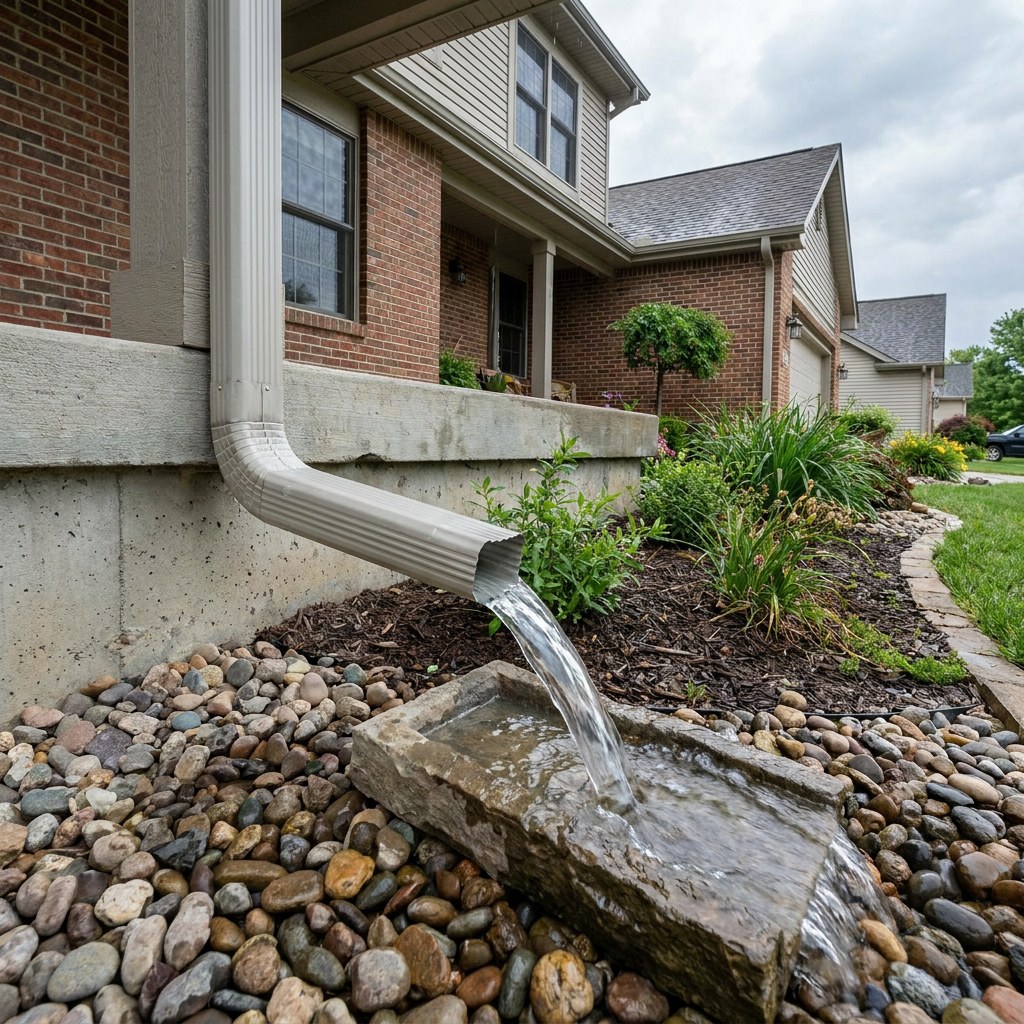
- Scoop the debris: Starting near a downspout—the vertical pipe that carries water from the gutter down to the ground—use your scoop or gloved hands to pull the wet leaves and dirt out of the channel. Place the debris in your bucket rather than dropping it on your lawn or walkway.
- Flush the system: Once the bulk of the debris is gone, turn on your garden hose and spray water down the gutter toward the downspout. This washes away leftover dirt and lets you check the water flow.
- Check the downspouts: Watch the water exit the bottom of the downspout. If the water backs up or trickles out slowly, there is likely a clog inside the vertical pipe. You can often clear this by spraying a high-pressure stream of water directly down the pipe.
- Inspect the hardware: While you are up there, look for any loose spikes or brackets holding the gutter to the house. If the gutter is sagging or pulling away from the wood, those fasteners need to be tightened or replaced.
How Often It Should Be Done
For most homes, checking and clearing gutters twice a year is sufficient—once in the late spring after trees have dropped their seeds and blossoms, and once in the late fall after the majority of the leaves have fallen.
If your home is surrounded by heavy tree cover, particularly pine trees that drop needles year-round, you may need to inspect them every three to four months.
Signs You Have Waited Too Long
Sometimes life gets busy, and maintenance slips. You will know your gutters need immediate attention if you notice:
- Water spilling like a waterfall over the edge of the gutters during a rainstorm.
- Visible sagging in the middle of a gutter run.
- Small plants or weeds visibly growing out of the gutters.
- Unexpected water pooling in your basement or crawlspace after heavy rain.
- Stains or peeling paint on your siding directly beneath the gutters.
Cost of Neglect vs. Cost of Maintenance
The financial difference between maintaining your gutters and repairing the damage from neglecting them is significant.
If you do the job yourself, the cost is practically zero, outside of purchasing a good ladder and a pair of gloves. If you prefer to hire a professional, routine gutter cleaning typically costs between $150 and $300, depending on the size and height of your home.
Compare that to the costs of neglect. Repairing a flooded basement or a cracked foundation can easily start at $3,000 and frequently exceeds $10,000. Replacing rotted siding or fixing a roof damaged by ice dams runs into the thousands as well. A small investment of time or money into seasonal maintenance pays off by preventing these major headaches.
Safety Boundaries
While clearing gutters is a common DIY task, it is not worth risking your physical safety. Be honest about your comfort level and your property's terrain.
Safe to try yourself: If your home is a single story, the ground around it is flat and firm, and you are entirely comfortable working on a ladder, this is a manageable task.
Time to call a professional: If your home is two or more stories high, the roof is exceptionally steep, or the ground below is sloped or uneven, it is best to hire a professional. You should also call an expert if power lines are located anywhere near your roofline or gutters. Professional crews have the specialized equipment, harnesses, and experience to handle difficult access safely.
How to Build This Into Your Home Maintenance Schedule
Keeping track of when you last checked your gutters can be tricky as the seasons blur together. The simplest way to handle this is to tie the task to predictable seasonal shifts—think Daylight Saving Time changes, or the first major drop in temperature in the fall.
This is exactly where Casa acts as a helpful home advisor. Instead of trying to hold these seasonal tasks in your head, you can use Casa to log the last time you or a pro cleared the gutters. From there, you can set a recurring reminder to check them again in six months, bringing organization and predictability to your exterior maintenance.
Recap
Gutters are more than an exterior trim piece; they protect your home’s most critical structures from water damage. By taking time this fall to clear out debris, test the downspouts, and secure loose hardware, you can head into winter knowing your foundation and roof are well-protected. If ladders aren't for you, hiring a pro is a highly cost-effective way to avoid major repair bills later on.
Stay organized and keep your home running smoothly with ease. Download the Casa app today to start tracking your seasonal maintenance tasks and receive timely reminders when it’s time to prepare your home for the next season.