

Updated Nov 23, 2026
How to Remove Stubborn Mineral Deposits in Your Bathroom
Remove limescale from glass, tile, chrome, and stone with the right cleaner for each surface, and keep vinegar away from the ones it would ruin.
White vinegar removes most chalky white deposits from glass, ceramic tile, porcelain, and plain chrome. Wipe it on, wait 5 to 15 minutes, scrub with a soft pad, rinse, and dry. Never use it on marble, travertine, limestone, or other natural stone. Check the maker's care advice before using it on matte black, brass, gold, or other coated finishes. For crust that won't move, use a lime remover that lists your surface.
Looking for more guidance? Take a look at our Maintenance overview.
One rule for all of it: never mix vinegar or lime remover with bleach. The fumes are dangerous. Rinse well before you switch products.
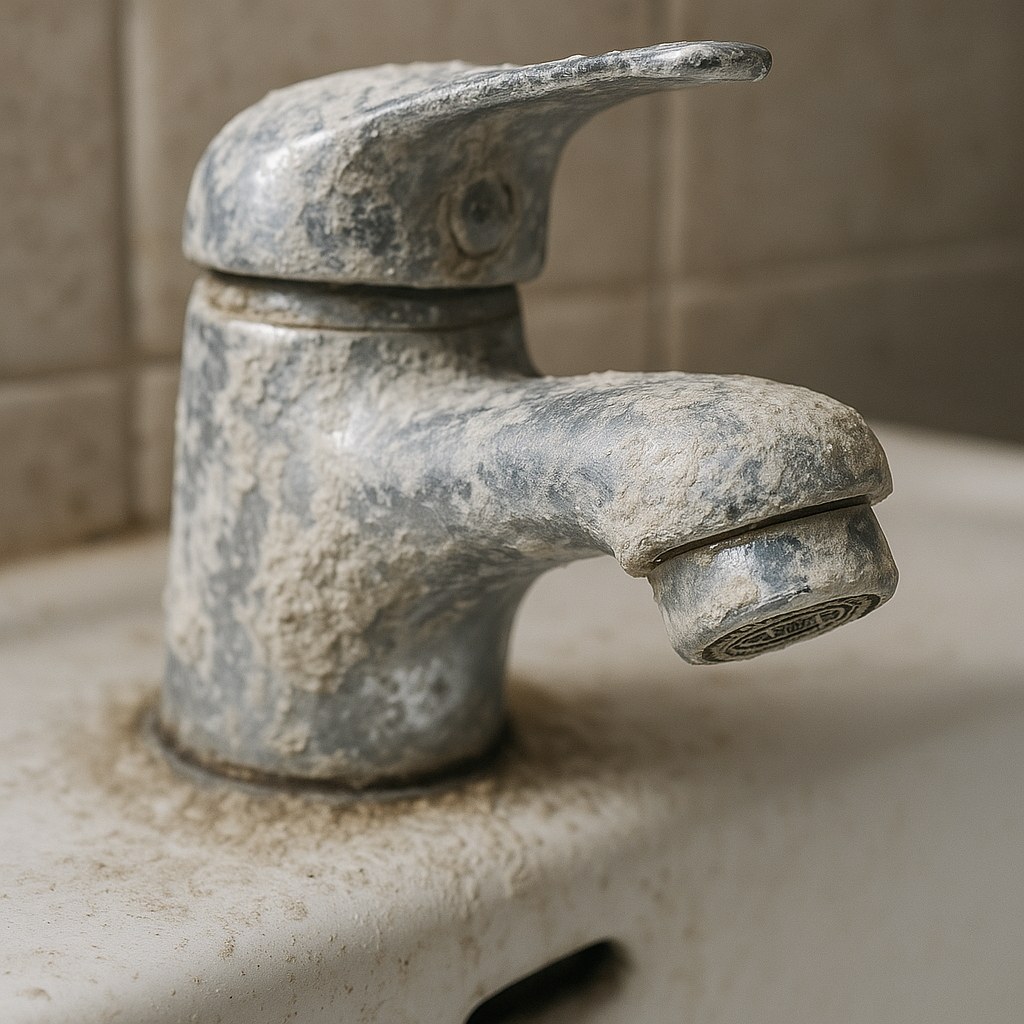
What Are These White Spots Anyway?
Hard water is rich in minerals like calcium and magnesium. When water evaporates from a surface, it leaves these minerals behind. Over time, they build up into the chalky, scaly deposits you see. Besides being an eyesore, heavy buildup on faucets and showerheads can actually clog them and reduce water pressure.
Step 1: Inspect the Damage and Identify Your Surfaces
Put on rubber gloves and have a look around.
- Look around: Check all the common culprits—faucets, showerheads, tap handles, tiles (especially in the shower), glass doors, mirrors, and the edges of your sink and tub.
- Do a scrape test: Try to flake off a small spot with your fingernail. Does it come off easily, or is it a hard, solid crust? This will help us decide if we need a light touch or a more heavy-duty approach.
- Identify the material: The right method depends on the surface. Are the deposits on natural stone (like a marble vanity or travertine tile), metal fixtures (chrome, stainless steel), or glass, porcelain, and ceramic tile? Using the wrong cleaner, especially on natural stone, can cause permanent damage.
Once you know what you're working with, you can jump to the right section below.
How to Clean Mineral Deposits on Natural Stone
The Natural Stone Institute says products with lemon, vinegar, or other acids may dull or etch marble, travertine, limestone, and similar stone. Lime removers do the same. Keep them all away from it.
For Light, Filmy Buildup
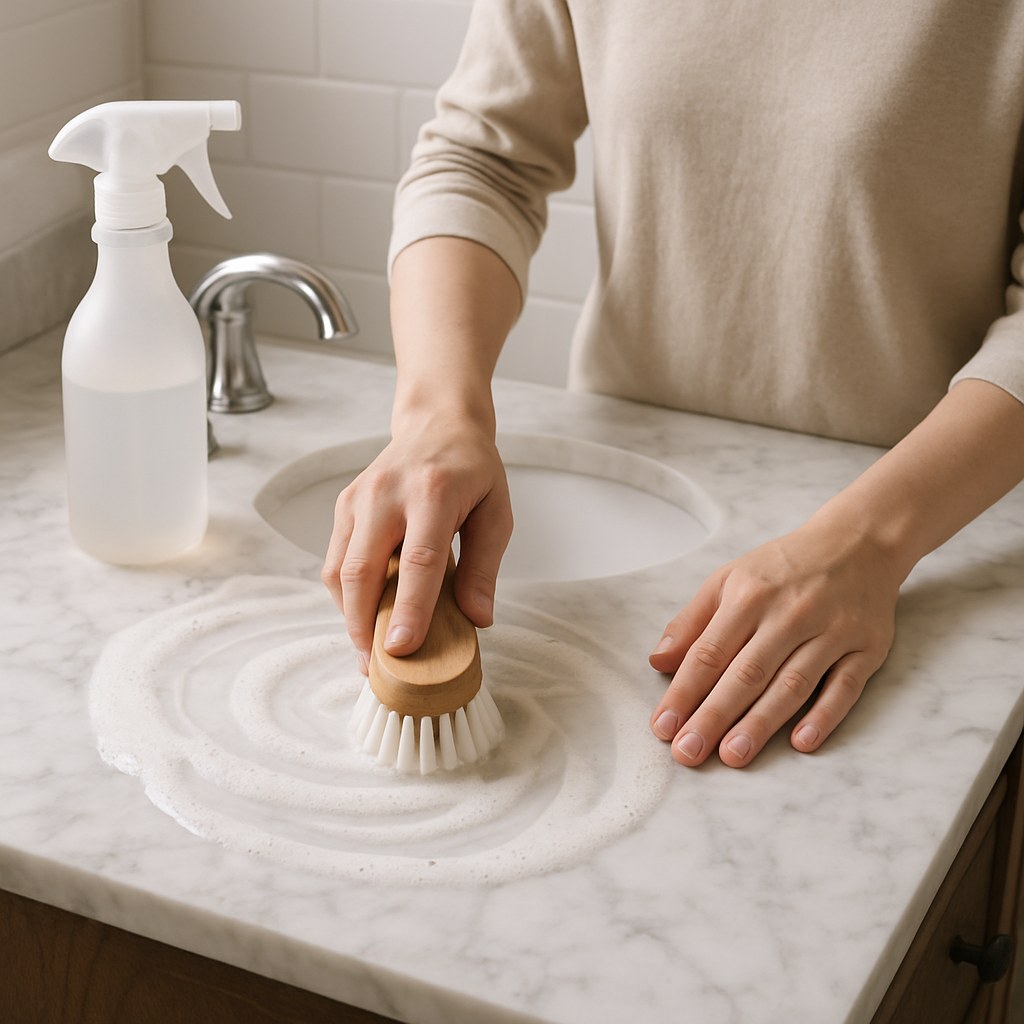
If the deposits are just a light film, a simple, pH-neutral solution is all you need. A pH-neutral cleaner is one that isn't acidic or alkaline, making it safe for sensitive surfaces.
What You'll Need:
- A spray bottle
- pH-neutral stone cleaner (available at hardware stores)
- A soft-bristled brush or old toothbrush
- Microfiber cloths
Instructions:
- Fill your spray bottle with warm water and a few drops of the pH-neutral stone cleaner.
- Spray the solution directly onto the affected stone areas.
- Let it sit for about 5 minutes. This gives the cleaner time to start breaking down the mineral film.
- Gently scrub the area with your soft brush. Use light, circular motions to avoid any scratches.
- Rinse the surface thoroughly with a cup or spray bottle of clean water.
- Dry the area completely with a clean microfiber cloth. This is key to preventing new water spots from forming right away!
For Heavy, Crusty Buildup
For spots and rings from hard water, the Natural Stone Institute suggests buffing with dry 0000 steel wool, the finest grade.
What You'll Need:
- 0000 steel wool
- pH-neutral stone cleaner
- Microfiber cloths
Instructions:
- Test a small, hidden spot first, especially on honed or softer stone.
- With the stone dry, buff the spot lightly in small circles.
- Wipe away the dust, clean with the stone cleaner, rinse, and dry.
- If the surface looks dull or feels rough, stop. That may be etching, where the stone itself is worn, and more rubbing won't help.
Scouring powders and creams can scratch stone, so skip those.
If deposits remain: Call a stone-care specialist. They can hone and polish the stone without making it worse.
How to Clean Mineral Deposits on Metal Fixtures
Plain chrome and stainless steel handle diluted vinegar well. Matte black, brass, gold, bronze, and other coated or living finishes may not, so follow the maker's care instructions or use warm, soapy water.
For Light Scale on Faucets
If you just have some light spots around the base or on the handles, a quick spray-and-scrub will do the trick.
What You'll Need:
- A spray bottle
- White vinegar
- Paper towels or a rag
- An old toothbrush
- A microfiber cloth
Instructions:
- Fill your spray bottle with a 50/50 solution of warm water and white vinegar. If the sink or counter is stone, put the solution on a cloth and cover the stone with a towel.
- Spray the solution onto the fixture.
- For stubborn spots, soak a paper towel in the vinegar solution and wrap it around the fixture. Let it sit for about 10-15 minutes.
- Remove the paper towel and use an old toothbrush to gently scrub away the loosened deposits. Pay special attention to crevices.
- Rinse the fixture with warm water and dry it with a microfiber cloth to a brilliant shine.
For Heavy Buildup on Showerheads and Aerators (The Baggie Method)
If your showerhead is sputtering or the faucet aerator is clogged, give it a soak. For the full steps, see how to clean faucet aerators and showerheads.
What You'll Need:
- A plastic sandwich bag
- White vinegar
- A rubber band or twist tie
- An old toothbrush
Instructions:
- Place the plastic bag around the showerhead or faucet aerator.
- Fill the bag with enough pure white vinegar to completely submerge the parts with buildup.
- Secure the bag tightly with a rubber band.
- Let it soak for at least 45 minutes. For heavy buildup on chrome, you can leave it for a few hours. Keep it to 30 minutes on other finishes.
- Remove the bag and discard the vinegar.
- Use a toothbrush to scrub off any remaining deposits, which should now be soft and easy to remove.
- Run the water for a minute to flush out any debris inside the fixture, then rinse and dry the outside.
If deposits remain: If a long soak doesn’t clear the clog, the fixture might have internal buildup that requires disassembly. At this point, you may want to call a plumber. They can either take the fixture apart for a deep clean or recommend a replacement if it’s too far gone.
How to Clean Mineral Deposits on Glass, Tile, and Porcelain
These surfaces can handle more.
For Everyday Water Spots and Film
The same vinegar solution works on uncoated glass, ceramic tile, and porcelain. Some glass doors have a coating that acids strip, so check the label. Keep it off unsealed grout and off acrylic doors, and see how to clean shower doors.
What You'll Need:
- A spray bottle with a 50/50 white vinegar and water solution
- A non-scratch scrub pad
- A squeegee (for glass) or microfiber cloths
Instructions:
- Spray the solution liberally onto the glass doors, tiles, or porcelain surfaces.
- Let it sit for about 5 minutes to dissolve the minerals.
- Scrub the surfaces with a non-scratch pad.
- Rinse thoroughly with clean water.
- On glass, use a squeegee for a perfect, streak-free finish. On tile and porcelain, dry completely with a microfiber cloth.
For Heavy, Caked-On Deposits
For years of buildup, use a commercial remover made for the job.
What You'll Need:
- Rubber gloves
- A commercial lime and calcium remover (like CLR or Lime-A-Way)
- A sponge or non-scratch scrub pad
- Good ventilation (open a window or turn on the fan)
Instructions:
- Read the whole label. Put on gloves and eye protection, open a window or run the fan, and rinse off any other cleaner first. Never use it with bleach. Check that your surface is on the list, since these products damage stone, some metals, and colored grout.
- Apply the remover to the stubborn deposits using a sponge.
- Let it sit for the recommended time (usually 5-10 minutes). Don't let it dry on the surface.
- Scrub with your non-scratch pad until the deposits loosen and dissolve.
- Rinse the area thoroughly with plenty of clean water and dry with a microfiber cloth.
If deposits remain: Some buildup etches the surface, and what's left isn't on the glass but in it. A glass restoration or cleaning company can tell you whether it will polish out, and what that costs next to replacing the panel.
Prevention: The Best Way to Fight Mineral Buildup
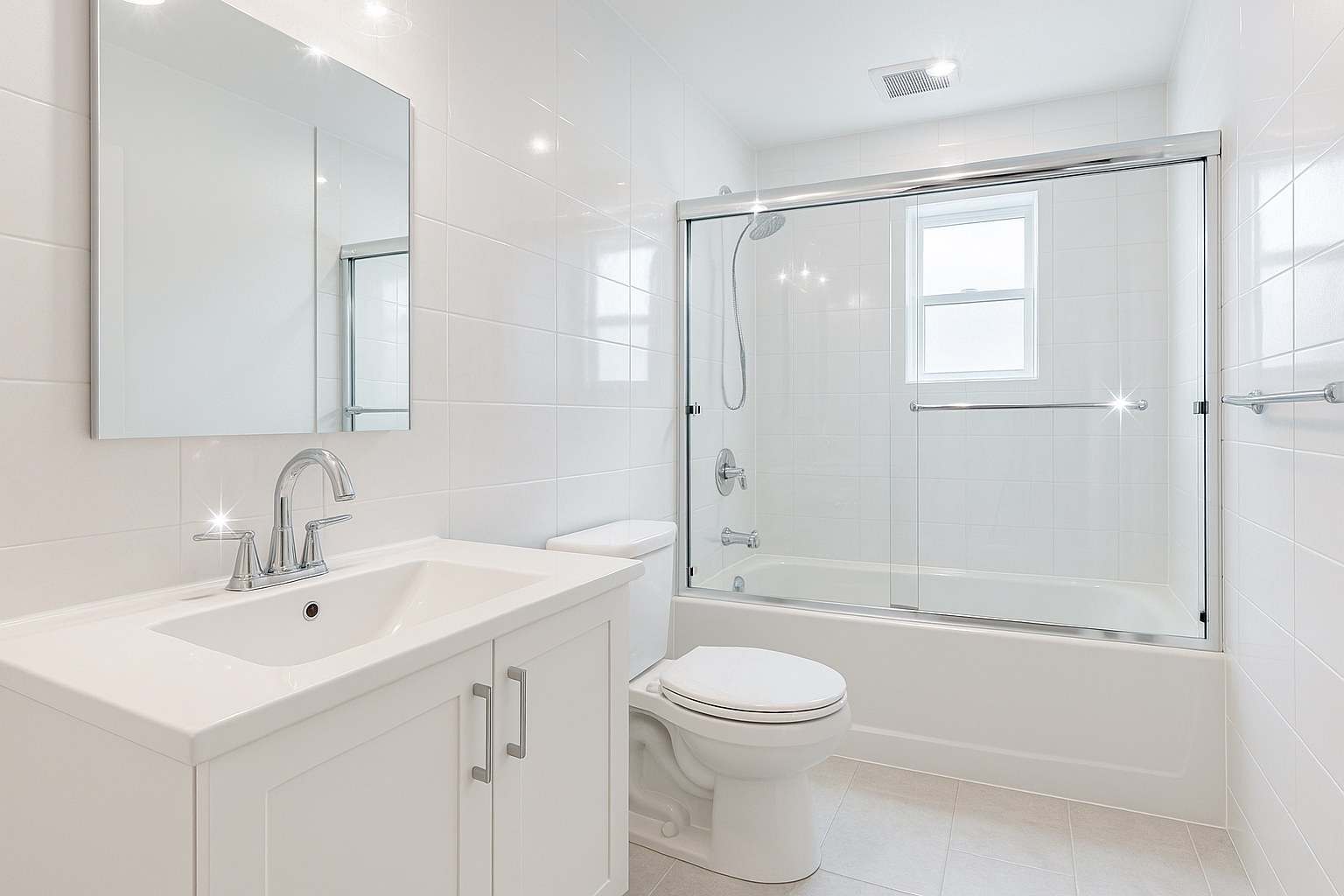
- Wipe Down Surfaces: After showering, use a squeegee on glass doors and wipe down fixtures with a microfiber cloth. It takes 30 seconds.
- Clean Regularly: A quick weekly spray-down with your vinegar solution will prevent light buildup from becoming a major project.
- Consider a Water Softener: With very hard water, a whole-house softener cuts scale in the whole house, including the water heater. Test the water first, and compare the installed price, the salt, and the upkeep. Thumbtack puts the national average for installing a water softener at $406 to $1,397.