

Updated Nov 23, 2026
How to Remove Bathroom Mold Safely
Clean small mold spots on tile and other hard surfaces, know the size and surfaces that need a professional, and stop the moisture behind it.
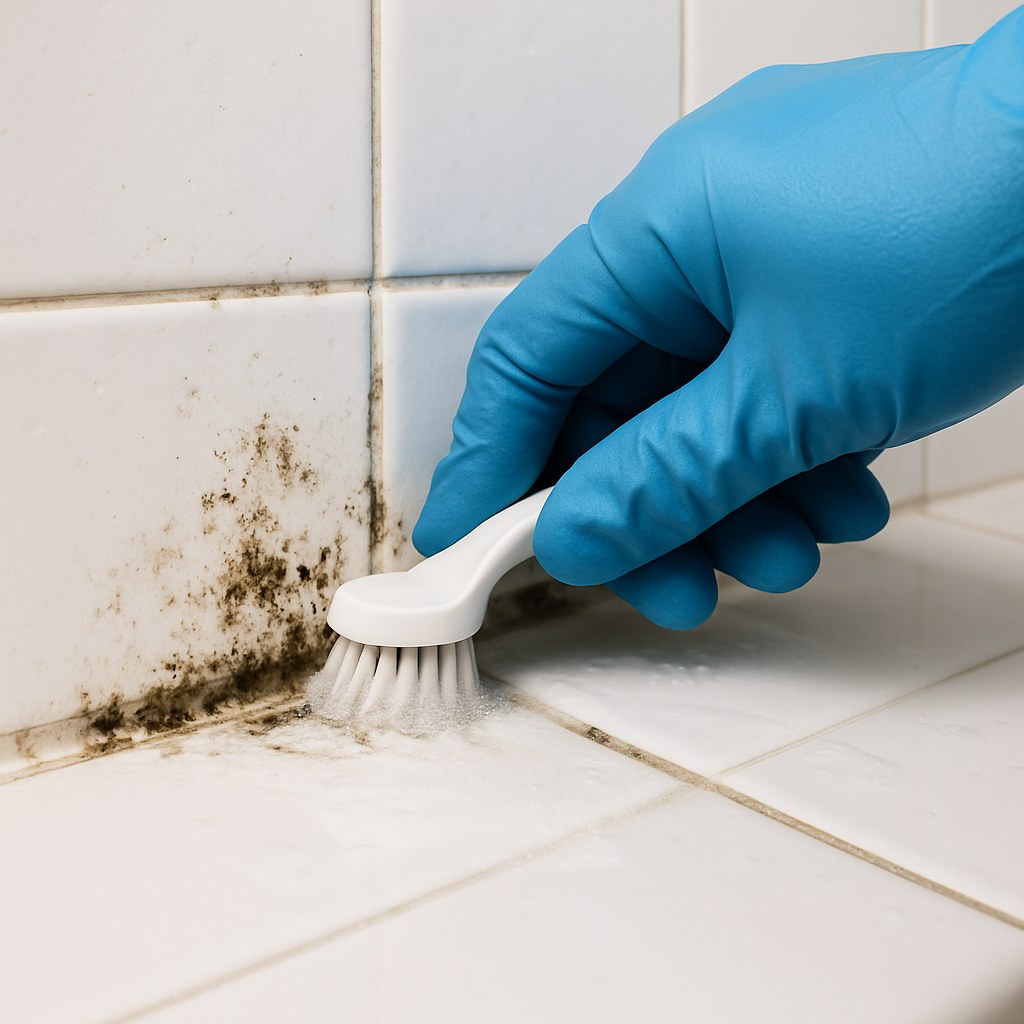
You can clean small patches of mold on hard surfaces such as tile, glass, and sealed counters with detergent and water. Then dry the area completely and fix what keeps it wet. If the mold covers more than about 10 square feet, is on soft drywall, or keeps returning, it is a moisture problem that needs more than scrubbing.
Looking for more guidance? Take a look at our Maintenance overview.
DIY or Professional?
| What you see | What to do |
|---|---|
| Spots on tile, glass, tub, or sealed counter | Clean it |
| Dark stains in grout | Clean, then reseal or repair |
| Mold in caulk | Replace the caulk |
| Small spots on a painted ceiling, drywall firm and dry | Wipe with detergent and water, dry, fix the fan |
| Soft, swollen, or stained drywall | Find the leak. Replace the material |
| Larger than 3 feet by 3 feet | Professional |
| Musty smell, nothing visible | Look for a hidden leak |
The EPA suggests that most people can handle an area smaller than about 10 square feet. It says absorbent materials may need to be thrown away, since mold can be hard to remove from them, and not to paint or caulk over mold.
About Bleach
You do not need it. The EPA does not recommend bleach or other biocides as a routine practice for mold. If you use any disinfectant, ventilate to the outdoors, and never mix it with another cleaner. Killing mold is not enough anyway. It has to be removed and the surface dried.
Step by Step: Clean a Small Area
- Open a window or run the fan to the outside. Close the bathroom door.
- Wear waterproof gloves and goggles without vents. The EPA also suggests an N-95 respirator.
- Mist the spot lightly so you raise less dust.
- Scrub with detergent and water and a nylon brush.
- Rinse with clean water. Wipe with paper towels and bag them.
- Dry the surface fully with a towel and a fan. Point the fan outside, not at the mold.
- Wash cloths and clothes. Wash your hands.
- Look again in a week. If it is back, find the moisture.
Replace Moldy Caulk
If mold is in the caulk, cleaning will not help for long. Remove it with a plastic tool, let the joint dry, and reseal with bathroom caulk. See How to Inspect and Maintain Bathroom Caulk.
Fix the Moisture
- Run the fan during and after showers, and check that it vents outdoors.
- Keep indoor humidity below 60 percent, and ideally 30 to 50 percent, as the EPA advises.
- Wipe down shower walls.
- Fix drips under the sink and at the toilet.
- Dry wet materials within 24 to 48 hours.
- Leave the door open after showers.
A bathroom fan that hums but moves little air may need cleaning or a new duct. Turn it off at the switch and leave any wiring to an electrician.
What Does Professional Mold Removal Cost?
Thumbtack puts the national average for mold removal at $755 to $2,777. A small patch on caulk or grout is a cleaning job, and the price climbs when mold has spread into walls or behind tile.
Hiring Help
Ask a mold contractor for experience, references, and what standard they follow. The EPA mentions its own guidance and the ACGIH and IICRC standards. Find the leak first. If a company sells both testing and cleanup, get a second opinion on the scope.