

Sep 1, 2026
How to Test and Maintain GFCI Outlets
Learn how to test your home GFCI outlets safely in minutes. This simple monthly check protects your family from electrical shocks and prevents costly wiring repairs.
When you move into a home, it is easy to view minor electrical maintenance as an optional chore. You plug in a coffee maker or a hair dryer, the device turns on, and you assume everything is working properly.
Looking for more guidance? Take a look at our Maintenance overview.
Electrical maintenance is not busywork—it is early risk prevention. Taking five minutes to test your outlets can protect you from expensive electrical repairs, prevent appliance damage, and keep your household safe from unexpected shocks.
One of the simplest and most important tasks you can perform is testing your Ground Fault Circuit Interrupter (GFCI) outlets.
What a GFCI Outlet Does and What This Task Protects
A Ground Fault Circuit Interrupter (GFCI) is a specialized electrical outlet designed to protect people from electrical shock. You will usually find them anywhere moisture might be present: kitchens, bathrooms, laundry rooms, garages, basements, and outdoor walls.
Standard outlets deliver electrical current without monitoring where that current goes. A GFCI outlet constantly monitors the balance of electrical current flowing through a circuit. If it senses even a tiny imbalance—such as electricity leaking through water or through a person—it cuts the power in milliseconds.
Testing these outlets regularly protects three things:
- Personal safety: It ensures the internal shut-off mechanism trips quickly enough to prevent serious injury.
- Connected appliances: It helps prevent electrical surges from damaging sensitive electronics plugged into the circuit.
- Wiring longevity: It ensures that downstream outlets (standard outlets wired further along the same circuit) are properly protected.
What Typically Goes Wrong When Outlets Are Ignored
The most common misunderstanding about GFCI outlets is assuming that because an outlet provides power, its safety mechanism works.
GFCI outlets contain delicate internal electronics that degrade over time due to normal wear, ambient humidity, and power surges. When a GFCI outlet fails, it often fails silently. It will continue to deliver power to your toaster or hair dryer, but the internal sensor can no longer shut the power off during a ground fault.
If you do not test the outlet periodically, you will only discover the safety mechanism has failed when a fault occurs.
Step-by-Step GFCI Testing Checklist
Testing your GFCI outlets requires no special tools and takes less than a minute per room. You only need a small plug-in item, such as a nightlight or a small table lamp.
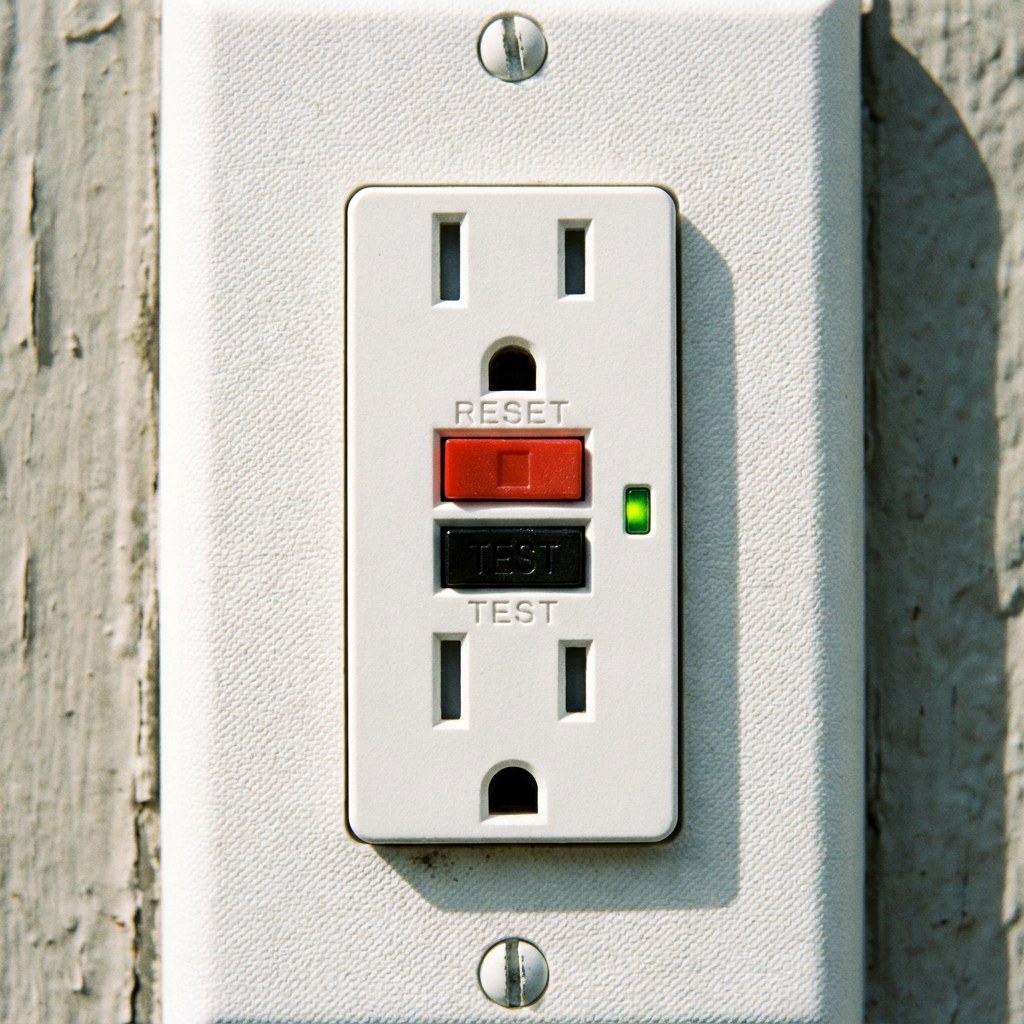
Follow these steps for each GFCI outlet in your home:
- [ ] Plug in your test light: Plug a working nightlight or lamp into the GFCI outlet and turn it on.
- [ ] Press the "Test" button: Firmly push the rectangular button labeled "TEST" on the face of the outlet.
- [ ] Verify power cuts off: You should hear a distinct click, and the light should turn off immediately. If the light stays on, the safety mechanism is not functioning.
- [ ] Press the "Reset" button: Push the button labeled "RESET" until it clicks into place. The light should turn back on.
- [ ] Check both sockets: Move the light to the second socket on the same outlet to confirm both openings are receiving power normally.
Note on downstream outlets: In many homes, one GFCI outlet in a bathroom or kitchen protects several standard-looking outlets nearby. If pressing "TEST" turns off power to other outlets in the room, that is normal and indicates your circuit was wired correctly.
How Often Should You Test Your GFCI Outlets
You should test all GFCI outlets once a month, as well as immediately after any major electrical storm or power surge.
Monthly testing keeps the internal mechanical components moving and ensures that electrical surges have not damaged the trip switch.
Signs You Have Waited Too Long
If you have not checked your outlets recently, keep an eye out for these warning signs:
- The outlet does not click: When you push the "TEST" button, nothing happens and the button feels loose.
- The "RESET" button will not stay in: The button pops back out immediately when pressed, leaving the outlet dead.
- Visible discoloration or warmth: The plastic faceplate looks yellowed, scorched, or feels warm to the touch.
- Tripping without a load: The outlet shuts off randomly even when nothing high-powered is plugged in.
Cost of Neglect vs. Cost of Maintenance
Preventive checks cost nothing and help you budget for standard replacements before an urgent issue arises.
| Approach | Typical Cost | What You Get | | :--- | :--- | :--- | | Routine Maintenance | $0 (5 minutes of your time) | Confirmation that safety devices are active and functional. | | Planned DIY Replacement | $15 – $30 per outlet | Replacing an aged GFCI unit yourself with off-the-shelf parts. | | Scheduled Pro Replacement | $120 – $200 | An electrician replaces 1–3 outlets during a standard service visit. | | Emergency Repair / Damage | $250 – $600+ | Emergency diagnostic fees, ruined appliances, or addressing heat-damaged wiring. |
Safety Boundaries: When to Call a Professional
It is important to know where routine maintenance ends and licensed electrical work begins.
Safe to handle yourself:
- Performing the monthly push-button test.
- Using a plug-in circuit analyzer to check for proper wiring.
- Replacing the outlet faceplate cover if cracked.
Time to stop and call an electrician:
- The outlet sparks, buzzes, or emits a burning odor.
- The outlet shows signs of scorching or melting.
- The reset button repeatedly trips as soon as you restore power.
- Your home has two-prong outlets or older wiring and you want to upgrade to GFCI protection.
How to Build This Into Your Home Maintenance Schedule
Home maintenance is easiest to manage when you bundle simple tasks together. Instead of trying to remember GFCI testing on its own, pair it with checking your smoke and carbon monoxide detectors on the first weekend of every month.
You can also use an advisor like Casa to keep your home maintenance tasks organized. Tracking your electrical fixtures in Casa helps you log when an outlet was last tested, store notes on which breakers control specific rooms, and receive calm reminders when routine checks are due.
Summary
Testing your GFCI outlets is a five-minute habit that provides significant safety and financial peace of mind. By testing monthly, you ensure that your home's built-in defenses are ready to protect your family and your appliances.
If you are looking for an easier way to stay ahead of home maintenance and keep track of your home's systems, download the Casa app today.